
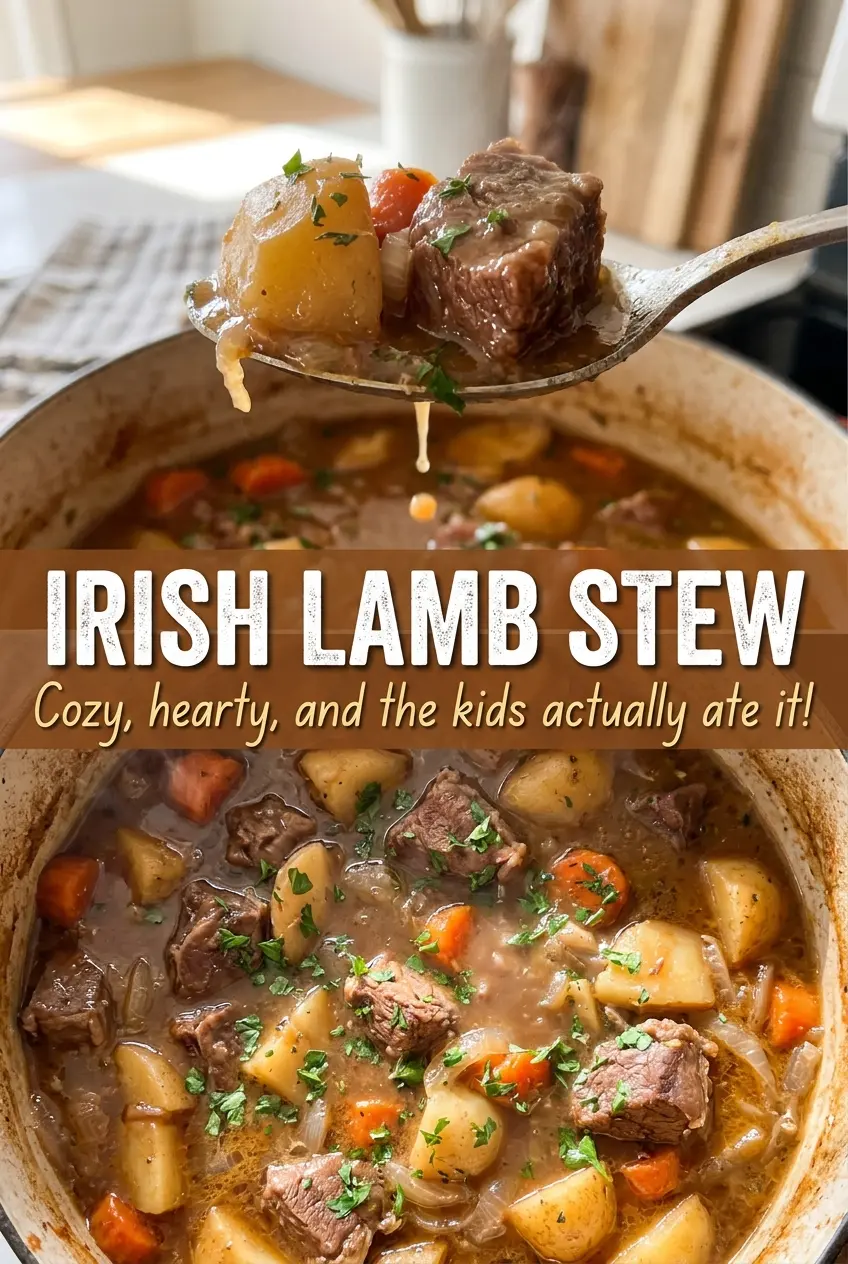
The lamb starts out pale and flour-dusted, but a few minutes in the Dutch oven gives it browned edges and leaves a savory layer on the bottom of the pot. That’s the foundation for Irish lamb stew: a gentle, slow simmer turns boneless shoulder tender while the broth picks up the flavor of the onions and browned lamb.
I add the potatoes and carrots only after the lamb has had its first stretch of cooking. They need less time than the shoulder, and that staggered start helps the vegetables finish tender without falling apart. Keep the broth at a gentle simmer rather than letting it boil hard, and you’ll have a hearty stew with tender lamb and potatoes that still hold their shape.
Kitchen Note
Let the pot rest off the heat for the full 10 minutes before serving. The broth settles around the lamb and vegetables, so each bowl comes out hearty instead of watery at the edges.
Save this Irish lamb stew for a cozy dinner with tender shoulder, a savory broth, and potatoes that hold their shape.
Why the Potatoes Wait Until the Lamb Has Simmered
Lamb shoulder needs a longer, gentler cook than potatoes and carrots do. If everything goes into the pot together, the vegetables sit through the whole braise and can soften past the point where they hold their shape. Giving the lamb a head start lets it become fork-tender while the vegetables still have enough structure to make each spoonful feel like stew, not purée.
The order also gives the broth time to build its flavor before the vegetables join in. Lamb, onions, thyme, and bay leaves simmer together first; the potatoes and carrots then cook in that seasoned liquid. Keep the simmer gentle throughout. A rolling boil can knock the edges off the potatoes and make the broth cloudy, while a quiet simmer gives the lamb time to soften without roughing up the vegetables.
Why Yukon Golds Suit This Long Lamb Braise
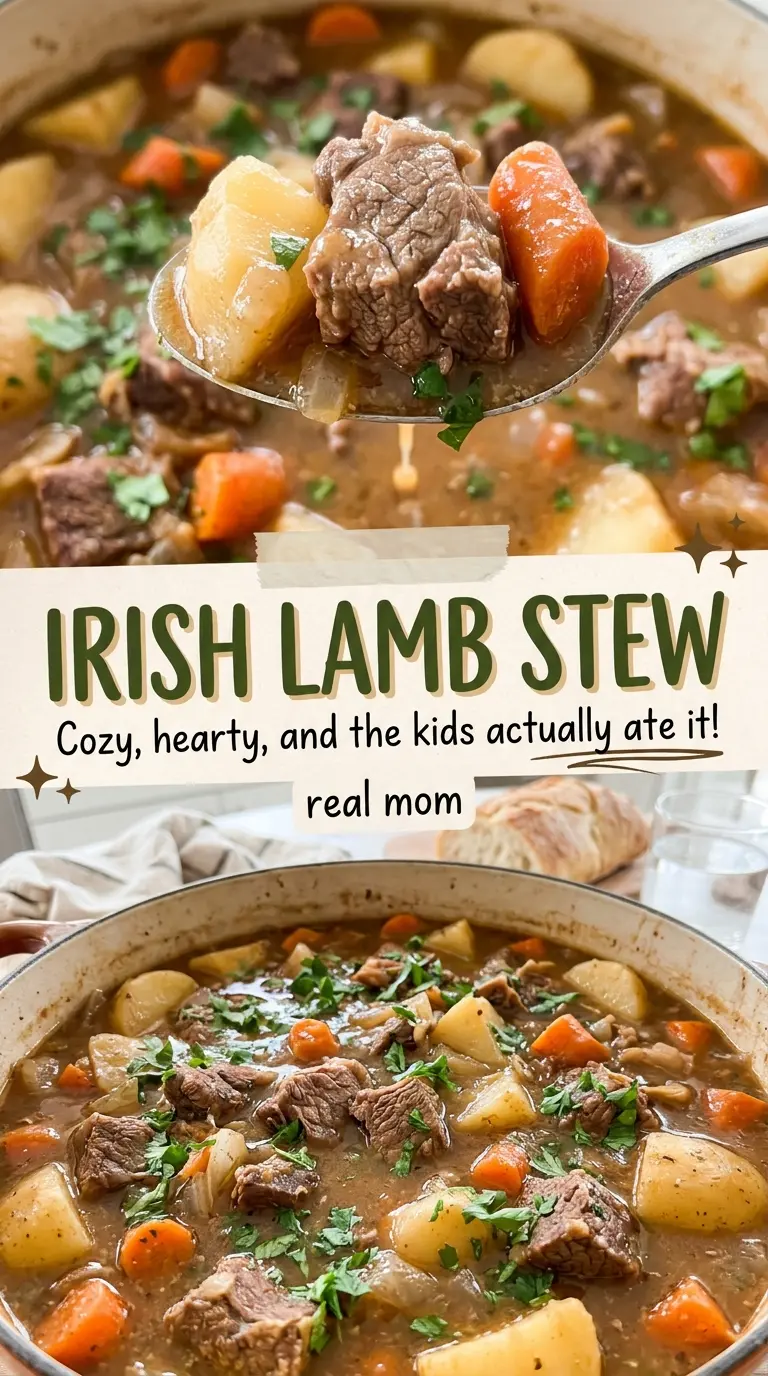
- Boneless lamb shoulder — Shoulder has enough connective tissue to become tender during a slow braise, and its rich flavor stands up to the potatoes and beef broth. Ask for evenly trimmed pieces, then cut them to the same size so they cook at a similar pace. Lean lamb leg isn’t an equal swap here; it can turn dry before it develops the shoulder’s tender texture.
- All-purpose flour — The light coating helps the lamb brown and gives the broth a little body as the stew simmers. A basic pantry flour works well; there’s no need for a specialty brand. For a gluten-free version, use a cup-for-cup gluten-free all-purpose flour in its place.
- Yellow onions and beef broth — The onions soften into the base, while beef broth gives the stew a savory, rounded flavor. Regular beef broth is a good fit; the onions don’t need to be a special variety. Lamb stock can replace the beef broth for a more lamb-forward taste.
- Yukon Gold potatoes — Their creamy texture and ability to hold together make them especially suited to this stew. Red potatoes are the closest swap and tend to stay firm; russets are more likely to break down and thicken the broth unevenly. Cut the potatoes into even pieces so they finish together.
- Carrots, thyme, bay leaves, and parsley — Carrots bring sweetness, while dried thyme and bay leaves season the broth without crowding the lamb. Fresh parsley goes in at the end, where its clean, green flavor stays noticeable. Peel the carrots and keep their pieces consistent; remove the bay leaves before serving.
- Vegetable oil — Use a neutral oil so the lamb can brown without adding a competing flavor. Canola oil works in the same way if that’s what you keep on hand.
Build the Broth in Stages, Not All at Once
Coat and Brown the Lamb
Season the lamb with kosher salt and black pepper, then toss it with the flour until every piece has an even coating. Heat the vegetable oil in a 6-quart Dutch oven over medium-high heat. Brown the lamb in batches for 8 to 10 minutes total, turning it so several sides develop color, then transfer the pieces to a plate. Crowding the pot makes the lamb steam instead of brown, so leave room around the pieces as they cook.
Soften the Onions and Make the Base
Add the chopped onions to the same pot and cook for 5 minutes, stirring as they soften. Scrape up the browned bits from the bottom as you stir; they dissolve into the broth and carry the flavor from browning into the stew. Add the beef broth, dried thyme, and bay leaves. Return the browned lamb and any juices on the plate to the pot.
Simmer the Lamb Until Tender
Bring the broth to a gentle simmer, then cover the Dutch oven and lower the heat. Cook over low heat for 1 hour to 1 hour 15 minutes, keeping the liquid at a gentle simmer rather than a hard boil. Check the pot now and then; if the broth is bubbling vigorously, lower the heat. The lamb gets its first stretch of slow cooking here, before the vegetables go in.
Finish with the Vegetables and Parsley
Stir in the potatoes and carrots, cover the pot, and simmer for 30 to 40 minutes. The vegetables should be tender, and the lamb should be fork-tender and have reached at least 145°F. If the potatoes are still firm, give them more time at the gentle simmer so they soften without the broth boiling hard. Remove the bay leaves, stir in the chopped fresh parsley, and let the stew rest off the heat for 10 minutes before serving.
Two Useful Changes Without Losing the Stew’s Character
Make It Gluten-Free
Replace the all-purpose flour with a cup-for-cup gluten-free all-purpose flour blend when coating the lamb. The stew keeps its savory character, though the broth’s final texture can vary a little depending on the blend.
Lean Into the Lamb
Use lamb stock instead of beef broth, keeping the same volume. It gives the broth a deeper lamb flavor without changing the order of cooking or the vegetables in the pot.
Storage and Reheating
- Refrigerator: Refrigerate within 2 hours and keep leftovers for 3 to 4 days. The potatoes soften a little as they sit in the broth.
- Freezer: Freeze in airtight, freezer-safe containers for up to 2 to 3 months for best quality. Thaw overnight in the refrigerator; potatoes may be softer after freezing.
- Reheating: Warm on the stovetop over medium-low heat, stirring gently, until the stew reaches 165°F. Avoid a hard boil, which can break up the potatoes.
Questions That Come Up When Making Irish Lamb Stew
Irish Lamb Stew
Ingredients
Equipment
Method
- In a large bowl, season the lamb with the salt and pepper, then toss with the flour until evenly coated.
- Heat the oil in a 6-quart Dutch oven over medium-high heat, and brown the lamb in batches for 8 to 10 minutes total, turning to brown several sides; transfer the browned lamb to a plate.
- Add the onions to the pot and cook for 5 minutes, stirring and scraping up browned bits; add the broth, thyme, and bay leaves, then return the lamb and any juices to the pot.
- Bring the broth to a gentle simmer, cover, and cook over low heat for 1 hour to 1 hour 15 minutes, keeping it at a gentle simmer.
- Stir in the potatoes and carrots, cover, and simmer for 30 to 40 minutes, until the vegetables are tender and the lamb is fork-tender and has reached at least 145°F.
- Remove the bay leaves, stir in the parsley, and let the stew rest off the heat for 10 minutes before serving.