
Golden-seared chicken breast with a glossy herb-butter finish earns its keep fast. The crust turns deep amber in the skillet while the inside stays tender and juicy, and the pan drippings pull everything together into a sauce that tastes far bigger than the ingredient list suggests. It’s the kind of chicken that gets sliced at the table and disappears before the plates are set down.
What makes this version work is the order of operations. The chicken gets pounded to an even thickness first, which keeps the thinner ends from drying out before the center cooks through. A simple seasoning of paprika, thyme, salt, and pepper builds flavor early, then the butter and garlic go in after the sear so they don’t burn before they can perfume the pan.
Below, you’ll find the small details that matter here: how to get that crust without tearing the meat, why the butter goes in at the end, and what to do if your chicken breasts are unusually thick or thin. If you’ve had dry pan-seared chicken before, this method fixes the usual problems.
The crust got that deep golden color without sticking, and the garlic butter spooned over the top kept the chicken juicy all the way through. My husband kept stealing slices right out of the skillet.
Juicy Herb-Butter Chicken Breast deserves a spot in your weeknight rotation for the crust alone.
The Reason Chicken Breast Stays Juicy Instead of Turning Stringy
Chicken breast dries out when the outside races ahead of the center. Pounding each piece to an even thickness solves most of that problem before the pan ever heats up, because the narrow end doesn’t sit there overcooking while the thick part catches up. That one step does more than any sauce can.
The other trap is moving the chicken too early. When it’s left alone in the skillet, the proteins have time to release and then reattach in a crust that lifts cleanly when it’s ready. If it’s sticking hard, it’s not done searing yet. Give it another minute instead of forcing it free.
- Even thickness — This is the difference between juicy and dry. Aim for a steady thickness across the whole breast, not a perfect rectangle.
- Medium-high heat — Hot enough to brown the outside, not so hot that the seasoning scorches before the chicken cooks through.
- Butter added after searing — Butter tastes best here, but it burns quickly. Waiting until the end keeps the garlic sweet and the pan sauce clean.
What Each Ingredient Is Actually Doing in This Dish
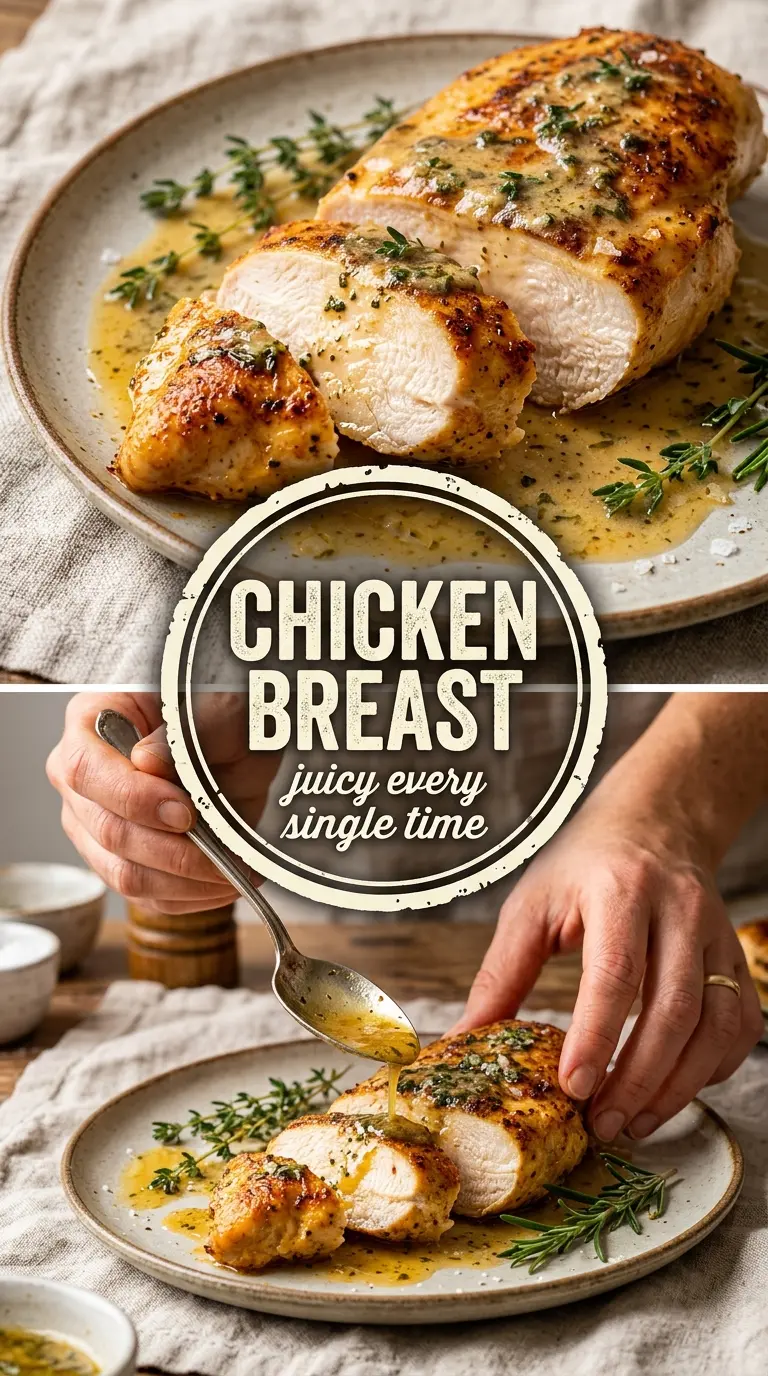
- Boneless skinless chicken breasts — These cook fast and slice neatly, but they need even thickness to stay juicy. If yours are huge, split them horizontally or pound them flatter so the center isn’t raw when the outside is browned.
- Olive oil — Oil gives you the high-heat sear the butter can’t handle on its own. Any neutral high-heat oil works here if that’s what you have, but olive oil adds a little flavor under the crust.
- Unsalted butter — This is what turns the pan drippings into the sauce. Use unsalted so you can control the seasoning at the end, especially after the sauce reduces a bit.
- Garlic — Fresh minced garlic matters here because it perfumes the butter in the last minute of cooking. If it goes in too early, it turns bitter and dark; add it only after the chicken has already cooked through.
- Paprika and dried thyme — Paprika helps deepen the color while thyme gives the chicken that savory, herby edge. Smoked paprika works if you want a little extra depth, but regular paprika keeps the flavor cleaner.
- Parsley and lemon wedges — Parsley adds freshness at the end, and lemon wakes up the butter sauce. Don’t skip the lemon if you want the dish to taste balanced instead of heavy.
Getting the Sear Right Before the Butter Goes In
Pound and Season First
Place the chicken between two sheets of parchment or plastic and pound it to an even thickness. Season both sides with paprika, thyme, salt, and pepper so the flavor starts in the meat, not just on the surface. If you skip the pounding step, the thinner edge will overcook before the center is done.
Build the Crust Without Moving It
Heat the olive oil in a large skillet over medium-high heat until it shimmers. Lay the chicken in and leave it alone for 6 to 7 minutes per side, depending on thickness, until the surface is deep golden and the meat releases without tearing. If it sticks, give it another minute; forcing it too early rips the crust and leaves browned bits on the pan instead of on the chicken.
Finish With Garlic Butter
Lower the heat, add the butter and minced garlic, then spoon the melted butter over the chicken for about 2 minutes. The garlic should smell fragrant, not dark and sharp. Pull the pan off the heat as soon as the chicken reaches 165°F, then let it rest for 5 minutes so the juices stay in the meat instead of running onto the cutting board.
How to Adapt This for Different Pan Sizes and Diet Needs
Chicken Thigh Version
Boneless skinless thighs work well if you want richer meat and a little more forgiveness at the stove. They usually need a few extra minutes, and they won’t slice as neatly, but they stay moist even if you miss the timing by a minute.
Dairy-Free Version
Swap the butter for a good dairy-free butter alternative or a little more olive oil plus a splash of chicken broth at the end. You’ll lose a bit of richness, but the garlic and pan drippings still give you a good finishing sauce.
Gluten-Free and Low-Carb Serving Ideas
The chicken itself is naturally gluten-free and low-carb. Serve it with roasted vegetables, cauliflower mash, or a simple salad so the butter sauce has something to soak into.
Storage and Reheating
- Refrigerator: Store in an airtight container for up to 3 days. The crust softens, but the chicken stays flavorful.
- Freezer: It freezes fine for up to 2 months, though the butter sauce won’t be as glossy after thawing. Freeze the chicken and sauce together in a sealed container, then thaw overnight in the fridge.
- Reheating: Reheat gently in a covered skillet over low heat with a splash of water or broth. High heat dries out the breast fast and can make the garlic taste harsh.
Answers to the Questions Worth Asking
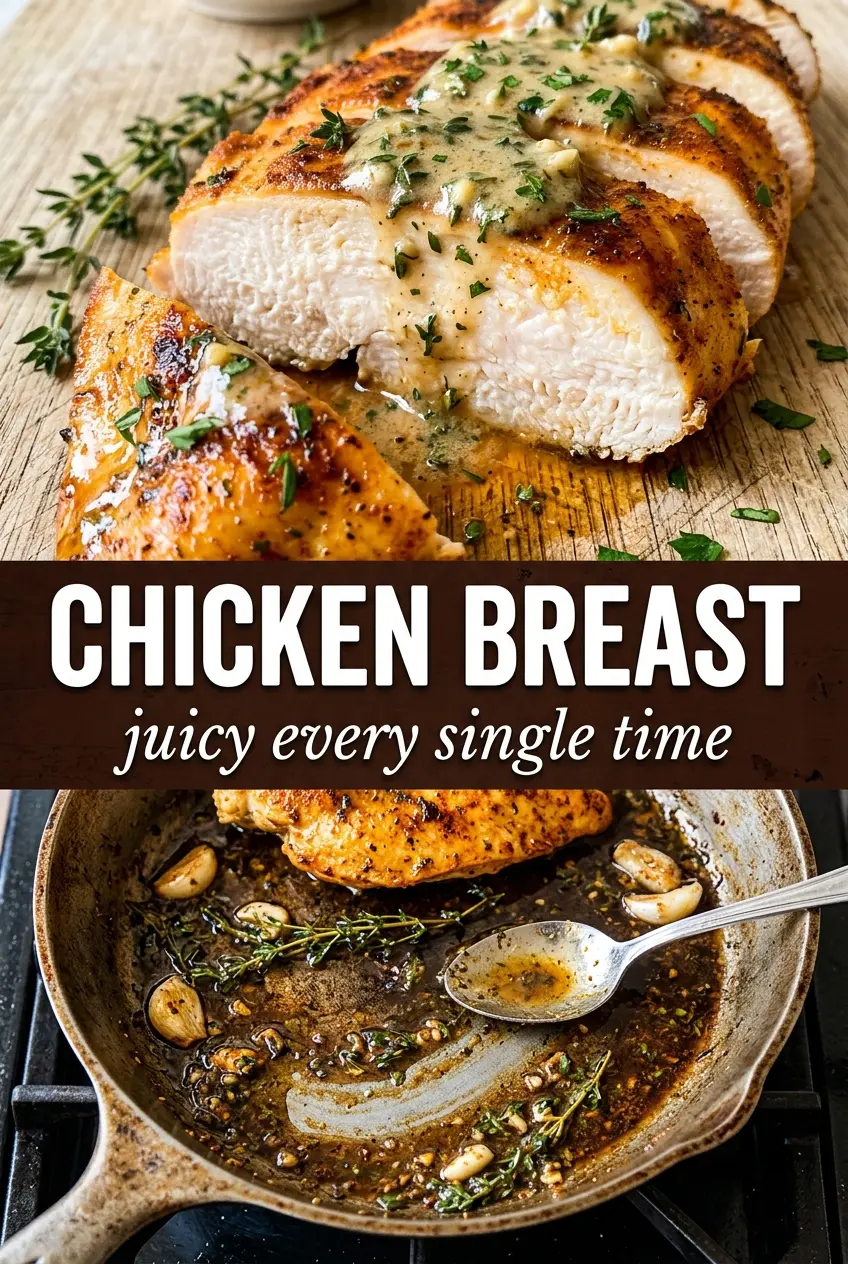
Juicy Herb-Butter Chicken Breast
Ingredients
Equipment
Method
- Pound the boneless skinless chicken breasts to an even thickness, then season with paprika, dried thyme, salt, and pepper.
- Let the seasoned chicken sit briefly while you heat the skillet so seasoning can start to adhere.
- Heat the olive oil in a large skillet over medium-high heat until shimmering.
- Place the chicken in the skillet and sear 6–7 minutes per side until golden and cooked through to 165°F internal, without moving it during searing.
- Reduce heat and add the unsalted butter and minced garlic, then baste the chicken with garlic butter for 2 minutes.
- Rest the chicken 5 minutes before slicing so juices redistribute, then serve with pan drippings and lemon wedges.
- Finish with fresh parsley for serving.