
Meatball soup is the kind of dinner that settles into the bowl with a deep, steady kind of comfort. The broth turns rich and savory as the meatballs poach, the vegetables soften just enough to sweeten the base, and the pasta gives every spoonful a little more body. It’s hearty without feeling heavy, and the tomato broth has that ruby color that makes the whole pot look like it’s been simmering for hours.
What makes this version work is the order. The meatballs go in small and uniform so they cook through gently instead of breaking apart or turning tough. The pasta waits until the end, which keeps it from swelling into soft little starch bombs while the soup sits. Those details matter here because a soup like this can go wrong fast if the meatballs are too big or the noodles spend too long in the broth.
Below you’ll find the timing that keeps everything tender, the one substitution that works without wrecking the texture, and a few useful ways to adapt the pot for different diets or leftovers. It’s the kind of recipe that earns its keep on a weeknight and still feels worth serving on a Sunday.
The meatballs stayed tender and the broth picked up so much flavor while they simmered. I added the pasta at the end like suggested and it was still perfect the next day, which never happens with my soup recipes.
Save this meatball soup for the nights when you want tender meatballs, a rich tomato broth, and one pot that tastes even better tomorrow.
The Small Meatballs That Stay Tender in the Broth
The biggest mistake with soup meatballs is treating them like dinner-plate meatballs. Bigger ones take longer to cook and are more likely to tighten up before the center is done. Small, evenly rolled meatballs cook through quickly in the simmering broth, and the gentle poach keeps the texture soft instead of springy.
The other thing that matters is handling. Mix the meat just until everything comes together. If you work it like bread dough, the meatballs get dense. The breadcrumbs and egg are there to hold them together, not to turn them into a firm sausage texture.
Let the soup stay at a steady simmer, not a rolling boil. Hard boiling can knock the meatballs apart and cloud the broth before the flavors have a chance to settle.
What Each Ingredient Is Actually Doing in This Soup

- Ground beef — This is the backbone of the meatballs and the broth’s savory depth. An 80/20 blend works well because it stays juicy without making the soup greasy. Leaner beef works too, but the meatballs will be a little firmer.
- Breadcrumbs and egg — These bind the meatballs so they hold together in the broth. If you need a gluten-free swap, use gluten-free breadcrumbs or crushed gluten-free crackers in the same amount.
- Parmesan — Adds saltiness and a little aged, nutty flavor that rounds out the meat mixture. The shelf-stable grated kind works in a pinch, but freshly grated gives a cleaner taste.
- Onion, carrots, and celery — This is the soup’s base layer. Cook them until the onion turns translucent and the carrots start to soften; that’s when the pot stops tasting raw and starts tasting like soup.
- Beef broth — Use the best broth you can manage because it carries the whole dish. If yours is bland, add a small extra pinch of salt at the end rather than over-reducing the soup early.
- Diced tomatoes — These bring the ruby-red color and the tomato backbone that makes the broth taste full instead of thin. Fire-roasted tomatoes will add a little smokiness if you want a deeper finish.
- Small pasta — Tiny shapes work best because they cook fast and fit on a spoon with the meatballs. Add them only near the end so they stay al dente instead of swelling into mush.
Building the Pot So the Broth Stays Clear and the Meatballs Stay Intact
Mixing the Meatballs Without Overworking Them
Combine the beef, breadcrumbs, egg, garlic, and Parmesan until the mixture just comes together. It should hold its shape when rolled, but it shouldn’t look pasty or compacted. Roll them into small, even balls with damp hands so they don’t stick to your palms. If the mixture feels too loose, let it sit for a few minutes so the breadcrumbs hydrate before you panic and add more.
Softening the Vegetables First
Heat the olive oil in a large pot and cook the onion, carrots, and celery until the onion softens and the vegetables start to smell sweet. That step builds the background flavor the broth needs. If you rush it and move straight to the broth, the soup tastes flatter and the carrot pieces can stay a little firm. A few extra minutes here pays off in the finished bowl.
Simmering the Meatballs Gently
Add the broth and tomatoes, then bring the pot to a calm simmer before the meatballs go in. Drop them in one by one and don’t stir aggressively; a spoon can break them before they set. Give them 12 to 15 minutes, and look for meatballs that are firm on the outside but still tender when pressed. A rolling boil is the fast way to cloudy broth and tough meatballs.
Adding the Pasta at the End
Stir in the pasta only when the meatballs are cooked through. The pasta should move through the broth freely and still have a little bite when you taste it. If you add it too early, it keeps drinking liquid and turns the soup starchy and thick in a dull way. Pull the pot from the heat as soon as the pasta hits al dente if you’re planning leftovers.
Three Smart Ways to Adapt Meatball Soup
Gluten-Free Meatball Soup
Use gluten-free breadcrumbs in the meatballs and swap the pasta for a gluten-free small shape. Gluten-free pasta can soften faster, so start tasting a minute or two early. The soup still tastes rich and complete; it just needs a little more attention near the finish.
Dairy-Free Version
Leave out the Parmesan and add a small pinch more salt plus a little extra garlic. You lose some nuttiness, but the broth still carries plenty of savory depth from the beef and tomatoes. If you want a little more roundness, stir in a teaspoon of tomato paste with the vegetables.
Make It Heartier With Beans Instead of Pasta
Skip the pasta and add a can of drained white beans near the end. That keeps the soup a little lighter while still giving it enough substance to eat as a full meal. Beans hold up in leftovers better than pasta, so this is the best move if you know the pot won’t be empty tonight.
Storage and Reheating
- Refrigerator: Store for up to 3 days. The pasta will keep absorbing broth, so expect the soup to thicken a bit.
- Freezer: It freezes better without the pasta. Freeze the soup base, then cook fresh pasta when you reheat it.
- Reheating: Warm it slowly over medium-low heat and add a splash of broth if needed. Don’t boil it hard or the meatballs can tighten and the pasta can turn soft.
Answers to the Questions Worth Asking
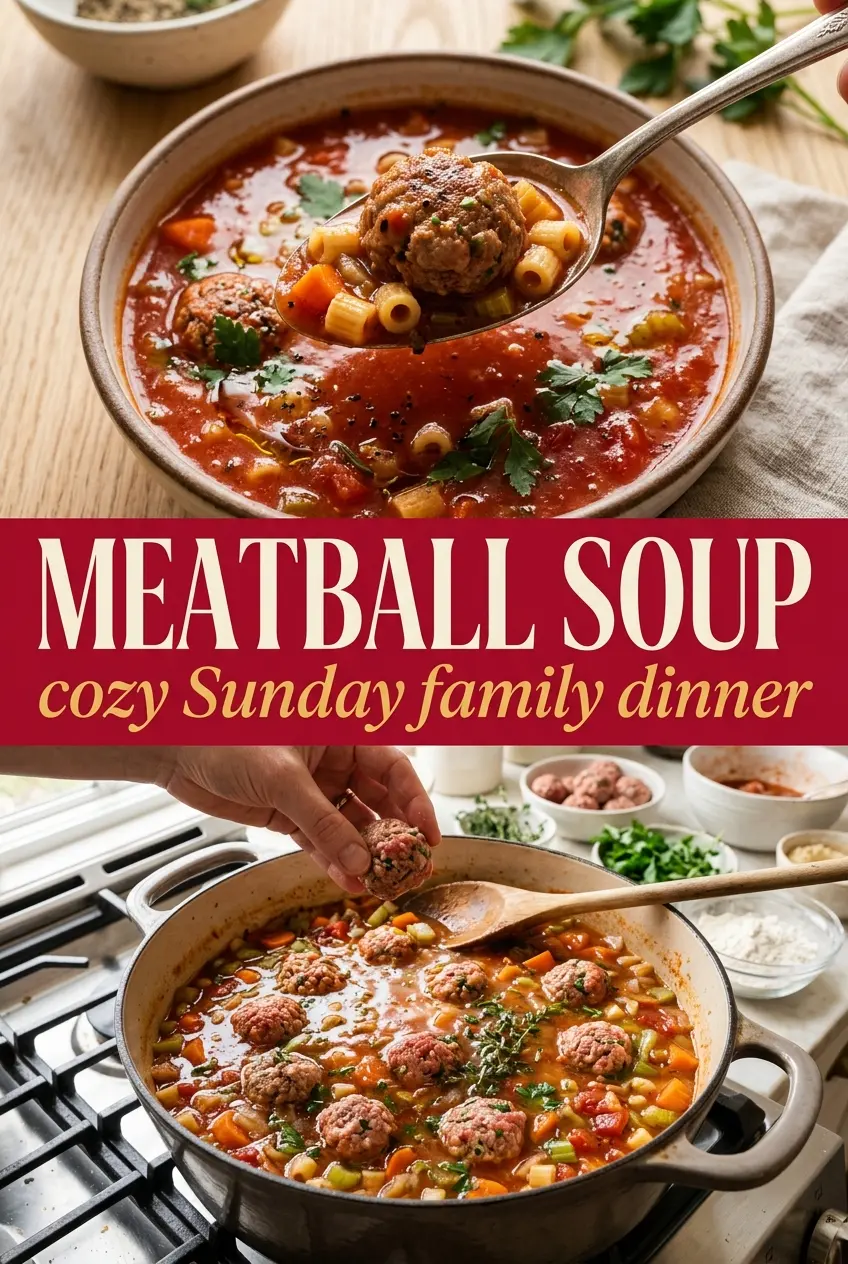
Meatball Soup
Ingredients
Equipment
Method
- In a bowl, combine ground beef, breadcrumbs, egg, minced garlic, and grated Parmesan, then mix until just combined. Roll into small, uniform meatballs so they cook evenly in the broth.
- Heat the olive oil in a Dutch oven over medium heat and add the chopped onion, diced carrots, and diced celery. Sauté for 6-8 minutes, stirring, until softened and fragrant.
- Add the beef broth and diced tomatoes to the pot. Bring to a simmer over medium-high heat, with steady small bubbles breaking at the edges.
- Gently drop the meatballs into the simmering broth in a single layer as much as possible. Cook for 12-15 minutes, keeping the liquid at a gentle simmer.
- Add the small pasta to the pot and stir so it isn’t stuck on the bottom. Cook for 8-10 minutes until al dente, with the pasta still holding its shape.
- Season with salt and pepper to taste, then stir once more to distribute evenly. Garnish with fresh parsley before serving and serve hot.