
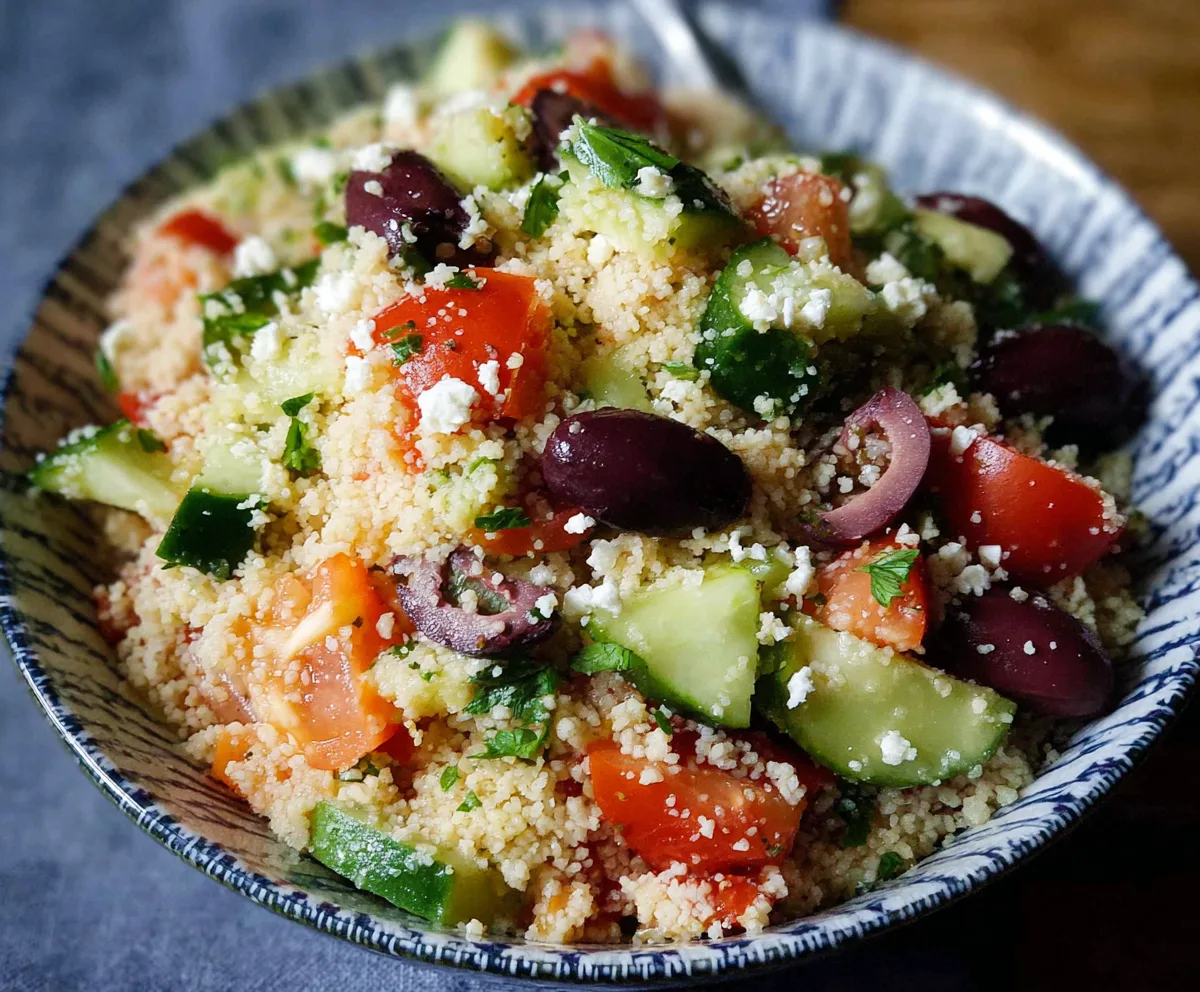
Mediterranean Couscous Salad is a bright and colorful dish packed with fluffy couscous, fresh veggies like cucumber and cherry tomatoes, and a handful of tangy olives and feta cheese. It’s a perfect mix of textures and flavors that feels light yet filling. The herbs and a zesty lemon dressing bring everything together with a fresh, vibrant taste.
I love making this salad when I want something quick but still impressive to bring to a picnic or a casual dinner. What makes it special to me is how easy it is to customize—sometimes I toss in some chickpeas for extra protein or sprinkle a bit of mint for a cool twist. It’s a dish that feels both familiar and exciting every time I make it.
My favorite way to enjoy this Mediterranean Couscous Salad is chilled right out of the fridge, especially on warm days. It’s great as a side to grilled chicken or fish, or even just on its own for a light lunch. Plus, it keeps well for a couple of days, so it’s a handy recipe to have when you want something tasty ready to go.
Key Ingredients & Substitutions
Couscous: This tiny pasta is the base, soaking up all the dressing flavors. If you’d like, try quinoa or bulgur for a gluten-free or nuttier option. Just adjust cooking times accordingly.
Cherry Tomatoes: Sweet and juicy, they add great color and freshness. Grape tomatoes work well too. If fresh tomatoes aren’t available, sun-dried tomatoes can offer a tangy twist.
Cucumber: Provides a cool crunch. English cucumbers are my favorite because they have fewer seeds and a thinner skin. You can peel regular cucumbers if you prefer.
Kalamata Olives: Their rich, briny flavor makes the salad pop. If those aren’t at hand, regular black olives or green olives with pimentos can be good substitutes.
Feta Cheese: Crumbled feta adds a creamy, salty touch. For a dairy-free version, try a vegan feta or omit it altogether and increase the olives a bit.
Fresh Herbs: Parsley and mint brighten the salad. If you don’t have fresh, dried herbs can work in a pinch, but use them sparingly. Fresh is always best for this salad’s lively taste.
How Do You Get Fluffy, Separated Couscous Every Time?
The key to perfect couscous is in how you cook and fluff it:
- Pour boiling water or broth over the couscous and cover immediately to trap steam.
- Let it sit undisturbed for about 5 minutes to absorb all the liquid fully.
- Use a fork to fluff gently—don’t stir vigorously or press down, or it can get mushy.
- Let it cool to room temperature before mixing with the dressing and other ingredients to keep it light and fluffy.
Taking these steps helps each couscous grain stay separate and airy, making your salad look and taste fresh.
Equipment You’ll Need
- Large mixing bowl – I like this because it gives plenty of space to toss everything together without spilling.
- Medium saucepan – used to cook the couscous; it’s small but just right for boiling water and preparing grains.
- Whisk or fork – handy for mixing the dressing to make it smooth and well combined.
- Measuring cups and spoons – keep things accurate, especially with the olive oil and lemon juice.
- Chopping knife and cutting board – for preparing the vegetables and herbs, which makes all the flavors easier to blend.
Flavor Variations & Add-Ins
- Replace feta with goat cheese or vegan cheese for different creamy textures and flavors.
- Add grilled chicken, shrimp, or chickpeas to turn it into a more filling main dish.
- Mix in roasted vegetables like bell peppers, zucchini, or eggplant for extra depth and texture.
- Sprinkle with paprika, cumin, or oregano to give it more of a Mediterranean or spicy kick.
How to Make Mediterranean Couscous Salad
Ingredients You’ll Need:
Main Ingredients:
- 1 cup couscous
- 1 cup boiling water or vegetable broth
- 1 cup cherry tomatoes, halved
- 1 medium cucumber, diced
- ¼ cup red onion, finely chopped
- ½ cup Kalamata olives, pitted and halved
- ¼ cup crumbled feta cheese
- ¼ cup fresh parsley, chopped
- ¼ cup fresh mint, chopped (optional)
For the Dressing:
- 3 tablespoons olive oil
- 2 tablespoons fresh lemon juice
- 1 garlic clove, minced
- Salt and pepper, to taste
Time You’ll Need
This salad takes about 10 minutes to prepare and 5 minutes for the couscous to soak. For best flavor, chill it for at least 30 minutes before serving. Total time is approximately 45 minutes including chilling.
Step-by-Step Instructions:
1. Cook and Prepare Couscous:
Put 1 cup couscous in a large bowl. Pour 1 cup of boiling water or vegetable broth over it. Cover the bowl with a plate or plastic wrap and let it sit for about 5 minutes until all the liquid is absorbed. Then, fluff the couscous with a fork to separate the grains. Let it cool to room temperature.
2. Prepare the Vegetables:
While the couscous cools, halve the cherry tomatoes, dice the cucumber, finely chop the red onion, and halve the Kalamata olives. Chop the parsley and mint if you’re using it.
3. Make the Dressing:
In a small bowl, whisk together olive oil, fresh lemon juice, minced garlic, salt, and pepper until combined nicely.
4. Combine and Toss Salad:
Add the cooled couscous, vegetables, olives, crumbled feta cheese, and chopped herbs into a large bowl. Pour the dressing over the top and toss gently to mix everything evenly.
5. Chill and Serve:
Season with extra salt and pepper if needed. Refrigerate the salad for at least 30 minutes to allow flavors to blend. Serve cold or at room temperature as a fresh side dish or a tasty light meal.
Can I Use Instant Couscous for This Salad?
Yes! Instant couscous works perfectly since it cooks quickly by simply soaking in hot water. Just follow the instructions on the package and fluff it well before mixing with the other ingredients.
How Long Can I Store This Salad?
Store the salad in an airtight container in the refrigerator for up to 3 days. The flavors actually improve after chilling, but the cucumbers and tomatoes are best fresh, so add extra if you want more crunch when serving later.
Can I Make This Salad Vegan?
Absolutely! Omit the feta cheese or substitute it with a vegan cheese alternative or toasted nuts for extra texture and flavor. The olives and dressing keep it flavorful and satisfying.
What Can I Substitute for Kalamata Olives?
If you don’t have Kalamata olives, black olives or green olives with pimentos make good alternatives. They provide that briny tang essential to the Mediterranean flavor profile.