
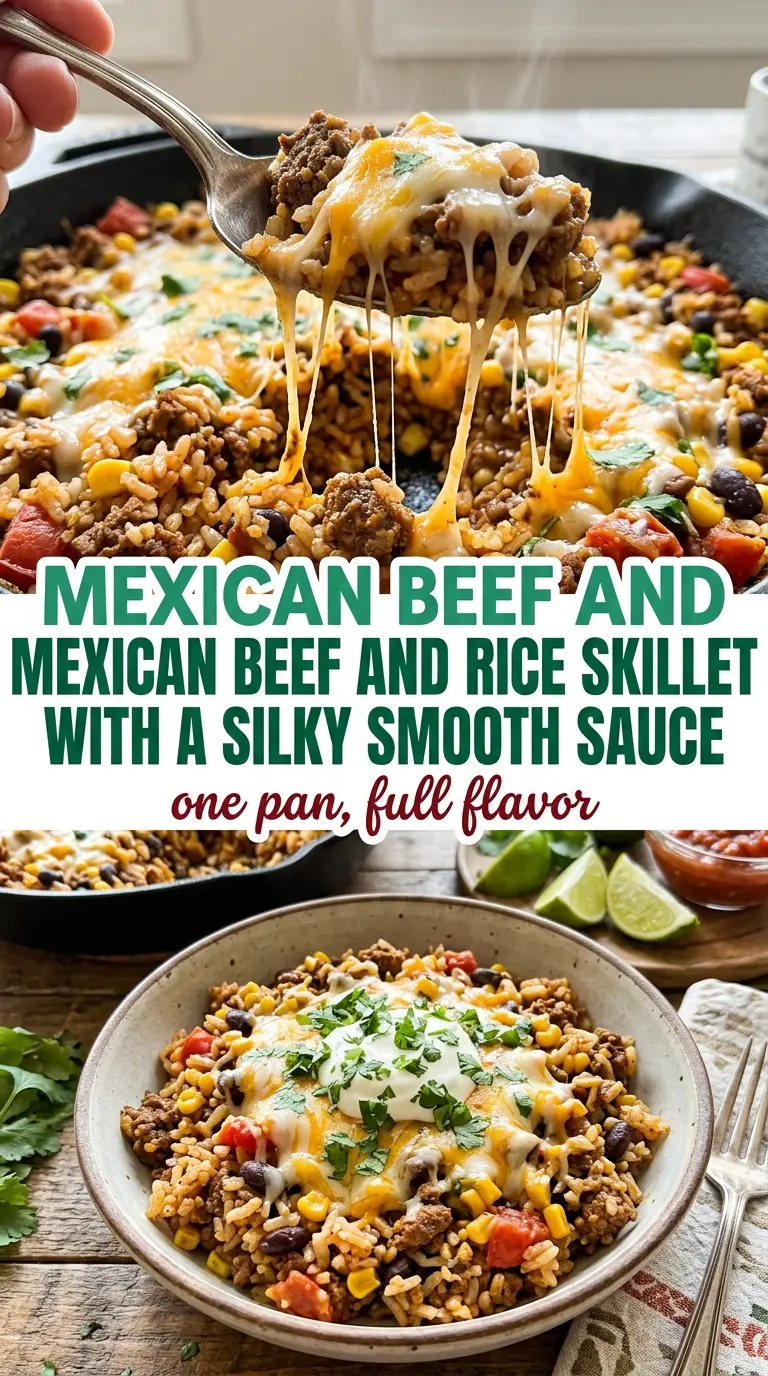
Mexican beef and rice skillet lands in that sweet spot between cozy and efficient: one pan, hearty beef, tender rice, and enough seasoning to make the whole thing taste like it cooked much longer than it did. The best versions don’t leave the rice bland on the bottom and the beef seasoned only on the surface. They build flavor in layers, then let the rice absorb the broth and tomatoes until every bite tastes round and complete.
The trick is using just enough liquid for the rice to cook without turning the skillet soupy. Brown the beef with the onion and bell pepper first so the vegetables soften and the meat picks up some color before the seasoning goes in. Once the broth and tomatoes hit the pan, the lid stays on. That trapped steam is what gives you fluffy rice instead of a scorched mess.
Below, I’ll walk through the part that matters most: how to keep the rice tender, not mushy, and how to finish the skillet so the cheese melts into a proper blanket instead of disappearing into the pan.
The rice came out fluffy and every bite had that smoky taco seasoning flavor — I also loved that the cheese melted right on top without getting greasy.
Save this Mexican beef and rice skillet for the nights when you want one pan, bold taco flavor, and tender rice without extra cleanup.
The Rice Needs Steam, Not Guesswork
The most common mistake with skillet rice is lifting the lid too often. Each time you do, steam escapes and the rice cooks unevenly, which leaves some grains soft and others still tight in the center. The covered simmer is doing the real work here, and the pan should stay at a gentle bubble, not a hard boil. If the heat is too high, the bottom can catch before the rice has a chance to absorb the liquid.
The other thing that matters is the balance between tomato and broth. Too little liquid leaves the rice undercooked and chalky. Too much makes the skillet loose and heavy. This recipe relies on the tomatoes and broth together so the rice cooks in seasoned liquid instead of plain water, which is why the flavor reaches all the way through the pan.
- Browned beef — This gives the skillet its savory base. If you rush it and only gray the meat, the finished dish tastes flatter. Let the beef get some color before moving on.
- Rice — Long-grain white rice works best because it stays separate and fluffy. Instant rice changes the timing and can turn soft; brown rice needs a different liquid ratio and a much longer cook.
- Taco seasoning — A packet keeps the seasoning balanced and easy. If you use homemade, add enough salt, cumin, chili powder, and garlic powder to season the whole pan, not just the meat.
- Diced tomatoes — The juice from the can is part of the cooking liquid, so don’t drain them. They add acidity and keep the skillet from tasting one-note.
What Each Ingredient Is Doing in This Skillet
The onion and bell pepper are there for more than color. They soften into the beef and help the skillet taste layered instead of just meaty. Dice them fairly small so they cook through during the browning stage and disappear into the finished dish instead of staying crunchy.
Beef broth does the heavy lifting for moisture and depth. You can use chicken broth in a pinch, but the flavor will come out a little lighter. The cheese goes on at the very end so it melts into a soft top layer instead of sinking and disappearing into the rice. A mild cheddar, Monterey Jack, or a blend all work well here. Fresh cilantro is worth using if you like it; it wakes up the whole skillet and cuts through the richness.
Building the Skillet So the Rice Cooks Evenly
Getting Color on the Beef First
Start with a hot skillet and let the ground beef sit undisturbed long enough to brown before you stir it apart too much. That browning gives you the deep, savory flavor that keeps the dish from tasting like seasoned rice with meat mixed in. Add the onion and bell pepper early enough for them to soften, but don’t cook them until they collapse completely or they’ll vanish into the final dish. If there’s a lot of grease in the pan after browning, spoon off some of it so the finished skillet doesn’t feel heavy.
Letting the Rice Simmer Undisturbed
Once the rice, tomatoes, broth, and seasoning are in the pan, bring it to a simmer and then cover it immediately. The goal is a gentle cook where the liquid slowly disappears into the grains. If you see the liquid boiling aggressively, lower the heat. Stirring during this stage breaks the rice and releases starch, which can make the whole skillet gluey instead of fluffy.
Melting the Cheese Without Overcooking the Rice
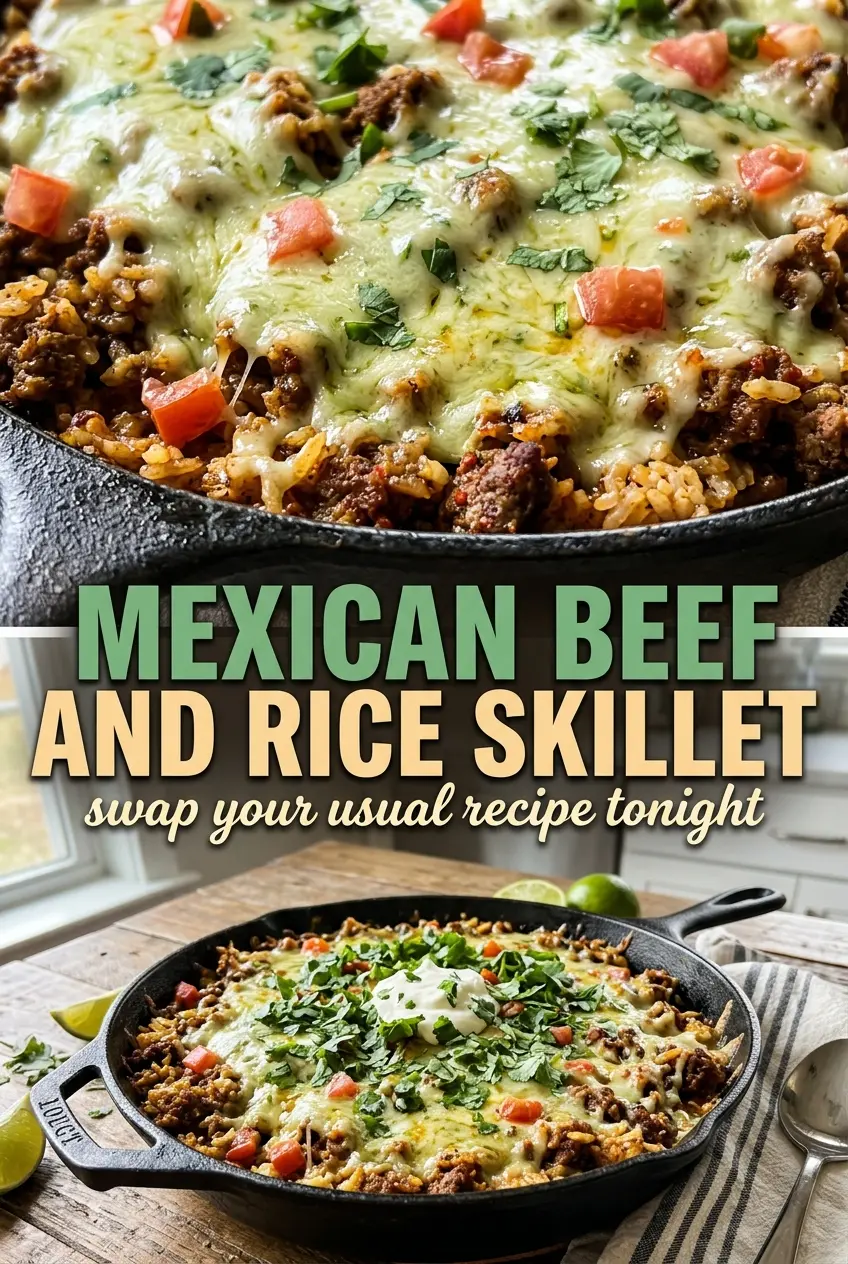
When the rice is tender and the liquid is absorbed, scatter the cheese over the top and put the lid back on for a couple of minutes. The residual heat is enough to melt it cleanly. If you leave the pan over high heat at this point, the bottom can scorch while the cheese gets oily on top. The skillet is done when the cheese is melted, the rice is tender, and the mixture holds together in soft scoops.
What to Change When You Need a Different Version
Make It Dairy-Free
Skip the cheese or finish with a dairy-free shredded cheese that melts well. The skillet will still have plenty of flavor from the beef, tomatoes, and seasoning, but you’ll lose the creamy, stretchy top layer. If you omit the cheese entirely, add a small squeeze of lime at the end to brighten the dish.
Swap in Ground Turkey
Ground turkey works well if you want a lighter skillet, but it needs a little extra help because it’s leaner than beef. Add a teaspoon of oil to the pan and don’t skip browning, or the finished dish can taste dry. The seasoning and cheese become even more important here because they carry most of the flavor.
Make It Gluten-Free
This recipe is naturally close to gluten-free, but the taco seasoning and broth are the places to check. Use a seasoning packet and broth labeled gluten-free, and you’re set. The texture stays the same, so this is one of the easiest swaps to make without changing the dish.
Stretch It for a Bigger Crowd
You can add a drained can of black beans or corn to bulk it up without changing the cooking method much. The skillet will feed more people, but it may need an extra splash of broth if the rice looks dry near the end. Add those extra ingredients early enough for them to heat through and pick up the taco seasoning.
Storage and Reheating
- Refrigerator: Store leftovers in an airtight container for up to 4 days. The rice firms up a little as it sits, but the flavor stays good.
- Freezer: It freezes fairly well for up to 2 months. Let it cool completely, portion it into freezer-safe containers, and expect the rice to soften a bit after thawing.
- Reheating: Reheat gently on the stove or in the microwave with a splash of broth or water. The common mistake is blasting it dry, which makes the rice tight and the beef grainy.
Questions I Get Asked About This Recipe
Mexican Beef And Rice Skillet
Ingredients
Equipment
Method
- Heat a large skillet over medium-high heat and brown the ground beef with the diced onion and diced bell pepper, stirring often, until the beef is no longer pink.
- Add the taco seasoning to the skillet and stir for 30 seconds until fragrant and evenly coated over the beef mixture.
- Stir in the rice, diced tomatoes, and beef broth, scraping up any browned bits from the bottom of the skillet.
- Bring the mixture to a simmer, then cover with a lid and cook 18-20 minutes over a gentle simmer until the rice is tender.
- Keep the lid on while the rice simmers so the liquid absorbs evenly.
- Sprinkle the shredded cheese over the top, cover, and let it melt until glossy and fully melted.
- Garnish with fresh cilantro and serve warm directly from the skillet.