
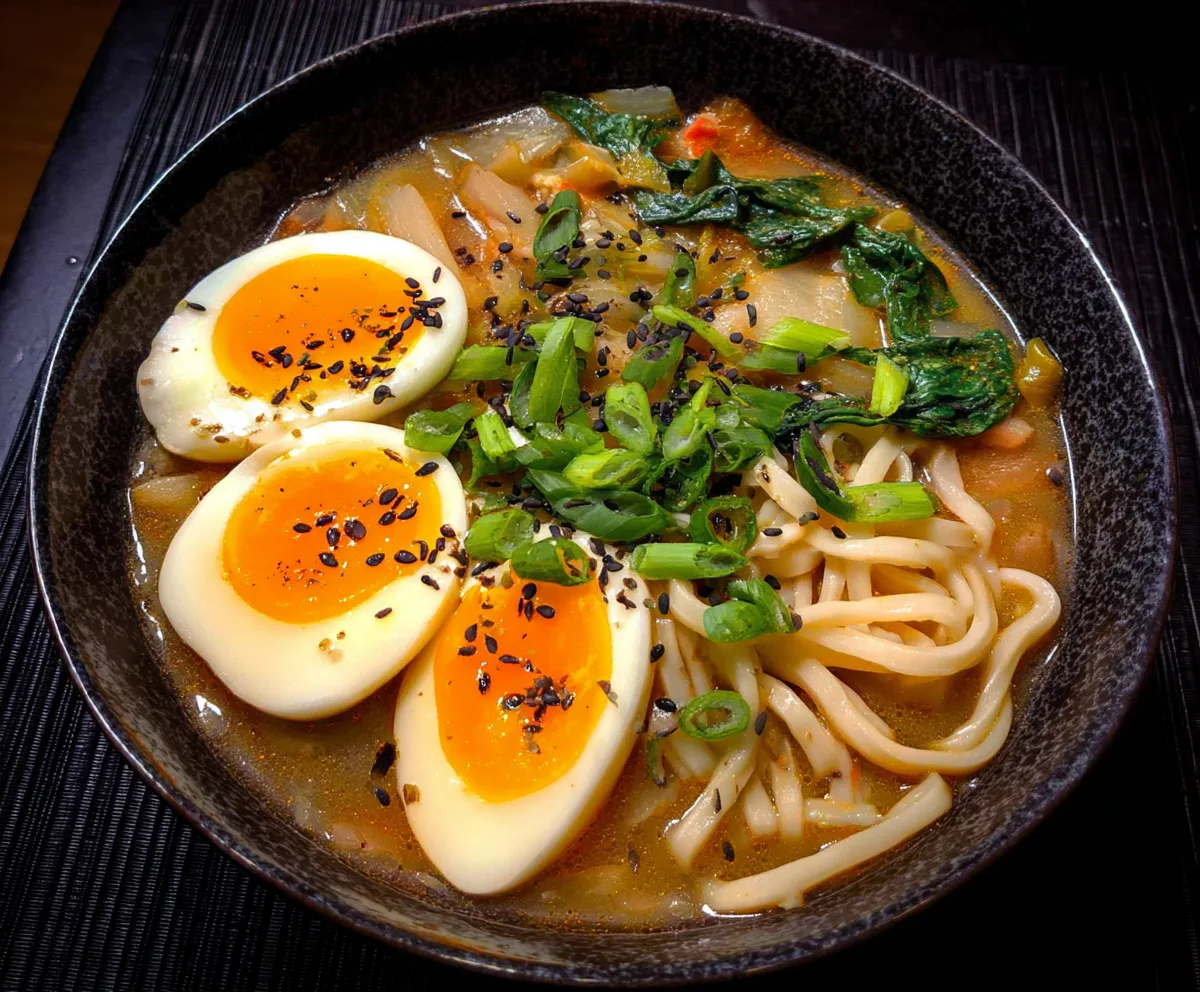
Miso Ramen with Soft Boiled Egg is a warm, comforting bowl of noodles swimming in rich, flavorful miso broth. The broth is full of deep umami notes, while the soft boiled egg adds a creamy, melt-in-your-mouth texture that makes every bite extra special. You’ll also find tender noodles and fresh veggies that add just the right bit of crunch and color.
I love making this ramen when I need something cozy but still satisfying. The soft boiled egg is my favorite part—I always aim for that perfect jammy yolk that blends beautifully into the broth. A quick tip: gently crack the egg before adding it to the soup so it warms up just right without getting overcooked.
This miso ramen is perfect for chilly days or whenever you want a bowl that feels both nourishing and a little fancy. I like to serve it with a sprinkle of green onions and a dash of chili flakes for a little kick. Every spoonful feels like a big hug from the inside!
Key Ingredients & Substitutions
Miso Paste: This is the heart of the soup’s flavor. Red miso is stronger and saltier, while white miso is milder and sweeter. If you can’t find miso, try adding a bit of soy sauce or tahini for umami, but miso is best.
Broth: Chicken broth lends richness, but vegetable broth works well for a vegetarian option. You can also use mushroom broth for extra depth if available.
Noodles: Fresh ramen noodles are ideal for their soft, chewy texture. If you can’t get them, udon or even spaghetti pasta can work in a pinch. Just adjust the cooking time to avoid mushy noodles.
Eggs: Soft boiled eggs with that jammy yolk are a must. If you’re short on time, you can poach eggs, but they won’t have the same creamy texture inside.
Vegetables: Carrots and spinach are great for color and nutrition. Feel free to swap in mushrooms, bok choy, or bean sprouts depending on what you like or have on hand.
How Do I Get the Perfect Soft Boiled Egg Every Time?
Getting that jammy yolk is all about timing and quick cooling. Here’s how I do it:
- Bring water to a rolling boil.
- Gently lower cold eggs into boiling water.
- Set a timer for 6-7 minutes depending on how runny you like the yolk.
- As soon as time’s up, transfer eggs to a bowl of ice water to stop cooking. Let them chill for at least 5 minutes.
- Peel carefully, starting from the wider end where the air pocket is.
This quick chill prevents overcooking and helps peel the eggs easily. Don’t skip that step for the best texture!
Equipment You’ll Need
- Large pot – I use this to cook the eggs and simmer the broth. It’s sturdy and easy to handle.
- Small saucepan – Perfect for boiling eggs separately to control timing.
- Strainer – Helps drain noodles without breaking them and makes cleanup easier.
- Ice water bowl – To chill the eggs quickly and stop the cooking process.
- Cutting board and sharp knife – To slice carrots and chop green onions easily.
- Soup ladle – For serving the hot broth smoothly into bowls.
Flavor Variations & Add-Ins
- Boost spice: Add a splash of chili oil or chopped fresh chili for heat.
- Change protein: Include sliced cooked chicken, tofu, or shrimp for extra protein.
- Upgrade veggies: Swap spinach for kale, bamboo shoots, or bean sprouts for more crunch.
- Different miso: Mix red and white miso for a balanced flavor or add a teaspoon of fermented soybean paste for richness.
Miso Ramen with Soft Boiled Egg
Ingredients You’ll Need:
For the Broth and Soup:
- 4 cups chicken or vegetable broth
- 3 tbsp miso paste (red or white)
- 2 tsp soy sauce
- 1 tsp sesame oil
For the Noodles and Vegetables:
- 2 servings fresh ramen or udon noodles
- 1 medium carrot, sliced into thin sticks
- 1 cup fresh spinach or bok choy leaves
For the Topping:
- 2 large eggs
- 2 green onions, chopped (for garnish)
- Fresh ground black pepper, to taste
- Optional: chili flakes or sesame seeds for garnish
How Much Time Will You Need?
This recipe takes about 20 minutes from start to finish. You’ll use some time to boil and cool eggs perfectly, cook the noodles, simmer the flavorful broth with veggies, and assemble everything into a comforting bowl of miso ramen.
Step-by-Step Instructions:
1. Prepare the Soft Boiled Eggs:
Bring a pot of water to a rolling boil. Gently lower the eggs into the boiling water and cook for 6-7 minutes for a soft, jammy yolk. Remove the eggs and place them immediately into a bowl of ice water. This stops the cooking and makes them easy to peel. Once cool, peel the eggs and set aside.
2. Cook the Noodles:
Cook the fresh ramen or udon noodles according to the package instructions. When done, drain them well and set aside.
3. Make the Broth:
In a pot, bring your chicken or vegetable broth to a gentle simmer. Whisk in the miso paste until fully dissolved. Add soy sauce and sesame oil, then taste and adjust the seasoning as needed.
4. Add Vegetables:
Add the thinly sliced carrots to the simmering broth and cook for 3-4 minutes until just tender. Then stir in the spinach or bok choy leaves and cook for another 1-2 minutes, just until wilted and bright green.
5. Assemble Your Bowl:
Divide the cooked noodles into serving bowls. Ladle the hot miso broth with vegetables over the noodles.
6. Add the Soft Boiled Eggs:
Slice the peeled soft boiled eggs in half and gently place them on top of the ramen.
7. Garnish and Serve:
Sprinkle chopped green onions over the bowl, add freshly ground black pepper, and if you like a little spice, scatter some chili flakes or sesame seeds on top. Serve the miso ramen hot and enjoy!
Can I Use Frozen Noodles Instead of Fresh?
Yes, frozen noodles work well! Just be sure to thaw them according to package instructions before cooking to avoid clumping or uneven texture.
How Long Can I Store Leftover Miso Ramen?
Store leftovers in an airtight container in the fridge for up to 2 days. Reheat gently on the stove or microwave, adding a splash of broth or water to loosen the noodles if needed.
Can I Make the Broth in Advance?
Absolutely! The miso broth can be made a day ahead and refrigerated. Warm it up gently before adding noodles and veggies to keep everything fresh and vibrant.
What’s the Best Way to Peel Soft Boiled Eggs Easily?
Peel eggs starting from the wider end where the air pocket usually is, and do it under running water or in the ice water bath to help remove the shell smoothly without damaging the egg white.