
Silky, garlicky pasta with a glossy Parmesan sauce hits that sweet spot between fast and satisfying. The noodles cook right in the broth, so they give off starch as they soften, and that starch turns the cream into something that clings instead of sliding off the bowl. You get a one-pot dinner that tastes like it took a lot more effort than it did.
The trick here is timing. The garlic needs just enough heat to bloom in the butter without browning, and the pasta needs enough liquid to cook evenly while still reducing into a sauce. Once the cream and Parmesan go in, the heat stays gentle so the cheese melts smoothly instead of turning grainy. That small shift is what keeps this from becoming heavy or split.
Below, I’ll walk through the part that matters most: how to keep the pasta moving so it cooks evenly, how to judge when the sauce has reduced enough, and the one adjustment to make if it tightens up before dinner is on the table.
The pasta cooked right in the broth and the sauce turned out creamy without needing flour. I kept stirring like you said and it never stuck to the bottom.
Creamy garlic pasta that cooks in one pot and finishes with the glossiest Parmesan sauce.
The Reason This Pasta Stays Creamy Instead of Gummy
The biggest mistake with one-pot pasta is crowding the pan with too little liquid or boiling it too hard. In both cases, the noodles can grab at each other, and the starch turns pasty before the pasta has a chance to cook evenly. This version keeps enough broth in the pot for the pasta to move, then finishes with cream and Parmesan after the noodles are tender.
The other detail that matters is how you treat the cheese. Parmesan melts cleanest when the pan is off the hottest part of the burner and the sauce is already glossy from the starch in the pasta water and broth. If the sauce ever looks tight or a little dull, a splash of reserved broth brings it back fast.
What Each Ingredient Is Actually Doing in This Dish
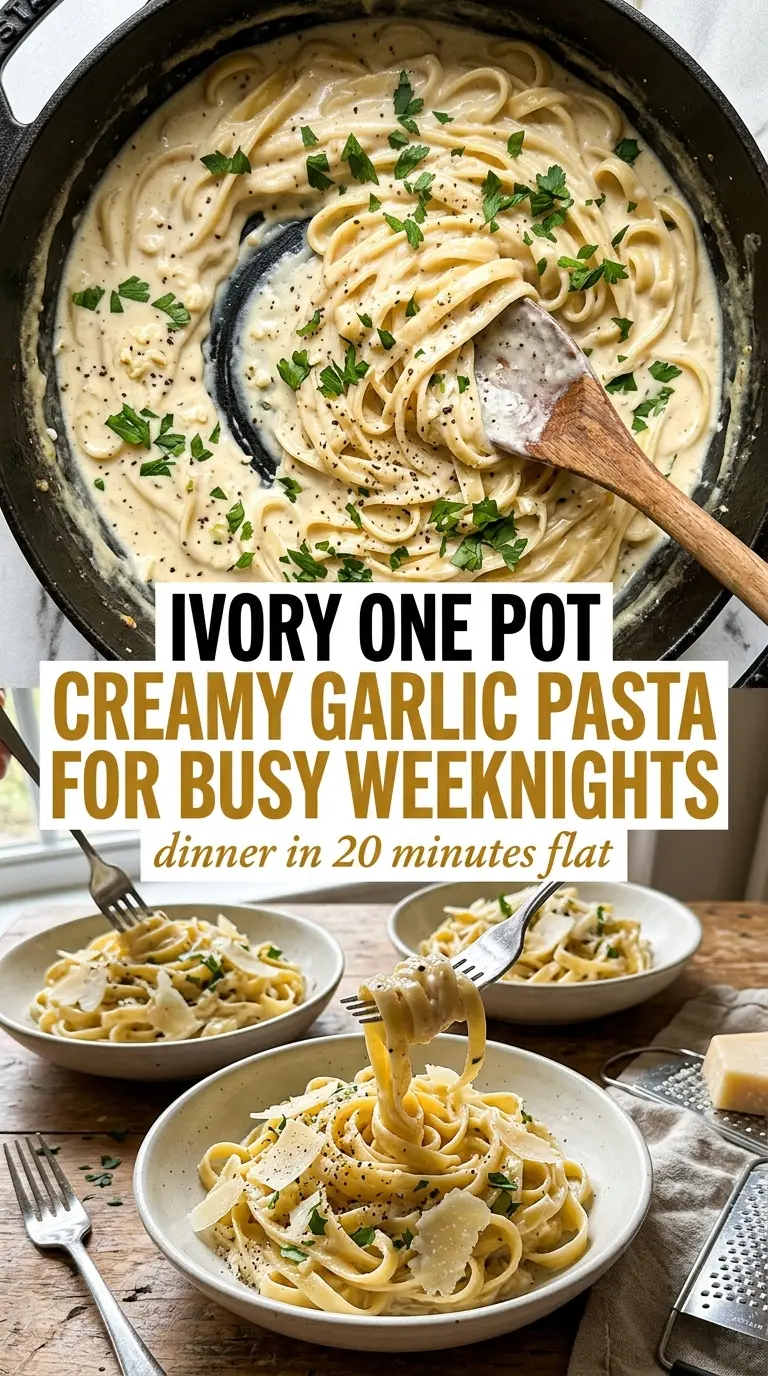
- Pasta — Fettuccine gives you long, silky strands, while penne catches more sauce inside the tube. Use a shape with enough surface area to hold the cream sauce; tiny pasta can get lost here.
- Broth — Chicken broth brings a little more depth, but vegetable broth works well if that’s what you have. Use low-sodium if possible so the Parmesan doesn’t push the dish into overly salty territory.
- Heavy cream — This is what gives the sauce its body at the end. Half-and-half can work in a pinch, but the sauce will be thinner and a little less stable once the heat goes on.
- Parmesan — Freshly grated Parmesan melts smoother than the pre-shredded stuff, which often contains anti-caking agents. If pre-grated is what you have, add it slowly and keep the heat low so it doesn’t clump.
- Butter and garlic — The butter carries the garlic flavor into the broth and keeps the sauce tasting round instead of flat. Let the garlic turn fragrant, not brown; browned garlic turns bitter fast in a mild cream sauce.
The 20 Minutes That Actually Matter
Blooming the Garlic
Melt the butter over medium heat, then stir in the garlic just until it smells sweet and nutty, about a minute. If the garlic starts taking on color, lower the heat right away; once it browns, that sharp edge carries through the whole pot. You want the butter scented with garlic, not flecked with toasted bits.
Cooking the Pasta in the Broth
Add the pasta and broth, then bring it to a boil before reducing the heat to a steady simmer. Stir every minute or so, especially around the bottom edges of the pot, because that’s where pasta likes to stick first. The liquid should stay moving with small bubbles, not churn aggressively, or the noodles will break before they soften evenly.
Finishing the Sauce
When the pasta is tender and most of the broth has been absorbed, stir in the cream and Parmesan. Keep the heat low here. If the sauce looks loose at first, give it a minute; it thickens as the cheese melts and the starch finishes working. If it gets too thick, loosen it with a splash of broth instead of more cream, which can weigh it down.
Seasoning and Serving
Stir in the red pepper flakes, then taste for salt and pepper after the cheese has melted. Parmesan already brings salt, so the last adjustment is usually a small one. Finish with chopped parsley for freshness and color, and serve it right away while the sauce is still glossy and fluid.
What to Change When You Need a Different Version
Dairy-Free Version
Use olive oil instead of butter, swap in unsweetened oat or cashew cream, and finish with a dairy-free Parmesan-style cheese. The sauce won’t have the exact same richness as heavy cream, but it still turns silky if you keep the heat low and add the cheese substitute at the end.
Gluten-Free Version
Use your favorite gluten-free pasta, but watch the simmer closely because some brands go from firm to soft fast. Add a little extra broth if needed, since gluten-free noodles often drink up more liquid before the sauce reaches the right texture.
Add Protein Without Changing the Sauce
Stir in shredded rotisserie chicken, seared shrimp, or sautéed mushrooms at the end. Add cooked protein after the sauce is finished so it warms through without overcooking the pasta or breaking the cream.
Make It Spicier
Increase the red pepper flakes or add a pinch of cayenne with the garlic. A little heat works well here because the cream softens it, but adding too much early can make the garlic taste harsh instead of balanced.
Storage and Reheating
- Refrigerator: Store leftovers in an airtight container for up to 3 days. The sauce thickens as it chills, so the pasta will look a little tighter the next day.
- Freezer: I don’t recommend freezing this one. Cream sauces can separate when thawed, and the pasta tends to turn soft and a little grainy.
- Reheating: Warm it gently on the stovetop or in the microwave with a splash of broth or milk. High heat is the mistake that breaks the sauce, so reheat slowly and stir once or twice as it loosens.
Answers to the Questions Worth Asking
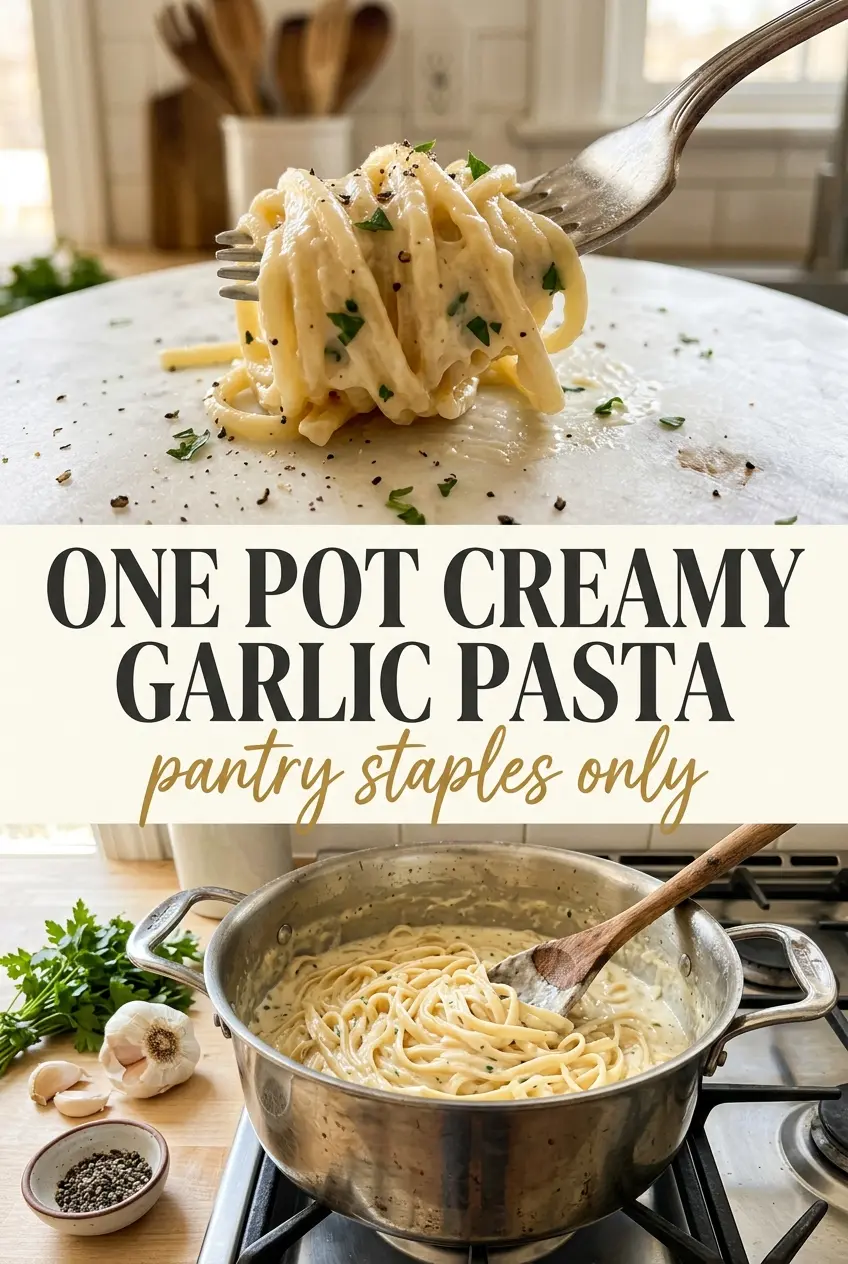
One Pot Creamy Garlic Pasta
Ingredients
Equipment
Method
- Melt the butter in a large Dutch oven over medium heat and sauté the garlic until fragrant, about 1 minute, stirring so it doesn’t brown.
- Add the pasta and broth, bring to a boil, and scrape any browned bits from the bottom for flavor.
- Reduce heat to a gentle simmer and cook, stirring occasionally, until the pasta is tender and most liquid is absorbed (about 10–12 minutes).
- Stir in the heavy cream and Parmesan until the sauce turns glossy and thick, about 1–2 minutes.
- Season with red pepper flakes, salt, and pepper, stirring until evenly distributed.
- Garnish with fresh parsley before serving, letting it sit for 1 minute so the color stays bright.