
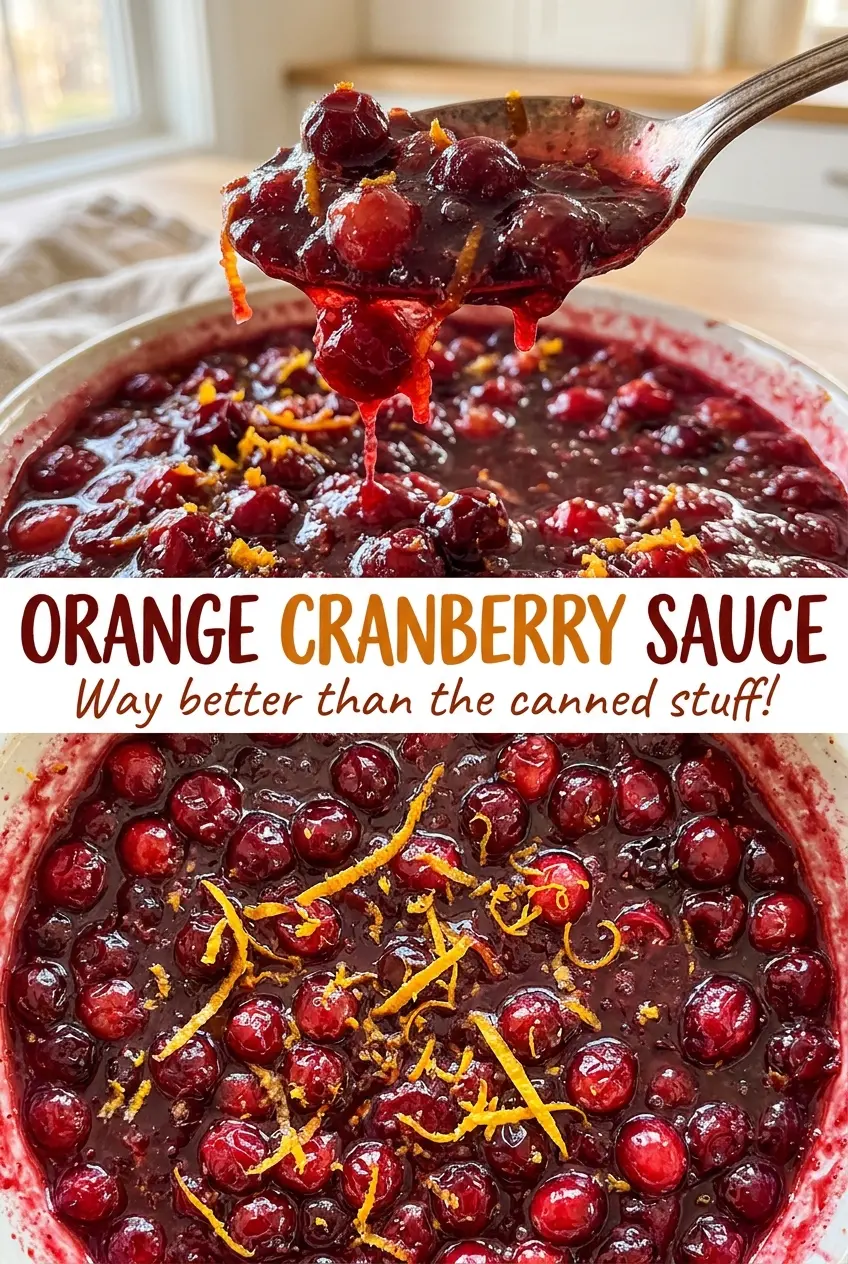
The first cranberry pops are sharp little snaps against the sides of the saucepan, and then the berries start collapsing into the orange liquid. I watch for that change as I stir; it tells me the sauce is moving from separate fruit and syrup toward the chunky, spoonable texture I want. This orange cranberry sauce has enough whole berries left to feel like it came from a pot on the stove, not a can.
Orange juice goes into the saucepan with the water and sugar, while finely grated zest joins the cranberries later. That gives the sauce citrus flavor in two ways without burying the tartness of the berries. I keep the simmer gentle and let the fruit do the work, then leave the sauce alone to cool until it thickens into a glossy, ruby-red spoonful.
Kitchen Note
Stir across the bottom of the pan every so often once the berries begin popping. The fruit thickens as it cooks, and an occasional scrape keeps it from catching while the berries soften.
Save this orange cranberry sauce for a bright, tart side with soft berries and a fresh citrus finish.
Why a Few Whole Berries Belong in the Sauce
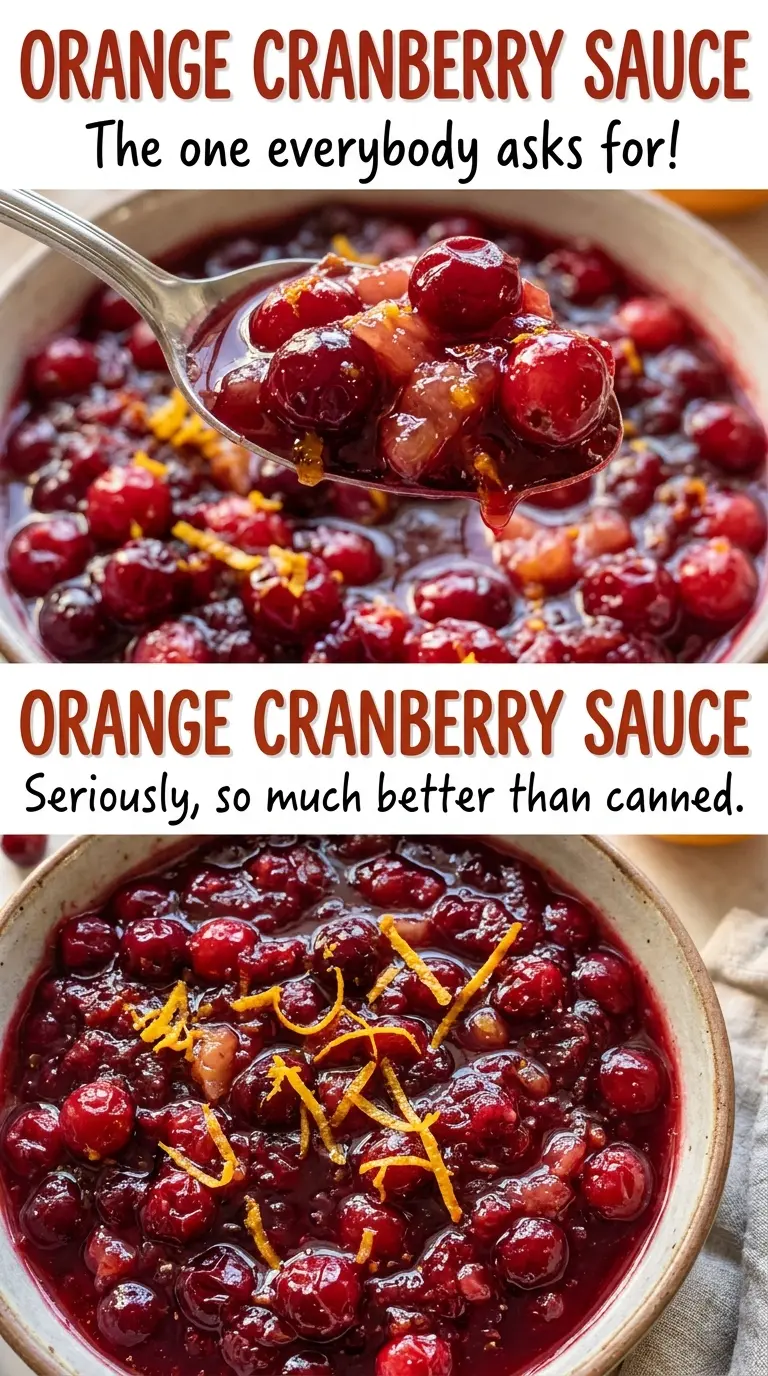
Homemade cranberry sauce doesn’t need to turn into a smooth puree to be ready. Cranberries soften and release their juices as they simmer, but the best texture here comes when most berries have burst and a few still hold their shape. Those softened berries make the sauce feel full and fruit-forward, while the broken ones give it body.
That distinction matters because it’s easy to keep cooking while waiting for every berry to disappear. Don’t. The sauce thickens as the fruit cooks, and the mixture will look looser in the pan than it does after cooling. If you push it until it looks like a firm spread over the heat, you can lose the contrast between tender whole berries and the thicker sauce around them. Stop when most have burst and the liquid has noticeably thickened.
The tart cranberry flavor is meant to remain present; the sugar and orange round it out rather than making this taste like candy. The result is a sauce that sits comfortably beside a rich meal but still has enough brightness to stand on its own.
The Orange Is Doing Two Different Jobs Here
- Fresh cranberries — Choose a firm bag with berries that are plump and brightly colored. Rinse them and pick through before cooking, removing any shriveled or damaged ones so they don’t affect the finished sauce. Frozen cranberries work too; I explain how to handle them in the FAQ.
- Orange juice — It adds liquid and a rounded citrus note to balance the berries. Fresh-squeezed or bottled 100% orange juice works; skip sweetened orange drinks, which can throw off the balance with extra sweetener.
- Finely grated orange zest — The zest carries the fragrant orange oils, which juice alone doesn’t provide. Grate only the colored outer peel; the white pith underneath tastes bitter. A fine grater also keeps the zest from leaving chewy strips in the sauce.
- Granulated sugar — It dissolves cleanly into the juice and water and balances the cranberries’ sharpness. Standard granulated sugar is the right choice here; coarser crystals take longer to dissolve and may leave a less even sweetness.
- Water — Water keeps the orange flavor from overwhelming the berries while giving the sugar a liquid base to dissolve into. It doesn’t need to be filtered or special.
Build the Orange Syrup Before the Berries Go In
Dissolve the Sugar in the Citrus Liquid
Combine the water, granulated sugar, and orange juice in a 2-quart saucepan. Set it over medium-high heat and stir as it comes to a boil, watching for the sugar to disappear into the liquid. If the mixture still looks grainy, keep stirring until it dissolves before adding the fruit. The syrup should look clear and uniform, not cloudy with crystals at the bottom.
Simmer Until Most of the Berries Pop
Add the rinsed cranberries and finely grated orange zest, then bring the mixture back to a boil. Reduce the heat to medium-low and simmer for 10 to 12 minutes, stirring occasionally. The berries will pop and soften, and the liquid will become thicker and more vivid in color. Look for most of the cranberries to have burst; a few whole ones are fine.
Let the Sauce Cool in the Pan
Remove the saucepan from the heat and let the sauce cool for at least 30 minutes. It will continue to thicken as it cools, so don’t judge the final consistency while it’s still bubbling hot. Once the surface stops steaming and the sauce settles, it should hold softly on a spoon while remaining easy to serve.
Ways to Shift the Sweetness and Orange Flavor
A less-sweet, lower-sugar batch
For a lower-sugar version, use 3/8 cup granulated sugar and 3/8 cup allulose in place of the 3/4 cup granulated sugar. Allulose provides sweetness without adding the same amount of sugar, but the sauce will taste less sweet and may set a little softer than the standard batch.
Make the orange more forward
Replace the 1/2 cup water with another 1/2 cup orange juice, keeping the original 1/2 cup orange juice as well. The sauce comes out more citrusy and a little sharper, with less of the neutral sweetness that water brings to the base.
Storage and Reheating
- Refrigerator: Store covered in an airtight container for 3 to 4 days. The sauce firms as it chills.
- Freezer: Freeze in an airtight freezer-safe container for up to 2 months. Thaw it overnight in the refrigerator; the texture may be a little softer after thawing.
- Reheating: This sauce is usually served chilled or at room temperature, so reheating isn’t necessary. If you want it warm, heat it gently in a saucepan over low heat and stir; boiling it again can cook the fruit down further.
Questions That Come Up With Orange Cranberry Sauce
Orange Cranberry Sauce
Ingredients
Equipment
Method
- Combine the water, sugar, and orange juice in a 2-quart saucepan, stirring until the sugar dissolves.
- Bring the mixture to a boil over medium-high heat.
- Add the cranberries and orange zest, then return the mixture to a boil.
- Reduce the heat to medium-low and simmer for 10 to 12 minutes, stirring occasionally, until most of the berries have burst and the sauce thickens.
- Remove the saucepan from the heat and let the sauce cool for at least 30 minutes; it will thicken further as it cools.