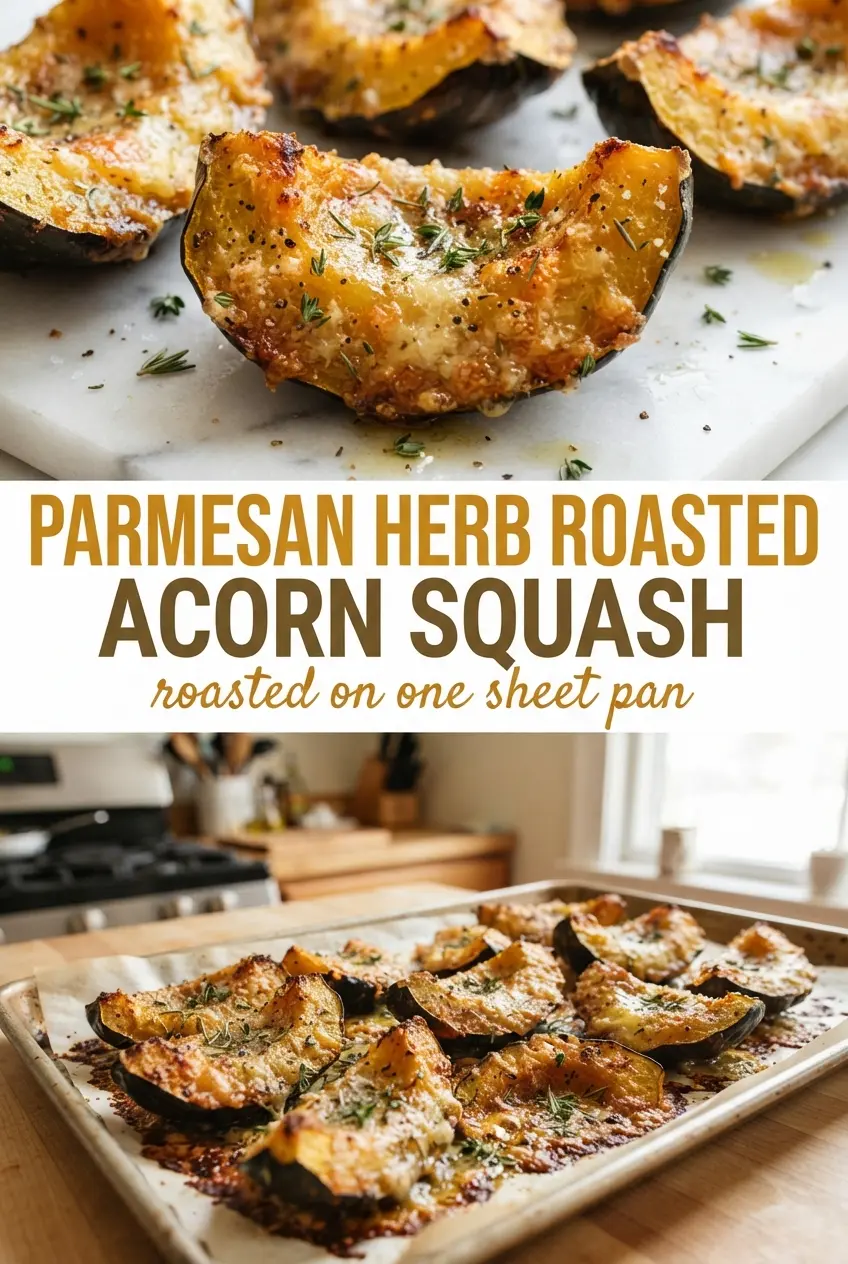
Golden acorn squash wedges pull double duty here: the flesh turns soft and sweet while the Parmesan on top bakes into a salty, crackly crust that snaps when you cut into it. That contrast is the whole reason this side dish earns repeat status. It tastes like you spent a lot longer in the kitchen than you did.
The trick is treating the squash like a roasting vegetable, not a steamed one. A hot oven and a single layer on the pan give the edges room to caramelize instead of soften under their own moisture. The Parmesan goes on in an even layer so it melts, browns, and turns crisp instead of sliding off in one greasy sheet.
Below, I’ve laid out the small details that keep the crust crisp and the squash tender, plus the one timing adjustment worth knowing if you want the cheese even more golden. It’s a simple recipe, but the method matters.
The squash came out tender with the Parmesan actually crisped on top instead of melting into a soggy layer. I added the cheese halfway through like you suggested and it browned beautifully without burning.
Save this Parmesan herb roasted acorn squash for the nights when you want a crisp, golden side with almost no prep.
The Trick to a Crisp Parmesan Crust Instead of a Melted Blanket
Acorn squash holds a lot of moisture, and that is what ruins the crust when people rush it. If the wedges are crowded or the oven isn’t hot enough, the cheese softens before it browns and you end up with a damp layer instead of that brittle, savory top. Space on the pan matters as much as the seasoning.
Cut-side up is the move here. It gives the Parmesan a flat surface to cling to and keeps the melted cheese on the squash instead of letting it run off into the pan. If you want the topping extra crisp, add the cheese halfway through roasting so the squash can start cooking first, then let the Parmesan brown without staying in the oven long enough to burn.
What Each Ingredient Is Actually Doing in This Dish

Acorn squash brings the sweetness and the soft, custardy texture once roasted. Pick squash that feel heavy for their size and have firm, unblemished skin; those tend to roast more evenly. If you can’t find acorn squash, delicata will work in a pinch, though it cooks faster and has a thinner skin.
- Olive oil — This carries the herbs and helps the squash brown instead of drying out. Use a good everyday olive oil here; you don’t need anything fancy.
- Parmesan — This is the crust. Grated Parmesan melts and crisps better than shredded, and it gives you those salty, lacy edges that make the dish memorable.
- Fresh thyme and rosemary — Dried herbs can work, but fresh herbs perfume the squash more cleanly and don’t taste dusty after roasting. Chop them finely so they cling to the oil and cheese.
- Garlic — Minced garlic adds a sharp, savory edge under the cheese. If you use garlic powder instead, the flavor will be softer and less noticeable once the squash comes out of the oven.
Roasting the Squash So the Edges Brown and the Centers Turn Tender
Seasoning the Wedges
Toss the squash wedges with olive oil, garlic, thyme, rosemary, salt, and pepper until every cut surface looks coated. The oil should sheen over the squash, not pool at the bottom of the bowl. If the wedges look dry, they’ll roast unevenly and the herbs won’t stick.
Setting Up the Pan
Arrange the wedges in a single layer on a parchment-lined sheet pan with a little breathing room between them. If they overlap, they steam, and steaming is the fastest way to lose the crisp edges. Cut-side up gives the Parmesan a place to settle and brown instead of sliding off.
Adding the Parmesan
Sprinkle the grated cheese evenly over the tops so you get thin coverage instead of thick clumps. Thick piles of Parmesan can burn before the squash is tender. If you want a more aggressively crisp crust, roast the squash for about 15 minutes first, then add the cheese and finish roasting.
Finishing the Roast
Roast at 425°F until the squash is tender enough to pierce with a knife and the Parmesan has turned deep golden at the edges. The cheese should look dry and lacy, not pale and wet. Let it sit on the pan for a minute or two before serving so the crust sets instead of sliding off.
Three Easy Ways to Work This Into a Different Menu
Dairy-Free Version with the Same Herb Roast
Leave off the Parmesan and roast the squash with the olive oil and herbs alone. You’ll lose the salty crust, but the squash will still caramelize beautifully, and the thyme-rosemary combination keeps it from feeling like a plain side dish.
More Savory, Less Sweet
Add a pinch of crushed red pepper or a little black pepper-heavy seasoning blend before roasting. That pushes the squash toward a more savory, dinner-side profile and cuts through the natural sweetness.
Parmesan Herb Acorn Squash for a Bigger Crowd
Use two sheet pans instead of piling everything onto one. Crowding adds steam, and the crust gets soft before it has a chance to crisp. Rotating the pans halfway through helps both batches brown evenly.
Storage and Reheating
- Refrigerator: Store leftovers in an airtight container for up to 4 days. The squash softens a bit, and the Parmesan crust loses some crunch, but the flavor stays good.
- Freezer: It freezes, but the texture changes enough that I don’t recommend it for best results. The squash gets watery after thawing and the cheese won’t stay crisp.
- Reheating: Warm leftovers on a sheet pan in a 400°F oven until heated through. The oven brings back some of the crust; the microwave makes the cheese rubbery and the squash mushy.