
Golden zucchini bread turns tropical when crushed pineapple and toasted coconut get folded into the batter. The loaf bakes up moist without tipping into heavy, and the coconut on top gives every slice a little toasted edge that plays nicely against the tender crumb. It tastes familiar at first, then the pineapple comes through with a soft sweetness that keeps each bite interesting.
The part that makes this version work is balance. Zucchini brings moisture without much flavor of its own, while the drained pineapple adds brightness and softness without making the batter wet enough to sink. Toasting the coconut matters too, because raw coconut can disappear in the oven; toasted, it stays fragrant and gives the bread a deeper, nuttier finish.
Below, I’ve included the one prep step that keeps this loaf from turning soggy, plus a few smart swaps if you want to make it dairy-free or adjust the sweetness. If you’ve had zucchini bread come out dense or damp in the middle before, the notes in this post will help you avoid both.
The pineapple was drained well and the loaf still came out super moist, not gummy. I loved the toasted coconut on top because it stayed crisp around the edges, and my husband kept slicing “just one more piece” until half the loaf was gone.
Save this pineapple coconut zucchini bread for the day you want a moist loaf with toasted edges and bright tropical flavor.
The Pineapple You Add Matters More Than the Zucchini Here
Zucchini bread gets watery when the batter starts with too much free moisture. Pineapple makes that problem worse if it isn’t drained hard enough, because crushed pineapple carries more juice than people expect. Press it in a fine mesh strainer or squeeze it lightly in clean hands before it goes into the bowl. That small step keeps the crumb tender instead of gummy.
The other mistake is overmixing once the flour goes in. This batter already has plenty of moisture, so it doesn’t need extra stirring to “come together.” Stop as soon as the flour disappears and you can still see a few streaks. That keeps the loaf soft and prevents the dense tunnel effect that shows up in quick breads when the batter gets worked too much.
What Each Ingredient Is Actually Doing in This Loaf
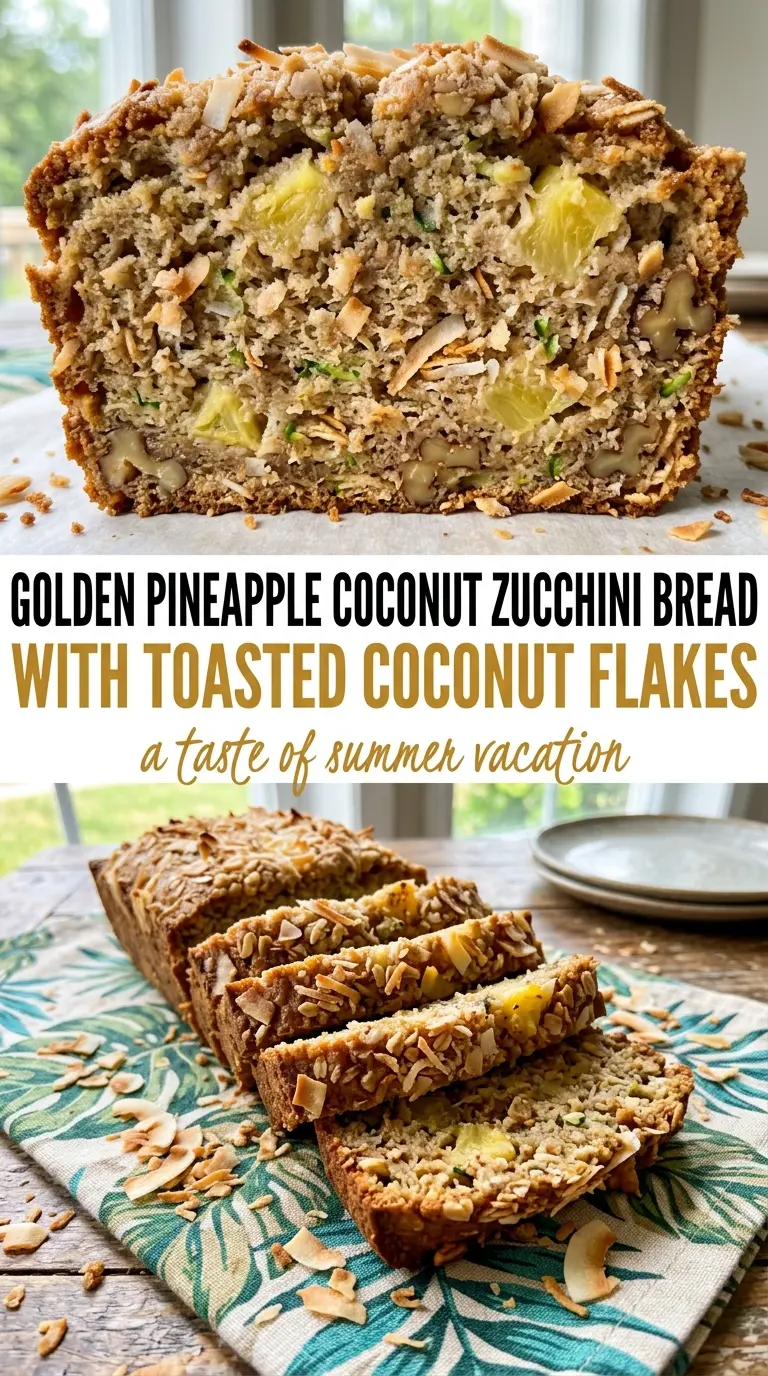
- Shredded zucchini — This adds moisture and tenderness, but only if you squeeze it dry first. Raw zucchini can make the loaf heavy and wet, so press it firmly in a towel after shredding.
- Crushed pineapple — This is the ingredient that gives the bread its tropical sweetness and extra softness. Drain it well; you want the fruit, not the juice, or the center can turn sticky.
- Toasted coconut — Toasting changes everything here. Untoasted coconut can taste flat in baked goods, while toasted flakes keep their flavor and add little bits of texture on top and throughout the loaf.
- Oil — Oil keeps quick bread moist longer than butter does. In a loaf with zucchini and pineapple, that staying power matters because the crumb can dry out at the edges if the fat isn’t doing its job.
- Brown sugar and granulated sugar — Using both gives the loaf a rounded sweetness and a little extra chew from the brown sugar. If you swap in only white sugar, the bread will still work, but it loses some of the depth.
- All-purpose flour — This keeps the structure light enough to rise without becoming cakey. Bread flour would make it tougher, and whole wheat flour needs extra moisture, which this batter already has plenty of.
Building the Batter Without Letting It Turn Heavy
Whisking the Wet Ingredients First
Start with the eggs, oil, sugars, and vanilla until the mixture looks smooth and glossy. That step dissolves the sugar enough to help the loaf bake evenly. If the sugar stays clumpy, the texture can come out uneven, with pockets that feel damp after baking.
Adding the Zucchini and Pineapple
Fold in the zucchini and drained pineapple before the flour goes in. That gives the wet ingredients a chance to spread evenly through the batter, so you don’t end up with a lump of fruit and vegetables at the bottom of the pans. The batter will look loose at this point, and that’s normal.
Bringing It Together Gently
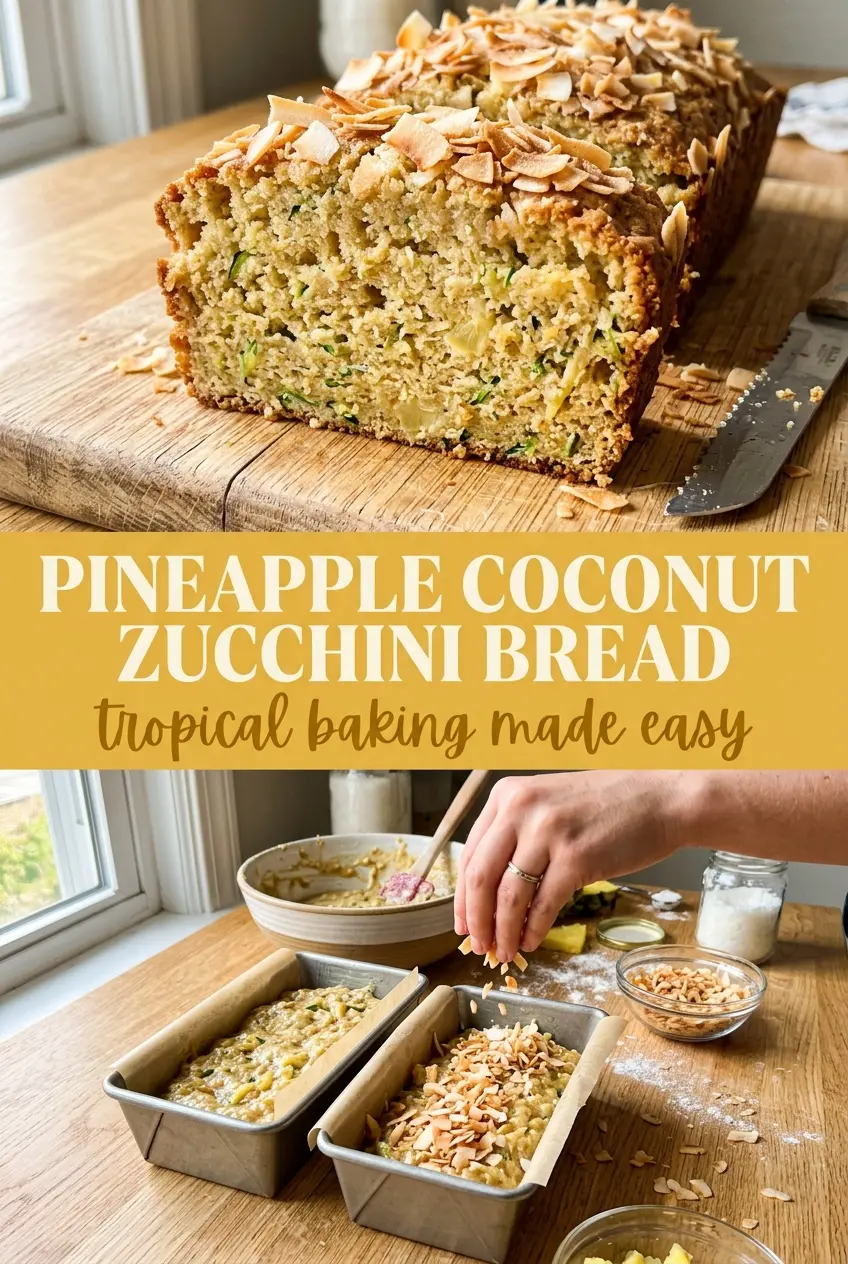
Stir the dry ingredients in just until the flour disappears, then stop. Quick bread batter gets tough when it’s beaten like cake batter, and the loaf loses its tender crumb. Fold in most of the toasted coconut at the end, then scatter the rest on top for a toasted finish that browns in the oven.
Baking Until the Center Sets
Bake until a toothpick comes out clean from the center and the tops spring back lightly when touched. If the top is browning before the middle is done, tent the pans loosely with foil for the last stretch. Letting the loaves cool in the pan for 10 minutes helps them set without sticking, then move them to a rack so the bottoms don’t steam.
How to Adapt This for Different Diets and Pantry Situations
Make It Dairy-Free Without Changing the Texture
This recipe is already dairy-free as written, which is part of why the crumb stays so soft for days. The oil does the moisture work that butter usually handles in quick bread, so you don’t lose anything by skipping dairy entirely.
Cut the Sweetness a Little Without Breaking the Loaf
If you want a less sweet breakfast loaf, reduce the granulated sugar by 1/4 cup and keep the brown sugar as written. That preserves the tender texture and some caramel depth, while backing off the sharp sweetness a bit.
Swap the Coconut When You Want a Different Finish
Chopped toasted pecans or walnuts can stand in for the coconut if you want more crunch and less chew. The loaf loses the tropical note, but it gains a deeper nutty flavor and a sturdier top crust.
Storage and Reheating
- Refrigerator: Store tightly wrapped for up to 5 days. The crumb gets a little firmer in the fridge, but the flavor stays good.
- Freezer: Freeze whole loaves or slices wrapped well for up to 3 months. Thaw at room temperature while still wrapped so the bread doesn’t dry out.
- Reheating: Warm slices in a toaster oven or low oven for a few minutes. A microwave works in a pinch, but too much heat makes quick bread rubbery and dulls the coconut.
Questions I Get Asked About This Recipe
Pineapple Coconut Zucchini Bread
Ingredients
Equipment
Method
- Preheat the oven to 325°F and grease two loaf pans.
- Toast the shredded coconut in a dry skillet until lightly golden, then set aside to cool slightly.
- Whisk the eggs, vegetable oil, granulated sugar, brown sugar, and vanilla extract in a large bowl until smooth.
- Stir in the shredded zucchini and drained crushed pineapple until evenly distributed.
- Whisk the all-purpose flour, baking soda, baking powder, and salt together in a separate bowl.
- Fold the dry ingredients into the wet mixture until just combined, keeping the batter thick.
- Fold in most of the toasted shredded coconut, saving a little for the top.
- Divide the batter between the prepared loaf pans and sprinkle the remaining coconut over the tops.
- Bake for 50-60 minutes at 325°F, until a toothpick inserted in the center comes out clean.
- Cool in the pans for 10 minutes before turning out onto a wire rack to finish cooling.