
Silky potato soup earns its place at the table when it lands with that spoon-coating, buttery texture and a finish that feels a little unexpected. This version keeps the base mild and velvety, then pushes it into something more memorable with a sharp jalapeño cheddar drizzle and crisp potato skin chips on top. The contrast matters here: smooth against crunchy, gentle against spicy, familiar against a topping that wakes everything up.
The soup base stays clean and creamy because the potatoes simmer until they collapse easily, then get blended while hot with butter and cream for the most even texture. That hot blending step is the difference between a glossy, restaurant-style bowl and a grainy one. The jalapeño cheddar drizzle works for the same reason — the jalapeño is blended in before the cheese goes in, so it tastes integrated instead of chopped and awkward. The reserved skins pull double duty as chips, which keeps the recipe from feeling wasteful and adds the best salty crunch.
Below, I’ll walk through the small choices that make the texture stay smooth, how to keep the drizzle from turning clumpy, and a few ways to adjust the heat if you want a softer finish or a bigger kick.
The soup blended out perfectly smooth and the jalapeño cheddar drizzle made it feel restaurant-level. I followed the tip to blend it while hot and the texture came out unbelievably creamy, not gluey at all.
Love the cloud-smooth potato soup and spicy jalapeño cheddar swirl? Save it to Pinterest for the nights when you want a cozy bowl with a little drama on top.
The Reason This Potato Soup Stays Silky Instead of Gluey
Potato soup can turn heavy fast if the potatoes are overworked or the liquid gets pushed too far once the starch is released. The trick here is to cook the potatoes until they’re completely tender, then blend them right away with the butter and cream while they’re still hot. That gives you a smooth, even puree without needing extra thickeners, and it keeps the texture plush instead of pasty.
The other thing that matters is how you season it. Potatoes need more salt than people expect, and the smoked paprika gives the bowl a little depth without making it taste smoky in a loud way. If your soup tastes flat, it usually needs salt and a pinch more acid or heat from the jalapeño drizzle, not more cream.
- Russet potatoes — These break down into a soft, fluffy base that blends well. Waxy potatoes stay more structured and can leave the soup less smooth.
- Chicken broth — This seasons the potatoes from the inside out. Vegetable broth works too, but it will taste a little lighter and less savory.
- Heavy cream — This gives the soup its body and a clean, rich finish. Half-and-half can work, but the soup will be a little thinner.
- Butter — It rounds out the texture and helps the soup taste finished. Don’t skip it if you want that soft, buttery bowl instead of something that tastes watered down.
- Sharp cheddar and jalapeño — The drizzle needs a cheese with real bite, or it gets lost on the spoon. A milder cheddar will melt fine, but you’ll lose that sharp contrast against the potatoes.
- Reserved potato skins — These are worth keeping. They crisp up into the best salty garnish and turn the recipe into something with texture, not just a smooth bowl.
Building the Soup, the Drizzle, and the Crunch in the Right Order
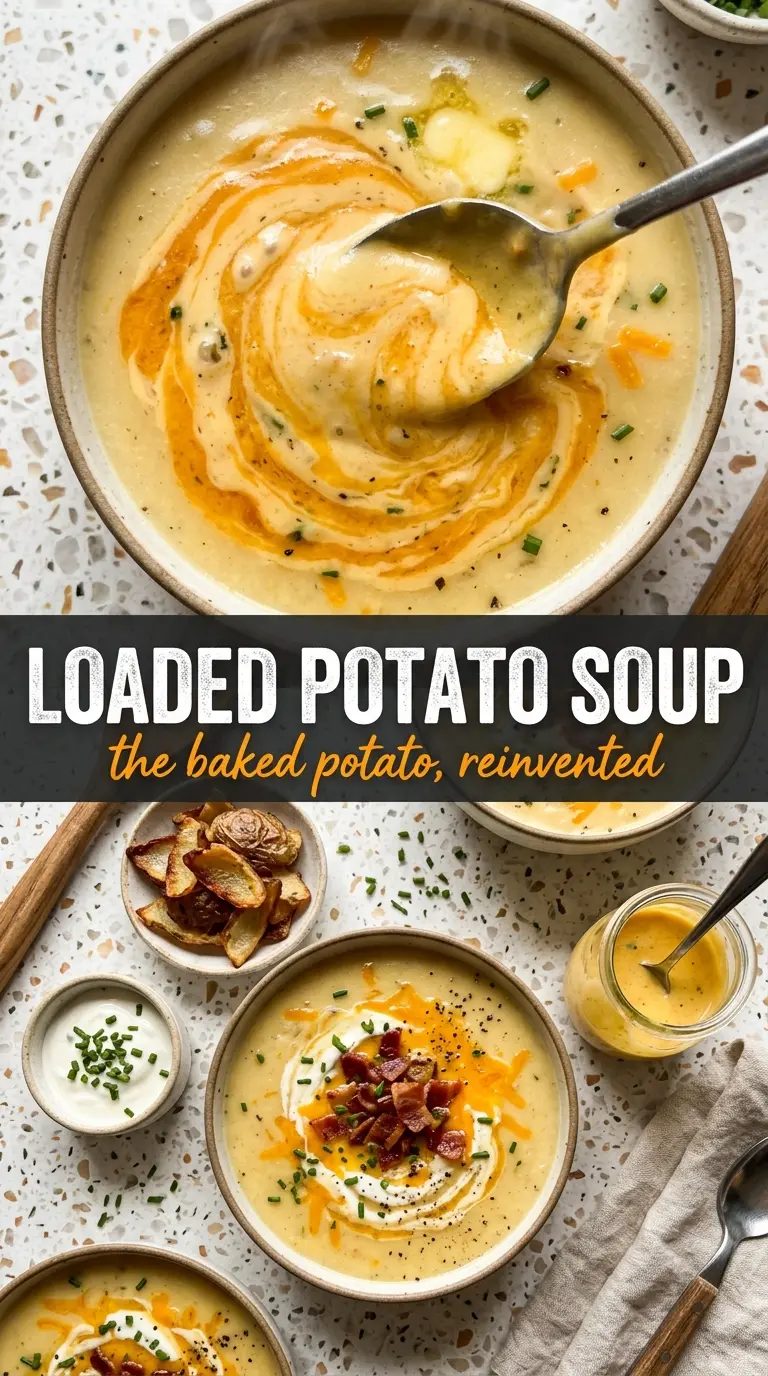
The order matters here because each piece depends on the one before it. The soup needs to be fully blended before you deal with the toppings, and the potato skins need enough oven time to dry out and crisp. If you rush the skins or let the soup sit too long before blending, the whole dish loses that contrast that makes it memorable.
Simmering the Potatoes Until They Fall Apart
Cut the potatoes into even cubes so they cook at the same pace, then simmer them with the onion, garlic, and broth until a fork goes through them without resistance. If the centers still feel firm, the blend will turn lumpy no matter how long you run the blender. Pull the pot as soon as the potatoes collapse easily and the onion has gone soft enough to disappear into the base.
Blending Into a Velvety Base
Add the butter and cream while the soup is still hot, then blend until it looks glossy and completely smooth. An immersion blender works well, but a countertop blender gives the silkiest result if you work in batches and vent the lid carefully. If the soup seems too thick, loosen it with a splash of broth; if it looks thin now, give it a minute before changing anything because potato soup thickens as it sits.
Making the Jalapeño Cheddar Drizzle
Blend the jalapeño with the cream first, then melt in the cheddar over low heat. High heat is what makes cheese separate and turn grainy, so keep the burner gentle and stir until it turns smooth and pourable. The drizzle should land in ribbons, not clumps; if it gets too thick, add a teaspoon of cream at a time until it moves easily from a spoon.
Baking the Potato Skin Chips
Toss the reserved skins with olive oil and salt, then bake them until the edges curl and turn deep golden. They need time to dry, not just heat, so don’t pull them early when they’re still bendy. The chips crisp more as they cool for a minute or two, which is exactly what you want before they go on top of the soup.
Three Ways to Adapt This Potato Soup Without Losing the Good Part
Make It Vegetarian
Swap the chicken broth for a full-bodied vegetable broth. The soup will still be creamy and satisfying, but it may taste a little less savory, so season it a touch more aggressively at the end. The cheddar drizzle and potato chips stay exactly the same.
Make It Lighter Without Losing the Texture
Use half-and-half instead of heavy cream and cut the butter back a little. The soup won’t be as plush, but it will still blend smooth if the potatoes are fully cooked. If you go this route, don’t boil it hard after blending or the texture can turn a little chalky.
Control the Heat on the Drizzle
Remove the jalapeño seeds and ribs for a gentler finish, or leave some in if you want the drizzle to bite harder. The spice shows up most in the topping, not the soup itself, so this is the easiest place to adjust the recipe without changing the base. Doubling the drizzle is a good move if you want each bowl to feel more dramatic.
Storage and Reheating
- Refrigerator: Store the soup for up to 4 days. It will thicken as it chills, and the drizzle is best stored separately if you want it to stay smooth.
- Freezer: The soup base freezes well for up to 2 months, but freeze it without the cream if you want the cleanest texture. Add the cream after thawing and reheating for the best result.
- Reheating: Warm it slowly over low heat and add a splash of broth if it feels too thick. Don’t boil it hard, or the dairy can separate and the soup can turn grainy.
Questions I Get Asked About This Potato Soup
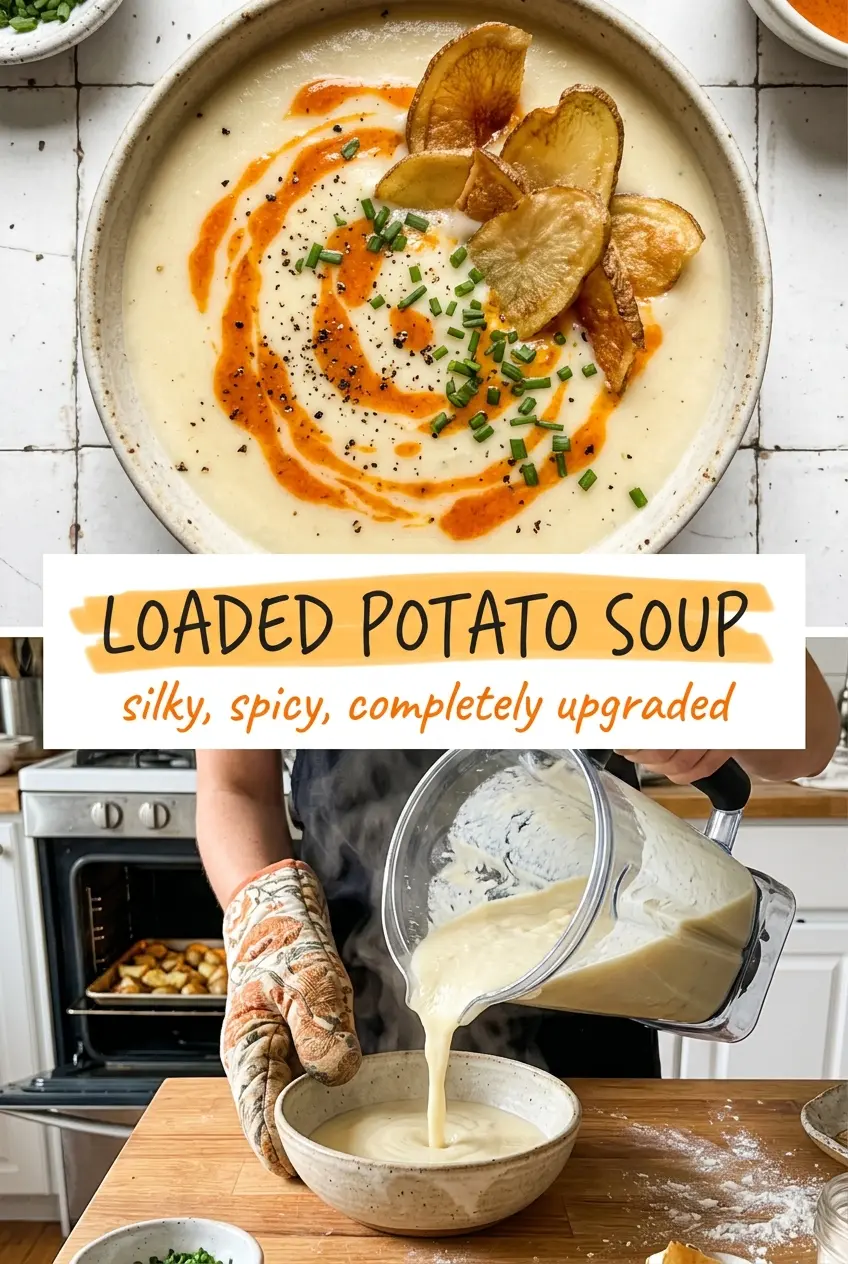
Potato Soup
Ingredients
Equipment
Method
- Add russet potatoes, onion, and garlic to a Dutch oven with chicken broth, then simmer until the potatoes are very tender, about 25 minutes, stirring occasionally and keeping the liquid at a gentle bubble.
- Blend the soup completely smooth while hot, then stir in heavy cream and butter and season well with salt, pepper, and smoked paprika until the texture turns silky and uniform.
- Spread the reserved potato skins on a sheet pan, toss with olive oil and a little salt, then bake at 400°F for 20 minutes until crisp and golden-brown.
- Melt sharp cheddar, then stir it together with blended jalapeño and 2 tbsp cream until smooth and pourable, with a vivid orange-red color.
- Ladle the soup into bowls, then swirl the jalapeño cheddar drizzle over the top so it streaks across the creamy surface.
- Top each bowl with crispy potato skin chips, then finish with sour cream and chives so the chips stay upright and the herbs add fresh green contrast.