
Soft pumpkin bread with a thick cap of cream cheese frosting has a way of disappearing faster than almost any other loaf. The crumb stays tender and moist from the pumpkin puree and oil, but what makes this version stand out is the frosting layer spread all the way to the edges, so every slice gets that tangy-sweet finish. It eats like a cross between quick bread and coffee cake, which is exactly why it keeps landing back on the counter for breakfast, snack time, and late-night slicing.
The batter comes together with no mixer and no fancy steps, which keeps the texture light instead of heavy. Pumpkin puree brings moisture and body, while the pumpkin pie spice gives the loaf enough warmth without turning it into a spice bomb. The important part is not overmixing once the flour goes in; that’s what keeps the crumb soft instead of tough. The frosting also matters here. Cream cheese and butter need to be fully softened so the topping turns smooth and spreadable instead of grainy.
Below, I’ve included the trick that keeps the frosting from melting into the loaf, plus a few useful swaps if you want to change the texture or make it a little easier to store.
The loaf baked up soft and stayed moist for days, and the cream cheese frosting spread perfectly once the bread was completely cool. My kids kept sneaking slices because the top tasted like pumpkin cake.
Save this pumpkin bread with cream cheese frosting for the days when you want a soft, spiced loaf with a thick, tangy-sweet finish.
The Reason the Frosting Belongs on a Fully Cooled Loaf
Pumpkin bread is forgiving in the oven, but frosting is not forgiving on a warm loaf. If the bread still feels even slightly warm at the center, the cream cheese topping starts to slide, thin out, and soak into the crust instead of sitting on top in that thick, bakery-style layer. The fix is patience. Let the loaf cool all the way down in the pan for a bit, then move it to a rack and wait until it feels completely cool to the touch before spreading anything on it.
The other common failure is a dense, gummy middle. That usually comes from overmixing after the flour goes in or from pulling the loaf before the center is set. You want a toothpick with a few moist crumbs, not wet batter, and the top should spring back when you press it lightly. This bread keeps cooking from residual heat after it comes out, so slicing into it too soon can wreck the texture and make the center look underbaked even when it isn’t.
What Each Ingredient Is Actually Doing in This Loaf
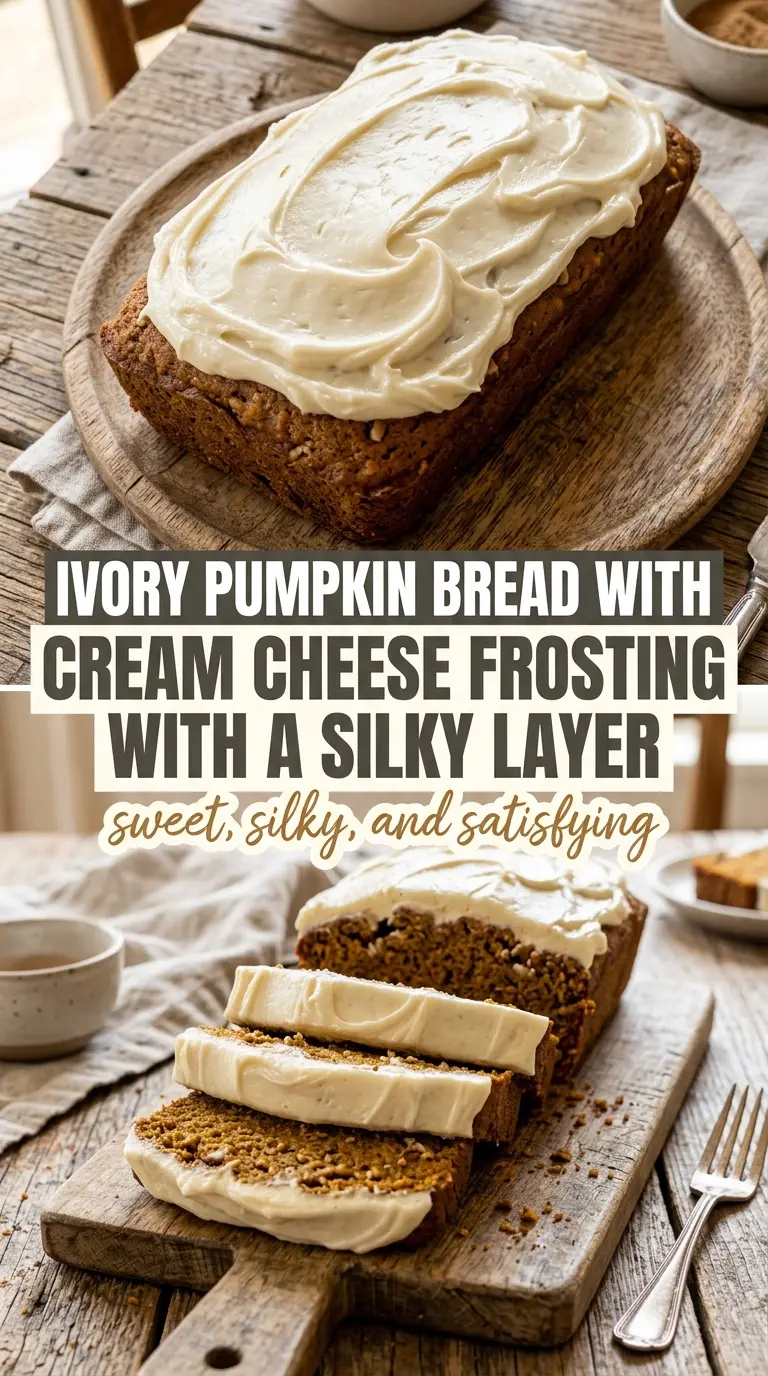
- Pumpkin puree — This is the moisture and the body of the loaf. Use plain pumpkin puree, not pumpkin pie filling, because the pie filling is already sweetened and spiced in a way that throws off the balance.
- Vegetable oil — Oil keeps the crumb softer for longer than butter does. Melted butter gives more flavor, but it can firm up as the bread cools; oil is the better choice when you want a tender, cake-like slice that stays that way on day two.
- Pumpkin pie spice — This gives the bread its warm background flavor without having to measure out several separate spices. If you don’t have it, use a blend of cinnamon, ginger, nutmeg, and a pinch of cloves, but keep the total amount about the same.
- Flour — All-purpose flour gives enough structure to hold the frosting without making the loaf heavy. Spoon and level it instead of packing it into the cup, because too much flour is the fastest way to get a dry, tight crumb.
- Cream cheese and butter — These are the base of the frosting, and both need to be softened fully so they beat together smoothly. Cold cream cheese leaves little lumps that never quite disappear, no matter how long you mix.
- Powdered sugar — This thickens and sweetens the frosting while keeping it silky. Add it gradually if you want a thicker topping, because a loose frosting will slide off the loaf before it sets.
Building the Batter and Frosting Without Ruining the Texture
Mix the wet ingredients until they look completely smooth
Whisk the pumpkin puree, sugar, eggs, oil, and pumpkin pie spice until the mixture looks glossy and even. You want no streaks of egg or pockets of pumpkin at this stage, because the smoother the base, the more even the crumb will bake. If the batter looks a little broken, keep whisking; that usually means the ingredients just need another minute to come together.
Fold in the flour with a light hand
Add the flour and stir only until it disappears. A few small streaks are better than a batter that has been beaten into glue. Overmixing at this point develops the gluten and gives you a loaf that slices up dense instead of soft and tender.
Bake until the center sets
Scrape the batter into a greased loaf pan and bake at 350°F until the top is domed and a toothpick inserted in the center comes out clean or with a few moist crumbs. If the top browns too quickly before the middle is done, tent it loosely with foil for the last part of the bake. The loaf should feel firm around the edges and slightly springy in the middle when you press it.
Beat the frosting until it turns fluffy
Once the loaf is completely cool, beat the softened cream cheese, butter, powdered sugar, and vanilla until smooth and spreadable. Stop and scrape the bowl once or twice so you don’t end up with hidden streaks of cream cheese. If the frosting seems too loose, a little more powdered sugar will tighten it; if it feels too stiff, let it sit for a few minutes and beat again.
How to Adapt This for Different Diets and Different Slices
Dairy-Free Frosting Swap
Use a dairy-free cream cheese and a plant-based butter with a firm texture. The frosting will still be tangy and spreadable, though it may soften a little faster at room temperature, so chill it briefly before spreading if needed.
Gluten-Free Loaf
Swap the all-purpose flour for a good 1:1 gluten-free baking blend that includes xanthan gum. The texture will be a little more delicate, but the loaf still bakes up moist and sliceable if you don’t overmix it.
Less Sweet, More Breakfast-Friendly
Reduce the sugar in the loaf a little if you want something less cake-like, but keep the frosting as written or the topping will lose its balance. The bread will taste a bit more pumpkin-forward and less dessert-like.
Storage and Reheating
- Refrigerator: Store the frosted loaf covered in the refrigerator for up to 5 days. The bread stays moist, but the frosting will firm up cold.
- Freezer: Freeze the unfrosted loaf tightly wrapped for up to 2 months. Frosting after thawing gives the best texture, since cream cheese frosting can weep a little after freezing.
- Reheating: Let refrigerated slices sit at room temperature for 15 to 20 minutes before eating, or warm the unfrosted loaf briefly and frost individual slices after. Don’t microwave a frosted slice too long or the topping will melt and slide.
Questions I Get Asked About This Recipe
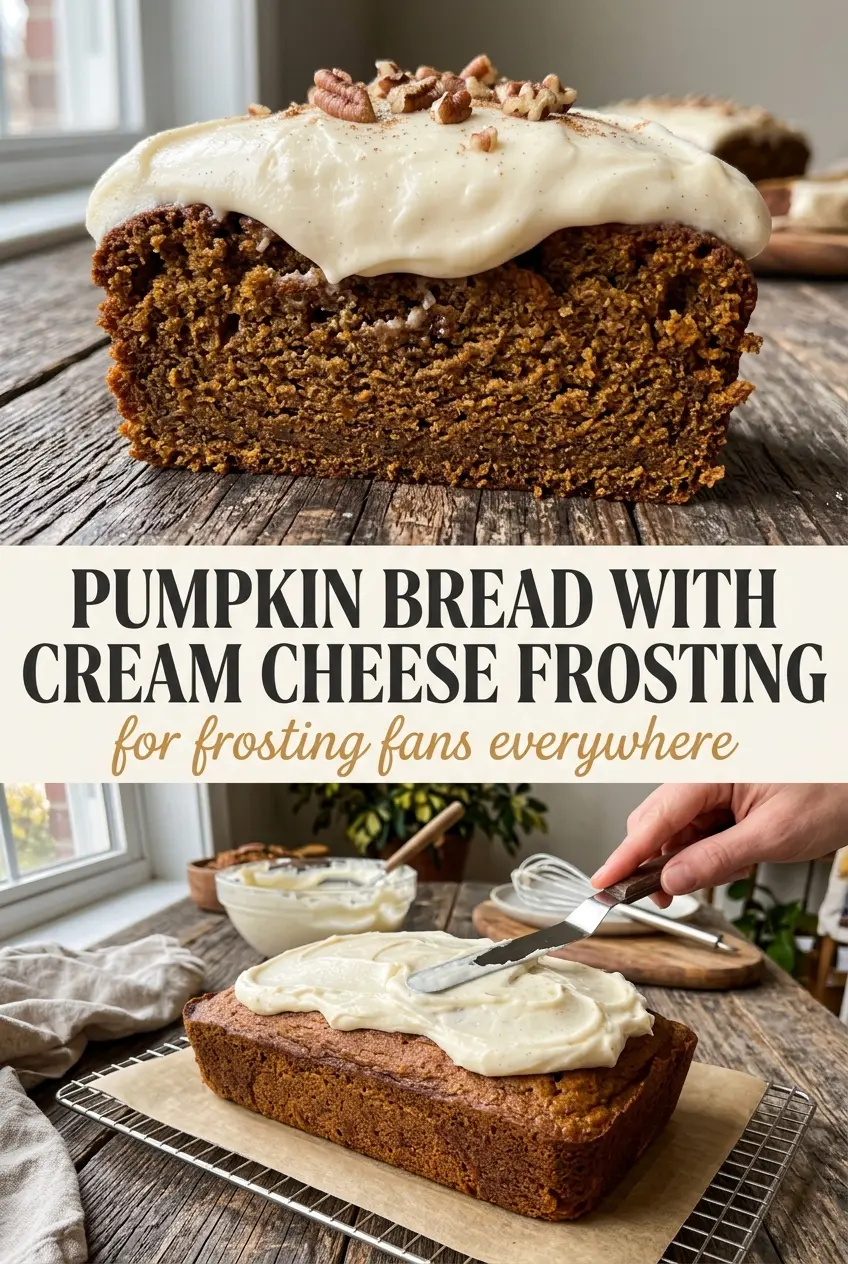
Pumpkin Bread With Cream Cheese Frosting
Ingredients
Equipment
Method
- Preheat the oven to 350°F and grease a loaf pan, then set it aside. This ensures the pan is ready for an even bake right away.
- Whisk together pumpkin puree, granulated sugar, eggs, vegetable oil, and pumpkin pie spice until smooth. Fold in the all-purpose flour just until combined so the batter stays tender.
- Pour the batter into the loaf pan, then bake for 55-65 minutes at 350°F. Bake until a toothpick comes out clean, indicating the center is fully set.
- Let the loaf cool completely before frosting. Cooling prevents the frosting from softening or melting on contact.
- Beat the cream cheese, butter, powdered sugar, and vanilla extract until smooth and fluffy. Stop and scrape as needed to keep the frosting lump-free.
- Spread the frosting evenly over the cooled loaf before slicing. Use an offset spatula or the back of a spoon to create a thick, even layer.