
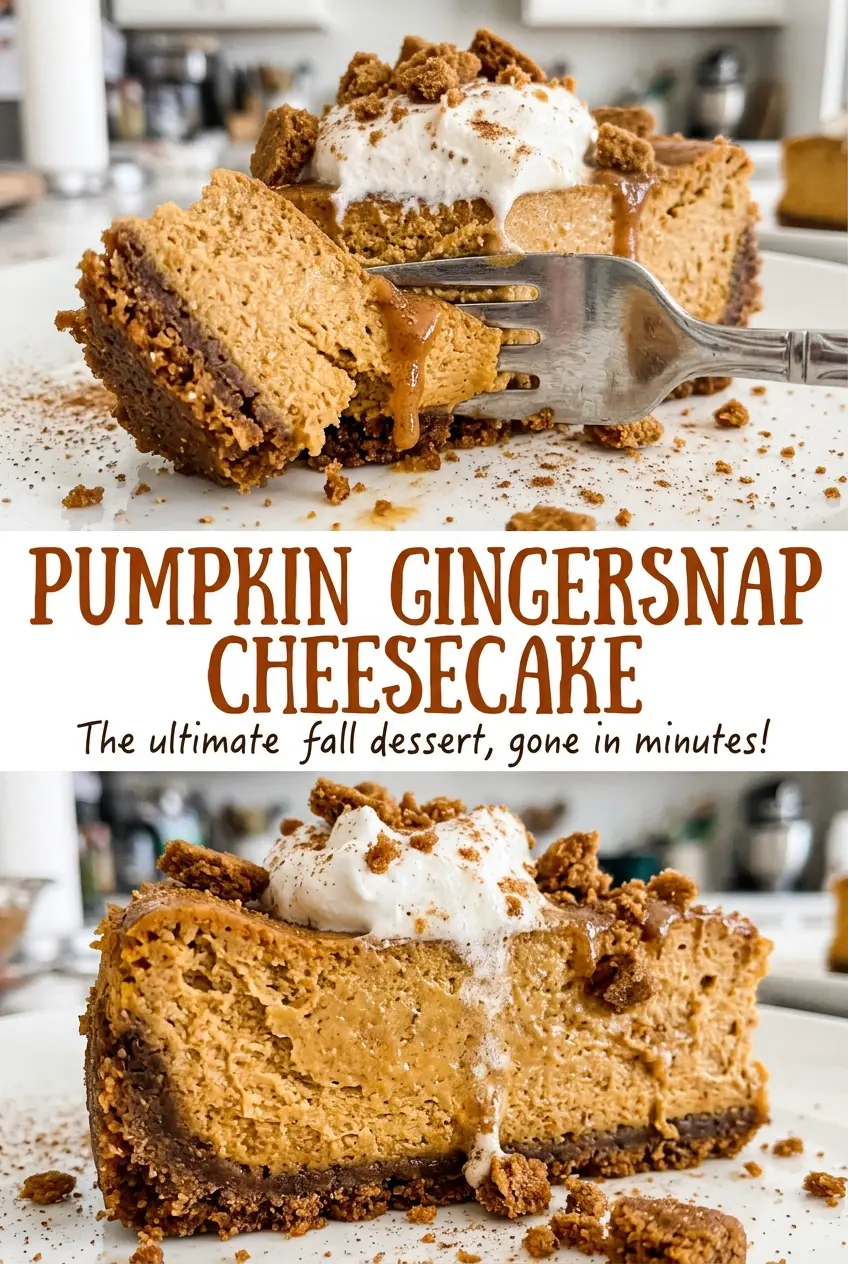
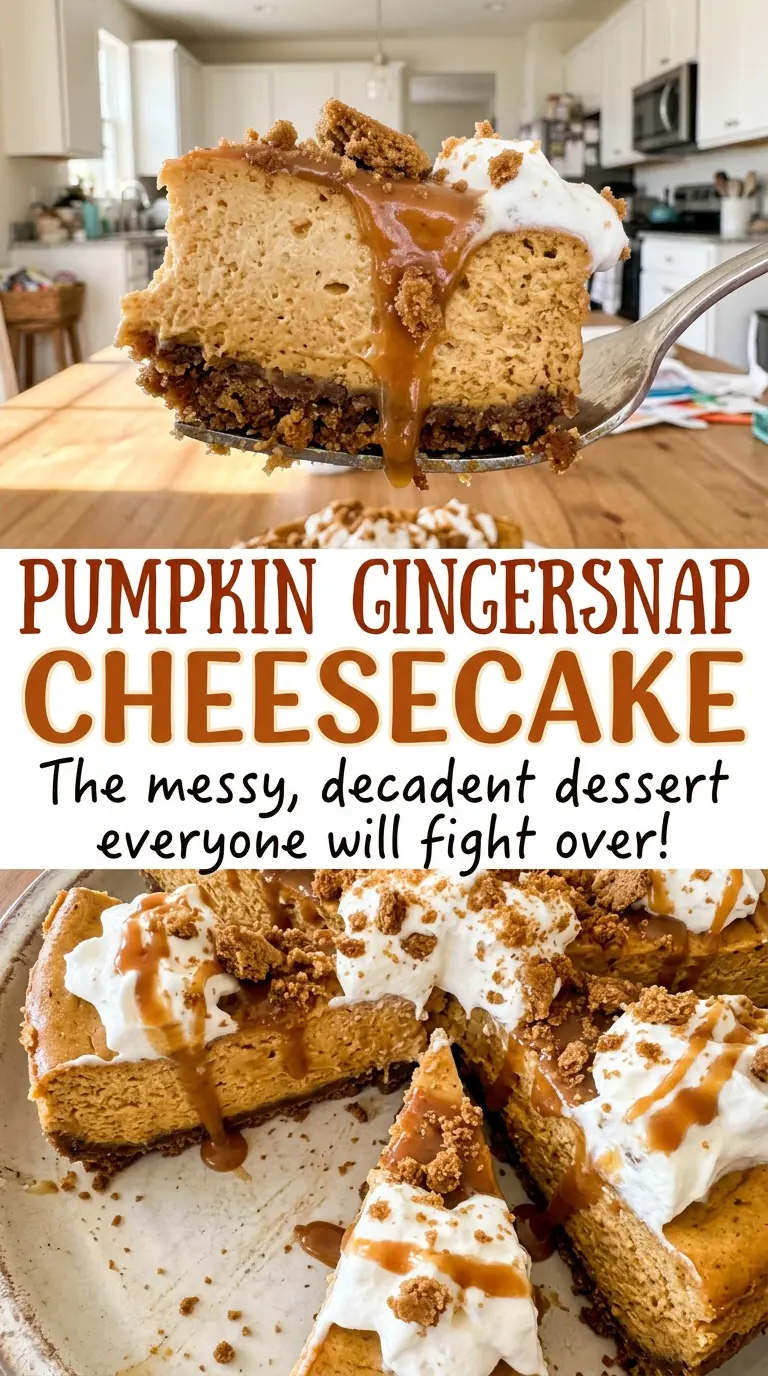
When the gingersnap crust comes out of the oven, it smells like ginger and brown sugar before the filling is even mixed. I like pressing the crumbs a little way up the sides of the pan; that gives each slice a crisp edge beside the soft pumpkin center. Pumpkin Gingersnap Cheesecake is rich without tasting heavy, with cinnamon, ginger, and nutmeg tucked into a creamy filling instead of overpowering it.
The water bath and slow cooldown keep the cheesecake from taking a hard heat hit. The pan sits in hot water while it bakes, then stays in the turned-off oven with the door cracked before it cools on the counter. It takes patience, but the surface stays smoother and the center settles gently. A little tang from the sour cream rounds out the pumpkin, while the gingersnaps carry the sharper spice. After a long chill, the filling slices cleanly against that snappy cookie crust.
Kitchen Note
The crust mixture should look evenly damp before you press it into the pan. Dry pockets crumble when sliced, so take a moment to stir until the butter reaches all the crumbs.
Save this Pumpkin Gingersnap Cheesecake for its creamy pumpkin filling, crisp spiced crust, and make-ahead chill.
Pumpkin Adds Moisture; Flour Helps the Cheesecake Hold Its Shape
Pumpkin puree changes the texture as well as the flavor: it brings moisture and weight to a cream-cheese filling. The small amount of flour gives that mixture a little more structure, so the chilled cheesecake can hold a slice without losing its creamy center. Leave the flour out and the filling may be softer; add much more and the texture can turn dense rather than silky.
This balance is why I keep the pumpkin and flour in proportion to the cream cheese instead of treating the batter like pumpkin pie filling. The pumpkin should be present in every bite, but the cheesecake still needs to taste like cheesecake. The flour supports the set quietly, without taking over the flavor. When the proportions are right, the center feels rich and smooth, and the edge of each slice stays neat rather than slumping onto the plate.
Why Plain Pumpkin and Gingersnaps Matter in This Cheesecake
- Gingersnap cookies — Their crisp texture crushes into a sturdy crust, and their ginger-forward spice gives the base a clear contrast with the creamy filling. Ordinary crisp store-bought cookies work well; very soft cookies are harder to turn into even crumbs.
- Unsalted butter and brown sugar — Melted butter binds the crumbs, while brown sugar adds a light molasses note that suits the gingersnaps. Unsalted butter lets the salt level stay controlled; there’s no need for a specialty brand.
- Full-fat cream cheese — This is the backbone of the filling, and full-fat blocks give it the rich, firm texture the recipe is built around. Let the cream cheese soften before mixing so it combines smoothly with the sugar.
- Canned pumpkin puree — Choose plain pumpkin puree, not pumpkin pie filling, which is already sweetened and seasoned. Canned puree gives a consistent texture from one batch to the next.
- Sour cream and eggs — Sour cream brings a gentle tang, and room-temperature ingredients blend more evenly into the cream cheese. Full-fat plain Greek yogurt can replace the sour cream in the same volume; the filling will be a little tangier.
- Cinnamon, ginger, and nutmeg — These warm spices round out the pumpkin without masking the gingersnap crust. Fresh, aromatic spices make the biggest difference; there’s no need to buy a special blend.
How to Bake a Smooth Center Without Overbrowning the Edges
Set the Gingersnap Crust
Heat the oven to 350°F and grease the bottom and sides of a 9-inch springform pan. Stir the crumbs with the melted butter and brown sugar, then press the mixture over the bottom and about 1 inch up the sides. Bake for 9 to 10 minutes, until fragrant and set; it should smell warmly spiced, not toasted or scorched. Cool the crust for 15 minutes, then reduce the oven temperature to 325°F before moving on.
Mix a Smooth, Gently Spiced Filling
Beat the softened cream cheese and granulated sugar on medium-low speed until smooth, about 2 minutes. Beat in the flour, cinnamon, ginger, nutmeg, and salt, then add the pumpkin and sour cream until combined. Add the eggs one at a time on low speed, mixing just until each is incorporated, then mix in the vanilla. Overbeating the eggs can put extra air into the batter, so stop as soon as the mixture looks even and pour it over the cooled crust.
Protect the Pan in the Water Bath
Wrap the outside of the springform pan with three layers of heavy-duty foil, then set it in a 12×16-inch roasting pan. Pour 6 to 8 cups of boiling water into the roasting pan, enough to reach about 1 inch up the sides of the springform pan. Take care not to splash water into the filling as you pour. Bake at 325°F for 65 to 75 minutes; the edges should be set while the center still jiggles slightly.
Cool Slowly, Then Chill Until Firm
Turn off the oven, crack the door, and leave the cheesecake in the water bath for 1 hour. Carefully lift out the springform pan, discard the foil, and cool the cheesecake on a rack for 1 hour. Once cool, cover it and refrigerate for at least 6 hours. Run a thin knife around the edge before releasing the springform ring so the filling doesn’t catch as the sides separate.
Two Easy Ways to Adapt the Crust
Make the Cheesecake Gluten-Free
Use gluten-free gingersnap cookies for the crust and replace the all-purpose flour in the filling with a 1:1 gluten-free baking flour blend. The flavor and creamy texture stay close to the original; the cookie crust may taste a little different depending on the brand.
Use a Milder Graham Cracker Crust
Replace the gingersnap crumbs with finely crushed graham crackers, keeping the butter and brown sugar amounts the same. The crust will be less gingery and more mellow, so the pumpkin and warm spices in the filling will stand out more.
Storage and Serving
- Refrigerator: Keep the cheesecake covered and refrigerated for 3 to 4 days. The crust gradually softens as it sits.
- Freezer: It freezes well. Cut into slices, wrap each one tightly, and freeze in an airtight container; thaw overnight in the refrigerator.
- Serving: Serve chilled. This cheesecake doesn’t need reheating; warming it will soften the filling and crust.
Questions That Come Up With Pumpkin Gingersnap Cheesecake
Pumpkin Gingersnap Cheesecake
Ingredients
Equipment
Method
- Heat the oven to 350°F.
- Grease the bottom and sides of a 9-inch springform pan.
- Stir the gingersnap crumbs, melted butter, and brown sugar in a medium bowl until evenly moistened.
- Press the crumb mixture firmly over the bottom and about 1 inch up the sides of the pan.
- Bake for 9 to 10 minutes, until fragrant and set.
- Cool for 15 minutes.
- Reduce the oven temperature to 325°F.
- Beat the cream cheese and granulated sugar in a large bowl with an electric mixer on medium-low speed until smooth, about 2 minutes.
- Beat in the flour, cinnamon, ginger, nutmeg, and salt.
- Beat in the pumpkin and sour cream until combined.
- Add the eggs one at a time on low speed, mixing just until each is incorporated.
- Mix in the vanilla.
- Pour the filling over the cooled crust.
- Wrap the outside of the springform pan with three layers of heavy-duty foil.
- Set the springform pan in a 12x16-inch roasting pan.
- Pour boiling water into the roasting pan until it reaches about 1 inch up the sides of the springform pan, about 6 to 8 cups.
- Bake at 325°F for 65 to 75 minutes, until the edges are set and the center still jiggles slightly.
- Turn off the oven and crack the door.
- Leave the cheesecake in the water bath for 1 hour.
- Carefully remove the springform pan and discard the foil.
- Cool on a rack for 1 hour.
- Cover and refrigerate for at least 6 hours.
- Run a thin knife around the edge and release the springform ring before serving.