
Roasted acorn squash turns silky and sweet in the oven, and the filling gives you the kind of contrast that keeps every bite interesting: fluffy quinoa, hearty black beans, sweet corn, and a bright finish of feta and pomegranate seeds. It eats like a complete meal, not a side dish stretched into dinner. The squash softens enough to cut with a fork, but it still holds its shape, which matters when you’re piling in all that filling.
The trick is roasting the squash cut-side down first so the flesh steams and caramelizes at the same time. That gives you tender squash without a watery center. The filling itself doesn’t need much fuss; the cumin and olive oil wake up the quinoa and beans, and the final bake just brings everything to the same temperature so the feta softens slightly without melting away.
Below you’ll find the timing that keeps the squash from turning mushy, plus a few swaps if you want to lean dairy-free or use what’s already in the pantry. This is the kind of recipe that looks special on the table but doesn’t ask much from you.
The squash came out tender but still held its shape, and the pomegranate seeds on top made every bite pop. I also loved that the filling stayed fluffy instead of getting soggy.
Save this quinoa stuffed acorn squash for a colorful dinner with tender roasted squash, creamy feta, and ruby pomegranate crunch.
The Reason This Squash Stays Tender Instead of Watery
Acorn squash can go soft fast if it starts steaming in its own moisture the whole time. Roasting it cut-side down first gives the cut surface direct contact with the hot pan, which helps the flesh cook evenly and sheds some of the excess moisture at the same time. That’s the difference between squash that tastes roasted and squash that tastes like it was heated up.
Another common miss is filling the squash before it has had enough time in the oven. If the halves are still firm, the quinoa mixture sits on top instead of settling in, and the final bake won’t fix that. You want the squash just tender enough that a fork slips in with a little resistance before you turn it over and spoon in the filling.
What Each Ingredient Is Doing in This Dish
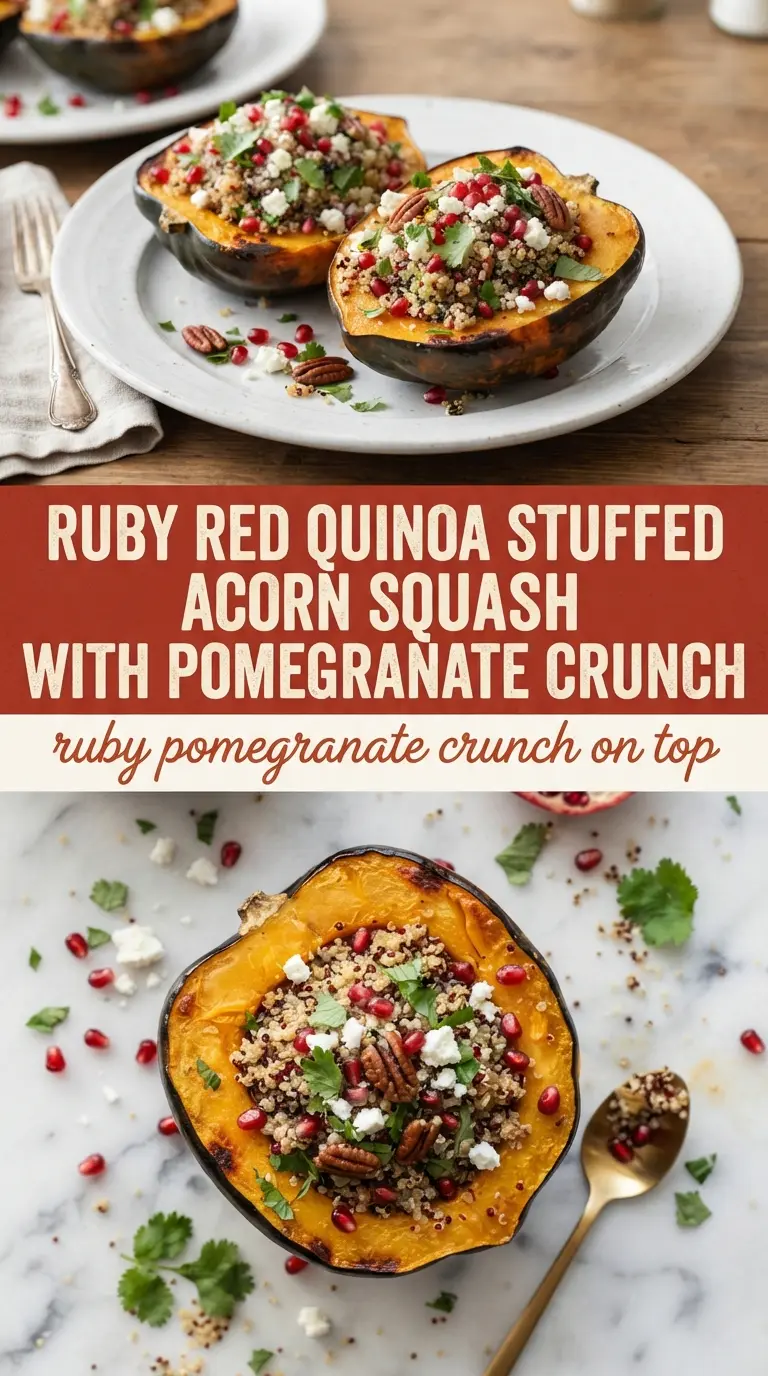
- Acorn squash — This is the edible bowl and the sweet, soft contrast to the filling. Look for squash that feels heavy for its size with deep green skin and a dull finish. Smaller squash are often easier to halve and roast evenly.
- Quinoa — Quinoa gives the filling structure without weighing it down. Cook it ahead and let it cool a little so it doesn’t turn the beans gummy when you mix everything together. If you only have rice, it works, but the filling will be a little heavier.
- Black beans — They bring body and protein, and they hold up well to roasting without turning pasty. Drain them well so the filling doesn’t puddle in the squash. If you use canned chickpeas instead, you’ll get a firmer, nuttier texture.
- Corn — Corn adds sweetness and a little burst of juiciness that keeps the filling from tasting dense. Frozen corn is fine here; thaw it first or warm it briefly so it doesn’t cool down the whole mixture.
- Feta and pomegranate seeds — These are the finishing notes that make the dish feel complete. Feta gives salt and tang, while pomegranate seeds bring crunch and brightness. If you need a dairy-free version, skip the feta and add avocado after baking or a spoonful of tahini sauce.
- Cumin and olive oil — Cumin ties the filling together with a warm, earthy note, and olive oil carries that flavor through the beans and quinoa. Don’t skip the oil; it helps the filling taste seasoned instead of dry.
Building the Filling and Finishing the Squash
Roasting the Halves First
Set the squash halves cut-side down on a parchment-lined baking sheet and roast them until the flesh is tender and the edges just start to deepen in color. You’re looking for a fork that slides in without force, but the squash should still hold a clean shape. If you pull it too early, the filling won’t settle properly; if you roast it too long, the halves collapse when you flip them.
Mixing the Filling While the Squash Cooks
Stir together the cooked quinoa, black beans, corn, cumin, olive oil, salt, and pepper in a bowl. The filling should look loose and well coated, not dry and clumpy. If your quinoa is clumping, fluff it with a fork first so the oil can coat every grain and the filling stays light.
Stuffing and Returning It to the Oven
Flip the squash right-side up and spoon the filling into the centers, packing it gently without pressing it down hard. The squash can hold more than it looks like it can, so mound the filling slightly if needed. Bake just long enough to heat the filling through and let the squash edges caramelize a bit more.
The Last-Minute Toppings
Add the feta, pomegranate seeds, and cilantro after the squash comes out of the oven. That keeps the pomegranate bright and the herbs fresh instead of wilted. If you add them too early, the feta softens into the filling and the cilantro loses its clean finish.
How to Adapt This for Dairy-Free, Grain-Free, or a Different Pantry
Dairy-Free Version
Leave off the feta and finish with sliced avocado, tahini, or a spoonful of dairy-free yogurt. You lose the salty tang of feta, so add a little extra salt and a squeeze of lemon to keep the filling bright.
Swap the Grain
Brown rice, farro, or couscous can replace quinoa if that’s what you have. Quinoa keeps the dish light and protein-rich, while farro gives it a chewier bite and couscous makes the filling softer.
Make It More Hearty
Add sautéed onions, chopped spinach, or roasted red peppers to the filling if you want more vegetables in the mix. Just cook off any extra moisture first, or the filling turns soft instead of fluffy.
Storage and Reheating
- Refrigerator: Store filled squash halves in containers up to 4 days. The squash softens a little more as it sits, but the flavor holds well.
- Freezer: It freezes best without the fresh toppings. Wrap the filled halves tightly and freeze for up to 2 months, then add feta, pomegranate, and cilantro after reheating.
- Reheating: Warm in a 350°F oven covered loosely with foil until hot through. The mistake to avoid is microwaving too long, which makes the squash watery and the filling dry in patches.
Answers to the Questions Worth Asking
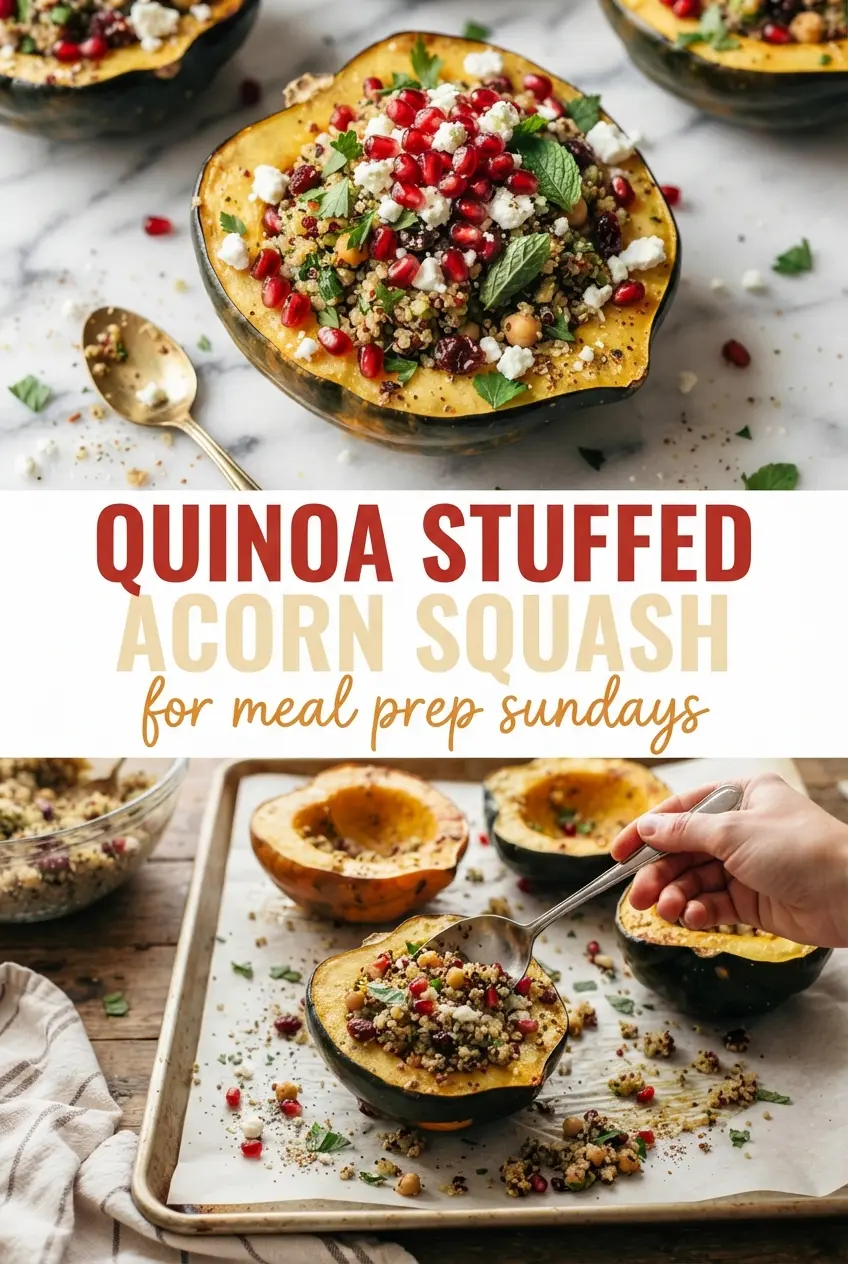
Quinoa Stuffed Acorn Squash
Ingredients
Equipment
Method
- Heat oven to 400°F. Place squash halves cut-side down on a sheet pan and roast for 30 minutes, until the flesh is tender.
- In a bowl, mix cooked quinoa, black beans, corn kernels, ground cumin, and olive oil. Stir until evenly combined and season with salt and pepper to taste.
- Flip the roasted squash halves cut-side up. Fill each half with the quinoa mixture.
- Bake the filled squash at 400°F for 10 minutes, just until heated through and the edges look slightly steamy.
- Remove from the oven and immediately top with crumbled feta, pomegranate seeds, and chopped cilantro. Serve warm for the best contrast between tender squash and bright toppings.