
Raspberry almond cake bakes up with the kind of tender crumb that makes people go back for a second slice before the pan has even cooled. The raspberries stay bright and juicy, the almond flour keeps the cake soft without making it heavy, and the sliced almonds on top give every bite a little crunch. It feels polished, but it still tastes like something made at home with a calm hand and good ingredients.
What makes this version work is the balance between structure and moisture. Regular flour gives the cake enough body to hold the berries, while almond flour brings richness and a slight frangipane-like softness that plain flour can’t match. Tossing the raspberries in a little flour before folding them in keeps them from sinking to the bottom, which is the difference between a pretty slice and a cake with all the fruit stuck in one layer.
Below you’ll find the small details that keep the crumb tender, the berries distributed, and the top golden instead of pale. The process is simple, but a few careful moves matter here.
The crumb came out so tender and the raspberries stayed evenly spread instead of sinking to the bottom. I also loved the almond topping for a little crunch on top.
Keep this raspberry almond cake handy for the kind of dessert that looks elegant, slices cleanly, and still comes together with pantry basics.
The Trick to Keeping the Raspberries Up Where They Belong
The biggest mistake with berry cakes is folding fruit into batter that is too loose. Thin batter can’t hold the raspberries in place, so they sink and leave you with a dense bottom layer and a plain top. This batter has enough structure from the flour and almond flour to suspend the fruit, but it still needs a light hand once the berries go in.
Flouring the raspberries before adding them isn’t just old-fashioned advice. That thin coat grabs onto the batter and slows the berries down as the cake bakes. Fold them in at the very end, and stop as soon as they’re distributed. Overmixing at this stage breaks the berries and turns the batter pink and streaky.
What Each Ingredient Is Actually Doing in This Dish
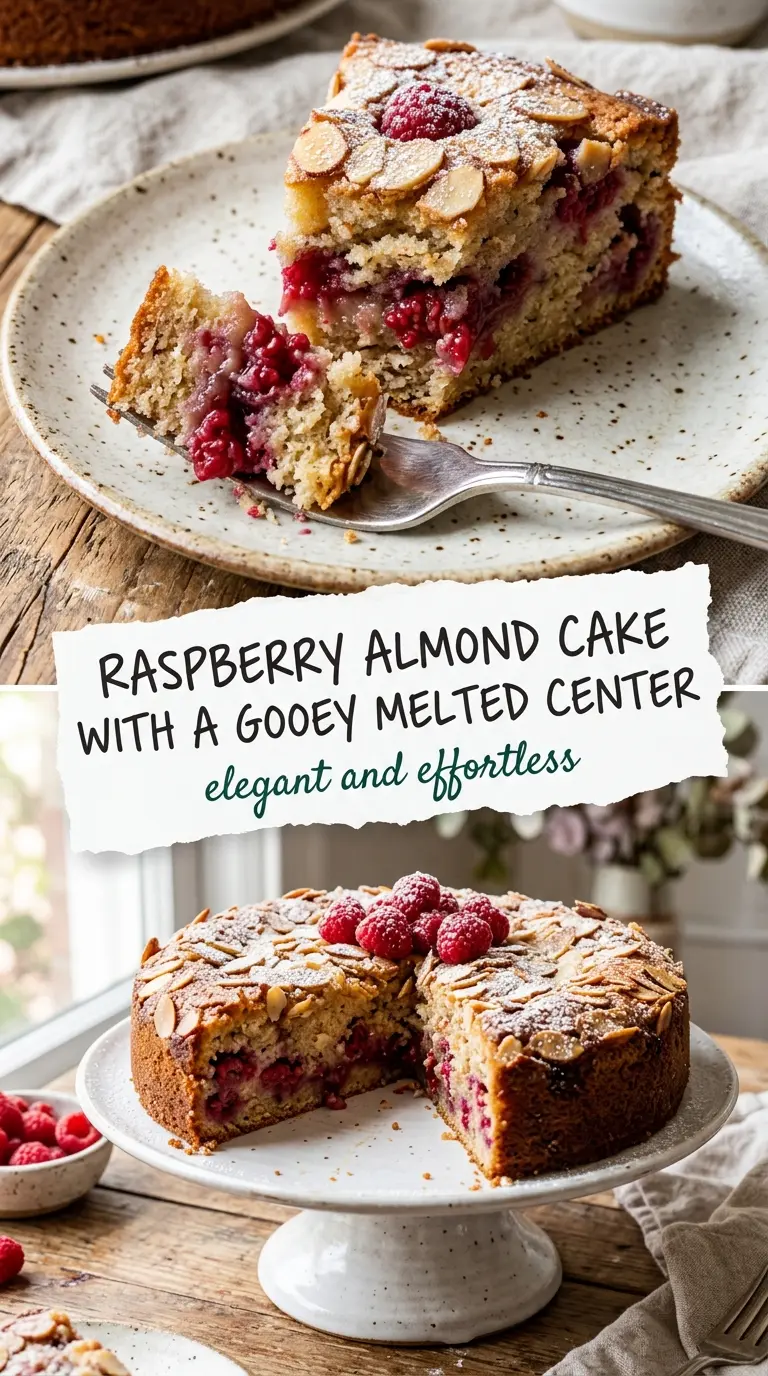
- Almond flour — This is what gives the cake its soft, rich texture and that subtle almond-cake flavor that regular flour alone can’t provide. Blanched almond flour works best here. Almond meal will make the crumb heavier and a little speckled, which is fine if that’s what you have, but the texture won’t be as fine.
- Butter — Softened butter beats with sugar into a fluffy base that traps air and helps the cake rise properly. If the butter is too cold, the mixture stays dense; if it’s melted, the cake loses structure. Let it soften on the counter until it dents easily when pressed.
- Fresh raspberries — Fresh berries hold their shape better than frozen ones in this cake. Frozen raspberries release too much juice and can make the batter muddy. If frozen is all you have, use them straight from the freezer and don’t thaw them first, but expect more streaking and a softer crumb.
- Almond extract — A small amount goes a long way. It sharpens the almond flavor in the flour and gives the cake its distinct aroma. Too much can turn bitter fast, so stick to the measured teaspoon.
- Sliced almonds — These add the finish you taste first when the cake comes out of the oven: toasted, crisp, and lightly nutty. They don’t just decorate the top; they protect it a little during baking and give each slice contrast.
Building the Batter Without Beating the Air Out of It
Creaming the Butter and Sugar
Beat the softened butter and sugar until the mixture looks pale and fluffy, not greasy or grainy. This is where the cake gets its lift, so give it enough time to lighten. If the mixture stays dense, the finished cake can bake up tight instead of tender. Scrape down the bowl once or twice so the butter under the paddle doesn’t stay hidden at the bottom.
Adding the Eggs and Almond Extract
Beat in the eggs one at a time so the batter stays smooth. If you dump them in all at once, the mixture can look curdled and split, which makes the next stage harder to blend cleanly. Add the almond extract with the last egg or right after, so it disperses evenly through the batter.
Folding in the Dry Ingredients and Raspberries
Stir in the flour, almond flour, and baking powder just until you stop seeing dry streaks. Overmixing at this point develops too much gluten and steals the softness you want from the almond flour. Toss the raspberries in a little flour, then fold them in gently with a spatula so they stay intact. A few streaks of batter around the berries are better than a fully beaten mixture.
Baking to a Tender Center
Pour the batter into the greased pan, spread it level, and scatter the sliced almonds over the top. Bake until the top is golden and a toothpick comes out clean or with a few moist crumbs, usually around 40 to 45 minutes. If the top browns too quickly, lay a loose piece of foil over it during the last part of baking. Let the cake cool in the pan for a bit before turning it out so the crumb has time to set.
How to Adapt This Cake for Different Kitchens and Different Cravings
Make It Dairy-Free
Swap the butter for a plant-based butter stick that’s meant for baking. The cake will still hold together and brown nicely, though the flavor will be a little less rich than with dairy butter. Use one with at least some fat, not a tub spread, or the crumb can turn soft and oily.
Use Frozen Raspberries When That’s What’s in the Freezer
Keep the berries frozen and fold them in at the very end. Thawing first releases too much juice and can streak the batter. The cake will bake up a little more moist and the fruit pockets may be softer, but the flavor stays bright.
Make It Gluten-Free
Replace the flour with a good 1:1 gluten-free baking blend that already includes xanthan gum. The almond flour helps keep the texture tender, but the cake still needs that binder if you want clean slices. Expect a slightly more delicate crumb and let it cool fully before cutting.
Storage and Reheating
- Refrigerator: Store covered for up to 4 days. The crumb stays moist, though the raspberry pockets soften a little.
- Freezer: This cake freezes well. Wrap individual slices tightly and freeze for up to 2 months, then thaw in the refrigerator so the texture stays intact.
- Reheating: Warm slices in the microwave for 10 to 15 seconds or in a low oven. Heat just enough to take the chill off; too much heat dries out the almond crumb and makes the berries break down.
Questions I Get Asked About This Recipe
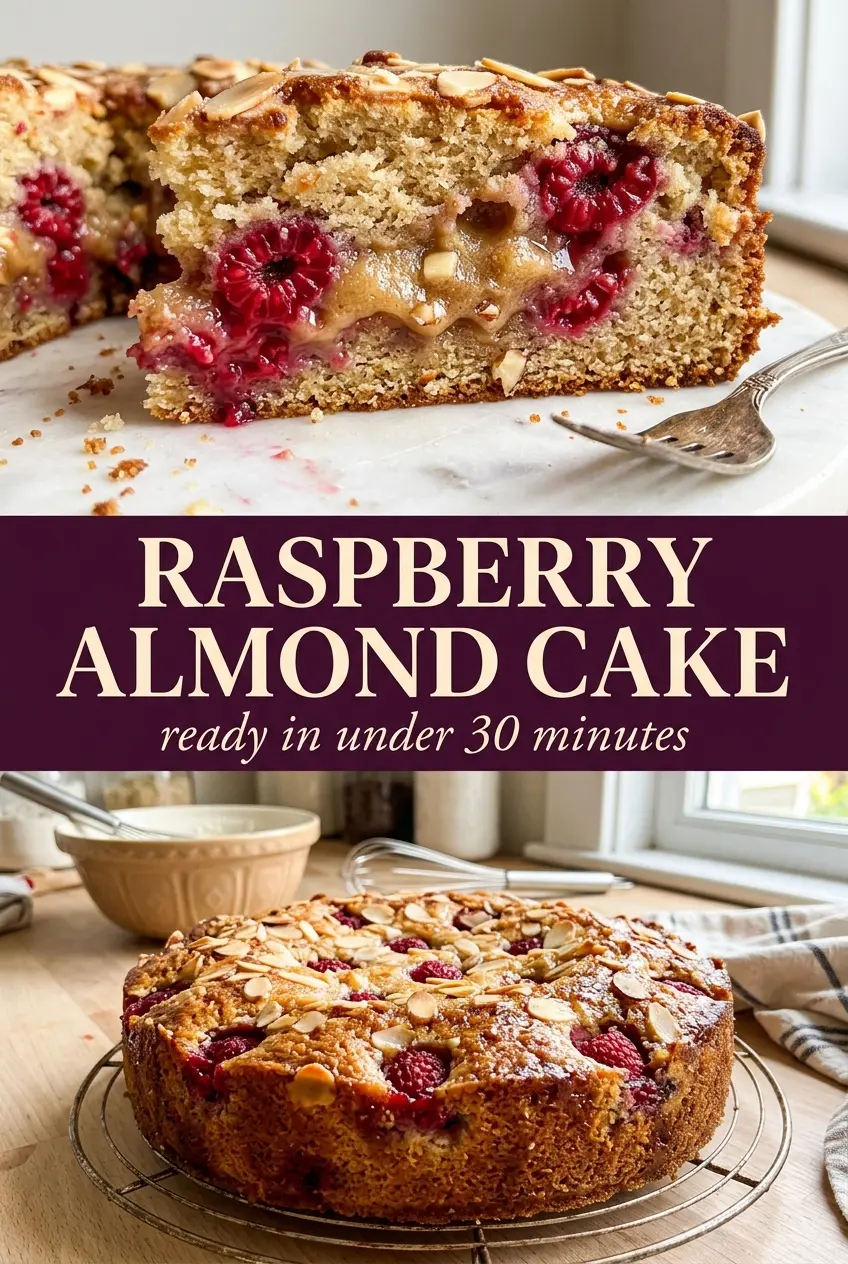
Raspberry Almond Cake
Ingredients
Equipment
Method
- Preheat oven to 350°F, then grease a cake pan so the cake releases cleanly.
- Slice any larger raspberries into halves if needed, so they distribute evenly without large pockets.
- Cream butter and sugar together until fluffy, using a smooth, pale mixture as the visual cue.
- Beat in eggs one at a time, then add almond extract, scraping the sides so everything blends.
- Fold in flour, almond flour, and baking powder until just combined, stopping as soon as you don’t see dry streaks.
- Gently fold in raspberries, using a light hand, then pour batter into the pan.
- Top with sliced almonds for a toasted-looking crust during baking.
- Bake at 350°F for 40-45 minutes until a toothpick comes out clean, with the center set and the edges lightly golden.