
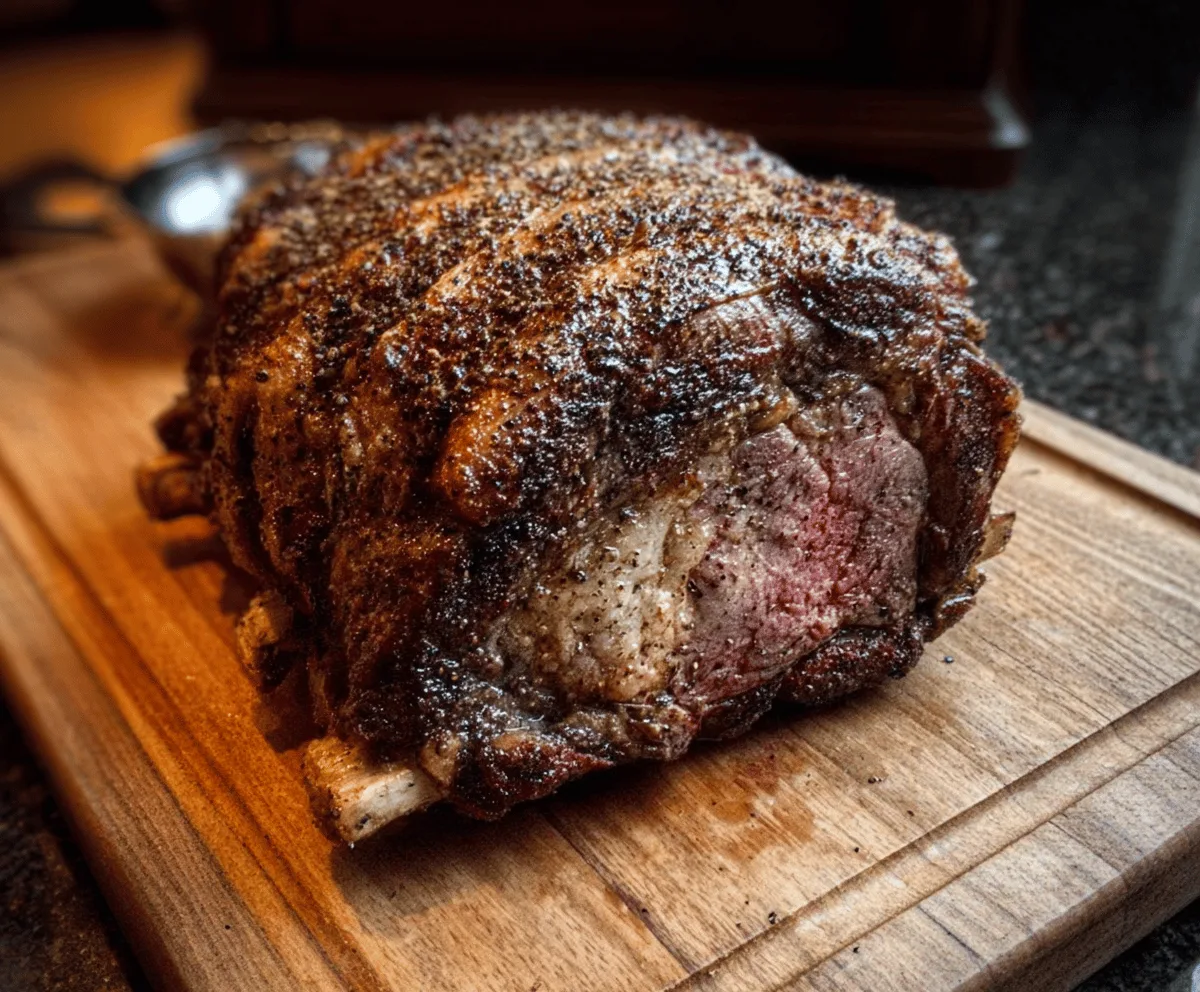
Roasted Bone-In Prime Rib is a classic, impressive dish that brings rich flavor and juicy, tender meat right to your table. The bone helps keep the prime rib extra moist while roasting, and the outside gets that perfect, savory crust. It’s the kind of meal that feels special but is actually pretty simple to make when you know the basics.
I love making prime rib for family gatherings or special occasions because it’s a crowd-pleaser and it fills the room with this amazing aroma. One tip I’ve learned: letting the meat rest after roasting helps lock in all those delicious juices, so don’t rush it! Also, seasoning it generously with salt, pepper, and herbs really makes the flavor shine.
Serving this prime rib with some horseradish sauce or a simple au jus on the side always brings everyone to the table happily. I like to keep the sides straightforward—think roasted veggies or buttery mashed potatoes—so the star of the meal can really take center stage. It’s a cozy, hearty dish that I always look forward to making and sharing.
Key Ingredients & Substitutions
Bone-In Prime Rib: The bone adds flavor and keeps the meat juicy. If unavailable, boneless prime rib works too, but the bone gives a better roast.
Garlic and Fresh Herbs: Fresh garlic, rosemary, and thyme brighten the taste. If fresh herbs are hard to find, dried versions work—just use about 1/3 the amount.
Kosher Salt: Essential for seasoning and crust formation. If you only have table salt, use less—about half the amount—as it’s more concentrated.
Olive Oil: Helps the seasoning stick and promotes browning. You can substitute with avocado oil or any neutral oil.
Dijon Mustard (optional): Adds a subtle tang to the rub and helps create a flavorful crust. Skip if you prefer a simpler taste.
How Do You Get That Perfect Crust and Tender Interior on Prime Rib?
Getting the crust and juicy inside right requires two heat stages:
- Start with a hot oven (450°F) to sear the outside quickly. This creates a flavorful crust.
- Lower the oven to 325°F to cook the meat evenly without drying it out.
Use a meat thermometer to check doneness—insert into the thickest part, avoiding the bone. Also, letting the roast rest after cooking is key. Tent it loosely with foil and wait 20-30 minutes to let juices settle, keeping the meat tender and juicy.
Equipment You’ll Need
- Roasting pan with a rack – I prefer this so air can circulate around the meat for even cooking.
- Meat thermometer – essential for checking doneness and avoiding overcooking.
- Kitchen twine (if needed) – helpful for tying any loose sections of the roast for even cooking.
- Large cutting board and sharp knife – for slicing the prime rib at the table.
- Aluminum foil – for tenting the meat as it rests, to keep it warm and juicy.
Flavor Variations & Add-Ins
- Herb crusts: Mix in rosemary, thyme, and parsley with your rub for a fresh herb kick.
- Spiced rubs: Add paprika, chili powder, or cumin to give the beef a smoky or spicy flavor.
- Garlic butter: Serve slices topped with melted garlic butter or include butter in your rub for extra richness.
- Different herbs: Experiment with sage, oregano, or basil for varied aroma and taste.
How to Make Roasted Bone-In Prime Rib?
Ingredients You’ll Need:
- 1 (5-6 pound) bone-in prime rib roast, trimmed
- 2 tablespoons olive oil
- 4 cloves garlic, minced
- 2 tablespoons kosher salt
- 1 tablespoon freshly ground black pepper
- 1 tablespoon fresh rosemary, finely chopped
- 1 tablespoon fresh thyme, finely chopped
- Optional: 1-2 teaspoons Dijon mustard
- Fresh herbs (rosemary, thyme) for garnish
How Much Time Will You Need?
This recipe takes about 15 minutes to prepare, plus around 1½ to 2 hours to roast depending on your desired doneness. You’ll also want to allow 20-30 minutes for resting time after roasting. Overall, plan for around 2 to 2½ hours from start to finish.
Step-by-Step Instructions:
1. Prepare the Prime Rib:
Take your prime rib out of the fridge about 2 hours before cooking so it comes to room temperature. This helps it cook evenly. Pat it dry with paper towels to remove any moisture.
2. Make the Seasoning Rub:
In a small bowl, mix together the olive oil, minced garlic, kosher salt, fresh ground black pepper, chopped rosemary, and thyme. If you like, add Dijon mustard to the mix for extra flavor.
3. Season the Roast:
Rub the seasoning mixture all over the prime rib, making sure to cover all sides well, especially the fatty top. This will help create a delicious crust as it roasts.
4. Preheat Your Oven and Start Roasting:
Preheat your oven to 450°F (230°C). Place the roast boneside down on a rack in a roasting pan. Roast it in the hot oven for 15 to 20 minutes to develop a crust on the outside.
5. Lower Temperature and Continue Roasting:
After the initial high-heat roast, lower the oven temperature to 325°F (163°C). Roast the meat until it reaches the internal temperature for your preferred doneness:
- Rare: 120-125°F (49-52°C)
- Medium Rare: 130-135°F (54-57°C)
- Medium: 140-145°F (60-63°C)
Use a meat thermometer inserted into the thickest part of the roast without touching the bone to check.
6. Rest the Meat:
When the prime rib has reached your desired temperature, remove it from the oven and loosely cover it with aluminum foil. Let it rest for 20-30 minutes. This step helps keep the meat juicy by letting the juices settle.
7. Slice and Serve:
Carve the prime rib into slices between the bones. Arrange on a platter and garnish with fresh rosemary and thyme sprigs. Serve with your favorite sides and sauces like horseradish cream or au jus for a classic touch.
Can I Use Frozen Prime Rib for This Recipe?
Yes, but be sure to fully thaw it in the refrigerator for 2-3 days before cooking. Cooking from frozen won’t yield an even roast and can affect the texture.
How Should I Store Leftover Prime Rib?
Wrap leftovers tightly in foil or place them in an airtight container. Store in the fridge for up to 3-4 days. Reheat gently in the oven or skillet to keep it tender.
Can I Make the Seasoning Rub Ahead of Time?
Absolutely! Mix the rub ingredients and store in an airtight container in the fridge for up to 2 days. Let it come to room temperature before applying to the roast.
What’s the Best Way to Check Doneness?
Use a meat thermometer inserted into the thickest part of the roast without touching the bone. This gives the most accurate reading for perfect doneness.