
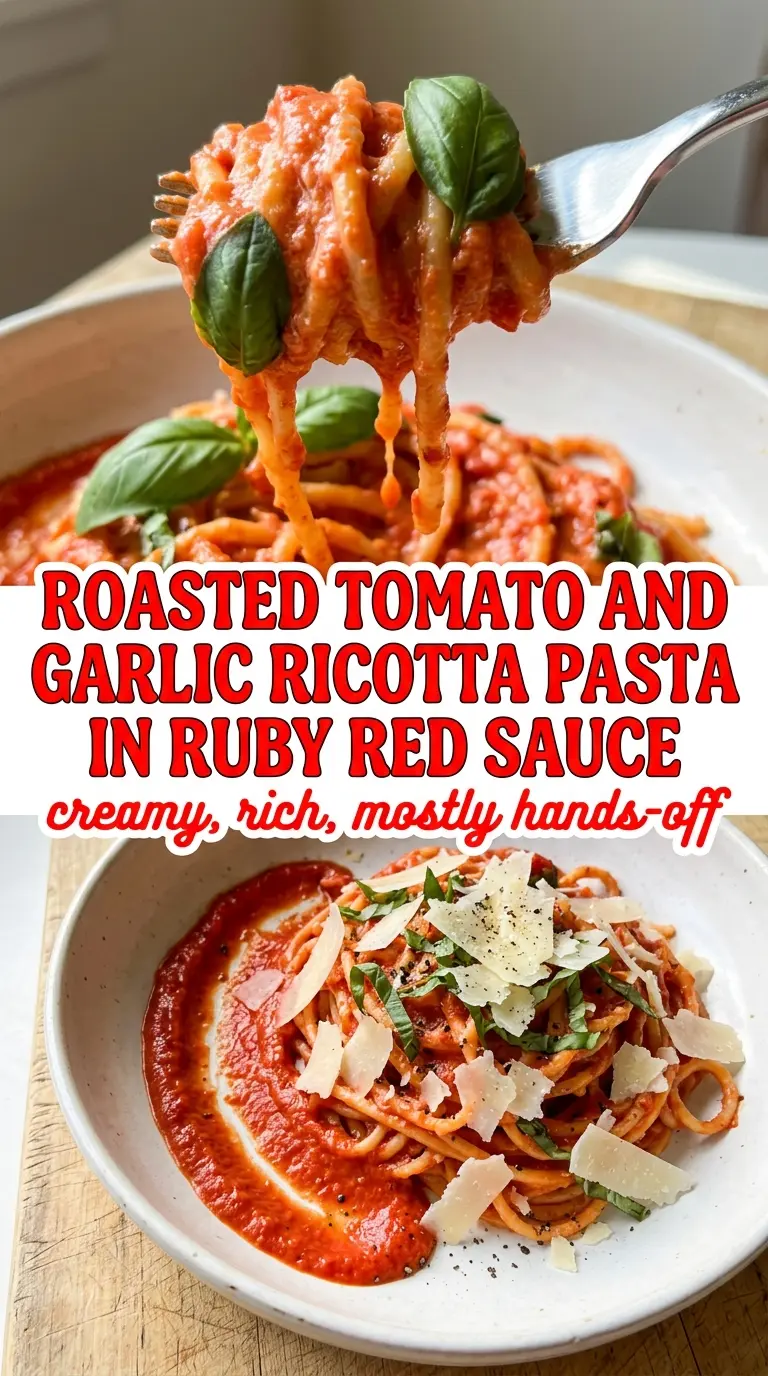
Blistered tomatoes, sweet roasted garlic, and ricotta turn into a sauce that clings to every ridge of pasta instead of sliding off in a puddle. The tomatoes go jammy in the oven, the garlic mellows into something soft and almost buttery, and the ricotta gives the sauce body without making it heavy. It tastes like you spent a lot more time at the stove than you actually did.
What makes this version work is the balance. Roasting concentrates the tomatoes before they ever hit the blender, which means you get depth instead of a thin pink sauce. The lemon juice wakes everything up at the end, and the Parmesan adds enough salt and structure to keep the ricotta from tasting flat. I also like adding the basil after the pasta goes back into the pot so it stays fresh instead of disappearing into the heat.
Below you’ll find the small details that matter here: how dark the tomatoes should get, why a splash of pasta water helps the sauce turn silky, and the one step that keeps the ricotta from turning grainy.
The tomatoes turned into the best jammy sauce and the ricotta made it so creamy without being heavy. I tossed in a little pasta water at the end and it coated the noodles perfectly. My husband went back for a second bowl before I even sat down.
Roasted Tomato and Garlic Ricotta Pasta is the kind of creamy, jammy pasta night dinner you’ll want to keep close for busy evenings.
The Reason the Sauce Turns Silky Instead of Grainy
Ricotta can go from creamy to sandy fast if it gets blasted with heat or blended without enough moisture. The fix is simple: roast the tomatoes until they collapse and release their juices, then blend them with the ricotta and a little pasta water if needed so the sauce has enough liquid to emulsify. That gives you a smooth sauce that coats the pasta instead of clumping around it.
The other thing that matters here is temperature control at the end. Once the sauce is blended, it doesn’t need a hard boil in the pot. Tossing it with the hot pasta over medium heat is enough to bring everything together; if the pan gets too hot, the dairy can turn tight and the sauce loses that glossy finish.
What Each Ingredient Is Actually Doing in This Dish
- Cherry tomatoes — These roast faster than larger tomatoes and collapse into a concentrated, naturally sweet base. If you only have grape tomatoes, they work the same way, though they can be a little firmer and slightly less juicy.
- Garlic and shallots — Both soften in the oven and lose the sharp bite they have raw. Whole peeled garlic cloves keep the sauce mellow; sliced shallots add a little depth and a faint sweetness that rounds out the tomatoes.
- Ricotta — This is what gives the sauce body and that soft, plush texture. Whole-milk ricotta blends smoother than part-skim, and it matters here; if you use a drier ricotta, add a splash more pasta water when blending.
- Parmesan — Parmesan sharpens the sauce and keeps the ricotta from tasting flat. Freshly grated is better than the shelf-stable kind because it melts in more evenly and gives the sauce a cleaner finish.
- Lemon juice — A small amount brightens the roasted flavors and keeps the sauce from tasting heavy. Don’t skip it unless you replace it with another acid, because the dish needs that lift at the end.
- Basil — Add it at the end so it stays fragrant and green. If you stir it in too early, it fades into the sauce and loses the fresh note that makes the whole bowl taste alive.
Building the Roasted Base Without Drying It Out
Roasting Until the Tomatoes Collapse
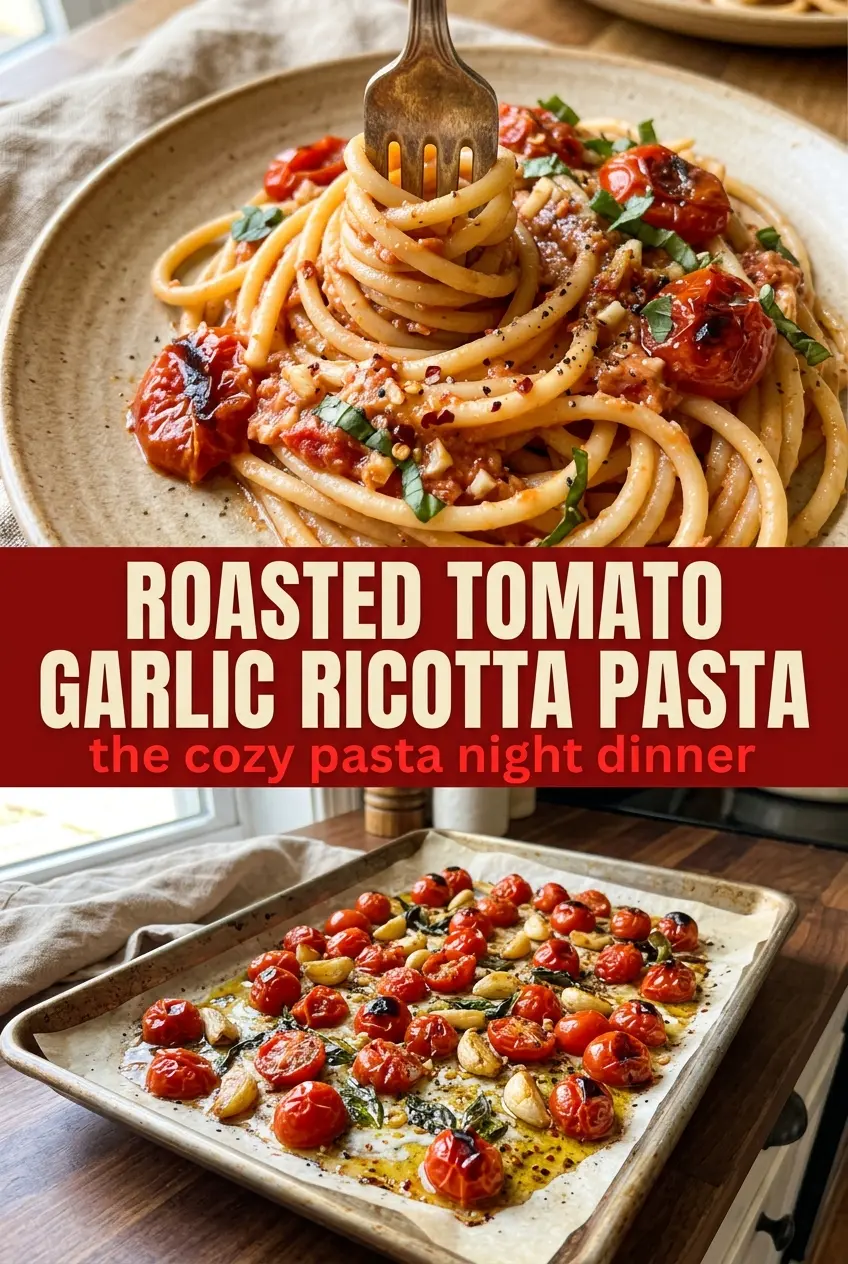
Toss the tomatoes, garlic, shallots, oregano, salt, pepper, and olive oil directly on the tray and spread everything in a single layer. You want the tomatoes blistered and split, with some caramelized edges and a little juice pooling on the pan. If the tray looks crowded, the vegetables steam instead of roast, and you’ll lose the deep flavor this sauce depends on.
Blending the Sauce to the Right Texture
Scoop the hot roasted mixture into a blender with the ricotta, Parmesan, red pepper flakes, and lemon juice. Blend until smooth and stop before it turns foamy. If the sauce seems thick or the blender blades are catching, add a spoonful or two of the reserved pasta water; that loosens the mixture without watering it down.
Finishing in the Pot
Return the drained pasta to the pot, pour in the sauce, and add the basil right away so the residual heat perfumes the dish. Stir over medium heat only until the pasta is coated and the sauce is steaming. If you cook it too long at this stage, the ricotta can tighten up and the sauce loses that silky finish.
Gluten-Free Version
Use a sturdy gluten-free pasta with some shape, like penne or fusilli, because the sauce needs ridges to cling to. Cook it just to tender; overcooked gluten-free pasta can turn soft once it gets tossed with the hot sauce.
Dairy-Free Swap
Use a plain dairy-free ricotta-style cheese and skip the Parmesan, then add a little extra salt and a spoonful of nutritional yeast for some of the savory depth. The sauce will be a touch looser and less rich, but the roasted tomatoes still carry the dish.
Make It More Tomato Forward
Roast an extra handful of tomatoes and leave a few whole after blending, then stir them into the finished pasta. That gives the dish more texture and a brighter, chunkier sauce that tastes closer to a simple roasted tomato pasta than a creamy pink sauce.
Storage and Reheating
- Refrigerator: Store leftovers in an airtight container for up to 4 days. The sauce will thicken as it chills.
- Freezer: The sauce freezes better than the finished pasta. Freeze the blended sauce for up to 2 months, then cook fresh pasta when you’re ready to use it.
- Reheating: Rewarm gently on the stove with a splash of water or milk, stirring until the sauce loosens again. High heat can make the ricotta seize and turn grainy.
Answers to the Questions Worth Asking
Roasted Tomato and Garlic Ricotta Pasta
Ingredients
Equipment
Method
- Preheat the oven to 400°F. Toss the cherry tomatoes, garlic, shallots, salt and pepper, dried oregano, and olive oil together, then spread on a lined baking tray so cut sides face down where possible.
- Roast for 15 to 20 minutes at 400°F, until the tomatoes are blistered and soft with browned edges and fragrant garlic.
- Cook the pasta according to package directions until al dente, reserving 1/2 cup of pasta water before draining to loosen the sauce.
- Blend the roasted tomato mixture with ricotta cheese, grated Parmesan cheese, red pepper flakes, and lemon juice until smooth, stopping to scrape the blender as needed for a consistent ruby-red texture.
- Return the drained pasta to the pot, add the basil and sauce, and toss over medium heat until piping hot and well coated, adding a splash of reserved pasta water if needed for silkiness.
- Serve with extra grated cheese and cracked black pepper on top for a finishing hit of salty, peppery flavor.