
Roasted tomato sauce tastes like tomatoes turned up to their best setting: sweeter, deeper, and a little smoky around the edges. The oven does the heavy lifting here, concentrating the juices until the tomatoes slump and caramelize instead of tasting thin or watery. Once you’ve had sauce made this way, it’s hard to go back to the quick simmer-only version.
What makes this one work is the combination of high heat and restraint. The tomatoes roast cut-side up so the juices stay on the pan and reduce instead of steaming away, and the garlic softens in its skins until it turns mellow and spreadable. Fresh basil goes in after blending, which keeps the sauce bright instead of muddy. If your tomatoes are a little uneven in ripeness, roasting evens them out and pulls everything into a richer, more balanced sauce.
Below you’ll find the timing that gives you deep color without drying the sauce out, plus the easiest way to freeze it in portions you’ll actually use later.
The tomatoes came out sweet and jammy, and the roasted garlic made the sauce taste slow-cooked even though it was mostly hands-off. I froze half in flat bags and it thawed perfectly for pasta night.
Roasted tomato sauce with caramelized edges and fresh basil belongs in your freezer for quick pasta nights.
The Reason This Sauce Tastes Slow-Cooked After an Hour in the Oven
Roasting tomatoes changes the sauce before you ever blend it. The oven drives off water, concentrates the natural sugars, and gives you those browned spots that taste richer than anything a quick boil can create. If your sauce usually tastes flat, the problem is often that the tomatoes never had a chance to caramelize before they were turned into liquid.
The other trick is keeping the tomatoes in a shallow layer on the sheet pan. Crowding them traps steam, and steam is the enemy of deep flavor here. You want the cut edges to darken a little, the skins to wrinkle, and the garlic to turn soft enough that it squeezes out like paste.
What Each Ingredient Is Actually Doing in This Sauce
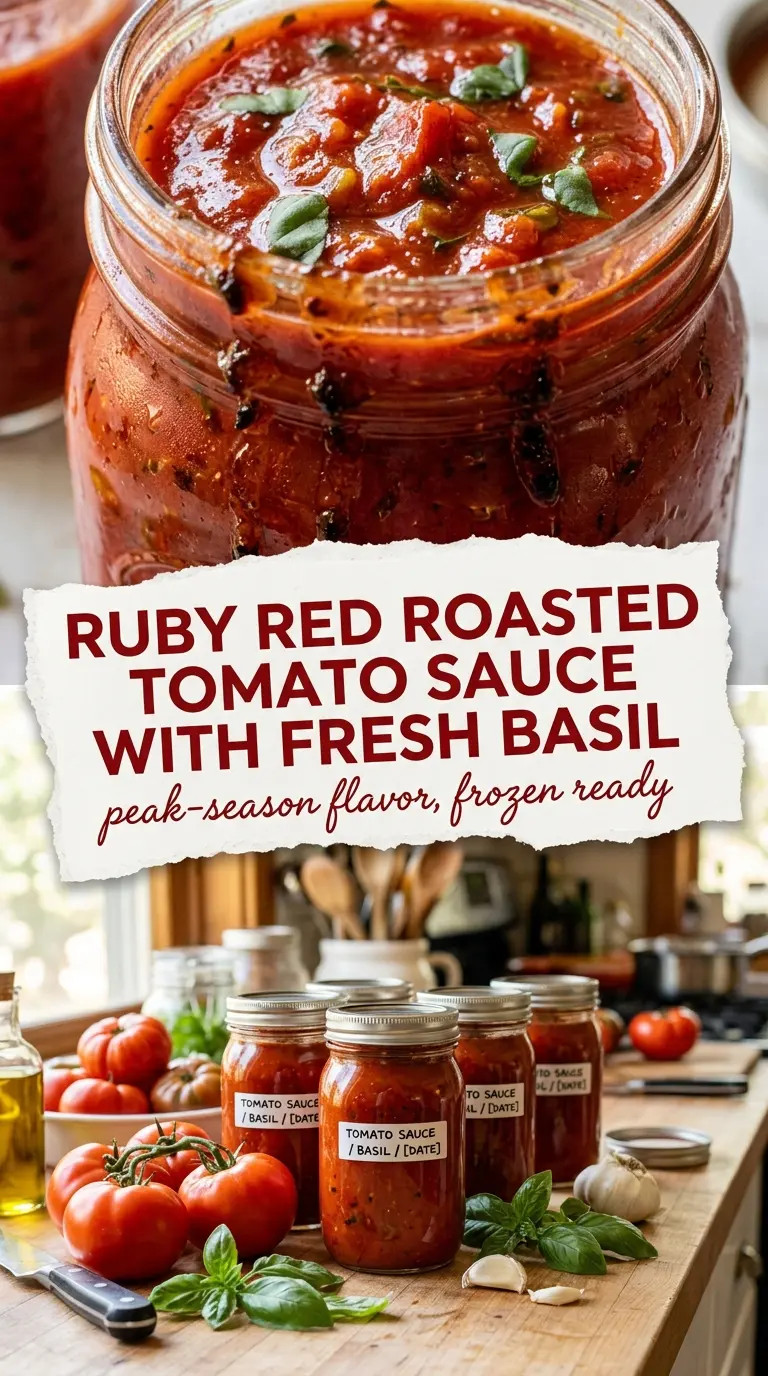
- Ripe tomatoes — These are the base of the sauce, and the ripeness matters more than variety. The sweeter and juicier they are to start with, the better the roasted sauce will taste. If your tomatoes are a mix of sizes or varieties, that’s fine; just use the best-flavored ones you can get.
- Garlic — Roasting a whole head of garlic mellows the sharp bite and gives the sauce a round, savory backbone. Halving the head exposes enough surface area to soften the cloves without burning them. If you only have pre-peeled garlic, it will work in a pinch, but it won’t get that same sweet, creamy finish.
- Olive oil — This helps the tomatoes roast instead of dry out and carries the flavor of the garlic and basil through the whole batch. Use a decent olive oil here since the sauce doesn’t have much else to hide behind. A neutral oil works if that’s what you have, but the finished sauce will taste less full.
- Fresh basil — Basil goes in after roasting because high heat dulls its brightness fast. Blending it in at the end keeps the sauce green, fragrant, and fresh-tasting. Dried basil won’t give you the same lift, so use it only if that’s your only option and add a smaller amount.
Getting the Tomatoes to Caramelize Instead of Steam
Set Up the Pan for Browning
Heat the oven to 400°F and spread the halved tomatoes cut-side up on a sheet pan. Give them space. If they’re packed too tightly, they’ll give off enough steam to soften each other instead of browning around the edges. Drizzle with olive oil and season before they go in, since the salt helps draw out moisture and the oil helps the surfaces color.
Roast Until the Edges Collapse
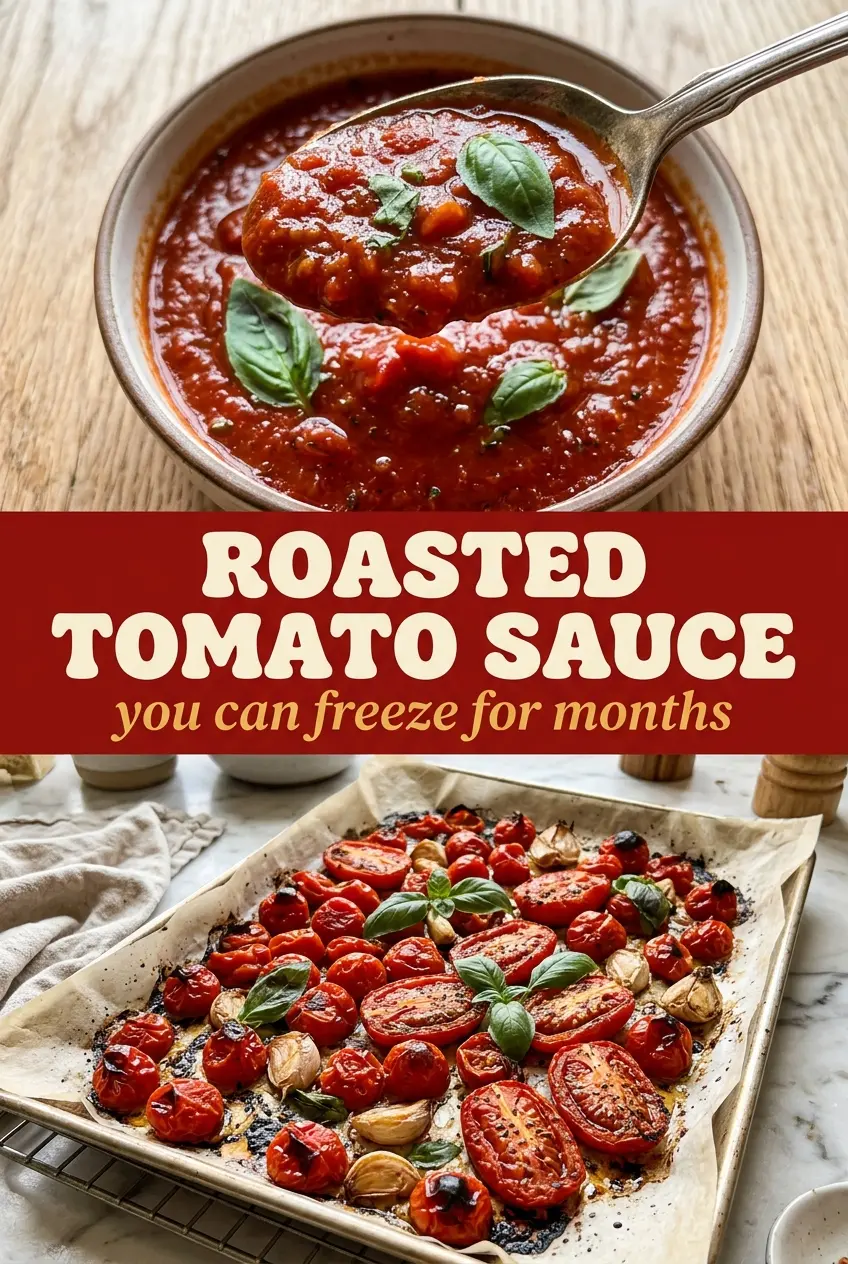
After 40 to 45 minutes, the tomatoes should look slumped, wrinkled, and a little sticky around the pan. You want some browned spots and concentrated juices, not blackened skins and dried-out flesh. The garlic should be soft enough that a gentle squeeze pops the cloves right out. If the pan is still pale and wet, give it more time; watery tomatoes make watery sauce.
Blend, Then Adjust the Texture
Squeeze the roasted garlic from its skins into a blender with the tomatoes and add the basil. Blend until smooth, or leave it slightly rustic if you like a little texture. If the sauce seems loose, simmer it briefly on the stovetop until it coats a spoon. That final simmer should be short; cook it down too far and the fresh roasted flavor gets muted.
Three Ways to Use This Sauce a Little Differently
Make It Dairy-Free and Naturally Vegan
This sauce is already vegan as written, which is one of the reasons it’s such a good freezer staple. Serve it over pasta, use it on pizza, or spoon it over roasted vegetables without changing a thing. If you add cheese later, do it at the table so the base stays flexible for everyone.
Make It Thicker for Pizza or Baked Pasta
If you want a thicker sauce, simmer it after blending until it leaves a clear trail on the spoon. That extra reduction makes it cling better to dough and pasta bakes. Don’t overdo it, though, or the sauce can turn overly concentrated and lose the fresh tomato taste that makes this version special.
Swap the Basil for Another Herb
If basil isn’t in the kitchen, parsley gives you brightness without changing the tomato flavor much, while oregano pushes the sauce toward a more classic Italian profile. Add softer herbs after blending, just like the basil, so they stay fresh. Hardier herbs can go in for the last few minutes of roasting if you want a deeper, less grassy finish.
Storage and Reheating
- Refrigerator: Store in a sealed container for up to 5 days. It may thicken as it chills.
- Freezer: Freezes beautifully for up to 6 months. Cool completely, portion into flat freezer bags or containers, and leave a little headspace for expansion.
- Reheating: Thaw in the fridge overnight, then warm gently on the stovetop over low heat. The most common mistake is boiling it hard, which dulls the roasted flavor and can make the texture taste harsh instead of rounded.
The Things That Trip People Up With This Sauce
Roasted Tomato Sauce
Ingredients
Equipment
Method
- Preheat the oven to 400°F. This ensures the tomatoes caramelize quickly once they go in.
- Arrange the halved tomatoes and halved garlic on a sheet pan, then drizzle with olive oil and season with salt and pepper. Spread everything in a single layer so edges roast and brown.
- Roast at 400°F for 40-45 minutes until deeply caramelized and softened. Look for darker, jammy spots around the tomato edges.
- Squeeze the roasted garlic cloves from their skins into a blender with the roasted tomatoes. Keep everything hot for easier blending into a smooth sauce.
- Add fresh basil and blend until smooth. Pause and scrape down the sides if needed for an even texture.
- Simmer briefly on the stovetop if a thicker consistency is desired. Stir occasionally and stop as soon as the sauce coats a spoon.
- Cool the sauce completely before freezing in portioned containers. Rapid cooling helps preserve flavor and texture for later use.