
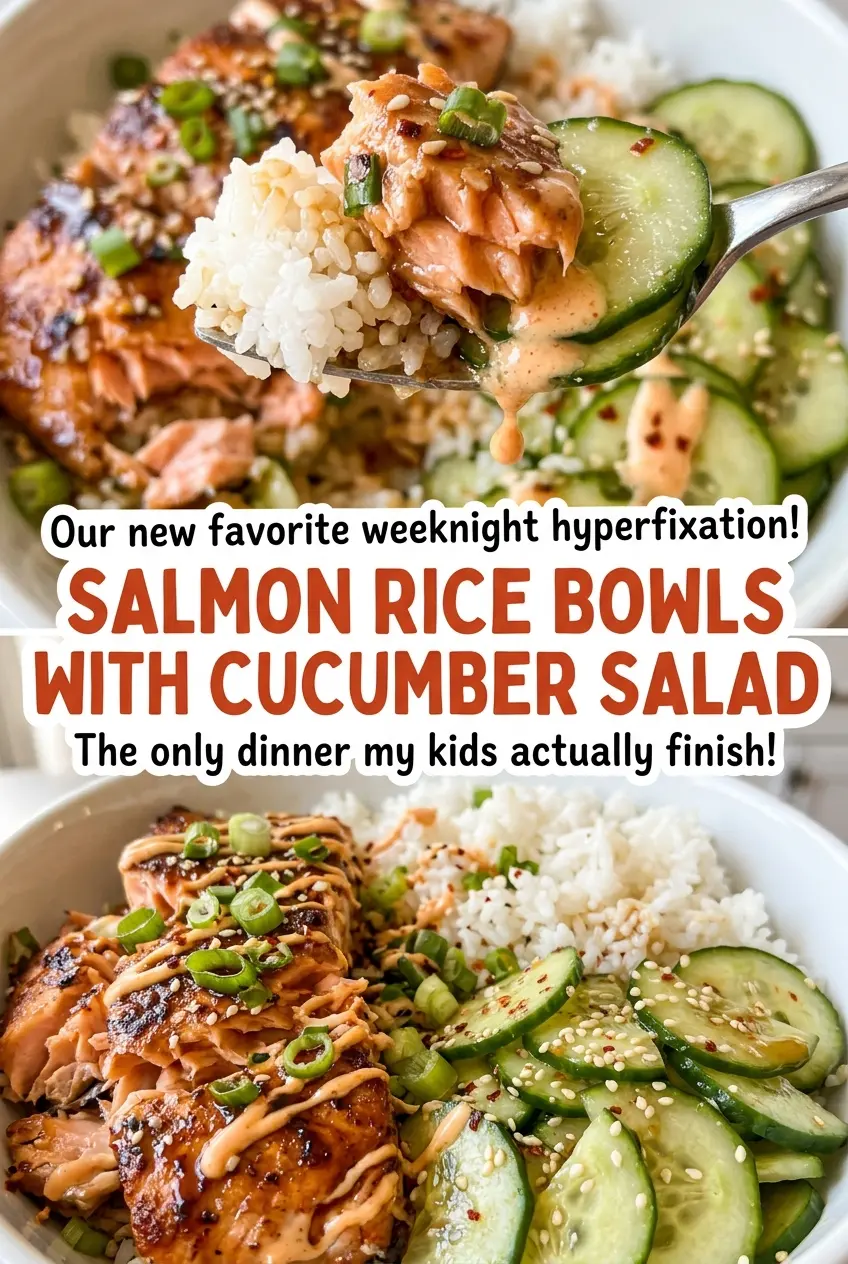
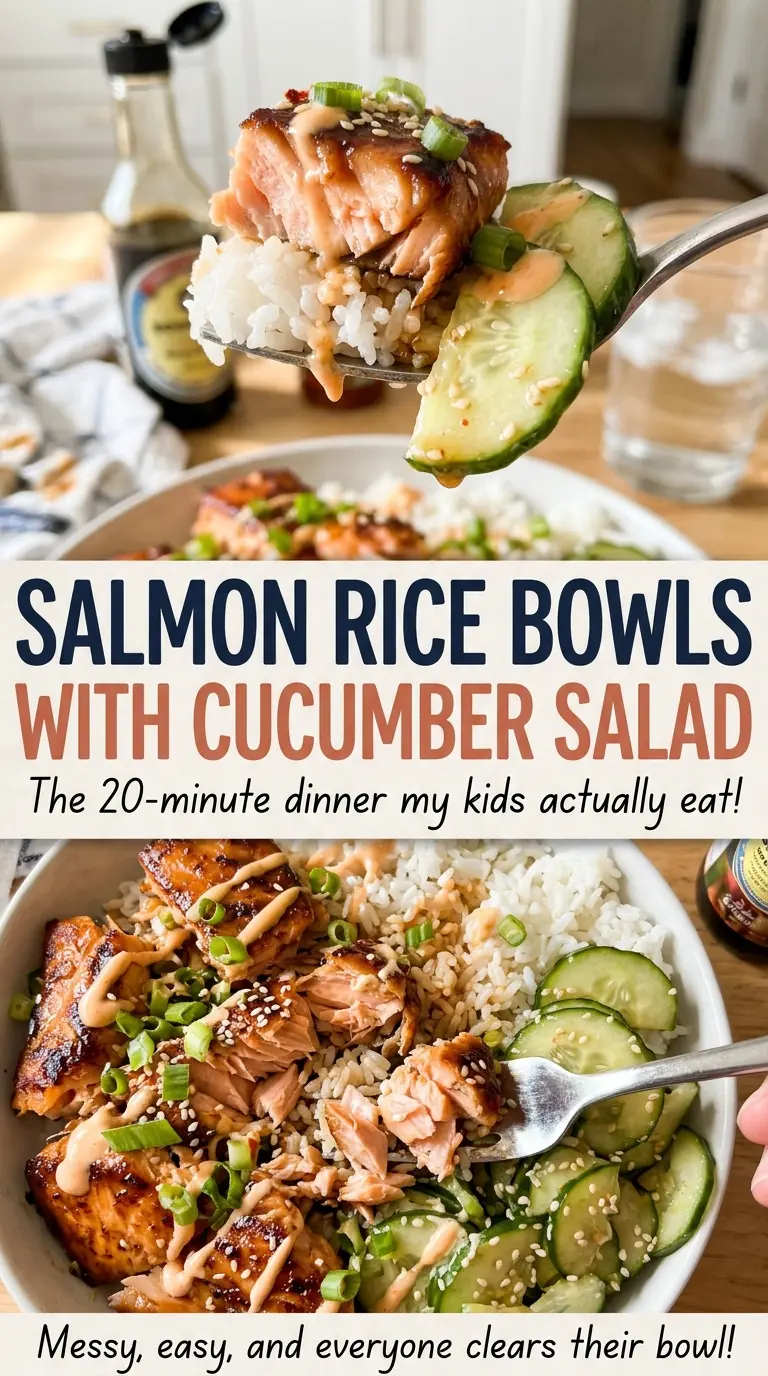
When the salmon comes out of the oven, the honey-soy glaze clings to the top while the cucumber salad stays cool and tangy beside it. That contrast is what makes these salmon rice bowls with cucumber salad feel like a complete meal, not just fish served over rice. I like that each part can be prepared in its own bowl or pan, then brought together at the table.
Rinsing the jasmine rice and letting it rest, covered, after cooking gives the grains time to finish steaming without turning sticky. Meanwhile, the cucumber salad gets a head start in its vinegar dressing, and the salmon bakes quickly once the oven is hot. The finished bowl has tender rice underneath, a sweet-savory piece of salmon, and crisp cucumber in every bite.
Kitchen Note
I brush the salmon with neutral oil before adding the soy-honey mixture. That thin first coat helps the glaze spread over the fish instead of running straight onto the parchment.
Save these salmon rice bowls with cucumber salad for a weeknight when you want sweet-savory salmon and a crisp, tangy bite in the same bowl.
Why the Rice Stays Plain in These Salmon Bowls
It’s easy to think the rice needs seasoning of its own, but the other parts of this bowl already bring plenty. The salmon glaze is salty and lightly sweet, and the cucumber dressing is tart with a toasted sesame note. Plain jasmine rice gives those stronger flavors somewhere soft and mild to land.
Keeping the components separate also lets you build each bite the way you like it. A forkful of salmon with rice tastes different from one that catches a little vinegar dressing from the cucumbers. If you stir everything together at once, the rice quickly picks up the salad’s liquid and the bowl loses some of its contrast.
This balance is why I don’t add extra sauce over the finished bowls. Let the glaze stay on the salmon and the cucumber dressing stay with the salad. The rice does its job quietly, soaking up a little of both as you eat.
What Makes the Rice, Cucumbers, and Glaze Work Together
- Jasmine rice — Its light fragrance and fluffy grains suit a bowl with a bold topping. Standard grocery-store jasmine rice works well; a specialty brand isn’t needed. Other types of rice have different water needs and cooking times, so they aren’t a reliable one-for-one swap here.
- English cucumbers — Their thin skin and relatively small seed pockets make them easy to slice into a crisp salad. Persian cucumbers work too; use enough sliced cucumber to match the volume you’d get from the English cucumbers. If using a waxed regular cucumber, peel it and remove the watery seed core for a closer texture.
- Rice vinegar — Unseasoned rice vinegar has a mild acidity that won’t overwhelm the cucumbers. Check the bottle before buying: seasoned rice vinegar already contains salt and sugar, so it can throw off the dressing’s balance. In a pinch, the same amount of white wine vinegar works, though its taste is sharper.
- Toasted sesame oil and sesame seeds — The oil provides the salad’s deep toasted aroma, which plain neutral oil can’t replace. Use a fresh bottle, since old sesame oil can taste stale. Ordinary sesame seeds are fine; toasting them isn’t necessary for this recipe.
- Skinless salmon — Portions with a similar thickness cook more evenly, so choose a center-cut piece when you can. Fresh or fully thawed fish works; there’s no need to pay extra for a premium label if the fillet looks moist and smells clean.
- Low-sodium soy sauce, honey, ginger, and garlic — Together they make a glaze that’s savory, gently sweet, and aromatic. Low-sodium soy sauce leaves room for the cucumber dressing’s salt without making the whole bowl taste too salty. Fresh ginger and garlic give the glaze a brighter edge than dried versions.
The Timing That Brings All Four Bowl Components Together
Rinse, Cook, and Rest the Jasmine Rice
Rinse 1 1/2 cups jasmine rice in a fine-mesh strainer under cold water until the water runs mostly clear. Combine it with 2 1/4 cups water in a 2-quart saucepan, then bring it to a boil over medium-high heat. Cover, lower the heat to low, and cook for 15 minutes; don’t lift the lid while it steams. Take the pan off the heat and leave it covered for 10 minutes, then fluff the rice with a fork.
Give the Cucumber Salad Time to Season
Thinly slice the English cucumbers and toss them with the rice vinegar, granulated sugar, kosher salt, and toasted sesame oil in a medium bowl. Mix in the sliced green onions and sesame seeds so they’re spread through the salad. Let it stand for at least 15 minutes; the cucumbers soften slightly as the dressing settles into their slices. If the bowl has a little liquid at the bottom, that’s normal.
Brush on the Ginger-Honey Soy Glaze
Heat the oven to 425°F and line a rimmed baking sheet with parchment paper. Arrange the four salmon portions on the sheet and brush them with neutral oil. Stir together the low-sodium soy sauce, honey, grated fresh ginger, minced garlic, and black pepper, then brush the mixture over the salmon. Coat the tops evenly so each portion gets a little of the ginger and garlic.
Bake the Salmon and Build the Bowls
Bake the salmon for 10 to 14 minutes, checking the thickest part of a portion for doneness. It’s ready when that spot reaches 145°F; thinner pieces may finish sooner than thicker ones. Divide the rice among four bowls, then serve with the salmon and cucumber salad. Keep the salad to the side rather than mixing it through the rice before serving.
Two Easy Ways to Adapt the Salmon Glaze
Make the Bowls Gluten-Free
Replace the low-sodium soy sauce with the same amount of gluten-free tamari. The glaze keeps its savory depth, though tamari can taste a little richer, so choose a low-sodium version if you want a similar salt level.
Use Maple Syrup Instead of Honey
Swap the honey for the same amount of maple syrup in the glaze. It gives the salmon a woodsy sweetness rather than honey’s floral note, while still brushing easily over the fish.
Storage and Reheating
- Refrigerator: Store the rice, salmon, and cucumber salad in separate airtight containers and use within 3 to 4 days. The cucumber slices soften and release more liquid as they sit.
- Freezer: The cooked salmon and rice freeze well for up to 2 to 3 months in freezer-safe containers. Don’t freeze the cucumber salad; it loses its crisp texture when thawed.
- Reheating: Warm the rice and salmon separately, covered, in the microwave until leftovers reach 165°F. A splash of water over the rice helps it loosen; keep the cucumber salad cold rather than reheating it.
Questions That Come Up While Making These Salmon Rice Bowls
Salmon Rice Bowls with Cucumber Salad
Ingredients
Equipment
Method
- Rinse the rice in a fine-mesh strainer under cold water until the water runs mostly clear.
- Combine the rice with the water in a 2-quart saucepan.
- Bring to a boil over medium-high heat.
- Cover and reduce the heat to low.
- Cook for 15 minutes.
- Remove from the heat and let stand covered for 10 minutes.
- Fluff the rice with a fork.
- Toss the cucumbers with the rice vinegar, granulated sugar, kosher salt, and toasted sesame oil in a medium bowl.
- Mix in the green onions and sesame seeds.
- Let stand for at least 15 minutes.
- Heat the oven to 425°F.
- Line a rimmed baking sheet with parchment paper.
- Arrange the salmon on the baking sheet.
- Brush the salmon with the neutral oil.
- Stir together the low-sodium soy sauce, honey, grated fresh ginger, minced garlic, and black pepper in a small bowl.
- Brush the mixture over the salmon.
- Bake for 10 to 14 minutes, until the thickest part of the salmon reaches 145°F.
- Divide the rice among 4 bowls.
- Serve with the salmon and cucumber salad.