
Shrimp go from translucent to opaque quickly in a hot wok, and leaving them in while the vegetables cook is an easy way to turn them rubbery. For shrimp lo mein, I cook them first, move them to a plate, and bring them back only at the end. That little pause keeps the shrimp tender while the cabbage and peppers stay crisp-tender.
The sauce is whisked together before anything hits the wok, so it’s ready to coat the noodles as soon as they’re cooked. A little cornstarch helps it cling instead of running to the bottom of the pan. Between the springy noodles, savory sauce, and fresh vegetables, every forkful of this shrimp lo mein has a bit of everything.
Kitchen Note
Pat the shrimp dry before seasoning, then arrange them in a single layer in the wok. A dry surface helps them cook quickly instead of releasing moisture into the pan.
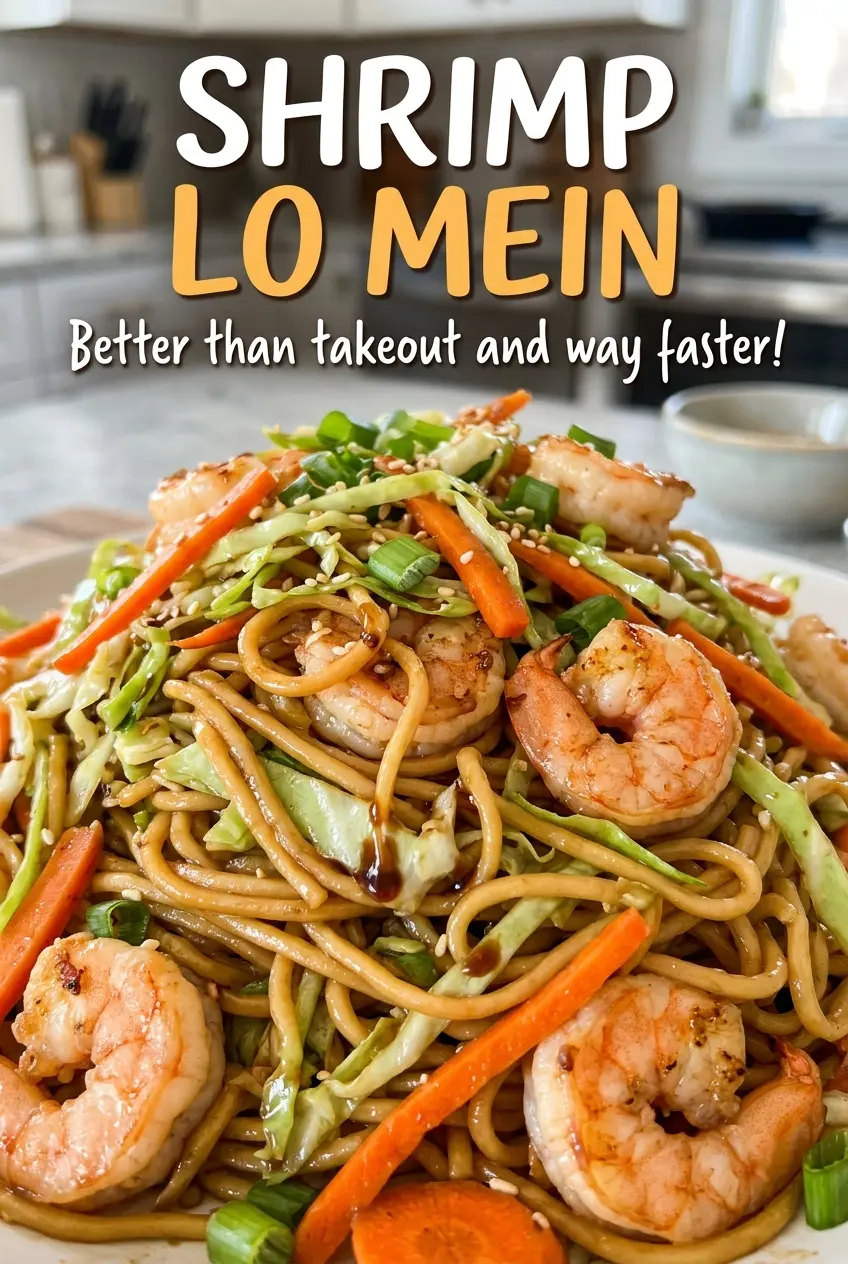
Save this shrimp lo mein for a night when you want tender shrimp, crisp-tender vegetables, and noodles coated in savory sauce.
Why the Sauce Needs One Last Whisk Before It Hits the Wok
The sauce contains cornstarch, which settles to the bottom of the bowl while you cook the noodles and shrimp. If you pour it in without stirring again, that starch can stay behind while the more liquid part runs across the noodles. Give the sauce a quick whisk right before it goes into the wok so the thickener is evenly dispersed.
At first, the sauce will look thin. As it heats and gets tossed with the noodles, the cornstarch thickens and helps the sauce cling to their surfaces. Keep tossing for the full minute or two, watching for the noodles to look glossy rather than wet at the bottom of the wok. The sauce should coat them without turning sticky or pasty.
The Noodles, Shrimp, and Sauce Ingredients That Set the Texture
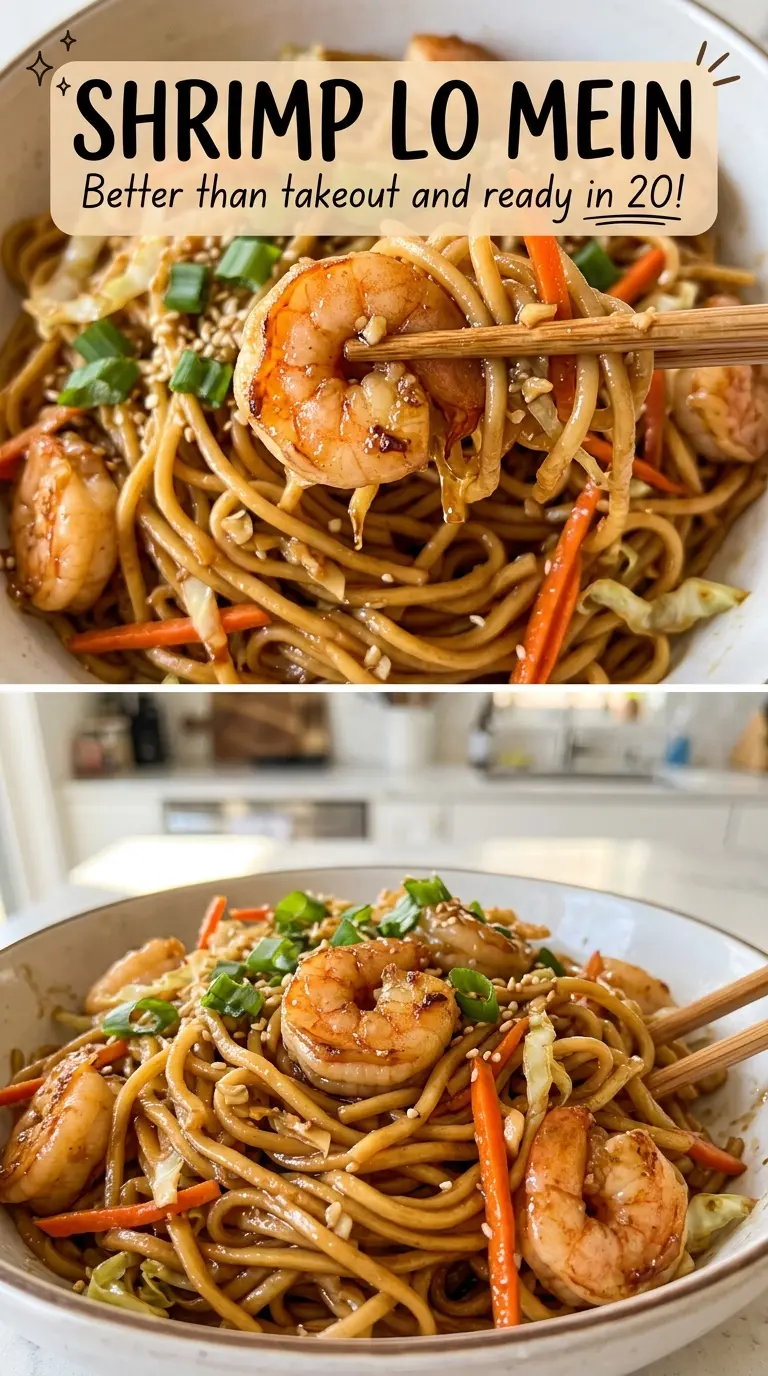
- Dried lo mein noodles — They give the finished dish its springy bite, and an inexpensive package works well here. Cook them only until just tender; they’ll spend another minute or two in the wok. If you can’t find dried lo mein noodles, dried spaghetti is a practical pantry substitute, though the texture will be less springy.
- Raw shrimp — Large shrimp are easy to cook in a single layer and stay distinct among the noodles. Fresh or frozen raw shrimp work; if using frozen, thaw them completely and pat them dry before seasoning. Skip precooked shrimp for this method, since they’re more likely to toughen during the stir-fry.
- Low-sodium soy sauce and oyster sauce — Soy sauce brings the salty, savory base, while oyster sauce adds a deeper, rounded savoriness. A standard grocery-store bottle of each is fine; using low-sodium soy sauce keeps the combined sauces from overwhelming the noodles.
- Toasted sesame oil — Toasted sesame oil contributes a nutty aroma that neutral oil won’t provide. Keep it in the sauce rather than using it as the main stir-frying oil, where its distinctive flavor can get lost.
- Garlic, ginger, and scallions — Fresh garlic and ginger make a brighter, more fragrant base than dried seasonings. Grate the ginger finely and keep the scallion whites separate from the greens; the whites go into the hot oil, while the greens finish the dish.
- Carrot, red bell pepper, and green cabbage — Their different textures keep the noodles from feeling heavy. Matchstick-cut carrot and thinly sliced pepper cook quickly, while shredded cabbage softens just enough to fold through the noodles. A crisp, firm head of cabbage is a good buy; no special variety is needed.
Keep the Shrimp and Vegetables on Separate Timers
Whisk the Sauce and Cook the Noodles
Whisk the soy sauce, oyster sauce, toasted sesame oil, water, sugar, and cornstarch in a small bowl until smooth. Bring a large pot of water to a boil, then cook the lo mein noodles according to the package directions until just tender. Drain them well so excess water doesn’t dilute the sauce in the wok. Keep the sauce nearby and stir it again just before adding it later.
Cook the Shrimp Quickly Over High Heat
Season the patted-dry shrimp with kosher salt and black pepper. Heat one tablespoon of neutral oil in a 14-inch wok over high heat, then add the shrimp in a single layer. Cook for 1 to 2 minutes per side, until opaque and 145°F, and transfer them to a plate. If the shrimp are still translucent in the center, give them a little more time before taking them out.
Let the Vegetables Stay Crisp-Tender
Add the remaining neutral oil to the wok, followed by the scallion whites, garlic, and ginger. Stir-fry for 30 seconds, just until fragrant; minced garlic can burn if it sits still over high heat. Add the carrot, red bell pepper, and shredded cabbage, then stir-fry for 3 to 4 minutes. Pull the vegetables from the heat while they still have a little bite, since they’ll be tossed again with the noodles.
Toss Until the Sauce Coats the Noodles
Stir the sauce again, add it to the wok with the noodles, and toss for 1 to 2 minutes. Keep the noodles moving so the sauce coats them evenly as it thickens. Return the shrimp to the wok, add the scallion greens, and toss until everything is heated through. Serve once the shrimp and vegetables are distributed throughout the glossy noodles.
Two Swaps That Change the Whole Pan
Make the Lo Mein Gluten-Free
Use rice noodles in place of the dried lo mein noodles, and swap the soy sauce for tamari and the oyster sauce for a gluten-free oyster sauce. Cook the rice noodles according to their package directions and handle them gently in the wok; they’re more delicate and can soften faster than wheat noodles.
Make It Vegetarian
Leave out the shrimp and replace the oyster sauce with mushroom-based vegetarian oyster sauce. The noodles and vegetables still get a savory coating, though you’ll lose the shrimp’s sweet, briny flavor. Keep the rest of the ingredients and cooking sequence the same.
Storage and Reheating
- Refrigerator: Store leftovers in an airtight container for 3 to 4 days. The noodles will soften as they sit.
- Freezer: Freeze in airtight portions for up to 2 months; the noodles and vegetables will be softer after thawing. Thaw overnight in the refrigerator for more even reheating.
- Reheating: Warm in a skillet over medium heat with a small splash of water, tossing until steaming throughout and 165°F. Avoid prolonged high heat, which can make the shrimp tough.
Questions That Come Up While the Wok Is Hot
Shrimp Lo Mein
Ingredients
Equipment
Method
- Whisk the soy sauce, oyster sauce, sesame oil, water, sugar, and cornstarch in a small bowl until smooth.
- Bring a large pot of water to a boil and cook the noodles according to the package directions until just tender, then drain.
- Season the shrimp with the salt and pepper.
- Heat 1 tablespoon of the neutral oil in a 14-inch wok over high heat, add the shrimp in a single layer, and cook for 1 to 2 minutes per side until opaque and 145°F; transfer to a plate.
- Add the remaining 2 tablespoons neutral oil to the wok, then add the scallion whites, garlic, and ginger and stir-fry for 30 seconds.
- Add the carrot, bell pepper, and cabbage and stir-fry for 3 to 4 minutes, until crisp-tender.
- Stir the sauce again, then add the noodles and toss for 1 to 2 minutes until the noodles are coated and the sauce thickens.
- Return the shrimp to the wok, add the scallion greens, and toss until heated through.