
Fork-tender beef, soft potatoes, and carrots that soak up every bit of savory gravy make slow cooker pot roast the kind of dinner people remember. The slow cooker does the heavy lifting, but the difference between a good pot roast and a great one comes down to a few smart choices: where you place the vegetables, how you season the meat, and when you thicken the sauce.
Chuck roast is the right cut here because it has the connective tissue that melts into rich, spoonable meat after a long, gentle cook. The onion soup mix and Worcestershire sauce bring salt, depth, and that old-fashioned roast flavor without needing a long ingredient list. Putting the vegetables under the beef keeps them from drying out and gives you a built-in bed of flavor while the roast slowly turns tender.
Below, I’ve included the small details that matter most, plus the easiest way to get gravy that actually clings to the meat instead of running all over the plate.
The gravy thickened up perfectly, and the potatoes stayed intact instead of turning mushy. I also browned the roast first like you suggested, and it had that deep, rich flavor you usually only get from a Sunday roast that’s been in the oven all day.
Save this slow cooker pot roast for the nights when you want fork-tender beef, soft vegetables, and rich gravy without hovering over the stove.
The Reason Chuck Roast Stays Tender Instead of Drying Out
Pot roast fails when it’s cooked like a lean cut. Chuck roast needs time and moisture to break down, and the slow cooker gives it both without pushing it past the point where the meat turns stringy. The long cook softens the connective tissue, which is why the roast should be cooked until it pulls apart easily with a fork rather than sliced while it’s still firm.
The other mistake is crowding the meat in a shallow layer of liquid and expecting the top to brown or the vegetables to keep their shape on their own. In a slow cooker, there’s no evaporation the way there is in a Dutch oven, so the liquid stays put. That means the seasoning has to be intentional from the start, and the gravy gets its body at the end with cornstarch instead of relying on reduction.
What Each Ingredient Is Actually Doing in This Dish
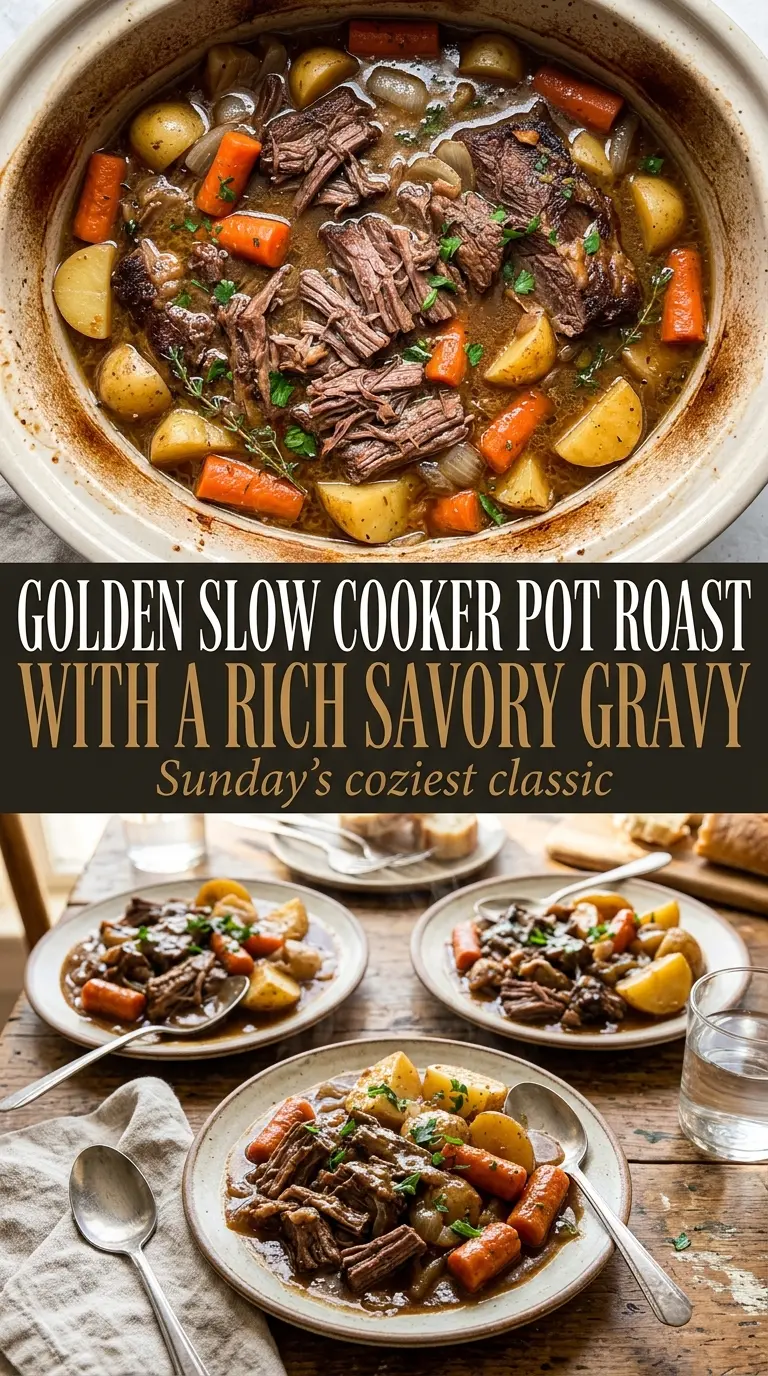
- Chuck roast — This is the cut that gives you the right texture. A lean roast like eye of round will dry out before it gets tender, while chuck gets silky and pull-apart soft after hours of low heat.
- Dry onion soup mix — It brings seasoning, onion flavor, and a little body to the cooking liquid. You can use it as written or swap in a homemade onion seasoning blend if you want more control over the salt.
- Beef broth — Use a broth you’d actually drink. A watery or bland broth makes bland gravy, and that’s the flavor you’ll taste in every bite.
- Worcestershire sauce — This adds depth and a subtle tang that keeps the gravy from tasting flat. There isn’t a perfect substitute, but soy sauce plus a splash of vinegar can stand in if that’s what you have.
- Cornstarch — This is what turns the cooking liquid into spoon-coating gravy. Stir it in after the roast comes out so the sauce thickens without turning gummy.
The Part Where the Gravy Goes from Thin to Spoon-Coating
Building the Vegetable Bed
Scatter the carrots, potatoes, and onion across the bottom of the slow cooker before anything else goes in. They act as a rack for the beef, which keeps the roast from sitting directly in the liquid and helps the vegetables pick up the drippings. If the potatoes are cut too small, they’ll collapse before the roast is done, so quarter them into sturdy chunks.
Seasoning and Loading the Pot
Season the chuck roast generously on all sides, then set it on top of the vegetables. Pour the broth mixture over everything, but don’t drown the roast completely; slow cooking works best when the meat is partly exposed to the steam and partly bathed in liquid. If you skipped the browning step, that’s fine, but know that searing first gives you a darker, meatier flavor in the finished gravy.
Cooking Until the Meat Gives Way
Cook on low until the beef is fork-tender and a fork twists into the meat with no resistance. If you rush it on high and pull it too early, the roast will still feel tight and stringy. The vegetables should be tender but not falling apart, which is why they sit under the beef and cook in the braising liquid instead of simmering uncovered.
Turning the Cooking Liquid into Gravy
Remove the roast and vegetables first, then whisk the cornstarch into the hot liquid until it looks smooth. Let it bubble for a few minutes so the starch activates and the sauce loses that thin, cloudy look. If the gravy seems too loose, it usually just needs another minute or two on high heat; if you add too much cornstarch at once, it can turn pasty instead of glossy.
How to make it without the onion soup mix
Use extra beef broth, 1 to 2 teaspoons onion powder, 1 teaspoon garlic powder, and a little more salt. You’ll lose some of the packaged savory depth, but the roast still tastes rich if you keep the seasoning balanced.
How to make it gluten-free
Use a certified gluten-free onion soup mix and check that your Worcestershire sauce is gluten-free. The texture stays the same, so this is one of the easiest swaps to make without changing the finished pot roast.
How to make it thicker and richer
After the roast comes out, simmer the gravy a few extra minutes before adding more cornstarch. That concentrates the beef flavor and gives you a fuller sauce without making it gluey.
Storage and Reheating
- Refrigerator: Store leftovers in an airtight container for up to 4 days. The potatoes soften a bit more as they sit, but the flavor gets even better the next day.
- Freezer: The roast and gravy freeze well for up to 3 months. Freeze in portions with a little gravy over the meat so it reheats moist instead of dry.
- Reheating: Reheat gently on the stove over low heat or in the microwave at medium power. Add a splash of broth if the gravy has thickened too much, and don’t boil it hard or the beef can turn stringy.
Questions I Get Asked About This Recipe
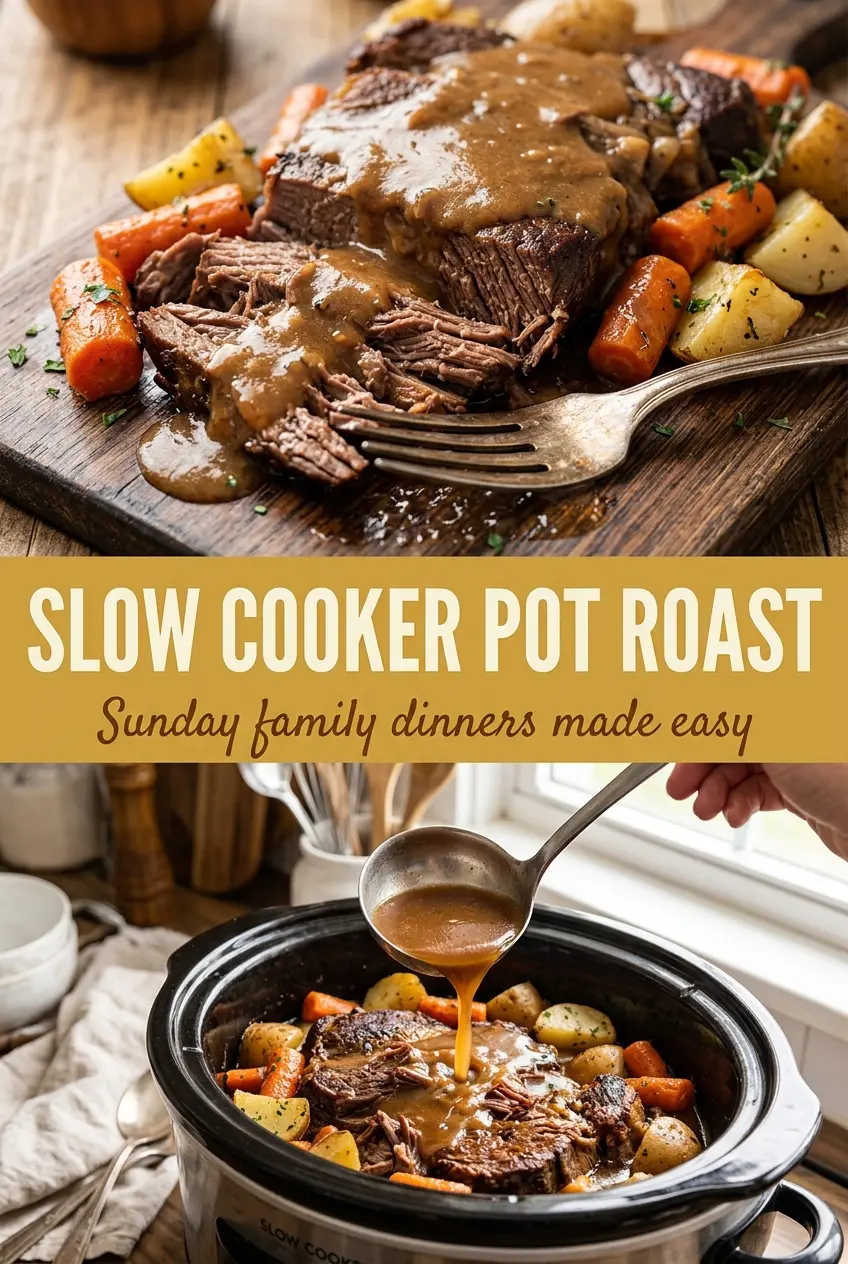
Slow Cooker Pot Roast
Ingredients
Equipment
Method
- Season the chuck roast generously with salt and pepper, ensuring the surface is fully coated for flavor during the long cook.
- Place the carrots, potatoes, and onion in the bottom of the slow cooker, then set the seasoned roast on top so the vegetables cook in the drippings.
- Whisk together the beef broth, Worcestershire sauce, and onion soup mix, then pour over the roast to coat it evenly.
- Cover and cook on low for 8-9 hours, or high for 5-6 hours, until the beef is fork-tender with vegetables cooked through.
- Remove the roast and vegetables, then whisk cornstarch into the remaining liquid to thicken into a gravy until visibly thicker and glossy.
- Slice or shred the roast and serve smothered in gravy alongside the vegetables so every bite is coated.