
The roast should sizzle when it meets the hot Dutch oven, and those browned patches left on the bottom are worth keeping. I used to think they were just stuck-on bits; after scraping them into the broth, I stopped wondering why the cooking juices tasted a little flat. They carry the deep, savory flavor that makes this slow roasted chuck roast dinner feel like a full meal rather than just beef and vegetables.
Chuck roast has plenty of connective tissue, which is exactly what a long, covered oven braise needs. The low heat gives that firm cut time to turn tender, while the onions, garlic, tomato paste, broth, Worcestershire, and herbs build a flavorful base around it. When the roast pulls apart easily with a fork, the potatoes and carrots are tender too, and the pot is ready to bring straight to the table.
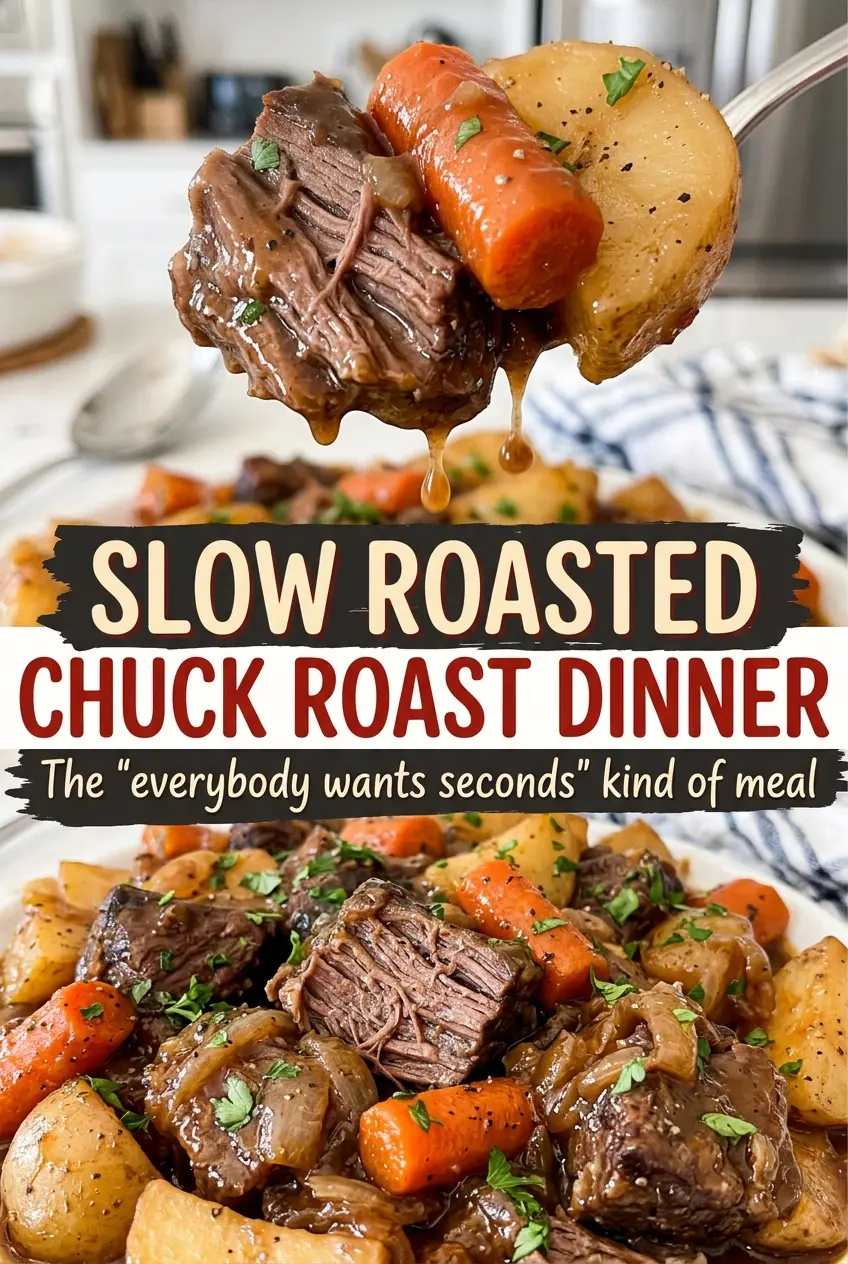
Kitchen Note
Cut the potatoes and carrots into pieces that are close to the same size. The 2-inch pieces hold their shape through the long braise while becoming tender enough to serve with the roast.
Save this slow roasted chuck roast dinner for a cozy one-pot meal with fork-tender beef, potatoes, and carrots.
Why the Potatoes and Carrots Wait Two Hours Before Joining the Roast
Beef needs more time in the oven than potatoes and carrots do. The chuck roast starts braising on its own, giving the connective tissue time to soften before the vegetables go into the pot. Add them at the beginning and they have to sit through the entire cook; adding them after the first two hours gives them a shorter stretch in the broth and helps them finish tender instead of spending the whole afternoon in the pot.
The roast and vegetables share the same covered Dutch oven for the final stretch, so the vegetables pick up the beefy cooking juices as they soften. Don’t judge the roast by the clock alone. The finish cue is that it pulls apart easily with a fork, while the vegetables are tender when pierced. Those cues matter because chuck roasts vary in shape and thickness, and tenderness—not a precise minute—is what tells you the braise has done its work.
What Chuck, Tomato Paste, and Yukon Golds Contribute to the Braise
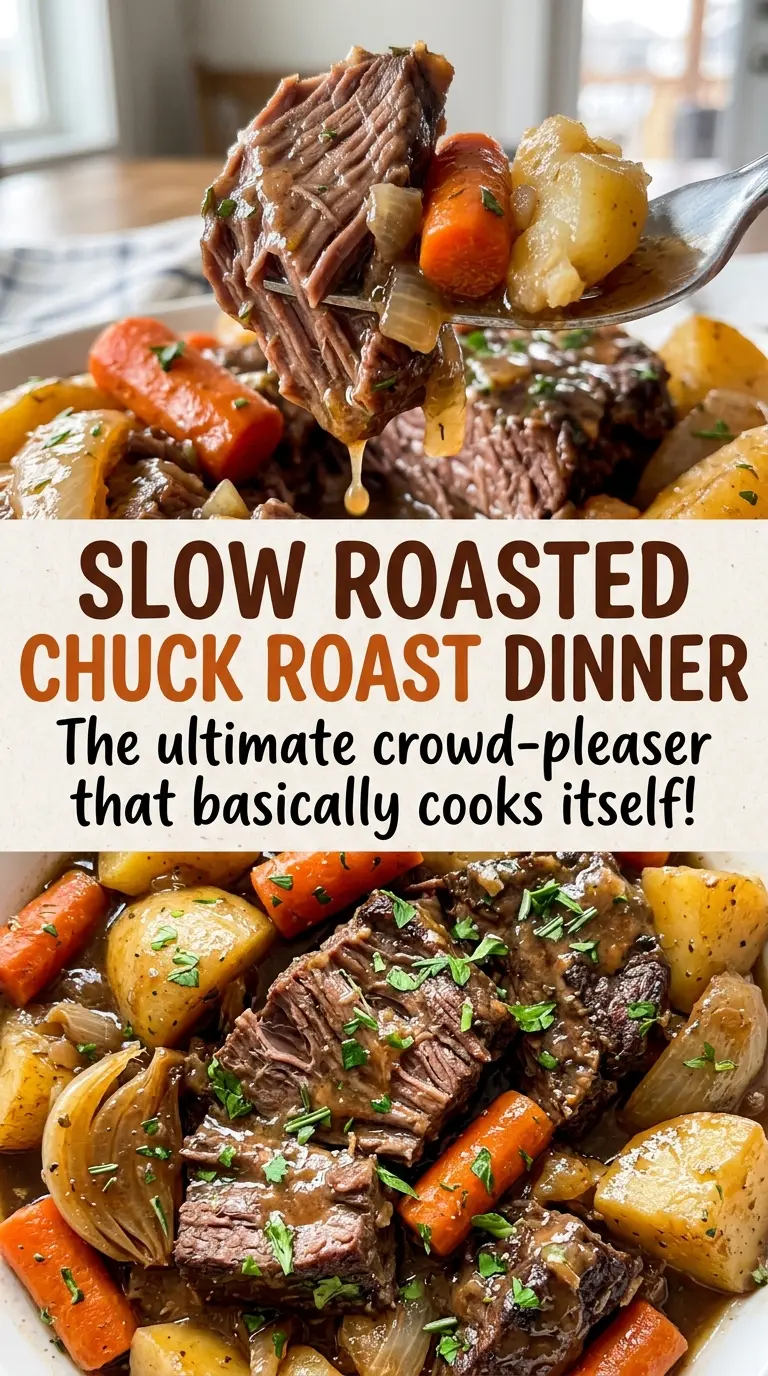
- Boneless chuck roast — Chuck has the connective tissue that softens during a long braise, giving you beef that pulls apart instead of staying firm. A boneless beef shoulder roast is the closest swap; it has similar braising qualities, though the time to become fork-tender can vary. Pat the surface dry before seasoning so the roast browns instead of steaming.
- Tomato paste, broth, and Worcestershire — Tomato paste brings concentrated savory depth, while low-sodium beef broth gives the roast a braising liquid without making the finished juices overly salty. Worcestershire adds a tangy, savory note that plain broth won’t fully replace. If you don’t have it, you can leave it out; the liquid will still braise the beef, but the flavor will be less layered.
- Yellow onions and garlic — The onions soften into the cooking liquid, and smashed garlic releases its flavor without needing to be finely chopped. Fresh onions and garlic are worth using here; dried versions won’t soften into the same kind of aromatic base.
- Yukon Gold potatoes and carrots — Yukon Golds become creamy while holding together well in chunks. Red potatoes are a useful stand-in for the same amount of Yukon Golds, with a slightly firmer, less buttery bite. Carrots bring a natural sweetness; leaving them out gives you a less sweet vegetable mix, but there isn’t a direct substitute in the ingredient list.
- Thyme and bay leaf — These herbs quietly perfume the broth during the long cook. Use the fresh thyme sprigs and remove the stems and bay leaf before serving; neither is meant to stay in the finished dish.
From a Dark Sear to Fork-Tender Beef: The Five Stages
Dry, Season, and Brown the Chuck
Heat the oven to 300°F, then pat the chuck roast dry and season all sides with kosher salt and black pepper. Warm the vegetable oil in a 5- to 6-quart Dutch oven over medium-high heat. Brown the roast for 4 to 5 minutes per side, resisting the urge to move it around while each side sears. Transfer it to a plate once you have browned surfaces and flavorful bits on the bottom of the pot.
Soften the Onions and Cook the Tomato Paste
Add the quartered onions to the same pot and cook for 3 minutes, stirring occasionally. They’ll begin to soften and pick up the browned flavor from the bottom. Add the smashed garlic and tomato paste, then cook for 1 minute; keep stirring so the paste cooks without scorching. If the paste starts catching, stir it through the onions rather than letting it sit against the hot pot.
Scrape Up the Browned Bits
Pour in the beef broth and Worcestershire sauce, scraping the bottom of the pot to loosen the seared bits. Those browned bits dissolve into the liquid as the roast braises, so don’t leave them behind. Add the thyme and bay leaf, then return the roast and any juices from the plate to the pot. The liquid should gather around the meat; the roast doesn’t need to be submerged.
Braise the Roast, Then Add the Vegetables
Cover the Dutch oven and roast for 2 hours. Arrange the potatoes and carrots around the roast, cover the pot again, and return it to the oven. Roast for 1 1/2 to 2 1/2 hours more, until the vegetables are tender and the beef pulls apart easily with a fork. If the vegetables are tender before the roast is ready, lift them out and keep the roast covered while it finishes.
Rest the Beef and Serve with the Juices
Transfer the roast to a cutting board and tent it loosely with foil for a 15-minute rest. That pause gives you time to discard the thyme stems and bay leaf and arrange the vegetables for serving. Pull the beef apart with a fork, or slice it if you prefer pieces that hold together. Spoon the cooking juices over the meat and vegetables at the table.
How to Adjust the Vegetables and Seasoning in This Pot Roast
A lower-starch pot roast without potatoes
Leave out the Yukon Gold potatoes and keep the carrots. The braise will have fewer starchy vegetables and a lighter, less filling feel, though it won’t be a very low-carbohydrate meal because carrots still contain carbohydrates.
A potato-only vegetable mix
Skip the carrots and keep the Yukon Gold potatoes for a less sweet braise. The cooking method stays the same, and the potatoes still go into the Dutch oven after the roast’s first two hours.
A Worcestershire-free cooking liquid
Omit the Worcestershire sauce if you want a simpler, less tangy broth. The beef broth, onions, garlic, and tomato paste still make a savory braising liquid, but you’ll lose some of the sauce’s sharp, complex edge.
Storage and Reheating
- Refrigerator: Store the roast, vegetables, and cooking juices in a covered container for 3 to 4 days. The potatoes may firm up as they chill.
- Freezer: Freeze the beef and vegetables with some cooking juices in an airtight container for up to 2 to 3 months. The potatoes may turn softer or grainier after thawing.
- Reheating: Reheat covered in a 300°F oven with the cooking juices until the center reaches 165°F, or warm individual portions covered in the microwave. Reheat gently; high heat can dry out the beef before the center is hot.
What to Do When the Roast Won’t Pull Apart—and Other Pot Roast Questions
Slow Roasted Chuck Roast Dinner
Ingredients
Equipment
Method
- Heat the oven to 300°F.
- Pat the chuck roast dry.
- Season the roast on all sides with the salt and pepper.
- Heat the oil in a 5- to 6-quart Dutch oven over medium-high heat, then brown the roast for 4 to 5 minutes per side.
- Transfer the roast to a plate.
- Add the onions to the pot and cook for 3 minutes, stirring occasionally.
- Add the garlic and tomato paste and cook for 1 minute.
- Pour in the beef broth and Worcestershire sauce, scraping up the browned bits.
- Add the thyme and bay leaf, then return the roast and any juices to the pot.
- Cover the pot and roast for 2 hours.
- Arrange the potatoes and carrots around the roast, then cover the pot again.
- Roast for 1 1/2 to 2 1/2 hours more, until the vegetables are tender and the roast pulls apart easily with a fork.
- Transfer the roast to a cutting board, tent loosely with foil, and rest for 15 minutes.
- Discard the thyme stems and bay leaf.
- Serve the roast with the vegetables and cooking juices.