
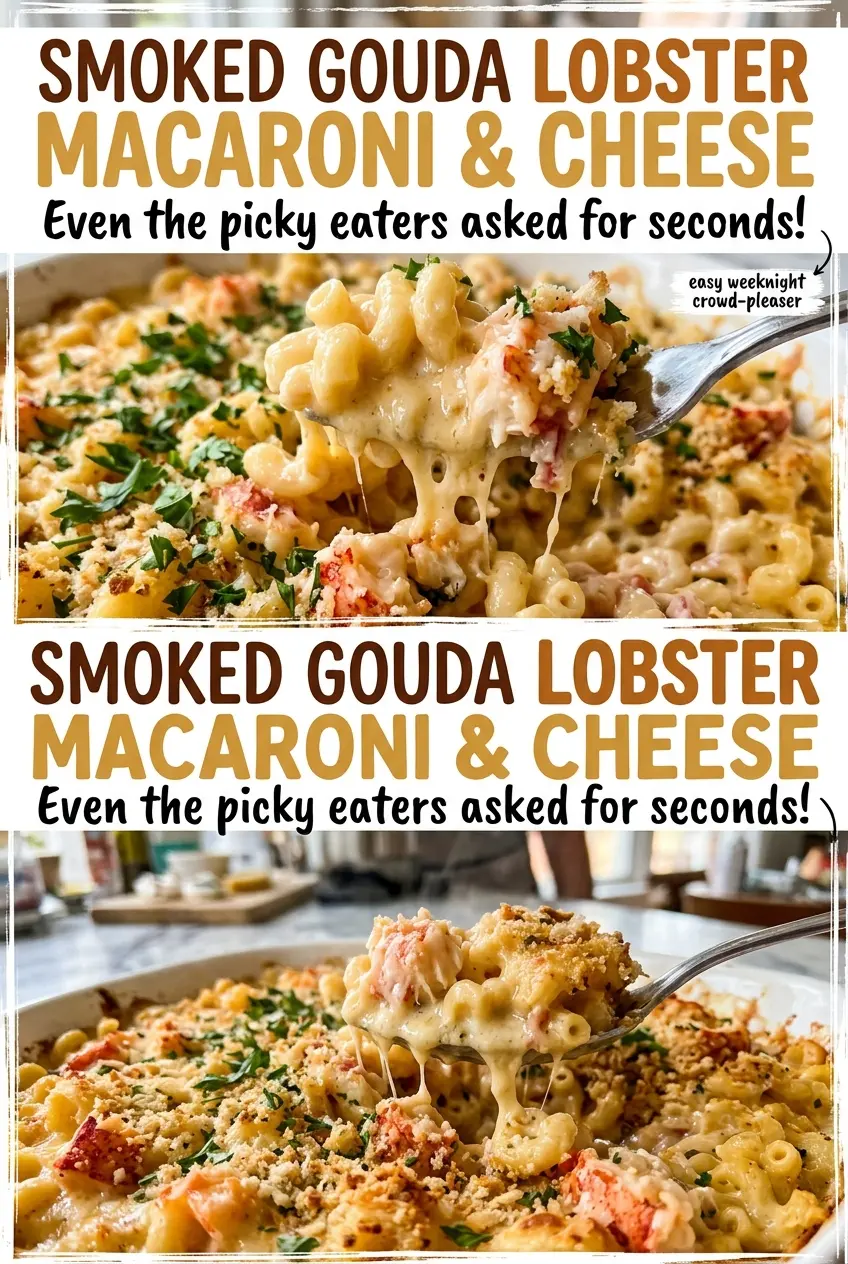
The panko turns golden while little bubbles break around the edges of the baking dish; that’s the moment this Smoked Gouda Lobster Macaroni and Cheese starts smelling like more than a pot of pasta. I like the contrast between the crisp top and the creamy sauce underneath, with tender pieces of lobster tucked through the elbows.
There’s one small timing choice that makes a big difference: the macaroni gets only 6 minutes in the pot, or 2 minutes less than the package directions, before it goes into the oven. It finishes cooking in the sauce instead of turning soft while the topping browns. Give the casserole 10 minutes to rest after baking, and the sauce settles around the pasta rather than running across the plate.
Kitchen Note
Take the saucepan off the heat before adding the cheeses. Stir them in by the handful, and give each addition a moment to melt before adding more; this keeps the sauce smooth instead of grainy.
Save this Smoked Gouda Lobster Macaroni and Cheese for a bubbling, golden-topped bake with sweet lobster and a smoky cheddar sauce.
Why Smoked Gouda Needs Sharp Cheddar Beside It
Smoked Gouda has a deep, mellow smoke that can take over a cheese sauce if it’s carrying the whole dish. Pairing it with sharp cheddar gives the sauce a brighter, more savory edge, so the lobster still has room to taste like lobster. The equal blend is doing two jobs: Gouda brings the smoky note, and cheddar keeps each bite from feeling heavy or one-note.
The mustard helps the cheeses read clearly, too. Dijon adds a little tang, while dry mustard brings a more concentrated savory bite without making the sauce taste like a sandwich spread. Paprika and black pepper round out the seasoning, but they stay in the background. You want the first impression to be creamy, smoky cheese and sweet lobster, not a mouthful of spice.
That balance is especially useful in a baked macaroni and cheese, where the pasta and crunchy topping soften the sharp edges of a sauce. Each spoonful has a little of everything, but none of it crowds out the lobster.
What the Lobster, Two Mustards, and Panko Each Bring
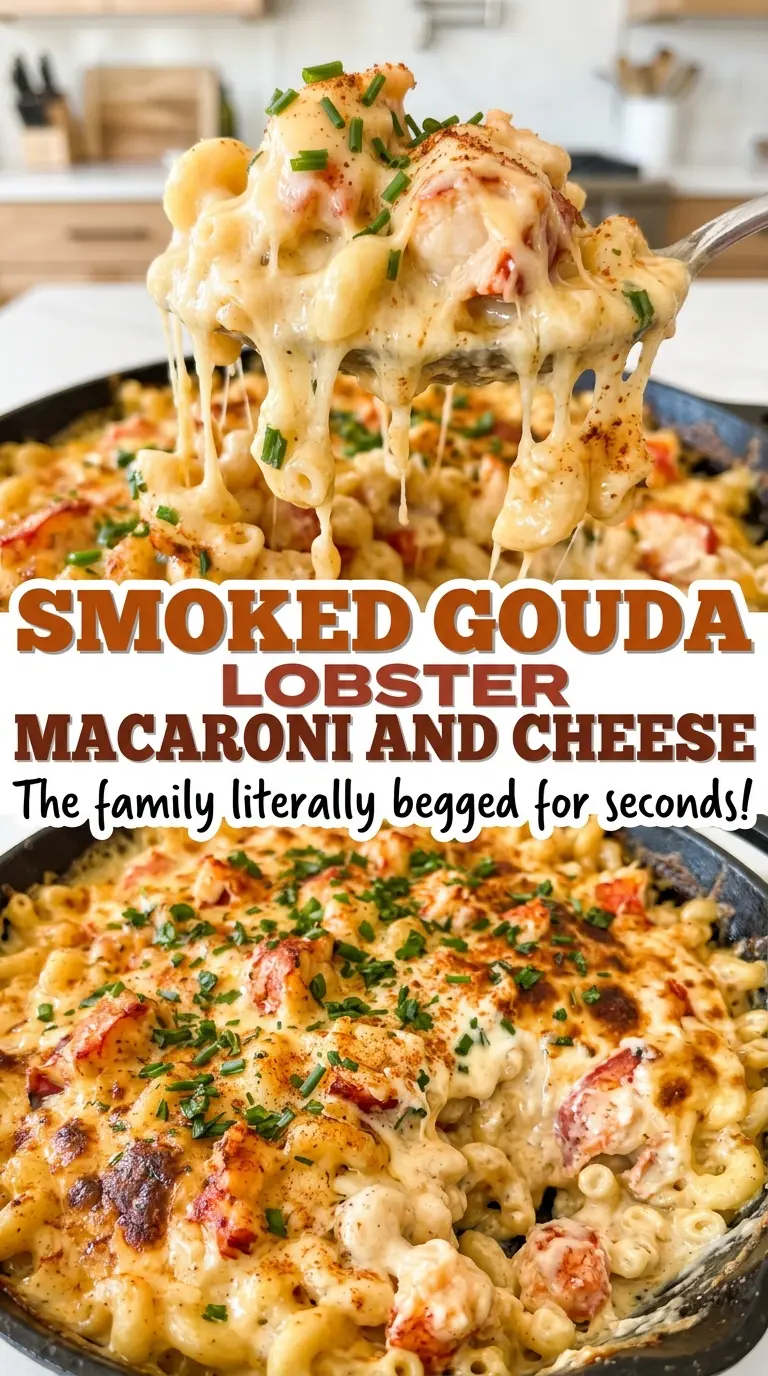
- Cooked lobster meat — Sweet, firm lobster is the centerpiece, so use cooked meat with a clean, mild smell and pick through it for any shell before cutting it into 1/2-inch pieces. There isn’t a direct replacement that keeps the same tender seafood character; leaving it out makes a good cheese macaroni variation, but it won’t have the same richness.
- Smoked Gouda and sharp cheddar — Shred both cheeses so they melt into the sauce without leaving large pockets. Smoked Gouda supplies the smoke, while sharp cheddar brings the tang that keeps the sauce lively. A block you shred yourself usually melts more evenly than cheese coated to keep pre-shredded strands separate.
- Whole milk and all-purpose flour — Together with butter, these build the roux-based sauce that clings to the elbows. Whole milk gives it body; lower-fat milk can make the sauce thinner and less plush. Whisk the flour into the melted butter before adding milk so the base starts smooth.
- Dijon and dry mustard — They bring different kinds of savory sharpness, so using both gives the cheese a fuller taste without adding a lot of heat. Keep them in the sauce; neither one is meant to stand out on its own.
- Panko breadcrumbs — Panko makes a light, crisp cap rather than a dense layer. Tossing it with melted butter helps it brown evenly. If you can only find regular breadcrumbs, they’ll make a finer, less airy crust, so panko is worth seeking out for this topping.
Getting the Pasta, Sauce, and Topping to Finish Together
Start with a Short Boil
Heat the oven to 375°F and coat a 9×13-inch baking dish with nonstick cooking spray. Bring a large pot of water to a boil, add 1 tablespoon of kosher salt, then cook the elbow macaroni for 6 minutes or 2 minutes less than the package directions. Drain it well so extra water doesn’t thin the cheese sauce. The elbows should still have a firm bite; they’ll finish in the oven.
Build a Smooth, Spoon-Coating Sauce
Melt the butter in a large saucepan over medium heat, whisk in the flour, and cook for 1 minute. Gradually whisk in the whole milk, then bring it to a gentle simmer and cook for 5–7 minutes, whisking often. The sauce is ready when it thickens enough to coat the back of a spoon. Keep the simmer gentle and keep whisking, especially around the edges of the pan, where flour can settle.
Melt in the Seasoning and Cheese
Remove the saucepan from the heat before stirring in the Dijon mustard, dry mustard, paprika, black pepper, and the remaining 1/2 teaspoon kosher salt. Add the shredded Gouda and cheddar in handfuls, stirring until each addition melts before adding the next. The finished sauce should look glossy and smooth, with no visible shreds of unmelted cheese. If it feels too thick before the pasta goes in, whisk in a small splash of the whole milk rather than trying to stir stiff sauce through the macaroni.
Fold, Top, and Bake Until Bubbly
Stir the drained macaroni and lobster into the sauce, then transfer everything to the prepared dish. Toss the panko with the melted butter and scatter it evenly across the top, taking the crumbs all the way to the edges. Bake for 15–20 minutes, until the panko is golden and the sauce bubbles at the edges. Let the dish rest for 10 minutes before serving so the sauce can settle around the pasta.
Two Easy Ways to Change the Casserole
Make It a Smoked Gouda Mac Without Lobster
Leave out the lobster and keep the rest of the casserole the same for a meatless cheese macaroni. The sauce and crisp panko still make a satisfying bake, though you’ll lose the sweet seafood flavor and the extra bites of lobster. This is the simplest change if you’re cooking for someone who doesn’t eat shellfish.
Skip the Panko for a Softer Top
Omit the panko and melted butter if you’d rather have a soft, cheesy surface than a crunchy crust. The macaroni will still bake in the sauce, but you won’t get the toasted contrast that makes the topped version special. Watch for bubbling around the edges as the visual cue that it’s ready.
Storage and Reheating
- Refrigerator: Store leftovers in a covered container for 3–4 days. The pasta will absorb some sauce as it chills, so it won’t be quite as loose as it was straight from the oven.
- Freezer: Freeze cooled portions in airtight containers for up to 2 months. The sauce may be a little less smooth after thawing, and the pasta softer, but the leftovers are still useful for an easy meal.
- Reheating: Warm individual portions in the microwave in short bursts, stirring once if you can. For a larger portion, cover it and reheat in a 325°F oven until hot throughout; avoid prolonged high heat, which can make the sauce oily. Reheat leftovers to 165°F.
Questions That Come Up Before the First Bite
Smoked Gouda Lobster Macaroni and Cheese
Ingredients
Equipment
Method
- Heat the oven to 375°F.
- Coat a 9x13-inch baking dish with nonstick cooking spray.
- Bring a large pot of water to a boil.
- Add 1 tablespoon of the kosher salt and the macaroni.
- Cook for 6 minutes or 2 minutes less than the package directions.
- Drain the macaroni well.
- Melt the butter in a large saucepan over medium heat.
- Whisk in the flour and cook for 1 minute.
- Gradually whisk in the milk and bring to a gentle simmer.
- Cook for 5–7 minutes, whisking often, until thick enough to coat the back of a spoon.
- Remove the saucepan from the heat.
- Stir in the Dijon mustard, dry mustard, paprika, black pepper, and remaining 1/2 teaspoon kosher salt.
- Add the Gouda and cheddar in handfuls, stirring until melted.
- Stir the drained macaroni and lobster into the cheese sauce.
- Transfer the mixture to the prepared baking dish.
- Toss the panko with the melted butter.
- Scatter the panko evenly over the macaroni.
- Bake for 15–20 minutes, until the topping is golden and the sauce is bubbling at the edges.
- Let the macaroni and cheese rest for 10 minutes before serving.