
Golden pork chops under a blanket of mushroom gravy hit that sweet spot between comforting and sturdy. The chops stay seared at the edges, the gravy turns silky instead of gluey, and the whole pan tastes like it had more work put into it than it did. That’s what makes this version worth keeping around. It eats like a Sunday supper but cooks in a single skillet, which means you get all the depth without turning the kitchen upside down.
The key is building the gravy in the same pan that held the pork. Those browned bits at the bottom give the sauce its backbone, and the flour needs a minute in the butter before the broth goes in so it loses that raw, pasty taste. The cream goes in at the end, after the broth has already thickened, which keeps the sauce smooth and prevents it from tightening up into something heavy.
Below, I’ve laid out the small details that matter most: how to get the chops browned without drying them out, how to keep the mushroom gravy glossy, and what to do if you want to change the cut or make the dish a little lighter.
The gravy thickened up beautifully and the pork stayed juicy instead of tough. I served it over mashed potatoes and my husband went back for seconds before I even sat down.
Smothered Pork Chops in Mushroom Gravy turns out silky, savory, and perfect for spooning over mashed potatoes when you want real comfort food.
The Reason the Gravy Stays Silky Instead of Going Pasty
Most mushroom gravies go wrong in one of two places: the flour never cooks long enough, or the liquid gets dumped in too fast and the pan turns lumpy before it can recover. Here, the flour is cooked with the onions and mushrooms just long enough to lose its raw edge, then the broth is added slowly so it can thicken in a controlled way. That gives you a gravy that coats a spoon without feeling sticky.
The second place people lose control is heat. Once the cream goes in, the sauce wants a gentle simmer, not a boil. Boiling cream-based gravy can make it separate at the edges or tighten up around the pork instead of staying pourable. Keeping the heat steady also helps the chops finish tender instead of overcooking while the sauce comes together.
What Each Ingredient Is Actually Doing in This Dish

- Thick-cut pork chops — These hold up better than thin chops, which can dry out before the gravy is finished. Bone-in chops add a little more flavor and stay juicier, but boneless works if that’s what you have; just shorten the final simmer.
- Mushrooms — Cremini or button mushrooms both work. Cremini bring a deeper, earthier flavor, while button mushrooms keep things milder and still soak up the gravy beautifully.
- Beef broth — This gives the gravy a darker, more savory backbone than chicken broth would. If you only have chicken broth, use it, but expect a lighter sauce.
- Heavy cream — This is what turns the pan sauce into a true mushroom gravy. Half-and-half can work in a pinch, but the sauce will be thinner and less luxurious.
- Dijon and Worcestershire — These don’t make the gravy taste tangy; they deepen it. Dijon adds a little sharpness, and Worcestershire fills in the savory gaps that broth alone can’t cover.
How to Build the Chops and Gravy in the Right Order
Getting the Sear Without Steaming the Pork
Pat the pork chops dry before they hit the flour. If the surface is damp, the coating turns gummy and the pan loses the chance to brown the meat properly. A hot skillet and enough oil give you a deep golden crust in about three minutes per side, and that crust should release on its own when it’s ready. If the chops stick hard, give them another minute; forcing them too early tears the crust and leaves browned bits behind that should be on the meat.
Cooking the Vegetables in the Fond
Once the chops come out, the pan should still hold all those browned bits from searing. That’s the flavor base, so don’t wipe it out. The butter goes in next, then the onion and mushrooms, and they should soften and take on a little color before the garlic joins them. Garlic burns fast in a hot skillet, so it goes in late and only needs a short minute to turn fragrant.
Making the Gravy Thick Enough to Coat a Spoon
Sprinkle the flour over the vegetables and stir until it looks absorbed and a little sandy. After that, add the broth slowly while whisking or stirring constantly so the flour disperses instead of clumping. The sauce will look thin at first, then suddenly start to thicken as it heats. Pull the heat down before the cream goes in, then let it simmer gently until it looks glossy and sits on the back of a spoon instead of running off like stock.
Finishing the Pork in the Sauce
Return the chops to the skillet and spoon the gravy over the top. Let them simmer just long enough to finish cooking through and pick up the mushroom flavor, usually a few minutes depending on thickness. If you cook them much longer, the pork starts to tighten and lose its juiciness. The sauce should stay velvety and the meat should feel tender when sliced, not dry at the center.
Three Ways to Adjust It Without Losing the Comfort-Food Feel
For boneless pork chops
Boneless chops cook faster and dry out more quickly, so keep the sear a touch shorter and the final simmer brief. They still work well in the gravy, but they won’t bring quite as much richness as bone-in chops.
For a gluten-free version
Use a gluten-free all-purpose flour blend for dredging and thickening. The texture comes out close to the original as long as the flour is cooked in the butter long enough to lose any raw taste before the broth goes in.
For a lighter gravy
Swap the heavy cream for half-and-half and use a little less of it. The sauce will be thinner and less rich, but the mushroom and onion flavor still comes through clearly.
If you want a dairy-free version
Use extra oil instead of butter and finish the sauce with an unsweetened, plain dairy-free cream. It won’t taste exactly the same, but you’ll still get a silky pan gravy with good body if you keep the simmer gentle.
Storage and Reheating
- Refrigerator: Store for up to 3 days. The gravy will thicken as it chills.
- Freezer: It freezes, but the cream sauce may separate a little when thawed. For best texture, freeze the pork and gravy together only if you don’t mind a slight change in the sauce.
- Reheating: Warm gently on the stove over low heat with a splash of broth or water. High heat is the mistake here — it tightens the pork and can make the gravy break.
Answers to the Questions Worth Asking
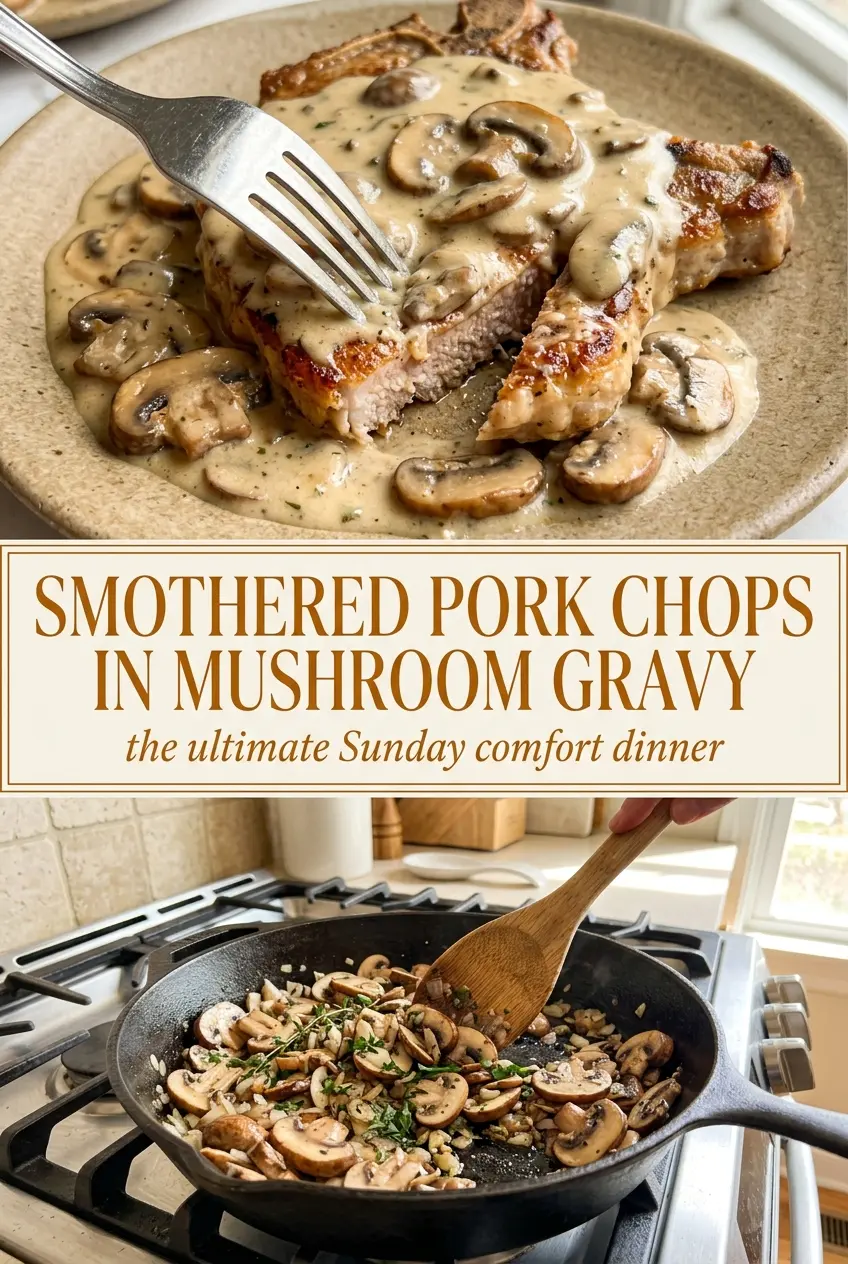
Smothered Pork Chops in Mushroom Gravy
Ingredients
Equipment
Method
- Pat the pork chops dry, season with salt and pepper, and dredge in flour to lightly coat both sides.
- Heat the olive oil in a large skillet over medium-high heat and sear the chops for 3 minutes per side until golden.
- Remove the chops to a plate and set aside while you make the gravy in the same skillet.
- Melt the butter in the same skillet, then sauté the onion, mushrooms, and garlic until softened.
- Sprinkle in the flour and whisk until browned, watching for a nutty aroma and color.
- Slowly stir in the beef broth and heavy cream, whisking until smooth and lightly thickened.
- Add the Worcestershire sauce and Dijon mustard, then simmer for 5 to 8 minutes until the gravy thickens.
- Return the pork chops to the skillet, spoon the gravy over top, and simmer for 3 to 5 minutes until heated through.