
Sour cream banana bread bakes up with a plush, tender crumb and that deep banana flavor that only comes from ripe fruit and a loaf that’s handled gently. The sour cream doesn’t just add tang. It keeps the texture soft for days, which is why this loaf is one of those rare quick breads that tastes just as good on day three as it does when it first comes out of the pan.
The trick here is balance. Melted butter brings richness, sour cream adds moisture without making the loaf heavy, and the mashed bananas do the rest of the work. Once the flour goes in, the batter only needs a few turns. Overmixing is what turns banana bread dense and chewy instead of tender and sliceable.
Below, you’ll find the small details that matter most: which sour cream gives the best crumb, how to tell when the loaf is baked through without drying it out, and the storage habit that keeps each slice soft long after baking day.
The crumb came out so soft and the sour cream gave it this rich, almost cake-like texture without being heavy. Mine was perfect at 58 minutes, and it sliced cleanly after cooling.
Save this sour cream banana bread for the days when you’ve got ripe bananas and want a loaf that stays moist for days.
The Secret to Banana Bread That Stays Tender Instead of Dry
Most banana bread goes wrong in one of two places: too much flour or too much stirring. This version avoids both. The sour cream adds enough fat and acidity to keep the crumb soft, while the bananas bring natural moisture that helps the loaf stay tender even after it cools. You’re not chasing a fluffy cake crumb here. You want a loaf that slices cleanly but still feels rich and plush on the tongue.
The other place people trip up is baking time. Banana bread keeps cooking from residual heat after it leaves the oven, so pulling it at the exact moment the top looks dark enough is how you end up with a dry loaf. The center should be set and a toothpick should come out clean or with just a few moist crumbs. If it comes out with wet batter, give it a few more minutes and check again.
What Each Ingredient Is Actually Doing in This Dish
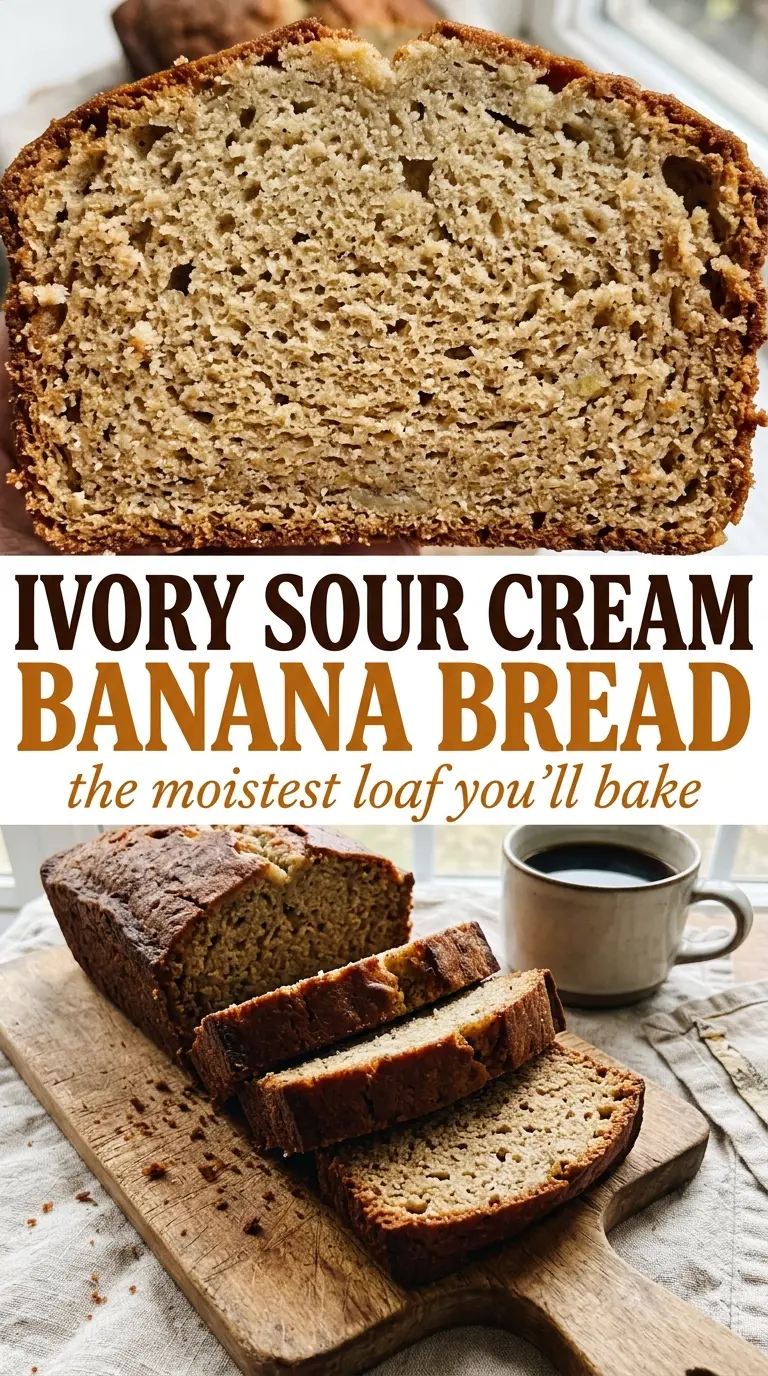
- Ripe bananas — The darker and softer they are, the better the flavor and texture. Bananas with plenty of brown spots mash smoothly and melt into the batter instead of leaving stubborn lumps.
- Sour cream — Full-fat sour cream gives the most velvety crumb. Low-fat works in a pinch, but the loaf will be a little less rich and slightly less tender.
- Melted butter — This brings flavor and a softer bite than oil. If you need a swap, neutral oil will keep the loaf moist, though you’ll lose a little of that buttery depth.
- All-purpose flour — Standard all-purpose flour gives the right structure. Spoon it into the measuring cup and level it off; packing in too much flour is one of the fastest ways to end up with a dry loaf.
How to Mix the Batter Without Ruining the Crumb
Starting With the Wet Ingredients
Mash the bananas until they’re mostly smooth, then whisk in the sour cream and melted butter. You want a thick, glossy base with no dry pockets of butter floating around. If the butter is hot enough to cook the egg later, let it cool for a few minutes before it goes in. A warm batter is fine; a hot one is how you end up with scrambled bits.
Adding the Sugar, Egg, and Vanilla
Stir in the sugar, egg, and vanilla until the mixture looks cohesive and slightly lighter in color. The sugar won’t fully dissolve here, and that’s fine. What matters is that everything is evenly distributed before the leavening goes in so the loaf rises and browns consistently.
Bringing in the Dry Ingredients Gently
Sprinkle the baking soda and salt over the batter, then add the flour last and fold just until the streaks disappear. Stop as soon as you no longer see dry flour. If you keep stirring after that point, the gluten develops and the loaf turns tough instead of tender. A few tiny lumps are better than an overworked batter.
Baking Until the Center Sets
Scrape the batter into a greased loaf pan and bake at 350°F until the top is deep golden and a toothpick in the center comes out clean. For me, that’s usually somewhere in the 55 to 65 minute range, but ovens vary. If the top is browning too quickly while the center still feels loose, lay a loose piece of foil over the loaf for the last stretch of baking.
Three Practical Ways to Change the Loaf Without Losing What Makes It Good
Make It Dairy-Free
Swap the sour cream for an unsweetened dairy-free yogurt with some thickness to it and use melted coconut oil or a neutral oil instead of butter. The loaf will still be moist, though the flavor will be a little less rich and a little more straightforward.
Add Walnuts or Chocolate Chips
Fold in about 3/4 cup of chopped walnuts or chocolate chips after the flour goes in. Walnuts add crunch and a toasty finish, while chocolate chips push it more toward dessert. Either way, keep the mix-ins modest so the loaf still holds together neatly.
Turn It Gluten-Free
Use a 1:1 gluten-free baking flour that includes xanthan gum. The texture will be a little more delicate, and the loaf may need a few extra minutes in the oven, but the sour cream still helps keep it from feeling sandy or dry.
Storage and Reheating
- Refrigerator: Store tightly wrapped for up to 5 days. The crumb stays moist, but the loaf firms up a little when chilled.
- Freezer: It freezes well. Wrap individual slices or the whole cooled loaf in plastic, then foil, and freeze for up to 3 months.
- Reheating: Warm slices in the microwave for 10 to 15 seconds or in a low oven until just heated through. Don’t overheat it or the crumb will dry out fast.
Questions I Get Asked About This Recipe
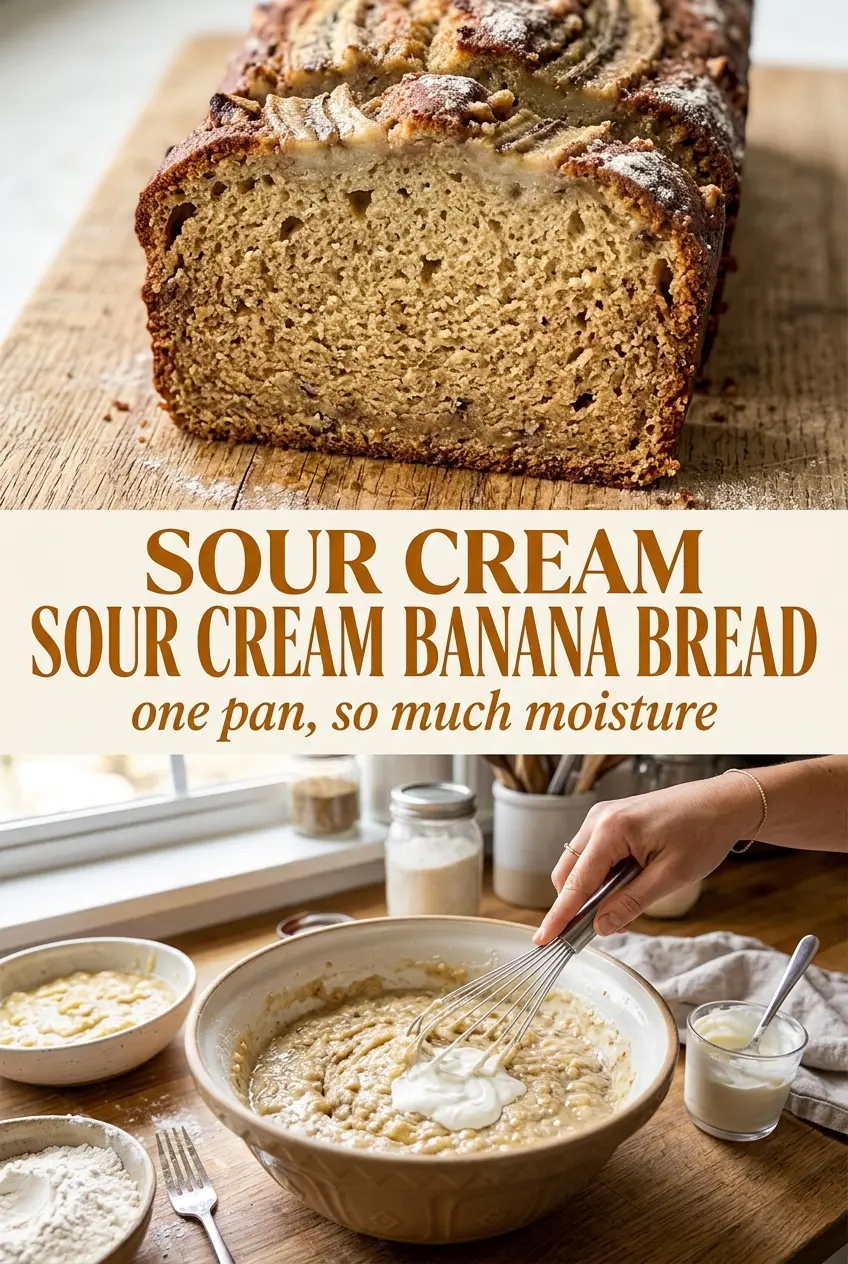
Sour Cream Banana Bread
Ingredients
Equipment
Method
- Preheat the oven to 350°F and grease a loaf pan so the batter releases easily after baking.
- Mash the bananas and whisk in the sour cream and melted butter until smooth and glossy.
- Mix in the sugar, egg, and vanilla until the mixture looks evenly combined.
- Sprinkle the baking soda and salt over the mixture and stir in to fully distribute.
- Fold in the flour until just combined, stopping as soon as no dry streaks remain.
- Pour the batter into the prepared loaf pan, spreading it evenly to prevent uneven rising.
- Bake for 55-65 minutes at 350°F, until a toothpick inserted in the center comes out clean.
- Cool in the pan for 10 minutes, then turn out onto a wire rack so the crust sets without steaming.