
The edges start bubbling before the middle of this casserole is ready, and that’s exactly what you want. Southern lobster mac and cheese needs enough oven time to turn the panko golden without letting the macaroni go soft, so I stop the pasta short of al dente before it ever meets the cheese sauce.
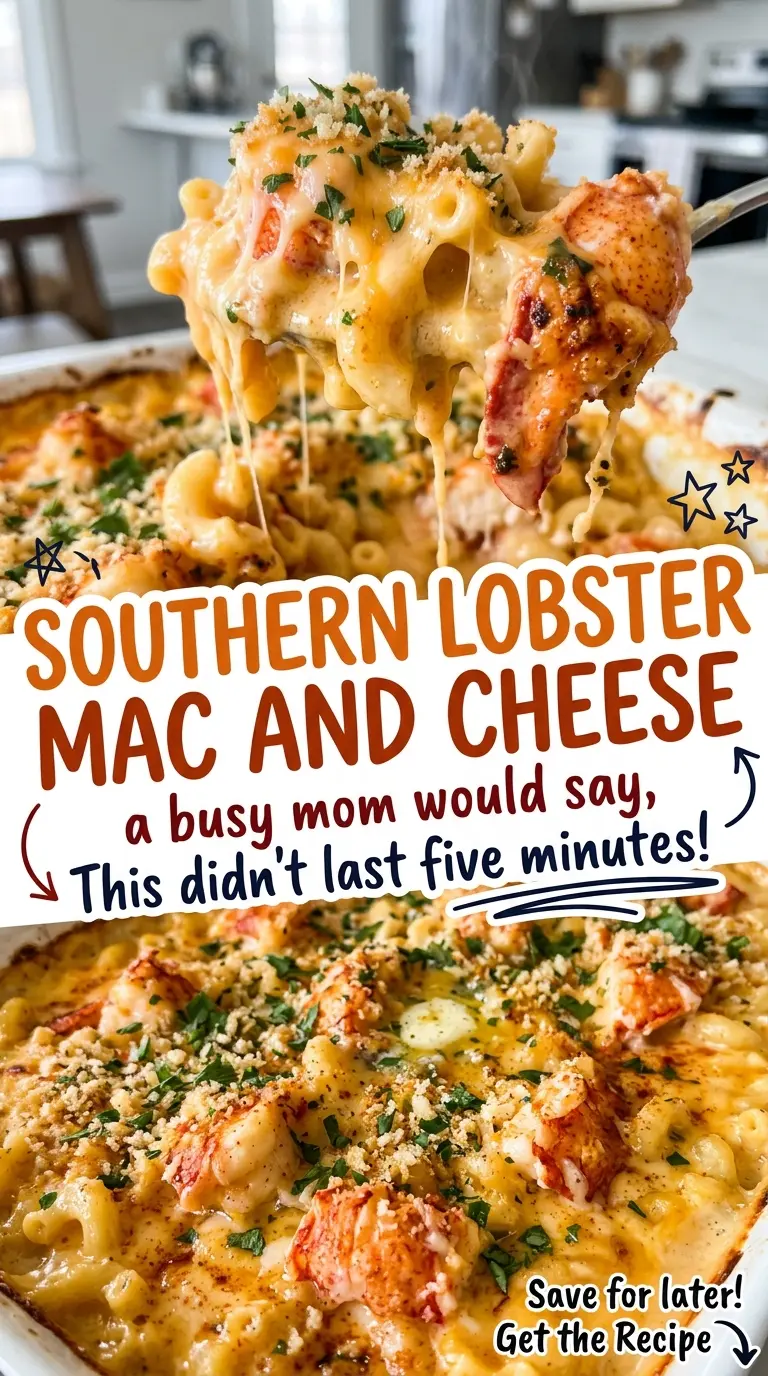
The sauce begins with a quick butter-and-flour roux, then milk and cream make it rich enough to coat every elbow. Sharp cheddar brings the familiar bite, while Monterey Jack melts smoothly around the lobster. I fold the cooked lobster in with the macaroni at the end, keeping those tender pieces intact beneath the crisp, olive-oil-coated crumbs.

Kitchen Note
Fold the lobster in with the macaroni at the very end, using a light hand. Stirring it around too much breaks those 1-inch pieces into little shreds, and you want a bit of lobster in every serving.
Save this Southern Lobster Mac and Cheese for a bubbling cheddar-and-Jack casserole with tender lobster and a golden panko top.
Why the Macaroni Goes Into the Oven a Little Underdone
Macaroni that’s perfectly tender in the pot can turn mushy by the time a baked casserole is bubbling at the edges. The pasta keeps cooking in the oven, and it also takes up some of the creamy sauce as the dish bakes. Starting with noodles that are about two minutes shy of al dente gives them room to finish without losing their shape.
That short boil is deliberate, not a way to save time. Drain the macaroni after 5 to 6 minutes, when it still has a firm bite in the center. The oven does the rest during its 20 to 25 minutes at 375°F. If you cook the noodles all the way tender first, they have nowhere to go once they’re covered in sauce and heat.
There’s a second benefit: the firm noodles are easier to fold through the sauce without breaking. That matters here because the lobster is already cooked and only needs to warm through in the casserole. Keep the pasta sturdy, fold the mixture gently, and the finished dish has defined elbows rather than a soft, crowded layer.
Why Cheddar and Monterey Jack Both Belong in This Sauce
- Sharp cheddar — It gives the sauce its recognizable tang and a fuller cheese flavor. Freshly grated cheese melts more evenly than pre-shredded cheese, which is coated to keep the shreds from clumping. A standard block is all you need.
- Monterey Jack — Jack softens cheddar’s sharper edge and melts into a smooth, creamy sauce. It’s worth keeping in the blend; using only a strongly flavored cheese can make the sauce taste heavier and melt less smoothly.
- Cooked lobster meat — Cut it into 1-inch pieces so the chunks hold their shape when folded through the macaroni. Since it’s already cooked, it doesn’t need to be sautéed or simmered before baking; extra cooking can make it tough.
- Whole milk and heavy cream — Together they make a sauce rich enough to cling to the pasta. The butter and flour thicken the dairy, so whisk the milk and cream in gradually rather than pouring them all in at once.
- Panko and olive oil — Panko makes a light, crisp top, and tossing it with oil helps the crumbs brown in the oven. Regular breadcrumbs are finer and make a less airy topping, so panko is the better choice for this texture.
- Dry mustard, paprika, and cayenne — These season the cheese sauce without covering up the lobster. Dry mustard adds a subtle savory sharpness, while paprika and cayenne bring warmth; black pepper rounds out the seasoning.
Build the Sauce and Bake Without Losing the Lobster
Get the macaroni ready for its second cook
Heat the oven to 375°F and coat a 9×13-inch baking dish with nonstick cooking spray. Bring 4 quarts of water and 1 tablespoon of the kosher salt to a boil in an 8-quart pot. Add the elbow macaroni and cook for 5 to 6 minutes, until it’s about 2 minutes shy of al dente. Drain it well so excess water doesn’t thin the cheese sauce.
Whisk a smooth roux-based sauce
Melt the butter in a 4-quart saucepan over medium heat, then whisk in the flour. Cook the mixture for 1 minute, whisking as it cooks so the flour is incorporated without browning. Gradually whisk in the whole milk and heavy cream; adding them in stages helps keep the base smooth. Keep whisking until no dry flour pockets remain.
Thicken the seasoned dairy before adding cheese
Whisk in the dry mustard, paprika, cayenne, black pepper, and remaining teaspoon of salt. Cook for 4 to 6 minutes, whisking often, until the sauce thickens enough to coat a spoon. Take the saucepan off the heat before stirring in the cheddar and Monterey Jack a handful at a time. The cheese should melt into a smooth, glossy sauce.
Fold, top, and bake until the edges bubble
Fold the drained macaroni and lobster into the cheese sauce, then spread everything evenly in the prepared dish. Toss the panko with the olive oil and sprinkle it over the top in an even layer. Bake for 20 to 25 minutes, until the edges are bubbling and the topping is golden brown. Rest the casserole for 10 minutes before serving.
Three Practical Ways to Adapt This Lobster Mac
Make the casserole gluten-free
Use gluten-free elbow macaroni, a cup-for-cup gluten-free flour blend in place of the all-purpose flour, and gluten-free panko. Cook the pasta according to its package, stopping about 2 minutes before al dente; the casserole keeps the same creamy, crunchy contrast, though gluten-free noodles can be more delicate when folded.
Swap in cooked lump crab
Replace the lobster with the same amount of cooked lump crab meat and fold it in just as gently. Crab makes the casserole a little sweeter and more delicate, so keep the pieces large rather than stirring them until they disappear into the sauce.
Keep the seasoning mild
Leave out the cayenne pepper for a gentler sauce. The dry mustard, paprika, and black pepper still give the cheese plenty of savory character, without the warm finish from cayenne.
Storage and Reheating
- Refrigerator: Store leftovers in an airtight container for 3 to 4 days. The panko softens in the refrigerator, while the sauce firms up around the pasta.
- Freezer: Freeze cooled portions in airtight, freezer-safe containers for up to 2 months. The cheese sauce may be less smooth after thawing, and the topping won’t stay crisp.
- Reheating: Thaw frozen portions in the refrigerator, then reheat covered in a 325°F oven with a small splash of milk until the center reaches 165°F. Uncover near the end if you’d like to crisp the top; reheating uncovered the whole time can dry out the macaroni.
Questions That Come Up While Making Lobster Mac and Cheese
Southern Lobster Mac and Cheese
Ingredients
Equipment
Method
- Heat the oven to 375°F.
- Coat a 9x13-inch baking dish with nonstick cooking spray.
- Bring the 4 quarts water and 1 tablespoon kosher salt to a boil in an 8-quart pot.
- Add the macaroni and cook for 5 to 6 minutes, until about 2 minutes shy of al dente.
- Drain the macaroni.
- Melt the butter in a 4-quart saucepan over medium heat.
- Whisk in the flour and cook for 1 minute.
- Gradually whisk in the milk and cream.
- Whisk in the dry mustard, paprika, cayenne, black pepper, and remaining 1 teaspoon salt.
- Cook for 4 to 6 minutes, whisking often, until the sauce thickens enough to coat a spoon.
- Remove the pan from the heat.
- Stir in the cheddar and Monterey Jack a handful at a time until melted and smooth.
- Fold the macaroni and lobster into the cheese sauce.
- Spread the mixture evenly in the prepared baking dish.
- Toss the panko with the olive oil.
- Sprinkle the panko evenly over the macaroni.
- Bake for 20 to 25 minutes, until the edges are bubbling and the topping is golden brown.
- Rest for 10 minutes before serving.