
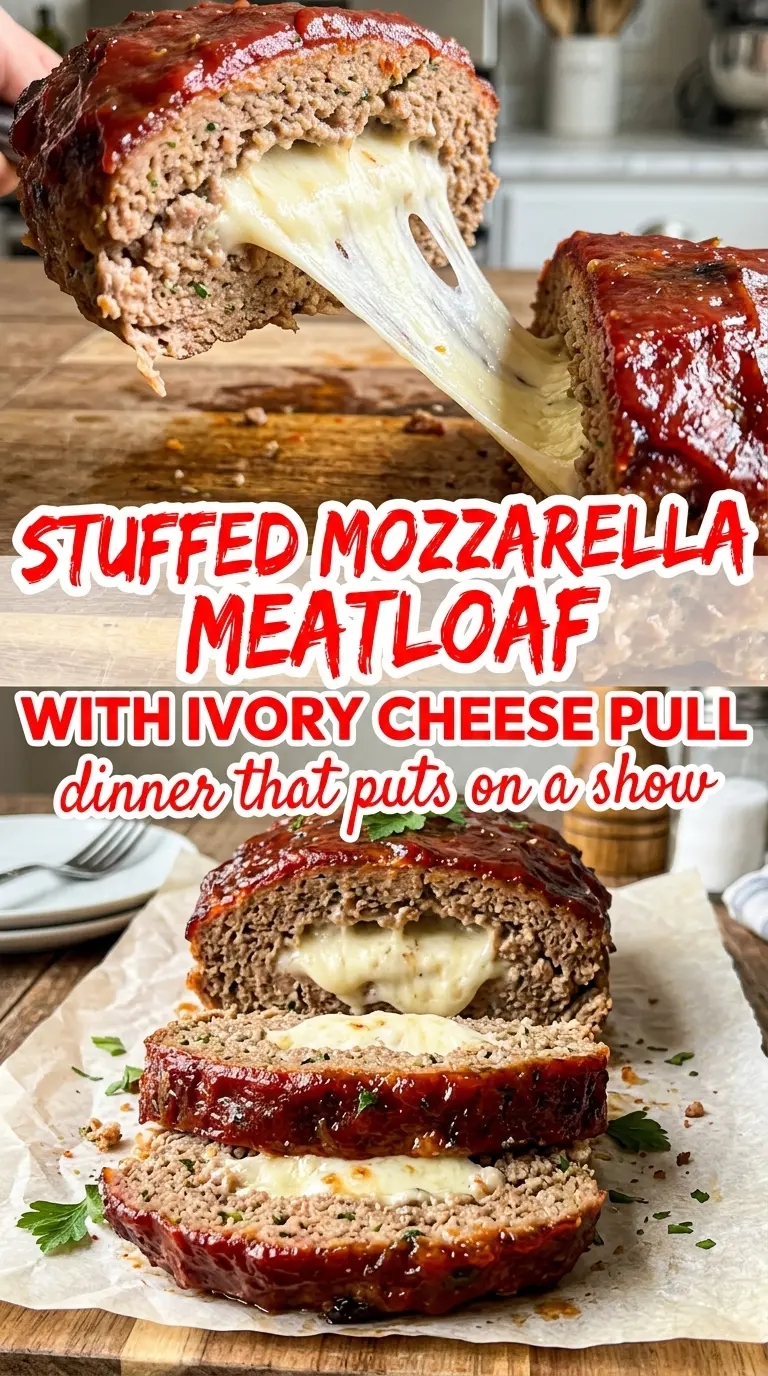
Stuffed mozzarella meatloaf turns a familiar comfort dinner into something that gets a reaction at the table before the first bite. The outside bakes up savory and firm with a tangy ketchup glaze, while the center stays soft enough to give you that dramatic cheese pull when you slice into it. It eats like a proper meatloaf, but the molten mozzarella running through the middle makes each slice feel a little special.
The trick is building enough structure in the meat mixture to hold the cheese without turning the loaf dense. Breadcrumbs and milk keep the texture tender, and the Worcestershire sauce adds the kind of savory depth that ground beef needs. Fresh mozzarella works best here because it melts cleanly into long, stretchy ribbons instead of disappearing into the meat the way a harder cheese can.
Below, I’ve included the exact point where people usually lose the cheese to a leak, plus a few smart swaps if you want to change the herbs or make it lighter on the dairy side without losing the pull.
The cheese stayed in the middle and didn’t leak out all over the pan, and the glaze caramelized into this sweet-tangy layer that worked so well with the beef. I sliced it after a short rest and got the cleanest cheese pull I’ve ever had from meatloaf.
Stuffed mozzarella meatloaf with a clean cheese pull is worth saving for the nights when you want a classic dinner that slices like a showpiece.
The Reason the Cheese Stays Inside Instead of Escaping
Most stuffed meatloaves leak because the filling is placed too close to the edges, or the top layer is patched on loosely and never fully sealed. Once the mozzarella starts melting, any gap turns into a channel, and the cheese follows the heat right out into the pan. The fix is simple: leave a clean border all the way around the cheese, then press the top layer firmly into the sides so the seam disappears.
The other thing that matters here is structure. A meat mixture that’s too wet collapses before it sets, which opens the door for cheese loss. Breadcrumbs and milk keep this loaf tender, but they also need time to hydrate so the mixture can hold together as a single mass instead of crumbling when you shape it.
What Each Ingredient Is Actually Doing in This Dish
- Ground beef — Use beef with enough fat to stay juicy, ideally around 80/20. Leaner beef can work, but the loaf will eat drier and the edges can tighten up before the center finishes cooking.
- Plain breadcrumbs — These bind the mixture and help trap the juices as the meat bakes. Crushed crackers can stand in, but they give a saltier, softer result.
- Milk — This hydrates the breadcrumbs and keeps the loaf tender. Skipping it gives you a denser texture that slices less cleanly.
- Worcestershire sauce — This brings savory depth that plain salt can’t cover. If you need a substitute, use soy sauce in a smaller amount so the mixture doesn’t go too salty.
- Fresh mozzarella — This is the heart of the recipe. Use sliced fresh mozzarella, not pre-shredded cheese, because it melts into long strands and gives you that clean center pull.
- Ketchup, brown sugar, and red wine vinegar — Together they make a glaze that’s sweet, tangy, and a little sticky. The vinegar keeps the topping from tasting flat, and the sugar helps it caramelize.
- Garlic — A small amount sharpens the glaze without taking over. Fresh garlic works best here because it softens as it bakes and blends into the ketchup instead of tasting raw.
Building the Loaf So the Cheese Pull Survives the Bake
Mix the meat gently
Combine the beef, breadcrumbs, herbs, salt, pepper, milk, and Worcestershire sauce just until everything is evenly distributed. If you work it like bread dough, the proteins tighten and the loaf turns springy instead of tender. The mixture should hold together when you press it, but it shouldn’t look pasty or overworked.
Seal the mozzarella in the center
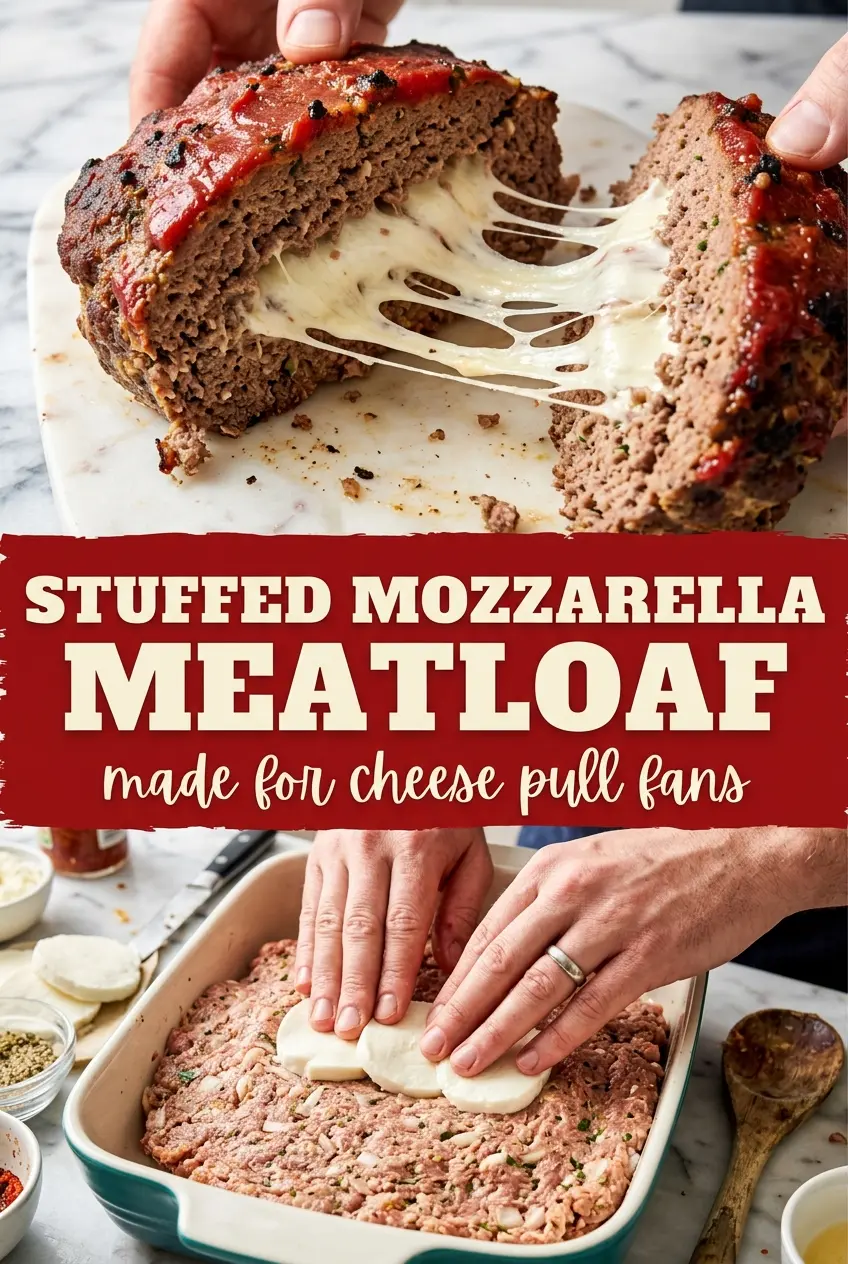
Press half the meat mixture into the pan first, then lay the mozzarella down the center with a border on all sides. Add the remaining meat over the top and press the edges together with your fingers so the cheese is fully enclosed. Any thin spot near a corner is usually where the melt starts to escape, so smooth the surface and compact the sides.
Glaze before and during baking
Whisk the ketchup, brown sugar, vinegar, and garlic, then spread or pour about half over the top before the loaf goes into the oven. That first layer bakes into the surface and gives the meatloaf a lacquered finish instead of a bare, cracked top. If the glaze looks too thick to spread, loosen it with a teaspoon of water so it brushes on evenly.
Rest before slicing
Bake until the center reaches 160°F, then let the meatloaf rest for at least 5 minutes. That pause lets the juices settle and gives the mozzarella a chance to thicken slightly, which is what helps you get a clean slice with a visible cheese center. Cut too soon and the filling runs; cut after a brief rest and you get the pull you were after.
Three Ways to Adapt This Without Losing the Melt
Gluten-free meatloaf
Swap the breadcrumbs for a gluten-free breadcrumb blend or crushed gluten-free crackers. The texture stays close to the original as long as the crumbs are fine and evenly mixed, though some brands soak up a little more moisture and may need an extra splash of milk.
Dairy-free version
You can replace the mozzarella with a good melting dairy-free cheese, but it won’t give the same elastic pull. Pick one that melts smoothly rather than browning into an oily layer, and expect the center to be creamier than stretchy.
Change the herb mix
The basil, oregano, and parsley give the meatloaf an Italian-style backbone, but you can shift the herbs toward thyme and rosemary for a deeper, more roast-like flavor. Use rosemary sparingly because it can take over fast, especially once the glaze and mozzarella enter the picture.
Make it ahead
You can assemble the loaf up to a day in advance and refrigerate it before baking. That resting time actually helps the shape hold, but cover it tightly so the top doesn’t dry out before it goes in the oven.
Storage and Reheating
- Refrigerator: Store slices in an airtight container for up to 4 days. The cheese center will firm up, but the flavor holds well.
- Freezer: Freeze cooled slices tightly wrapped, then tucked into a freezer bag for up to 2 months. The mozzarella won’t be as stretchy after thawing, but the loaf still reheats well.
- Reheating: Warm slices covered in a 325°F oven with a spoonful of water or extra glaze for 12 to 15 minutes. Microwaving works in a pinch, but it can make the cheese separate and the meat tough.
Answers to the Questions Worth Asking
Stuffed Mozzarella Meatloaf
Ingredients
Equipment
Method
- Preheat the oven to 350°F and lightly grease a 9x13-inch baking dish, so the meatloaf releases easily after baking.
- Combine the ground beef, plain breadcrumbs, dried basil, dried oregano, dried parsley, salt, black pepper, milk, and Worcestershire sauce in a large bowl until evenly mixed, with no dry breadcrumb pockets visible.
- Press half of the meat mixture into the bottom of the prepared dish, forming an even layer with a small border at the edges.
- Layer the fresh mozzarella slices down the center, keeping a clear border on both sides so the cheese stays contained.
- Top with the remaining meat mixture and seal the edges completely, pressing gently so the mozzarella is fully enclosed.
- Whisk together the ketchup, brown sugar, red wine vinegar, and garlic until smooth, then pour half over the meatloaf.
- Bake at 350°F until the internal temperature reaches 160°F, watching for bubbling glaze at the edges and juices running clear.
- Let the meatloaf rest for at least 5 minutes before slicing, so the cheese pull settles into a molten center rather than leaking out.