
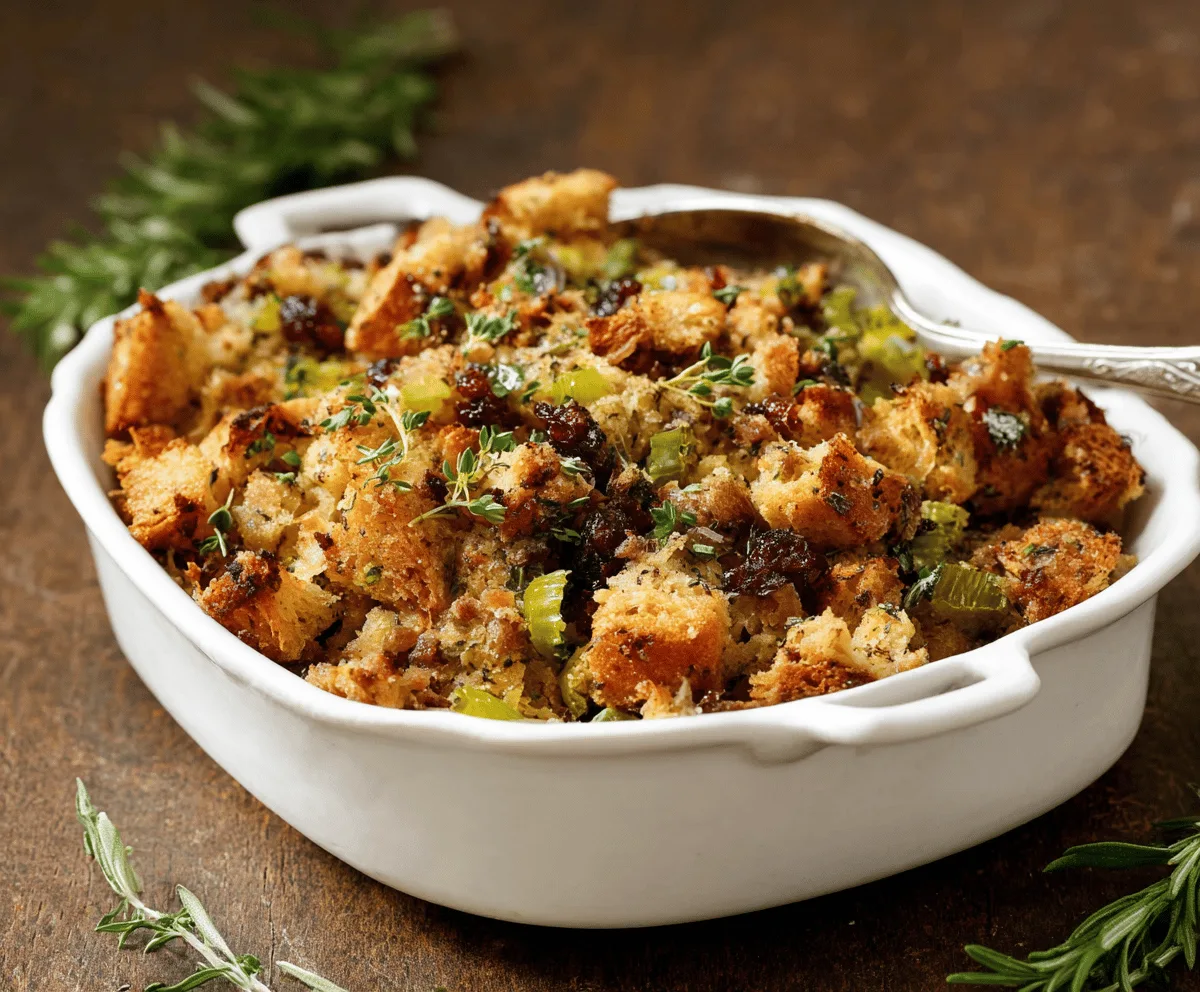
Stuffing is one of those classic dishes that fills the kitchen with the warm, comforting smell of herbs, bread, and a little bit of magic. This recipe brings together soft, toasted bread cubes, fragrant onions, celery, and plenty of fresh herbs like sage and thyme. The texture is a perfect mix of tender and slightly crispy bits that make every bite so satisfying.
I always look forward to making stuffing because it feels like a little love in a dish. I like to soak the bread just enough in broth to keep it moist but not soggy. Sometimes, I add a bit of sausage or mushrooms to give it a little extra flavor, but this basic version is a favorite for many who prefer a more traditional taste.
My favorite way to serve stuffing is alongside roasted turkey or chicken, letting all the tasty juices mingle on the plate. It’s one of those recipes that brings everyone around the table, perfect for holiday dinners or cozy family meals. I hope you find it as comforting and delicious as I do!
Key Ingredients & Substitutions
Bread Cubes: Using day-old bread or lightly toasted cubes helps create a nice texture that soaks up moisture without turning mushy. White or sourdough bread works well. If you prefer gluten-free, try gluten-free bread toasted the same way.
Butter: Butter adds richness and helps soften the vegetables. You can substitute with olive oil for a dairy-free version but expect a slightly different flavor and texture.
Herbs (Sage, Thyme, Rosemary, Parsley): Fresh herbs brighten the stuffing with aromatic flavor. If fresh aren’t available, dried ones can work—use about one-third the amount.
Broth: Chicken broth adds moisture and savory taste. Vegetable broth is a great option to keep it vegetarian, and low sodium varieties allow you to control the saltiness.
Optional Extras: Dried cranberries or pomegranate seeds add a lovely pop of color and sweet-tart flavor. Nuts like pecans or walnuts can also add crunch if you like.
How Do You Get Moist But Not Soggy Stuffing?
Getting the moisture right is the trick for perfect stuffing. Too dry makes it crumbly, too wet turns it mushy.
- Toast your bread cubes first to dry them out and add crunch.
- Add broth gradually—start with less so you can control moisture.
- Mix gently to coat the bread without smashing it.
- Check the texture; it should feel soft but hold its shape.
- Baking covered helps steam it moist, then uncovered at the end crisps the top.
I always recommend tasting the stuffing mixture before baking. Adding eggs helps bind it together and gives a nice richness too.
Equipment You’ll Need
- Baking sheet – I use it to toast the bread cubes evenly, which keeps them crisp and prevents sogginess later.
- Large mixing bowl – perfect for combining all ingredients without making a mess.
- Skillet or saucepan – I sauté the vegetables and herbs here to bring out their flavor.
- 9×13-inch baking dish – gives enough space for the stuffing to cook evenly and develop a golden top.
- Measuring cups and spoons – for accurate ingredient portions, saving time and making sure everything turns out just right.
- Whisk or fork – helps beat the eggs to mix thoroughly with the other ingredients.
Flavor Variations & Add-Ins
- Swap herbs: Use sage and thyme for a classic taste, or add rosemary for a more pungent aroma. Fresh herbs give the best flavor, but dried can be used in a pinch.
- Protein boost: Mix in cooked sausage, shredded cooked turkey, or sautéed mushrooms to make it more filling.
- Cheese: Fold in shredded cheddar, Parmesan, or cooked crumbled bacon for extra richness and texture.
- Veggies: Add cooked apples, sautéed onions, or chopped bell peppers for added color and flavor variations.
Classic Herb Stuffing
Ingredients You’ll Need:
Main Ingredients:
- 10 cups bread cubes (day-old or lightly toasted white or sourdough bread)
- 1 cup (2 sticks) unsalted butter
- 2 cups yellow onion, finely chopped
- 1 1/2 cups celery, finely chopped
- 2 cloves garlic, minced
- 1/4 cup fresh parsley, chopped
- 1 tablespoon fresh sage, chopped
- 1 tablespoon fresh thyme leaves
- 1 tablespoon fresh rosemary, chopped
- 1 teaspoon salt
- 1/2 teaspoon black pepper
- 2 1/2 to 3 cups low sodium chicken broth (or vegetable broth for vegetarian)
- 2 large eggs, beaten
- Optional: 1/2 cup dried cranberries or pomegranate seeds for a pop of color and flavor
Time Needed
This recipe takes about 15 minutes for preparation, around 15 minutes to toast the bread cubes, and 40 minutes baking time. So, in total, you’ll need roughly an hour from start to finish.
Step-by-Step Instructions:
1. Toast the Bread Cubes:
Preheat your oven to 350°F (175°C). Spread the bread cubes evenly on a baking sheet and toast them in the oven for about 15 minutes until they’re golden brown and crisp. Remove them from the oven and let them cool.
2. Cook the Vegetables and Herbs:
In a large skillet or saucepan, melt the butter over medium heat. Add the chopped onion and celery, sautéing until they’re soft and translucent, about 8 to 10 minutes. Then add the minced garlic and cook for another 1 to 2 minutes. Stir in the fresh parsley, sage, thyme, rosemary, salt, and pepper, cooking for one more minute to bring out the aromas.
3. Mix the Stuffing:
Transfer the toasted bread cubes into a large mixing bowl. Add the sautéed vegetable and herb mix, stirring gently to combine. Gradually pour in 2 1/2 cups of broth as you mix, ensuring the bread cubes absorb it evenly. Add the beaten eggs and toss everything gently. If the mixture feels dry, add a bit more broth until it’s moist but not soggy. If you like, fold in dried cranberries or pomegranate seeds now.
4. Bake the Stuffing:
Butter a 9×13-inch baking dish and spread the stuffing mixture evenly inside. Cover the dish with foil and bake in the preheated oven for 25 minutes. Then remove the foil and bake for an additional 15 minutes to get a golden brown, slightly crispy top.
5. Serve and Enjoy:
Once baked, let the stuffing rest for about 5 minutes before serving. Enjoy this classic, herby, buttery stuffing alongside your favorite roast or holiday meal!
Can I Use Frozen Bread for Stuffing?
Yes! Just make sure to fully thaw the bread first, then toast or dry it out before using. This helps prevent soggy stuffing and ensures the bread absorbs the broth properly.
How Can I Make This Stuffing Vegetarian?
Simply swap chicken broth for a good-quality vegetable broth. Double-check that your broth has enough flavor to keep the stuffing tasty and aromatic.
Can I Prepare Stuffing Ahead of Time?
Absolutely! Combine the ingredients, cover, and refrigerate for up to 24 hours. When ready, bake it covered with foil, then uncover to crisp the top before serving.
What’s the Best Way to Store Leftover Stuffing?
Store leftovers in an airtight container in the fridge for up to 3 days. Reheat covered in the oven or microwave to keep it moist and delicious.