
When a fork slides easily into the sweet potato, it’s ready to mash—but don’t peel it right away. Give it time to cool until it’s comfortable to handle, then the skin comes away easily and the flesh mashes into the smooth base this cornbread needs. That small pause makes the prep calmer and keeps the potato from turning into uneven chunks in the batter.
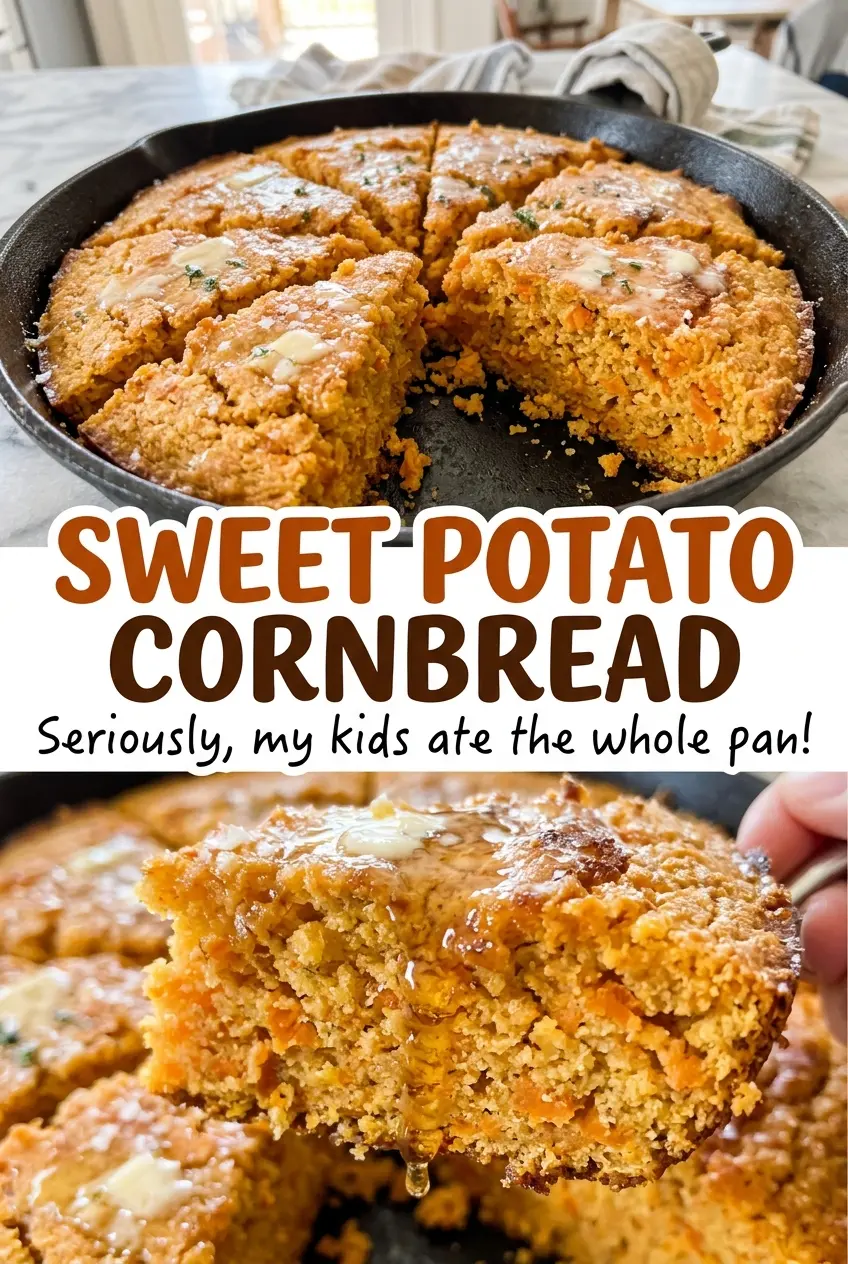
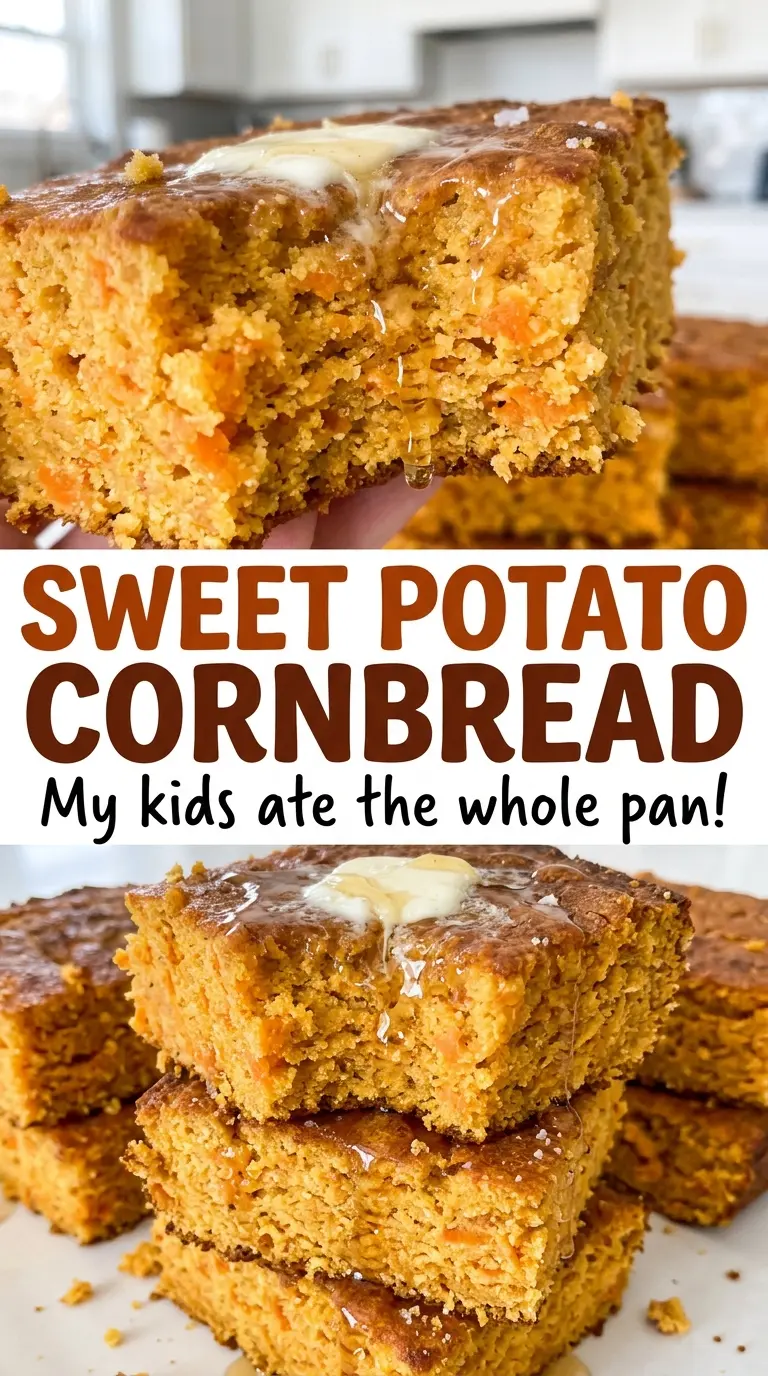
Sweet Potato Cornbread lands between classic cornbread and a soft, lightly sweet quick bread. The cornmeal still gives each square its familiar texture, while mashed sweet potato brings moisture and a mellow sweetness. I like that the batter comes together in two bowls: the dry ingredients get whisked separately, then stirred into the wet mixture only until the last dry patches disappear. The baked squares are golden at the edges, tender through the middle, and just right beside a bowl of soup or a plate of beans.
Kitchen Note
I pull this cornbread when the top is golden and the toothpick comes out with a few moist crumbs, not completely clean. A clean toothpick can mean the tender center has already baked longer than it needs to.
Save this Sweet Potato Cornbread for tender squares with a soft sweet-potato crumb and golden cornmeal edges.
The 12-ounce sweet potato isn’t the measurement that matters
A medium sweet potato weighing about 12 ounces gives you a useful starting point, but the amount that goes into the batter is measured after cooking, peeling, and mashing: one cup. Potatoes vary in shape and moisture, so two that weigh the same may not yield exactly the same amount of mash. Measuring the finished mash keeps the wet-to-dry balance consistent.
That balance matters in a batter built from both cornmeal and flour. Too little sweet potato leaves less moisture in the crumb; adding more than the measured cup shifts the batter toward a heavier, softer center. Mash the cooked flesh until smooth before measuring, rather than packing lumpy pieces into the cup. If your potato yields a little extra, set it aside instead of stirring it all in. The cornbread should be tender, not damp or dense.
What the cornmeal, flour, and buttermilk each bring to the pan
- Yellow cornmeal — It gives the squares their recognizable corn flavor and gently grainy bite. A standard bag from the baking aisle works well; there’s no need for a specialty product. White cornmeal is a useful swap if that’s what you have, with a paler color and a slightly different corn flavor.
- All-purpose flour — Flour helps the crumb hold together around the cornmeal instead of breaking into loose, sandy pieces. Regular all-purpose flour is the right choice here; replacing it with more cornmeal would make the texture coarser and more fragile. For a gluten-free version, use a measure-for-measure gluten-free baking blend in its place.
- Buttermilk — Its tang works alongside the baking soda, and its thickness gives the batter body. Plain kefir is the closest easy swap; use the same amount and expect a slightly more tangy flavor. Regular milk lacks the same acidity, so it isn’t my first choice here.
- Eggs and butter — The eggs help bind the crumb, while melted butter gives it richness and helps keep it tender. Unsalted butter is handy because the salt level stays controlled, and an everyday store-brand stick works just fine. I wouldn’t make an egg swap if you want the same cohesive, tender squares.
- Light brown sugar — It adds gentle sweetness and a hint of molasses that suits the sweet potato without making this taste like cake. Dark brown sugar is an easy one-for-one swap when you want a deeper molasses note.
From fork-tender sweet potato to an evenly baked square
Cook and mash the sweet potato
Pierce the sweet potato several times with a fork, then microwave it on high for 5 to 8 minutes, turning it halfway through. It’s ready when a fork slides into the flesh without resistance; if the center is still firm, give it more time within that range and check again. Let it cool until easy to handle, peel away the skin, and mash the flesh until smooth. Measure one cup for the batter.
Set up the pan and dry mixture
Heat the oven to 375°F and grease a 9-inch square baking pan with 1 tablespoon of the butter. Melt the remaining 5 tablespoons and set them aside while you whisk the cornmeal, flour, brown sugar, baking powder, baking soda, and salt in a medium bowl. Break up any brown sugar lumps as you whisk so they don’t turn into sweet pockets in the finished squares. Keeping the dry mixture even helps the leaveners distribute throughout the batter.
Whisk the wet ingredients, then combine
In a large bowl, whisk the eggs, buttermilk, mashed sweet potato, and melted butter until the mixture looks smooth. Add the dry ingredients to the wet mixture, then stir only until no dry patches remain. A few small lumps are fine; continuing to beat the batter after the flour disappears can make the crumb tougher. Scrape the bottom of the bowl once so no pockets of dry flour are left behind.
Spread, bake, and let the crumb settle
Spread the batter evenly in the prepared pan, nudging it into the corners without packing it down. Bake for 30 to 35 minutes, until the top is golden and a toothpick inserted in the center comes out with a few moist crumbs. Let the cornbread rest in the pan for 10 minutes before cutting; slicing sooner makes the soft center more likely to crumble. Cut it into squares once it has had that short rest.
Three practical ways to change the cornmeal or flour
Use white cornmeal for a paler square
Replace the yellow cornmeal measure with the same measure of white cornmeal. The cornbread will have a lighter color and a more delicate corn flavor, while keeping the same general texture.
Make it gluten-free with a measure-for-measure blend
Replace the all-purpose flour with the same amount of gluten-free measure-for-measure baking flour. Choose a blend formulated to replace wheat flour in baking; the finished crumb may be a little more delicate, so let the squares rest before cutting.
Use dark brown sugar for a deeper molasses note
Swap in dark brown sugar in the same measure as the light brown sugar. It gives the cornbread a more pronounced molasses flavor and a slightly deeper color without changing the mixing method.
Storage and Reheating
- Refrigerator: Keep covered in an airtight container for up to 4 days. The crumb firms as it chills.
- Freezer: Wrap squares individually and freeze for up to 3 months. Thaw in the refrigerator before reheating.
- Reheating: Warm a piece in the microwave in short bursts until just heated through. Long heating can dry the tender crumb, so stop as soon as it’s warm.
Questions that come up before this cornbread goes in the oven
Sweet Potato Cornbread
Ingredients
Equipment
Method
- Pierce the sweet potato several times with a fork.
- Microwave on high for 5 to 8 minutes, turning halfway, until fork-tender.
- Cool until easy to handle, then peel and mash until smooth to make 1 cup.
- Heat the oven to 375°F and grease a 9-inch square baking pan with 1 tablespoon of the butter.
- Melt the remaining 5 tablespoons of butter and set aside.
- Whisk the cornmeal, flour, brown sugar, baking powder, baking soda, and salt in a medium bowl.
- In a large bowl, whisk the eggs, buttermilk, mashed sweet potato, and melted butter until smooth.
- Add the dry ingredients to the sweet potato mixture and stir just until no dry patches remain.
- Spread the batter evenly in the prepared pan.
- Bake for 30 to 35 minutes, until golden and a toothpick inserted in the center comes out with a few moist crumbs.
- Let the cornbread rest in the pan for 10 minutes before cutting and serving.