
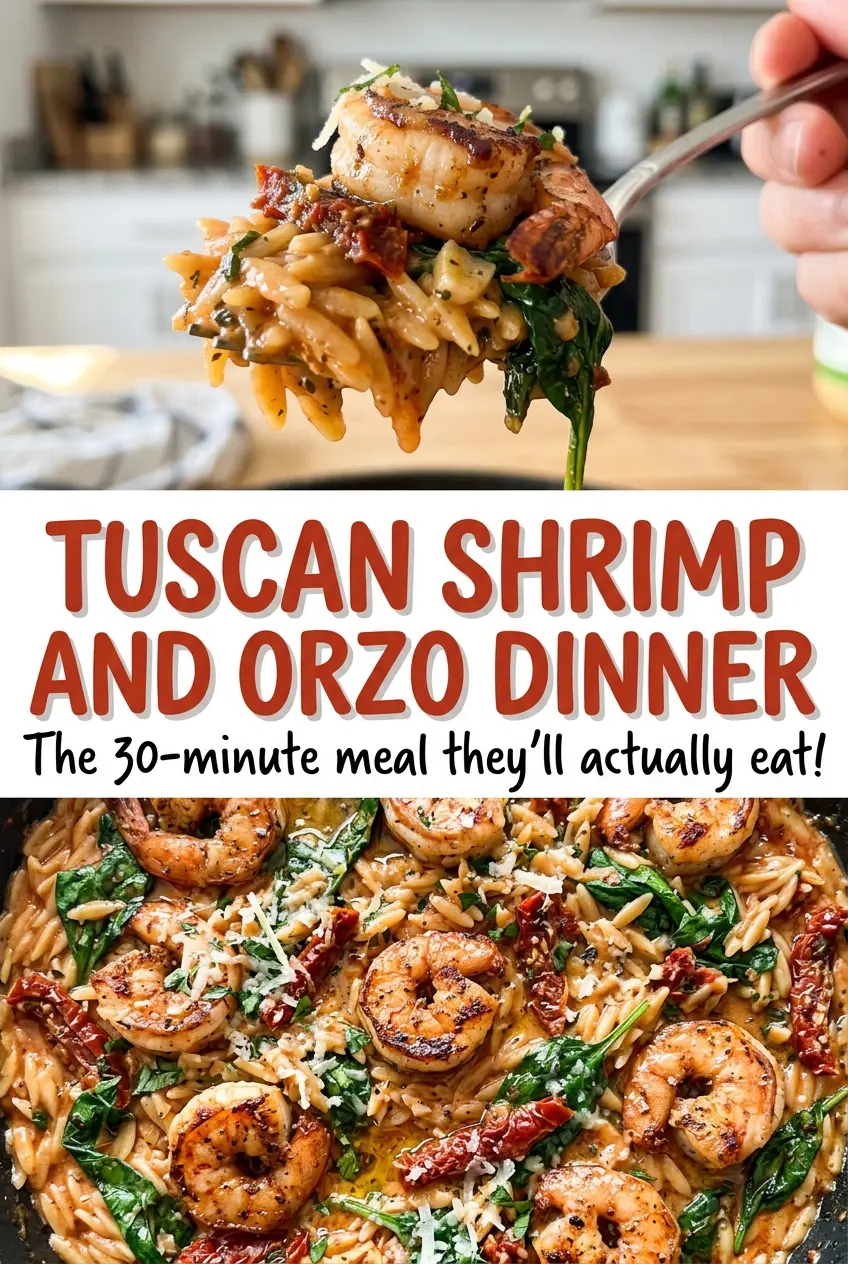
The shrimp turn opaque quickly in a hot skillet, and that’s the moment to move them out of the pan. Leave them in while the orzo cooks and they’ll keep tightening up; bring them back only at the end, and they stay tender. That quick sear is what makes this Tuscan Shrimp and Orzo Dinner feel like a complete skillet meal without asking the shrimp to sit through the whole cooking time.
The orzo cooks right in the sun-dried tomato and garlic oil, then simmers uncovered in chicken broth until tender. It picks up the savory bits from the bottom of the skillet as it cooks, while the cream and Parmesan make the broth silky at the finish. I like the way the lemon juice cuts through that richness, and the spinach wilts right into the warm orzo. You get a creamy, cozy dinner with bright tomato and a little heat in every forkful.
Kitchen Note
I have a plate ready before the shrimp go into the skillet. They cook fast, and transferring them right away keeps them from continuing to cook while the orzo simmers.
Save this Tuscan shrimp and orzo dinner for a creamy skillet meal with tender shrimp, sun-dried tomatoes, and spinach.
Why Toasting the Orzo Before the Broth Changes the Whole Skillet
Orzo is small, but it still benefits from a quick toast. After the garlic and sun-dried tomatoes have warmed in the oil, stirring in the dry orzo lets the grains get coated before the broth goes in. That coating helps the tomato, garlic, and oregano flavor travel through the pasta instead of leaving all the seasoning in the liquid.
This order also builds the dish in one skillet. When the broth goes in, scrape the bottom so the browned and fragrant bits loosen into the simmer. The orzo cooks uncovered and gradually absorbs most of the broth, leaving a creamy base once the cream and Parmesan are stirred in. Keep the simmer steady rather than letting the broth boil hard; a vigorous boil can cook the liquid away before the pasta is tender. Stirring often helps the orzo cook evenly and keeps it from settling into a dense layer on the skillet bottom.
It’s a small bit of attention up front, but it gives the finished dish more depth than cooking plain orzo separately and spooning sauce over it. The shrimp are kept out of the skillet during this stretch, so they don’t overcook while the pasta takes on the broth.
What Gives This Skillet Its Creamy, Bright Tuscan Character
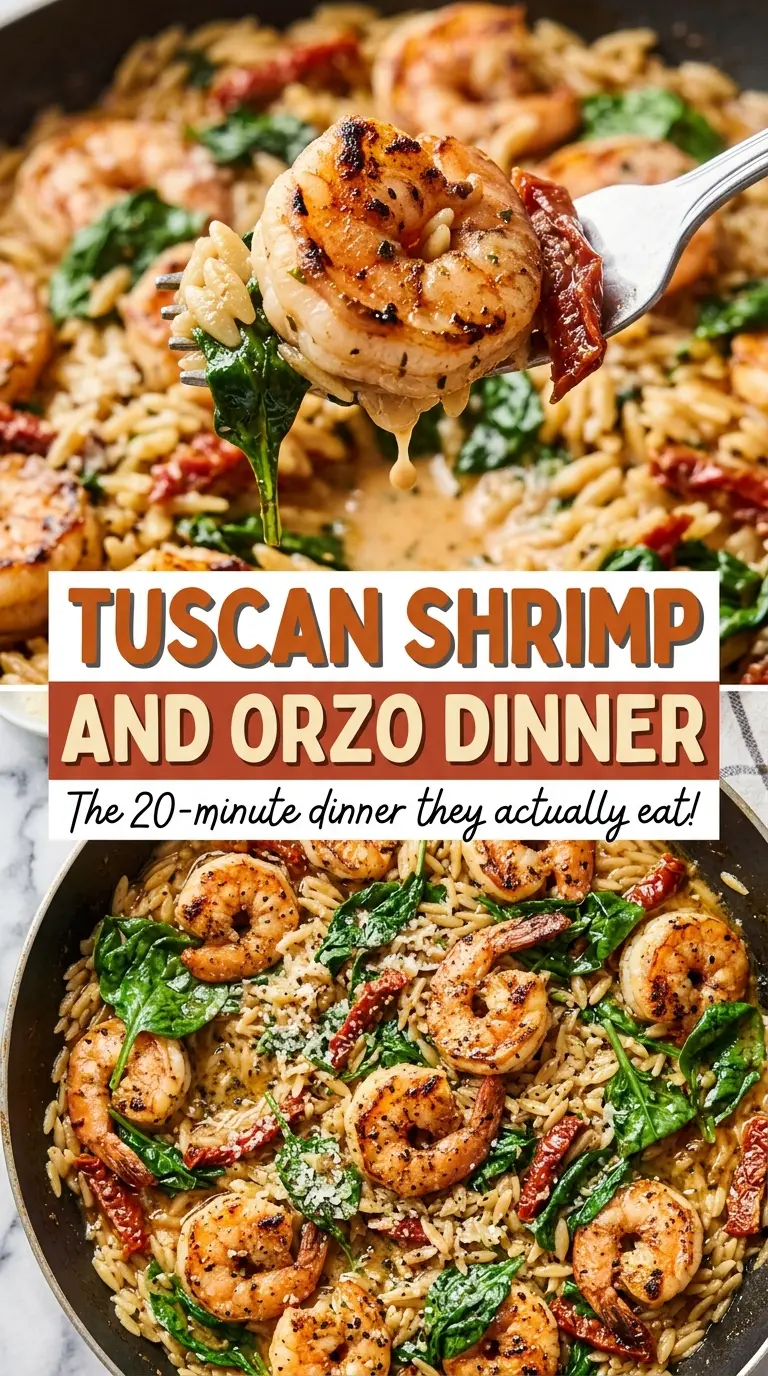
- Large shrimp — Peeled and deveined shrimp are ready to season and cook, and the larger size is easier to sear without overcooking. Freshness matters most; pat wet shrimp dry before seasoning so they sear rather than steam. Smaller shrimp cook faster, so they aren’t a direct swap if you want the same timing.
- Oil-packed sun-dried tomatoes — Drain them before chopping so extra oil doesn’t throw off the skillet. Their concentrated, tangy savoriness gives the broth its Tuscan-style backbone; dry-packed tomatoes won’t behave quite the same way here.
- Garlic, dried oregano, and red pepper flakes — Minced garlic releases its aroma quickly, so keep stirring as it cooks with the tomatoes and spices. Dried oregano stands up well to the broth, cream, and Parmesan, while the flakes give the finished dish a gentle warmth. There isn’t a single substitute that keeps this exact seasoning balance.
- Orzo — This small, rice-shaped pasta is what makes the skillet cook as one cohesive dish. Its size and cooking time suit the broth simmer; another pasta shape absorbs liquid differently, so it isn’t a one-for-one replacement.
- Low-sodium chicken broth — It supplies the liquid for cooking the orzo and lets the salt level stay balanced as the Parmesan reduces into the dish. Low-sodium broth is useful here because the cheese contributes saltiness at the end.
- Heavy cream and Parmesan — Heavy cream gives the sauce body, and finely grated Parmesan melts more evenly into it. A finely grated packaged Parmesan works, though freshly grated cheese tends to blend in more smoothly. Milk is not a like-for-like replacement for the cream in this skillet.
- Baby spinach and lemon juice — Baby spinach wilts quickly into the hot orzo without needing separate cooking. Add the lemon juice at the finish; its acidity brightens the cream and Parmesan. The lemon is a finishing note, not something to cook down with the broth.
Building the Orzo Base Before the Shrimp Goes Back In
Sear the Shrimp Just Until Opaque
Season the shrimp with 1/4 teaspoon of the kosher salt and the black pepper. Heat 1 tablespoon of olive oil in a 12-inch skillet over medium-high heat, then arrange the shrimp in a single layer. Cook for 1 to 2 minutes per side, until opaque and 145°F, then transfer them to a plate. If the skillet is crowded, work in a single layer so the shrimp sear instead of releasing moisture and steaming.
Warm the Tomato Aromatics and Toast the Orzo
Reduce the heat to medium and add the remaining olive oil, drained sun-dried tomatoes, garlic, dried oregano, and crushed red pepper flakes. Stir for 30 seconds, just until the garlic smells fragrant; don’t let it darken. Add the dry orzo and stir for 1 minute so the grains are coated in the seasoned oil. That minute is enough to toast the pasta without browning it.
Simmer Until the Orzo Is Tender
Stir in the chicken broth and remaining kosher salt, scraping the skillet bottom as you go. Bring the liquid to a boil, then reduce the heat to maintain a steady simmer and cook uncovered for 9 to 11 minutes. Stir often, checking that the orzo is tender and most of the broth has been absorbed. If the liquid is bubbling rapidly, lower the heat so it doesn’t disappear before the pasta is cooked through.
Wilt the Spinach and Finish the Skillet
Stir in the heavy cream, spinach, Parmesan, and lemon juice. Keep stirring for about 1 to 2 minutes, until the spinach wilts and the sauce looks creamy around the orzo. Return the shrimp and any juices from the plate to the skillet, then stir just until heated through, about 30 seconds. Stop there; extended cooking at the finish can make the shrimp firm.
Two Simple Ways to Adapt This Shrimp and Orzo Skillet
Make the skillet milder
Leave out the crushed red pepper flakes for a gentler, tomato-and-cream-forward dish. The garlic, oregano, sun-dried tomatoes, and lemon still give the orzo plenty of savory flavor, but you lose the little warmth at the end.
Leave out the spinach
For a simpler shrimp-and-orzo skillet, omit the spinach and stir the cream, Parmesan, and lemon juice into the cooked orzo. The sauce will feel a little richer without the leafy greens, and the rest of the cooking sequence stays the same.
Storage and Reheating
- Refrigerator: Store leftovers in a covered container for 3 to 4 days. The orzo will continue absorbing sauce, so it will be thicker after chilling.
- Freezer: Freeze in an airtight container for up to 2 months. The cream sauce may separate slightly and the orzo will soften after thawing, so the texture won’t be quite as silky as freshly cooked.
- Reheating: Warm gently in a skillet over low heat or in the microwave in short intervals, stirring between intervals, until the leftovers reach 165°F. Avoid high heat, which can make the shrimp tough and cause the creamy sauce to separate.
Questions That Come Up While Cooking This Skillet
Tuscan Shrimp and Orzo Dinner
Ingredients
Equipment
Method
- Season the shrimp with 1/4 teaspoon of the salt and the black pepper.
- Heat 1 tablespoon of the olive oil in a 12-inch skillet over medium-high heat.
- Cook the shrimp in a single layer for 1 to 2 minutes per side, until opaque and 145°F, then transfer to a plate.
- Reduce the heat to medium and add the remaining 1 tablespoon olive oil, sun-dried tomatoes, garlic, oregano, and red pepper flakes.
- Cook for 30 seconds, stirring.
- Add the orzo and stir for 1 minute to coat.
- Stir in the chicken broth and remaining 1/2 teaspoon salt, scraping the bottom of the skillet.
- Bring to a boil.
- Reduce the heat to maintain a steady simmer and cook uncovered for 9 to 11 minutes, stirring often, until the orzo is tender and most of the broth is absorbed.
- Stir in the heavy cream, spinach, Parmesan, and lemon juice until the spinach wilts, about 1 to 2 minutes.
- Return the shrimp and any juices to the skillet and stir just until heated through, about 30 seconds.