
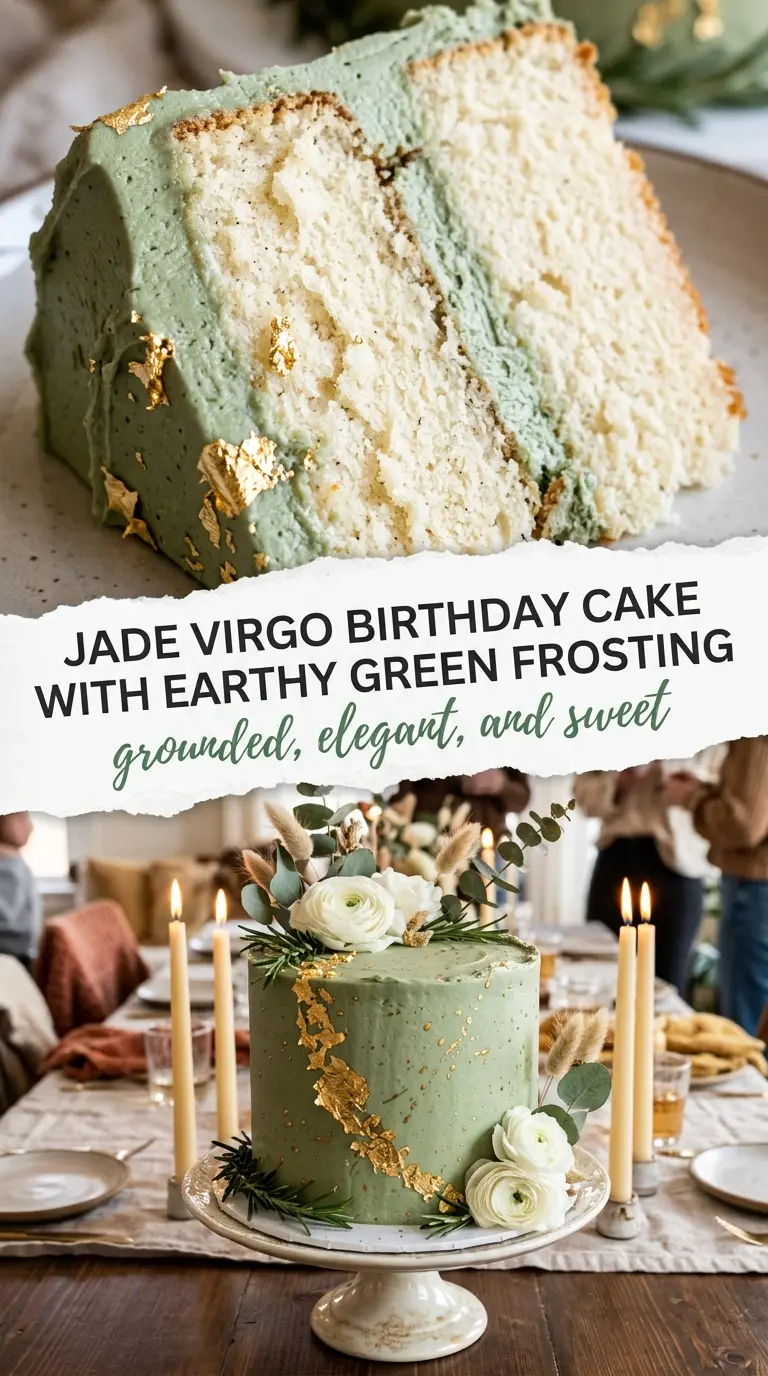
Soft, plush vanilla cake and a smooth sage-green buttercream make this Virgo birthday cake feel polished without being fussy. The crumb stays tender, the layers bake up flat enough to stack cleanly, and the finished cake has that calm, tailored look that suits a Virgo celebration perfectly. A little edible gold leaf on top gives it just enough contrast to feel special.
What sets this cake apart is the balance between structure and softness. The butter and sugar get beaten until pale, which builds a fine crumb, and the batter stays delicate because the flour and milk are added in alternating rounds instead of all at once. That keeps the cake from turning dense. The frosting is where the personality comes in: tinted sage green for an earthy feel, then finished with gold leaf so it still reads elegant and celebratory.
Below, I’ve added the small details that matter most when you want a birthday cake to slice neatly and look calm on the table instead of messy or overworked. The chilling tip is worth following if you want smooth sides and clean layers.
The layers baked up level and the sage frosting held its shape beautifully. I chilled the cake before decorating like you suggested, and the sides came out so smooth my daughter said it looked bakery-made.
Save this Virgo birthday cake for a celebration that needs soft vanilla layers, sage-green frosting, and a polished finish.
The Key to a Virgo Cake That Slices Cleanly
The main thing that goes wrong with birthday layer cakes is impatience. Warm cake tears under frosting, sliding layers turn a neat finish into a messy one, and soft buttercream starts to drag crumbs everywhere. Let the layers cool completely, then chill them before you frost. Cold cake gives you control.
The other piece that matters here is the batter order. Creaming the butter and sugar creates air, but overmixing after the flour goes in tightens the crumb. Alternate the dry ingredients and milk, and stop as soon as the batter looks smooth. That’s how you get a cake that’s tender enough for celebration but still sturdy enough to stack.
What Each Ingredient Is Doing in This Cake
- All-purpose flour — This gives the cake enough structure to layer without turning dry. Cake flour will make it a little softer, but all-purpose keeps the crumb stable and the slices clean.
- Baking powder — This is the lift. Fresh baking powder matters here because the cake depends on it for a tall, even rise.
- Unsalted butter — Use real butter at a soft room temperature, not melted. It traps air when creamed with the sugar, which is what gives the cake its fine, tender texture.
- Milk — The milk loosens the batter without thinning it out too much. Whole milk gives the richest result, but 2% works in a pinch.
- Vanilla extract — Vanilla is doing more than flavoring the cake; it rounds out the butter and sugar so the cake tastes complete instead of flat.
- Sage-green buttercream — The frosting carries the color story. Any sturdy buttercream works, but it needs enough body to hold smooth sides and decorative piping.
- Edible gold leaf — This is the finishing touch that makes the cake feel intentional. Add it last, after the frosting has set a bit, so it doesn’t sink or tear.
Building the Batter Without Overworking It
Start with the butter and sugar
Cream the butter and sugar until the mixture looks pale and fluffy, not just combined. That step builds the structure that keeps the cake light. If it still looks dense and grainy, keep going for another minute or two. The mixture should look a little whipped and hold soft ridges.
Add the eggs one at a time
Beat in each egg fully before adding the next. If you dump them all in at once, the batter can look curdled and lose that smooth, emulsified texture. A slightly split look can still come back together once the flour goes in, but slow addition gives you the cleanest batter.
Alternate dry ingredients and milk
Add the flour mixture in three additions, alternating with the milk, and stop mixing as soon as the flour disappears. Overmixing here is what makes a birthday cake tough. The batter should be thick but spoonable, with no streaks of dry flour hiding at the bottom of the bowl.
Bake until the centers spring back
Divide the batter evenly between the pans and bake until the tops are set and a toothpick comes out with a few moist crumbs. If the middle still looks wet, give it a few more minutes. Pull the pans when the centers spring back lightly under your fingertip and the edges just start to pull away from the sides.
Ways to Adapt the Virgo Birthday Cake
Dairy-Free Version
Use a plant-based butter with a firm texture and replace the milk with an unsweetened oat or almond milk. The cake will still bake up tender, though the buttercream may need a little extra powdered sugar to hold its shape.
Gluten-Free Swap
Use a 1:1 gluten-free flour blend that contains xanthan gum. The cake will be slightly more delicate, so let the layers cool completely in the pans before turning them out.
Botanical Decoration
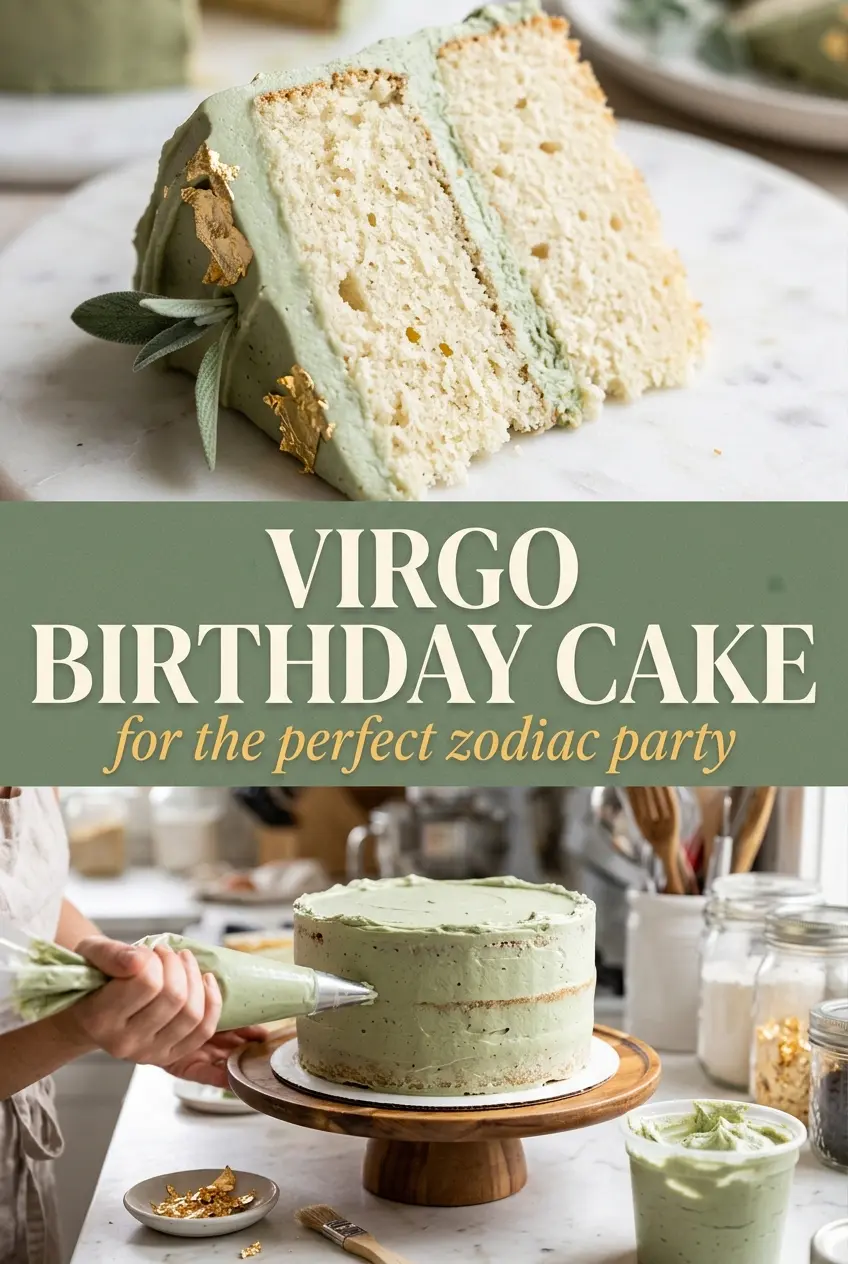
A leaf piping tip turns the simple sage frosting into something that feels earthy and deliberate. Pipe small clusters around the top edge, then finish with a few torn pieces of edible gold leaf for contrast.
Storage and Reheating
- Refrigerator: Store covered for up to 4 days. The frosting will firm up in the fridge, so let slices sit at room temperature before serving.
- Freezer: Freeze unfrosted layers tightly wrapped for up to 2 months. The fully frosted cake can also be frozen, but the gold leaf may lose its shine.
- Reheating: Bring individual slices to room temperature rather than microwaving them. Heat makes buttercream greasy and can dry out the crumb faster than you’d expect.
Answers to the Questions Worth Asking
Virgo Birthday Cake
Ingredients
Equipment
Method
- Preheat the oven to 350°F and grease two 9-inch cake pans to prevent sticking.
- Whisk together all-purpose flour, baking powder, and salt until evenly combined and uniform in color.
- Cream the unsalted butter and granulated sugar until light and fluffy, then beat in the eggs one at a time.
- Alternate adding the dry ingredients and milk, mixing until just combined to keep the crumb tender.
- Stir in the vanilla extract until the batter looks smooth and evenly speckled.
- Divide the batter between the pans and bake for 28-32 minutes, until the centers spring back when lightly pressed.
- Cool completely, then frost the cake layers with sage-green buttercream for clean, even coverage.
- Garnish with edible gold leaf for an earthy, elegant finish.