
White chicken lasagna soup lands in that sweet spot between comforting and practical: tender chicken, silky broth, ribboned noodles, and a ricotta topping that melts into little creamy pockets with every spoonful. It eats like a bowl of lasagna without the layering, baking, or waiting around for a casserole dish to set up. The broth stays rich but not heavy, and the spinach gives it just enough freshness to keep each bite from feeling flat.
The trick is building flavor in stages. Butter, onion, and garlic go first so the base tastes cooked, not rushed. Then the chicken simmers right in the broth, which gives you enough time to season the liquid properly before the cream goes in and softens everything. That order matters. If you add the dairy too early, you mute the seasoning and lose the depth that makes this soup taste like more than chicken in cream sauce.
Below, I’ll walk through the part that keeps the broth from tasting bland, plus the small noodle and ricotta details that make this soup come out thick, creamy, and spoonable instead of watery.
The broth had so much more flavor than I expected, and the ricotta on top made it taste just like lasagna in soup form. I also loved that the noodles stayed tender without turning mushy.
Save this white chicken lasagna soup for the nights when you want creamy comfort without baking a full pan of lasagna.
The Step That Keeps the Broth from Going Flat
The biggest mistake with a creamy soup like this is treating the broth like a background detail. It isn’t. The broth has to taste finished before the cream goes in, because cream softens salt, garlic, and herbs more than people expect. If the soup tastes just right before the dairy, it’ll taste balanced after.
Shredding the chicken after it simmers in the broth does two things at once: it keeps the meat tender, and it lets the chicken flavor feed back into the soup. That matters here because lasagna soup needs depth, not just richness. The noodles also cook directly in the pot, which means they absorb flavor instead of tasting like they were boiled separately and tossed in at the end.
- Butter gives the onion and garlic a richer start than oil alone. It also helps the soup taste a little more like a cream sauce from the beginning.
- Chicken breast stays lean and shreds cleanly after simmering. Thighs will work if that’s what you have, but the broth will feel a little richer and the meat a little softer.
- Ricotta is the lasagna part of the equation. Use whole-milk ricotta if you can; low-fat ricotta can turn grainy when it hits hot soup.
- Parmesan does more than add salt. It thickens the broth slightly and gives it that savory edge that keeps the cream from tasting bland.
What Each Ingredient Is Actually Doing in This Soup
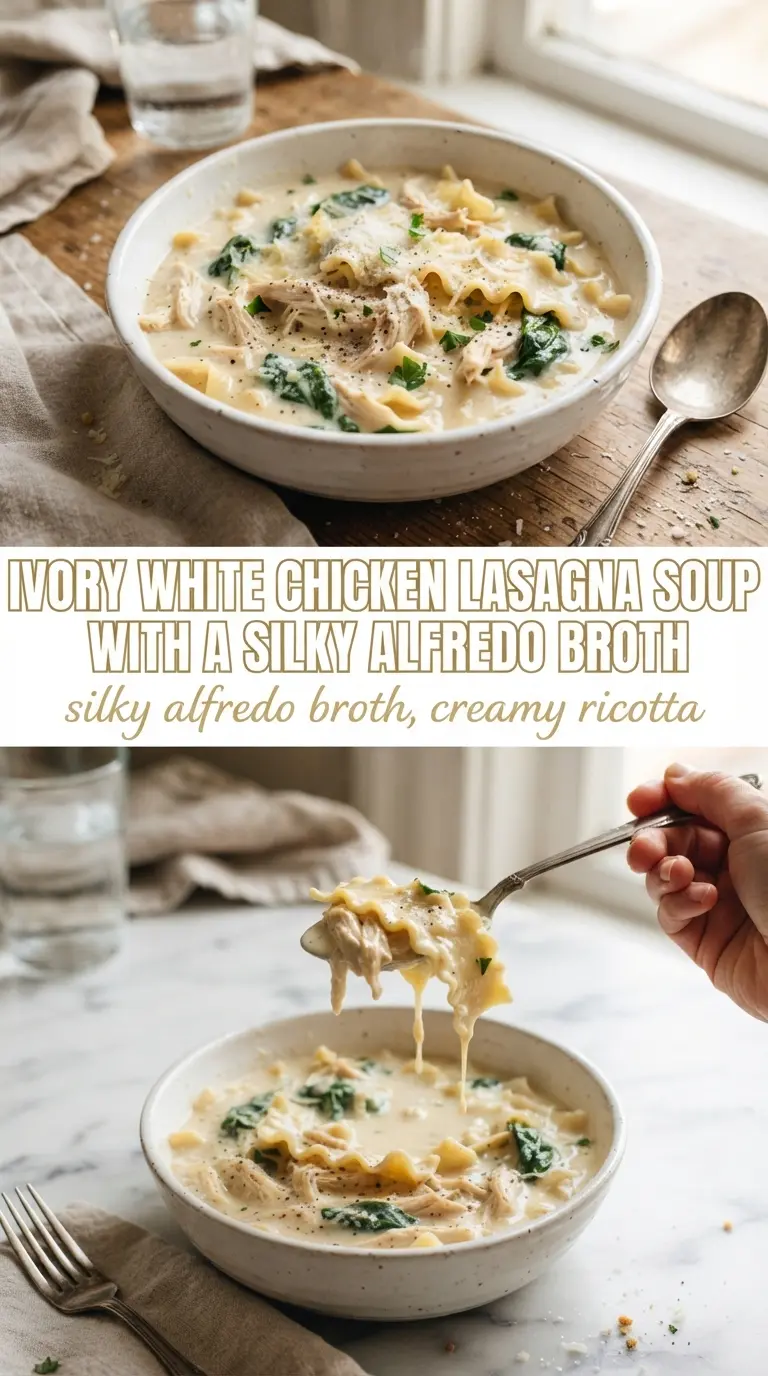
- Butter, onion, and garlic build the base. Let the onion soften fully before you add the broth so the soup tastes sweet and rounded instead of sharp.
- Chicken broth sets the flavor of the whole pot. Use a broth you actually like to sip, since the cream will soften it but not fix a weak one.
- Italian seasoning gives the soup its lasagna-like backbone. If your blend is salt-free, that gives you more control over the final seasoning.
- Broken lasagna noodles are worth using here because their wide shape makes every spoonful feel hearty. Break them into uneven pieces; perfect squares are less interesting in the bowl.
- Heavy cream gives the soup its silkiness. Half-and-half can work, but the broth will be lighter and a little less plush.
- Ricotta and Parmesan finish the soup with the creamy, savory note that makes it taste layered, not one-dimensional.
- Baby spinach wilts fast and brings freshness at the very end. Add it after the cream so it stays bright instead of turning swampy.
Building the Creamy Base Without Breaking It
Soften the onion before anything else
Start by cooking the onion in butter until it turns translucent and loses its raw edge. The garlic goes in after that, just long enough to smell fragrant, because garlic burns fast and bitter garlic will take over the whole pot. If the pan looks dry before the onion is done, a small splash of broth can loosen the bottom without changing the flavor.
Simmer the chicken in the broth
Add the chicken, broth, and seasoning, then let the pot simmer gently until the chicken is cooked through and easy to shred. Keep the heat at a true simmer, not a rolling boil, or the chicken will tighten up and the broth can turn cloudy and harsh. This stage is where the soup gets its body, so taste the broth before you move on and add salt if it needs more presence.
Cook the noodles until they still have a little bite
Once the chicken is shredded and the noodles go in, cook until they are just tender. Lasagna noodles keep softening in the hot broth even after the burner goes off, so pulling them when they still have a little resistance is the difference between a good bowl and a mushy one. If the soup gets too thick here, add a splash of broth or water before the dairy goes in.
Finish with the cream and cheese off the hottest heat
Stir in the cream, Parmesan, and spinach once the noodles are cooked. Lower the heat first so the dairy blends smoothly instead of separating or turning grainy. The ricotta belongs on top at serving, where it can stay creamy and give you little cold-and-warm pockets in the bowl.
Three Ways to Adapt This White Chicken Lasagna Soup
Dairy-Free Version with a Creamy Finish
Swap the butter for olive oil, use full-fat coconut milk or an unsweetened oat-based cream in place of the heavy cream, and skip the ricotta and Parmesan unless you have dairy-free versions you trust. The soup will still be creamy, but it will taste a little less like classic lasagna and a little more like a coconut-free cream soup if you use oat cream. Keep the seasoning assertive because dairy-free swaps can mute the broth less than you expect.
Gluten-Free Version That Still Eats Like Pasta Soup
Use gluten-free lasagna noodles and watch them closely, because they can go from tender to fragile fast. If your gluten-free noodles tend to cloud the broth, cook them separately and add them to each bowl before ladling in the soup. That keeps the texture cleaner and prevents the noodles from soaking up too much liquid as leftovers sit.
A Richer Version with Chicken Thighs
Chicken thighs give you a deeper, more savory broth and meat that stays extra tender after simmering. The tradeoff is a slightly richer, heavier soup, so it works best if you want something closer to a full-on comfort bowl. Trim excess fat before simmering so the finished soup stays creamy instead of greasy.
Storage and Reheating
- Refrigerator: Store for up to 4 days. The noodles will keep soaking up broth, so expect a thicker soup the next day.
- Freezer: It freezes, but the dairy can separate and the noodles soften a lot. For best results, freeze the soup before adding the cream, Parmesan, spinach, and ricotta.
- Reheating: Warm it gently over low heat on the stove and add a splash of broth to loosen it. High heat is the mistake here; it can make the cream break and push the noodles past their best texture.
Answers to the Questions Worth Asking

White Chicken Lasagna Soup
Ingredients
Equipment
Method
- Melt the butter in a Dutch oven over medium heat. Sauté the diced onion until translucent, then add the minced garlic and cook for about 30 seconds, stirring until fragrant (visual cue: softened onion and bubbling butter).
- Add the chicken breast, chicken broth, and Italian seasoning to the Dutch oven. Bring to a gentle simmer, then simmer for 20 minutes (visual cue: small bubbles around the edges).
- Remove the chicken, shred it, and return the shredded chicken to the soup. Add the broken lasagna noodles and stir so they’re submerged (visual cue: noodles dispersed across the broth).
- Simmer the soup for 10 minutes, stirring occasionally, until the noodles are tender. Stir in the heavy cream, Parmesan, and baby spinach and cook until the spinach wilts and the broth looks silky (visual cue: spinach turns bright green and the soup thickens slightly).
- Spoon the ricotta over the top and let it sit in the hot soup for 1 minute to warm through (visual cue: ricotta softens but keeps creamy dollops).