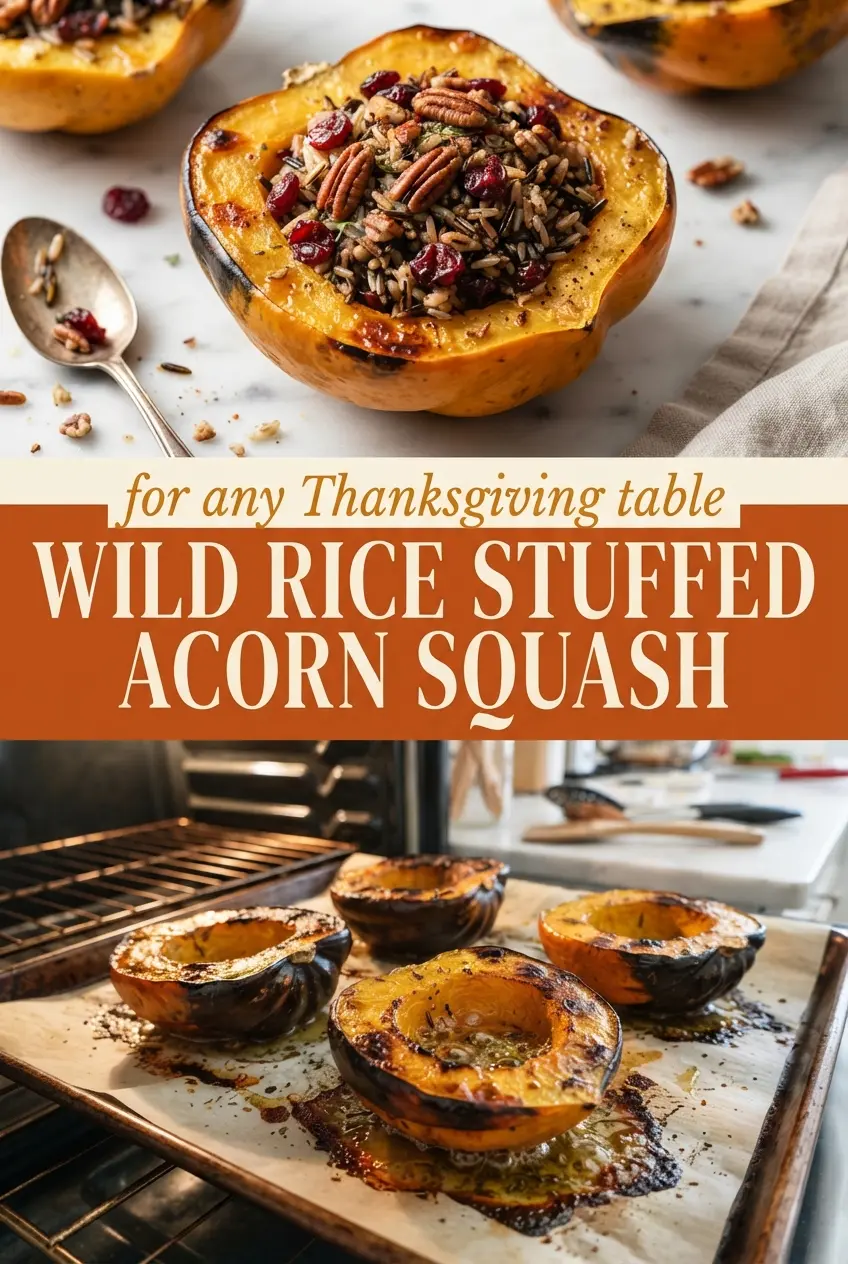
Roasted acorn squash turns silky and sweet in the oven, then gets filled with a wild rice mixture that brings chew, crunch, and little bursts of tart cranberry in every bite. The contrast is what makes this dish worth repeating: tender squash on the outside, nutty rice in the center, and maple-roasted pecans that keep the whole thing from tasting flat or one-note.
The best part is that nothing here is fussy. Roasting the squash cut-side down lets the flesh steam and caramelize at the same time, which gives you deeper flavor without extra work. The filling also benefits from a light hand with the maple syrup. You want just enough to bind the rice and echo the squash’s sweetness, not enough to turn the whole thing sticky.
Below, I’ve included the small details that matter most, like how to keep the squash halves steady on the pan and how to adapt the filling if you’re working with what’s already in the pantry.
The squash came out tender and caramelized, and the wild rice filling had the perfect mix of chewy, sweet, and crunchy. I made the filling the day before like you suggested and dinner came together fast.
Save this wild rice stuffed acorn squash for a make-ahead side with sweet cranberries, crunchy pecans, and tender roasted squash.
The Reason the Squash Stays Tender Instead of Watery
Acorn squash can go wrong in two directions: the flesh stays stubbornly firm, or it turns soft and watery before the filling is ready. Roasting cut-side down solves both problems. The cut surface sits directly against the hot pan, which gives the squash better browning, while the trapped steam inside the cavity softens the flesh evenly. If the halves are left cut-side up from the start, they tend to dry out on top and lag behind in the center.
The other detail that matters is seasoning before the squash goes into the oven. Olive oil, salt, and pepper on the cut surface help the squash taste like something, not just a vessel for the filling. Once it comes out tender enough that a fork slides in easily but the shell still holds its shape, it’s ready for stuffing. If it’s collapsing on the pan, it went too far.
What Each Ingredient Is Doing in This Dish
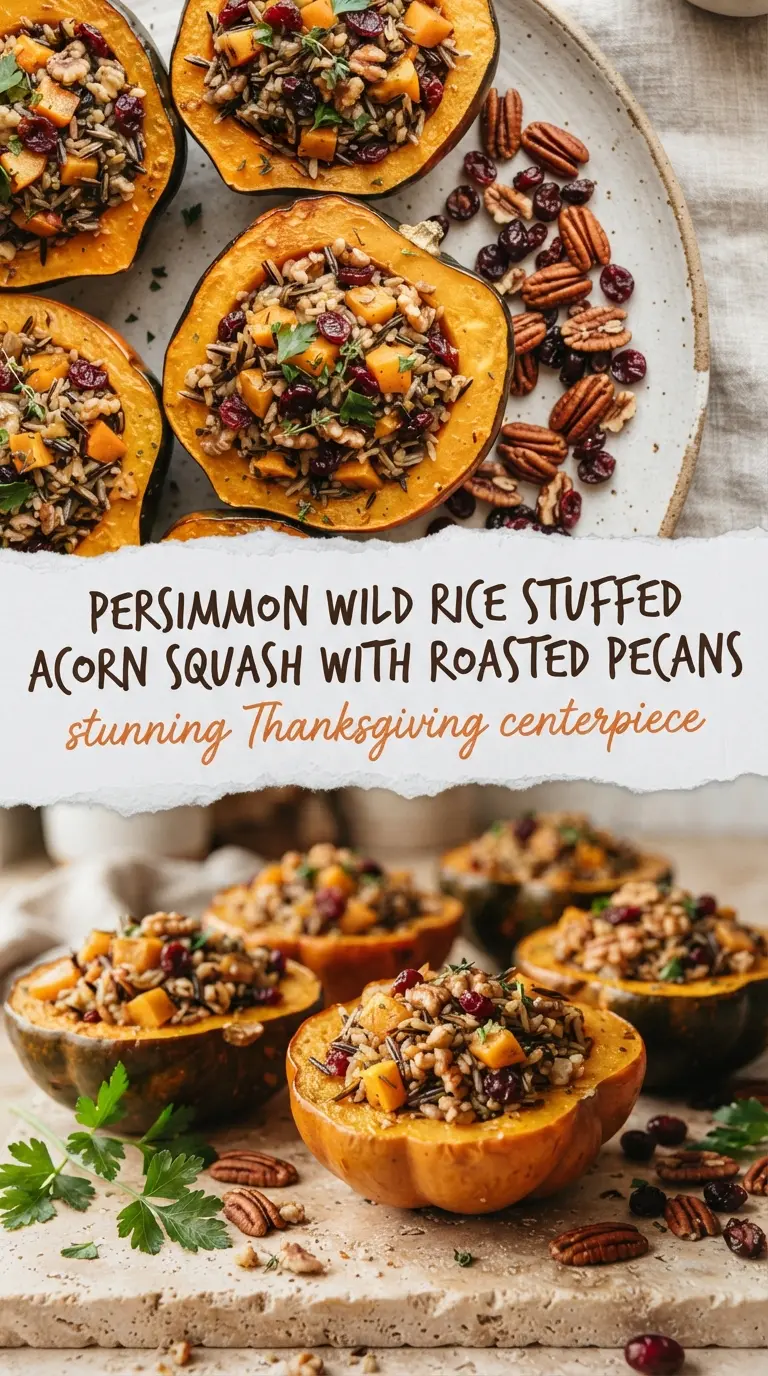
- Acorn squash — This is the edible bowl and the main sweet note. Choose squash that feel heavy for their size and have firm, unblemished skin. If you swap in delicata squash, the flavor still works, but you’ll lose the dramatic stuffed halves and need to shorten the roasting time.
- Wild rice — The chewy texture keeps the filling from becoming mushy. You can use a wild rice blend if that’s what you have, but plain wild rice gives the cleanest nutty flavor and the best texture contrast against the squash.
- Dried cranberries — They bring brightness and keep each bite from leaning too sweet. If your cranberries are very dry, soak them in warm water for 5 minutes and drain well before mixing so they soften enough to fold into the filling.
- Maple-roasted pecans — These are what make the filling taste complete. Their crunch matters, so add them at the end if you want them to stay crisp. Walnuts work in a pinch, but they taste sharper and less rounded than pecans.
- Maple syrup — A small amount pulls the filling together and ties it to the sweetness of the squash. More than that starts to bury the rice and nuts. Use pure maple syrup, not pancake syrup, because the flavor is cleaner and less cloying.
- Parsley — It wakes up the filling and keeps the final dish from tasting heavy. If you don’t have parsley, use a little chopped sage or thyme, but go light; those herbs are stronger and can take over quickly.
Getting the Roast, Filling, and Finish in the Right Order
Roasting the Squash First
Set the squash halves cut-side down on the baking sheet and let them roast until the flesh is fully tender and the edges are starting to caramelize. That direct contact with the pan is what deepens the flavor. If the squash is still hard near the stem end, give it more time; stuffing undercooked squash only makes the final dish awkward to serve.
Mixing the Filling Without Crushing It
Combine the cooked wild rice, cranberries, pecans, and parsley in a bowl, then drizzle in the maple syrup and toss gently. You want the rice evenly coated, not packed into a paste. If the rice is steaming hot, let it cool for a few minutes first so the pecans keep their crunch instead of softening on contact.
Stuffing and Warming Through
Flip the squash halves over only when they’re tender enough to hold their shape, then mound the filling generously into the cavities. Return them to the oven just long enough to heat the center through and let the flavors settle together. If you leave them in too long at this stage, the pecans lose their snap and the squash can start to slump.
How to Adapt This for Different Tables and Schedules
Make it vegan without changing the structure
This dish is already naturally vegan as written, which is part of why it works so well for mixed gatherings. Just keep an eye on the maple-roasted pecans if you buy them pre-made, since some versions use butter or honey in the coating. When in doubt, roast plain pecans and season them yourself.
Use quinoa when you need a faster grain
Quinoa makes the filling lighter and cuts the cooking time if you don’t have cooked wild rice on hand. The texture will be softer and less chewy, so add the pecans just before stuffing to keep some contrast. It’s a good swap for weeknights, but wild rice still gives the most satisfying bite.
Turn it into a heartier main dish
Add cooked lentils or crumbled sausage to the rice mixture if you want this to stand alone as dinner. Lentils keep the earthy, vegetarian feel, while sausage pushes the filling in a more savory direction and balances the maple. In both cases, keep the seasoning restrained so the squash still tastes like the centerpiece.
Storage and Reheating
- Refrigerator: Store leftovers in an airtight container for up to 4 days. The squash softens a bit more as it sits, but the flavor holds well.
- Freezer: The filling freezes better than the stuffed squash halves. Freeze the rice mixture separately for up to 2 months, then thaw and stuff freshly roasted squash for the best texture.
- Reheating: Reheat in a 350°F oven until warmed through, about 15 to 20 minutes depending on thickness. The microwave works, but it makes the squash wetter and softens the pecans, which is the first thing people notice.