
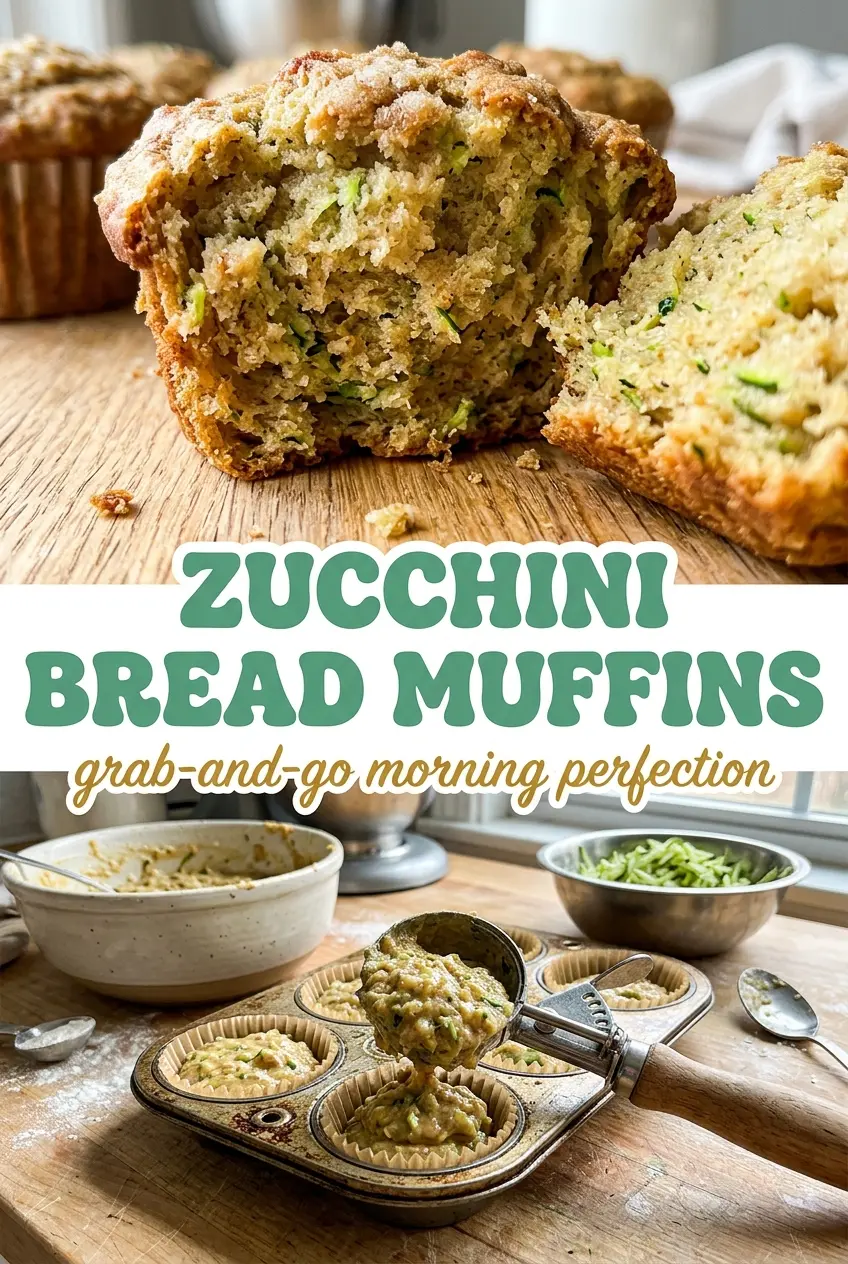
Soft zucchini bread muffins turn out with a tender crumb, a gentle cinnamon warmth, and just enough sweetness to work for breakfast without feeling like cake. The shredded zucchini disappears into the batter in the best way, keeping every bite moist while still letting the tops bake up with a light, domed finish. These are the kind of muffins that vanish fast because they taste homemade in the best sense: simple, comforting, and not overly sweet.
What makes this version work is the balance of moisture and structure. Zucchini holds a lot of water, and if you skip the squeezing step, the muffins turn heavy and a little gummy in the center. The mix of granulated sugar and brown sugar keeps the crumb soft while adding a deeper, more rounded sweetness than white sugar alone. Vegetable oil also helps here; it stays tender even after the muffins cool and keeps them from drying out the next day.
Below, you’ll find the small details that matter most, including how dry the zucchini should be, why the batter shouldn’t be overmixed, and the easiest way to freeze a batch for later. A little care at the mixing bowl pays off in muffins that bake up evenly and stay good for days.
The muffins came out so tender and the zucchini kept them moist for days. I followed the note about squeezing it dry and the centers baked up perfectly without that gummy texture I’ve had before.
These zucchini bread muffins stay soft for days and freeze beautifully, so they’re the perfect grab-and-go breakfast for busy mornings.
The Real Reason Zucchini Muffins Turn Heavy
The most common mistake with zucchini muffins isn’t the spice or the sugar. It’s the moisture. Zucchini looks harmless, but once it hits the batter, all that water wants to stay there. If you skip squeezing it dry, the muffins bake up dense in the middle and can look done on top before the crumb has actually set.
The other thing that trips people up is overmixing. Once the flour goes in, the batter only needs a few folds to come together. Stir until you no longer see dry streaks, then stop. That keeps the muffins tender instead of tough, and it helps the tops rise evenly instead of capping over and sinking.
- Dry zucchini gives you a light crumb instead of a wet one.
- Just-mixed batter keeps the texture soft and muffin-like.
- A quick bake at 350°F lets the centers set before the tops overbrown.
What Each Ingredient Is Doing in These Muffins

- Zucchini — This is the moisture source, but only after it has been squeezed dry. Leave too much water in it and the crumb turns gummy. A box grater works best because it shreds finely enough to melt into the batter without making stringy pockets.
- Vegetable oil — Oil keeps these muffins softer than butter would. Butter brings flavor, but oil gives you that plush, bakery-style texture that stays good after a day or two.
- Brown sugar and granulated sugar — The mix gives you sweetness plus a little depth from the molasses in the brown sugar. If you use all white sugar, the muffins taste flatter and lose some of that soft, rounded flavor.
- Cinnamon — This doesn’t overpower the zucchini. It just warms the batter enough to make the muffins taste like more than plain quick bread in muffin form.
- All-purpose flour — Standard all-purpose flour is the right call here because it gives the muffins enough structure without making them chewy. A 1:1 gluten-free flour blend can work, but the muffins may need the full bake time and a slightly gentler hand when mixing.
- Baking soda — The baking soda reacts with the sugars and helps the muffins lift. If your baking soda is old, the muffins can come out flat, so check the date if your pantry jar has been open a long time.
Getting the Batter Right Before It Hits the Oven
Whisking the Wet Ingredients First
Start by whisking the eggs, oil, sugars, and vanilla until the mixture looks smooth and glossy. The sugar won’t fully dissolve, and that’s fine, but you don’t want streaks of egg white hanging around in the bowl. This step gives the muffins a more even crumb and keeps the batter from separating later. If the oil sits in slicks on top, keep whisking for a few more seconds before adding the zucchini.
Working the Zucchini Into the Base
Stir the shredded zucchini into the wet mixture after it has been squeezed dry. It should look damp, not wet enough to leave puddles in the bowl. The zucchini will loosen the batter a little, which is exactly what you want. If it looks soupy at this point, the zucchini still has too much water and the finished muffins will be soft in the wrong way.
Folding the Dry Ingredients Just Enough
Combine the flour, baking soda, salt, and cinnamon in a separate bowl, then fold them into the wet mixture until the flour disappears. A few small streaks are better than a batter that’s been beaten smooth. Overmixing develops gluten and gives you a tighter, tougher muffin. The batter should look thick and spoonable, not pourable.
Baking Until the Centers Set
Divide the batter evenly among lined muffin cups and bake at 350°F until the tops spring back lightly and a toothpick comes out clean. The tops should be set and lightly golden, and the centers should no longer wobble when you tap the pan. Let them rest in the pan for five minutes, then move them to a wire rack so the bottoms don’t steam and soften.
How to Adapt These Muffins Without Losing the Good Texture
Make Them Dairy-Free Without Changing the Crumb
These muffins are already dairy-free as written, which is part of why the texture stays so soft. If you add a topping later, keep it dairy-free too so the base stays as quick and simple as the original version.
Swap in Whole Wheat Flour for a Heartier Muffin
Replace up to half the all-purpose flour with whole wheat flour if you want a nuttier, more substantial muffin. The texture will be a little less tender and a little more rustic, but it still works well as long as you don’t pack the flour when measuring.
Add Mix-Ins Without Making the Batter Collapse
A handful of chopped walnuts, mini chocolate chips, or raisins fits in nicely, but keep the total amount modest so the muffins still rise well. Too many mix-ins weigh down the batter and interfere with the even bake.
Storage and Reheating
- Refrigerator: Store in an airtight container for up to 4 days. The tops soften a bit after the first day, but the crumb stays moist.
- Freezer: These freeze well for up to 2 months. Cool completely, wrap individually, and tuck them into a freezer bag so they don’t pick up freezer запахs.
- Reheating: Warm from room temperature in the microwave for 10 to 15 seconds, or thaw frozen muffins overnight and warm them briefly in a low oven. Don’t overheat them or the crumb turns dry at the edges before the center is warmed through.
Questions I Get Asked About This Recipe
Zucchini Bread Muffins
Ingredients
Equipment
Method
- Preheat the oven to 350°F and line a muffin tin with paper liners, making sure each cup is ready to fill.
- Whisk the large eggs, vegetable oil, granulated sugar, brown sugar, and vanilla extract together until smooth and slightly thickened.
- Stir the squeezed-dry shredded zucchini into the wet mixture until evenly distributed.
- Whisk the all-purpose flour, baking soda, salt, and cinnamon in a separate bowl to evenly combine the dry ingredients.
- Fold the dry ingredients into the wet mixture until just combined, stopping as soon as no dry streaks remain.
- Divide the batter evenly among the muffin cups so they bake at the same rate.
- Bake at 350°F for 18-20 minutes, until a toothpick inserted in the center comes out clean.
- Cool in the pan for 5 minutes, then transfer the muffins to a wire rack to finish cooling.