
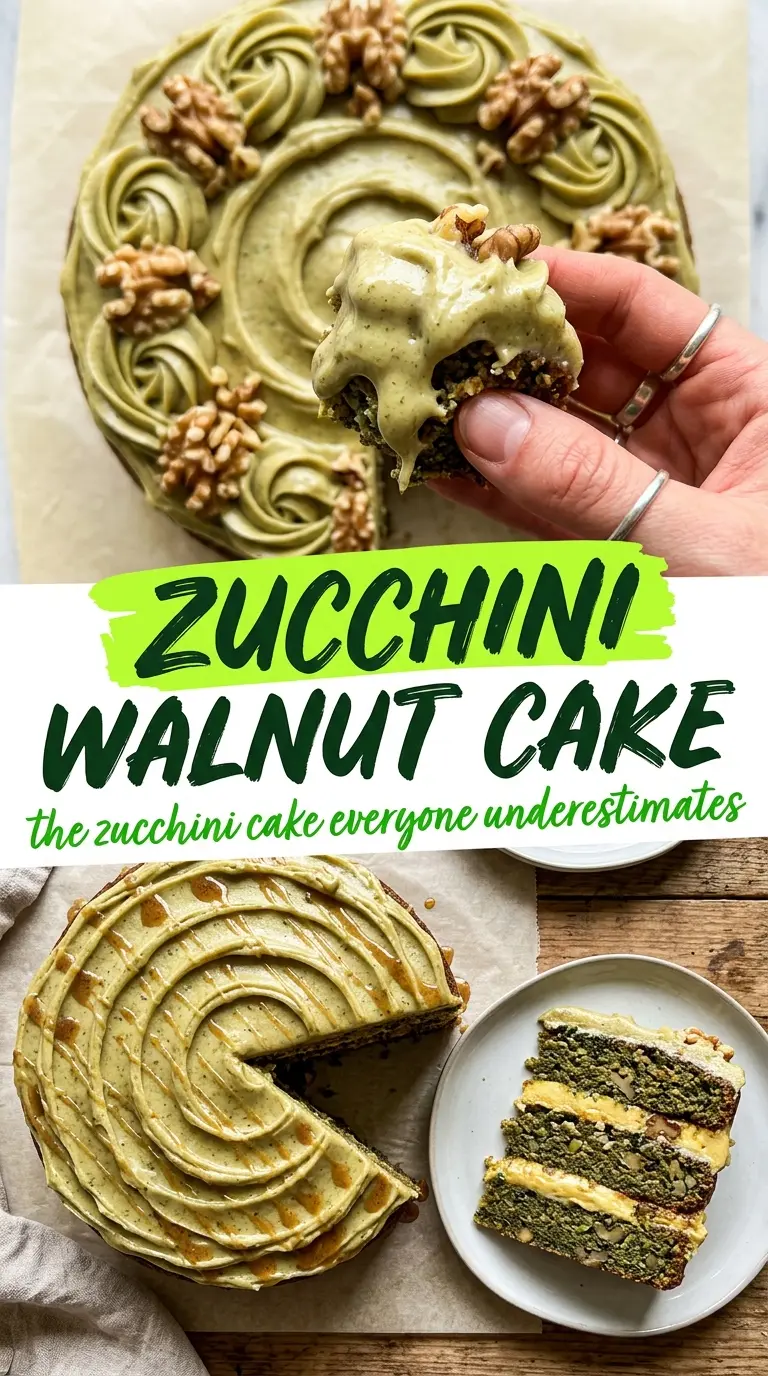
Zucchini cake turns out best when it eats like a real layer cake first and a vegetable cake second. The crumb should stay moist without going heavy, the spice should feel warm instead of loud, and the frosting should bring enough tang to keep each slice from tasting flat. This version gets there with shredded zucchini that disappears into the batter, a little crushed pineapple for extra moisture, and walnuts for a clean crunch in the middle of all that softness.
The trick is simple: squeeze the zucchini dry so the batter doesn’t turn wet, then let the pineapple and oil do the work of keeping the cake tender. Cinnamon and nutmeg give it the familiar bakery-style warmth, but the browned butter in the cream cheese frosting changes the whole thing. It adds a toasty, caramel edge that makes the frosting taste deeper and less sweet, which is exactly what this cake needs.
Below you’ll find the method that keeps the layers light, plus the small details that matter most when you’re baking a cake with a lot going on. If you’ve ever had zucchini cake turn out dense or bland, this version fixes both problems without making the process fussy.
The zucchini stayed completely hidden in the cake, but it kept the crumb so moist. The browned butter frosting was the part everyone talked about, and the walnuts gave it such a nice crunch.
Save this zucchini cake with brown butter cream cheese frosting for the next time you want a moist layer cake with a little extra crunch and a frosting worth remembering.
The Secret to Zucchini Cake That Stays Light, Not Dense
Most zucchini cakes go wrong before they ever hit the oven. The batter gets overloaded with moisture, the zucchini releases too much water while baking, and the cake settles into something gummy in the center. The fix is in the prep: squeeze the zucchini dry enough that it feels damp, not wet, and don’t add extra liquid anywhere else to compensate.
Another common problem is overmixing once the flour goes in. This cake has enough moisture from the zucchini, pineapple, eggs, and oil that you don’t need to beat it hard. Stir until the flour disappears and stop there. That keeps the crumb tender instead of tight.
What Each Ingredient Is Actually Doing in This Dish
- Zucchini — This is the backbone of the cake’s moisture. After shredding, squeeze it in a clean kitchen towel until you can pick up a handful without water dripping out. If you skip that step, the cake can bake up soggy in the center.
- Crushed pineapple — The pineapple brings extra moisture and a gentle brightness that keeps the cake from tasting flat. Drain it well, but don’t dry it out completely; a little juice is part of what makes the crumb soft.
- Vegetable oil — Oil keeps the cake tender even after chilling. Butter will work, but the texture gets a little firmer and less plush. Neutral oil is the right choice here because it lets the spices and frosting lead.
- Toasted walnuts — Toasting matters. Raw walnuts taste a little dull inside cake, but toasted ones stay crisp longer and bring a deeper nutty flavor. Chop most of them for the batter and save a few halves for the top if you want a clean finish.
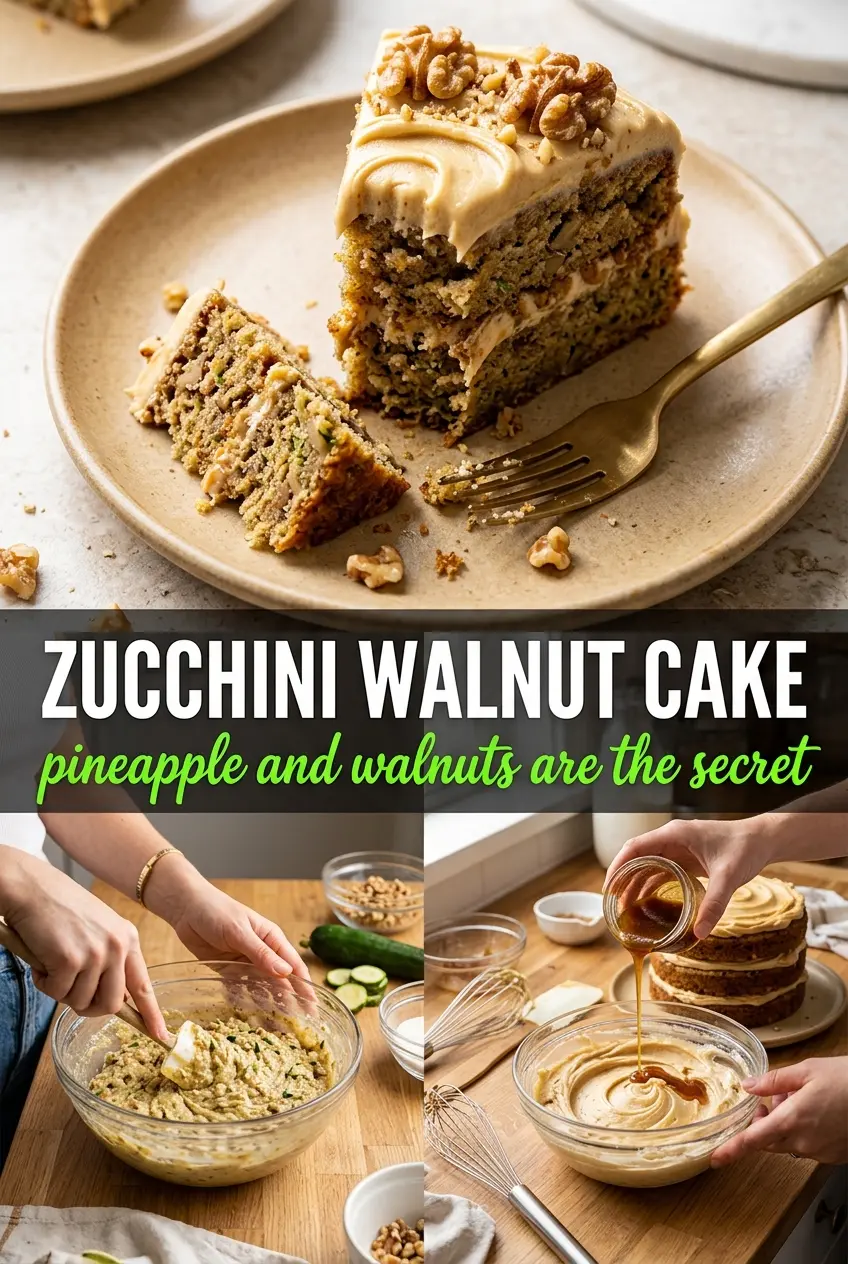
- Brown butter cream cheese frosting — This is what turns the cake from good to memorable. Browning the butter before beating it into the frosting adds a caramelized note that regular cream cheese frosting can’t match. Let the butter cool until it’s soft but not warm, or the frosting will turn loose.
Building the Batter Without Overworking It
Mix the wet ingredients first
Beat the eggs, sugar, oil, and vanilla until the mixture looks smooth and slightly thickened. You don’t need much air here, just enough to dissolve the sugar and start the batter evenly. If the mixture still looks grainy, keep going for another minute before adding the zucchini.
Fold in the zucchini, pineapple, and walnuts
Stir the zucchini, drained pineapple, and walnuts into the wet mixture until everything looks evenly distributed. The batter should already look loose at this point, and that’s normal. If the zucchini wasn’t squeezed dry enough, you’ll notice the batter getting slack and watery instead of thick and spoonable.
Add the dry ingredients just until combined
Whisk the flour, cinnamon, nutmeg, baking soda, baking powder, and salt in a separate bowl, then fold them in gently. Stop as soon as the flour streaks disappear. Overmixing at this stage develops too much gluten, and that gives you a dense cake instead of a tender one.
Bake until the centers spring back
Divide the batter between the pans and bake until the tops are set, the edges pull slightly from the pan, and a toothpick comes out with a few moist crumbs. Don’t wait for the cake to look completely dry on top; that usually means it’s already gone a little far. Cool the layers completely before frosting, or the cream cheese frosting will slide right off.
How to Adjust This Cake for Different Kitchens and Cravings
Gluten-Free Version
Use a good 1:1 gluten-free baking blend in place of the all-purpose flour. The cake will still be moist, but it may need a few extra minutes in the oven and should cool completely before slicing so the crumb can set.
Nut-Free Cake
Leave out the walnuts and add an extra 1/2 cup zucchini instead. You’ll lose the crunch, but the cake stays soft and balanced. If you want texture without nuts, a handful of shredded coconut works better than seeds here.
Loaf Pan Instead of Layer Cake
Bake the batter in two well-greased loaf pans or one large bundt-style pan if you want a simpler finish. The bake time will be longer, and the center needs to be tested carefully because this batter holds a lot of moisture. A loaf version is a little denser, but it slices beautifully.
Storage and Reheating
- Refrigerator: Store covered for up to 5 days. The cake actually holds its moisture well, though the frosting will firm up in the fridge.
- Freezer: Freeze unfrosted layers tightly wrapped for up to 2 months. Frosted slices can be frozen too, but the cream cheese frosting loses some of its smooth texture when thawed.
- Reheating: Bring slices to room temperature before serving, or warm them for a few seconds in the microwave. Don’t heat long enough to melt the frosting; this cake eats best when the crumb is soft and the frosting still holds its shape.
Questions I Get Asked About This Recipe
Zucchini Cake Recipe
Ingredients
Equipment
Method
- Preheat the oven to 350°F and grease two 9-inch round pans. Lightly coat the sides so the layers release cleanly.
- Whisk together the all-purpose flour, cinnamon, nutmeg, baking soda, baking powder, and salt. Whisk until the spices are evenly distributed.
- Beat the eggs, sugar, vegetable oil, and vanilla in a separate bowl until smooth and glossy. Beat just until the sugar dissolves and the mixture thickens slightly.
- Stir in the shredded zucchini, drained crushed pineapple, and toasted walnuts. Mix until the fruit and nuts are evenly suspended.
- Fold the dry ingredients into the wet mixture until no dry streaks remain. Stop mixing as soon as the batter looks uniform.
- Divide the batter between the two pans. Level the tops so the layers bake evenly.
- Bake at 350°F for 30–35 minutes, until a toothpick in the center comes out clean. The tops should look set and lightly golden.
- Cool the cakes completely before frosting. Let them cool on a rack until warm is gone to prevent the frosting from melting.
- Make brown butter, then cool it to room temperature before using. Use a faint golden-caramel color as your visual cue.
- Beat the cream cheese, browned butter, powdered sugar, and vanilla until smooth and spreadable. Scrape the bowl to remove any lumps.
- Frost the cooled cake layers, swirling to create a textured top and sides. Spread gently so the layers don’t crumble.
- Top with toasted walnut halves for decoration. Place them on the top edge so the crunch is visible in each slice.