
Sticky, savory Korean ground beef piled over tender cauliflower rice hits the table fast, but it still tastes like dinner that had a plan. The beef browns deeply before the sauce goes in, so you get those crisp little edges and a glossy glaze that clings to every bite instead of pooling in the pan. The cauliflower rice stays light and neutral, which keeps the whole bowl from feeling heavy while letting the soy, garlic, and gochujang do the work.
What makes this version work is restraint. The sauce is built from just a few pantry ingredients, but each one has a job: soy sauce for salt and depth, brown sugar for shine and balance, gochujang for heat and a little funk, and sesame oil for that nutty finish you notice right away. Cauliflower rice needs its own quick sauté so it dries out a bit and turns tender instead of soggy under the beef.
If you’ve ever ended up with bland ground beef or watery cauliflower rice, the notes below will help you avoid both. A short simmer is what turns the sauce sticky, and there’s a simple way to control the spice level without losing the bowl’s signature punch.
The sauce thickened into that sticky glaze I was hoping for, and the cauliflower rice stayed fluffy instead of mushy. I used a little less gochujang the first time and it was perfect for the kids too.
Save this Korean ground beef bowl for a fast sticky-sweet dinner with cauliflower rice and a glossy gochujang glaze.
The Secret to a Sticky Korean Beef Bowl Is Browning Before Sauce
The biggest mistake in a ground beef bowl like this is rushing the pan. If the beef goes into a crowded skillet or gets stirred constantly, it steams instead of browns, and the sauce never has anything to cling to. You want distinct browned bits in the pan before the sauce goes in, because that deep, savory flavor is what keeps the bowl from tasting flat.
The second thing that matters is simmer time. Once the sauce hits the beef, it should bubble gently until it turns shiny and slightly thick, not disappear into a thin coating. If the pan looks watery at the end, the heat was too low or the beef released too much moisture; keep cooking until the liquid reduces and the glaze looks lacquered.
What Each Ingredient Is Actually Doing in This Dish
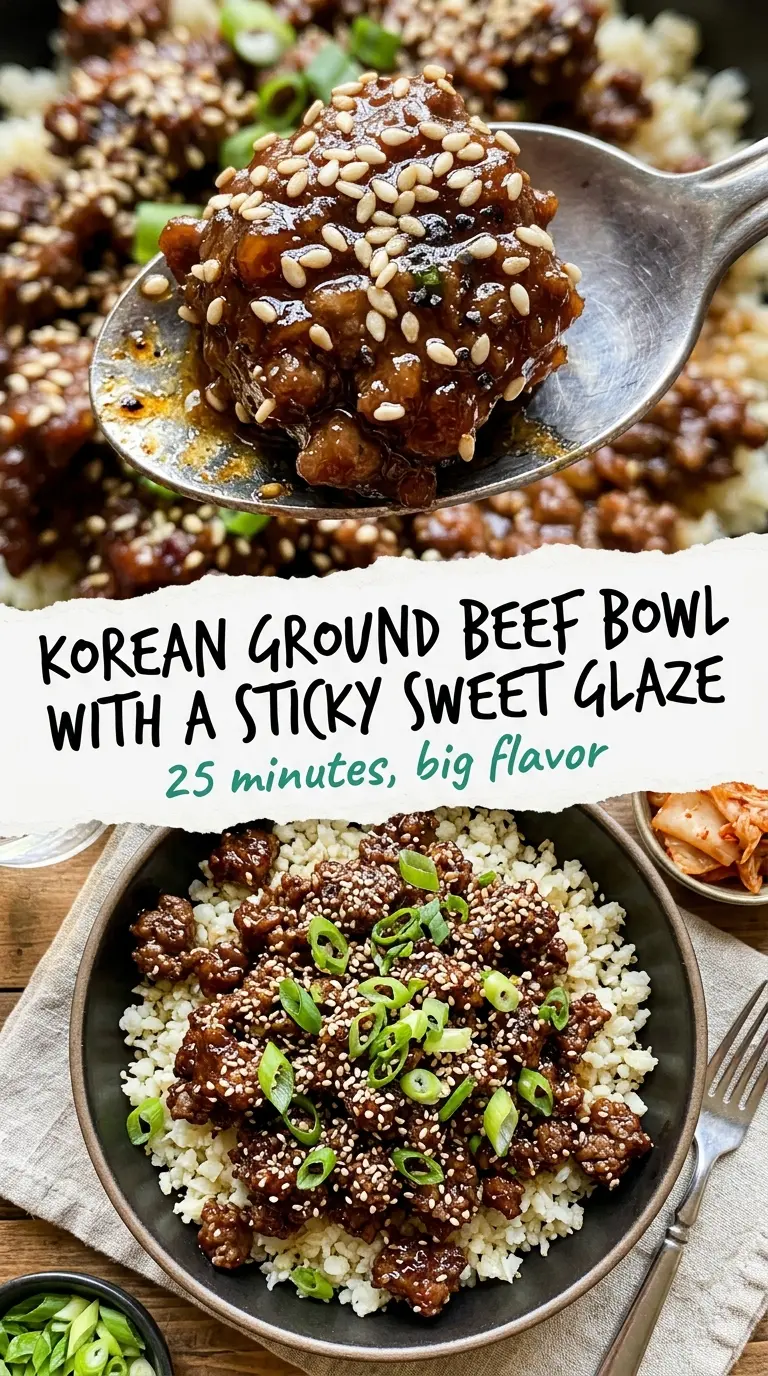
- Ground beef — An 85/15 or 90/10 blend works well here. You want enough fat for flavor, but not so much that the sauce turns greasy. If your beef is very lean, add a small splash of neutral oil to keep the garlic from sticking.
- Gochujang — This is the ingredient that gives the bowl its Korean character. It adds heat, sweetness, and a fermented depth you can’t get from plain chili sauce. Start with the amount listed, then taste after simmering if your brand runs hot.
- Brown sugar — It doesn’t just sweeten the sauce. It helps the glaze turn sticky and gives the beef that takeout-style shine. Honey works in a pinch, but the flavor will be a little softer and less caramel-like.
- Sesame oil — Use the toasted kind for the finished sauce. A little goes a long way, and it adds the nutty aroma that makes the bowl smell like dinner the second it hits the table.
- Cauliflower rice — Fresh or frozen both work. Frozen needs a bit more time in the pan so the extra moisture cooks off; if you skip that, the bowl gets watery fast. Cook it until tender and dry at the edges, not soft and wet.
Building the Bowl So Every Bite Stays Glossy, Not Watery
Brown the Beef First
Set a large skillet over medium-high heat and let the beef sit long enough to develop color before breaking it up too much. You want browning, not gray crumbles, because those caramelized bits are what give the sauce depth. If a puddle of fat builds up, spoon off most of it, but leave enough to carry the garlic and sauce.
Cook the Garlic Briefly
Add the garlic after the beef is browned and cook it for about a minute, just until fragrant. Garlic burns quickly in a hot skillet, and burned garlic will make the whole bowl taste bitter. If the pan seems too hot, pull it off the burner for a few seconds before you add the sauce.
Turn the Sauce Into a Glaze
Whisk the soy sauce, brown sugar, gochujang, and sesame oil together, then pour it over the beef and let it simmer. Stir once or twice, but not constantly, so the sauce has a chance to reduce and cling. By the end, the liquid should look syrupy and coat the beef instead of running to the bottom of the pan.
Give the Cauliflower Rice Its Own Pan Time
Sauté the cauliflower rice in a separate pan until it turns tender and the moisture cooks off. This is the difference between a bowl with texture and one that tastes steamed through. If your cauliflower rice clumps, spread it out and leave it alone for a minute so the steam can escape.
What to Change When You Want It Spicier, Milder, or Fully Gluten-Free
For a milder bowl
Cut the gochujang back to 2 teaspoons and add a touch more brown sugar if needed. You’ll still get the savory-sweet glaze, but the heat drops into the background instead of leading the bowl. This is the best move if your gochujang brand runs spicy.
For gluten-free cooking
Use a certified gluten-free tamari in place of regular soy sauce and check that your gochujang is labeled gluten-free. The texture stays the same, but you avoid the hidden wheat that shows up in some brands of both ingredients.
For a higher-protein version
Use extra-lean ground beef or swap in ground turkey, then add a teaspoon of oil to the pan so the garlic doesn’t scorch. Turkey takes the sauce well, though it needs a little more salt and a little more sesame oil to taste as full as beef.
Storage and Reheating
- Refrigerator: Store the beef and cauliflower rice separately for up to 4 days. The beef holds its glaze well; the cauliflower rice softens a little but still reheats nicely.
- Freezer: The beef freezes well for up to 2 months. Cauliflower rice can be frozen too, but the texture gets softer after thawing, so I usually make that fresh.
- Reheating: Warm the beef gently in a skillet over medium-low heat with a splash of water if the sauce has tightened. Reheat the cauliflower rice in a dry pan or microwave it briefly, then spoon the beef over top. High heat can dry out the beef and make the sauce sticky in the wrong way.
Answers to the Questions Worth Asking
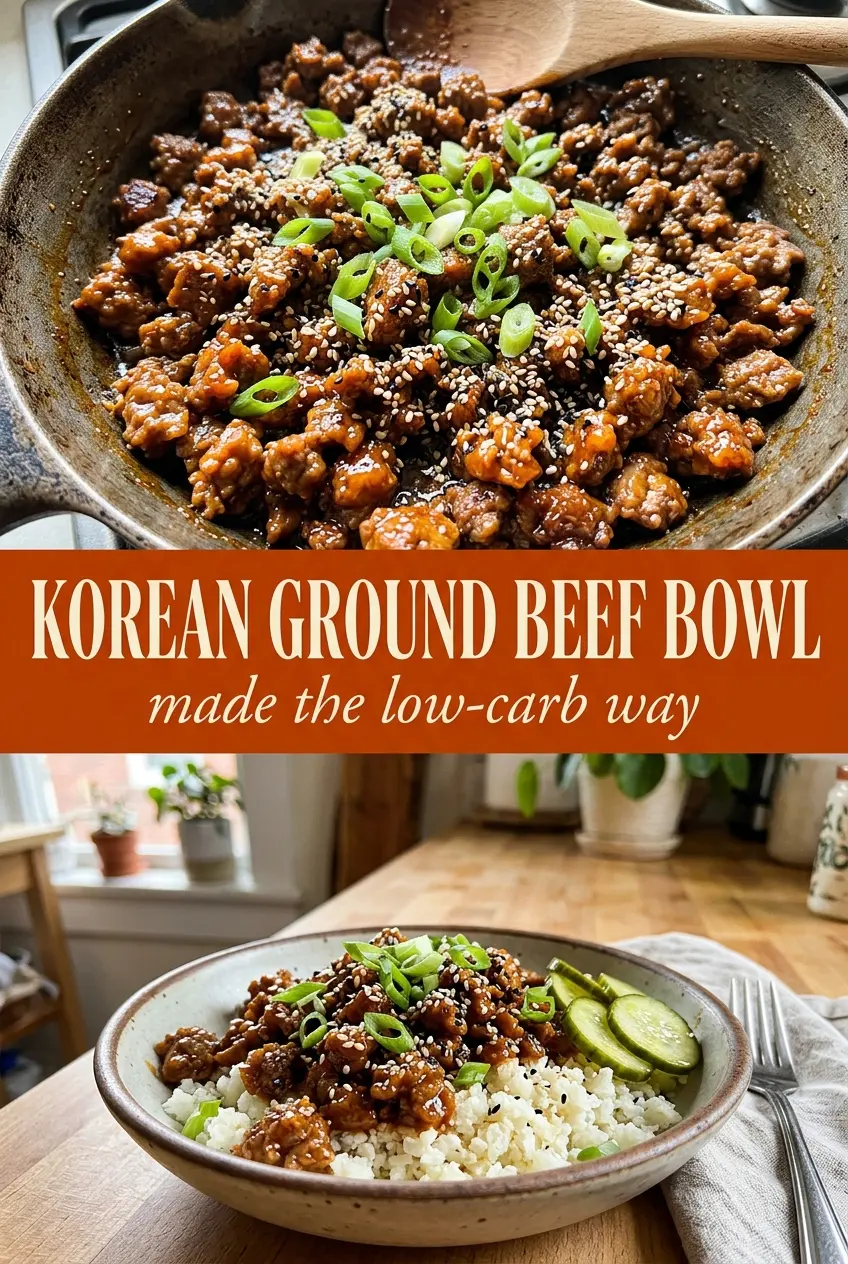
25-Minute Korean Ground Beef Bowl
Ingredients
Equipment
Method
- Heat a large skillet over medium-high heat, then add the ground beef and cook until browned, about 5 minutes, stirring as it cooks for even browning.
- Add the minced garlic and cook 1 minute, until fragrant with no raw garlic smell.
- Whisk soy sauce, brown sugar, gochujang, and sesame oil together, then pour over the beef so the glaze coats the crumbles.
- Simmer for 5 minutes until the sauce is sticky and glossy, reducing so it clings to the beef.
- In a separate pan, sauté cauliflower rice for 5-7 minutes until tender and lightly softened, stirring occasionally so it doesn’t steam.
- Serve the beef over the cauliflower rice, then top with the sliced scallions and sesame seeds so the bowl has fresh crunch and nutty finish.