
Pineapple chicken and rice lands in that sweet spot between weeknight-fast and takeout-worthy. The chicken picks up a light sear first, then gets coated in a glossy sauce that clings to every piece instead of pooling at the bottom of the pan. Fresh pineapple brings sharp sweetness and enough acidity to keep the dish from tasting flat, while the rice underneath soaks up every bit of the glaze.
What makes this version work is the order. The chicken browns before the sauce goes in, which gives you flavor in the pan instead of a pale simmer. Garlic only needs a short run in the skillet so it stays fragrant, not bitter, and the sauce gets a few minutes over steady heat until it turns sticky and shiny. Fresh pineapple matters here too — it caramelizes better than canned and gives the finished dish a cleaner, brighter taste.
Below, I’ve included the exact cues to look for so the sauce doesn’t go thin or overly sweet, plus a few easy ways to adapt it if you want to change the protein or make the meal fit what’s already in your kitchen.
The sauce got thick and sticky right at the 5-minute mark, and the pineapple caramelized instead of turning mushy. My kids ate it over rice without even asking for ketchup, which never happens here.
Sticky pineapple chicken and rice for the nights when you want a glossy sweet-savory dinner that comes together in one skillet.
The Sear Is Doing More Work Than the Sauce
The biggest mistake with pineapple chicken and rice is rushing straight to the glaze. If the chicken goes into a wet pan and steams, the sauce has nothing to cling to and the whole dish tastes one-note. A quick sear gives you browned bits on the bottom of the skillet, and those bits dissolve into the sauce as it simmers.
That’s also why the pineapple gets added after the chicken starts to color. If it goes in too early, it gives off juice before the meat has a chance to brown. You want the fruit to soften at the edges and pick up a little color of its own, not collapse into a sweet puddle.
- Golden chicken first — The goal is color, not cooked-through perfection. The chicken finishes in the sauce, so pull it forward once the outside looks deeply browned.
- Fresh pineapple — Fresh chunks caramelize better and keep their shape. Canned pineapple brings extra liquid and softens faster, which can make the sauce thinner.
- Soy sauce and brown sugar — This is the backbone of the glaze. Soy brings salt and depth; brown sugar gives the sticky finish that coats the rice.
- Sesame oil — A small amount goes a long way. It’s finishing flavor, not cooking fat, so treat it like the last layer that makes the dish taste rounded.
What Each Ingredient Is Actually Doing in This Dish
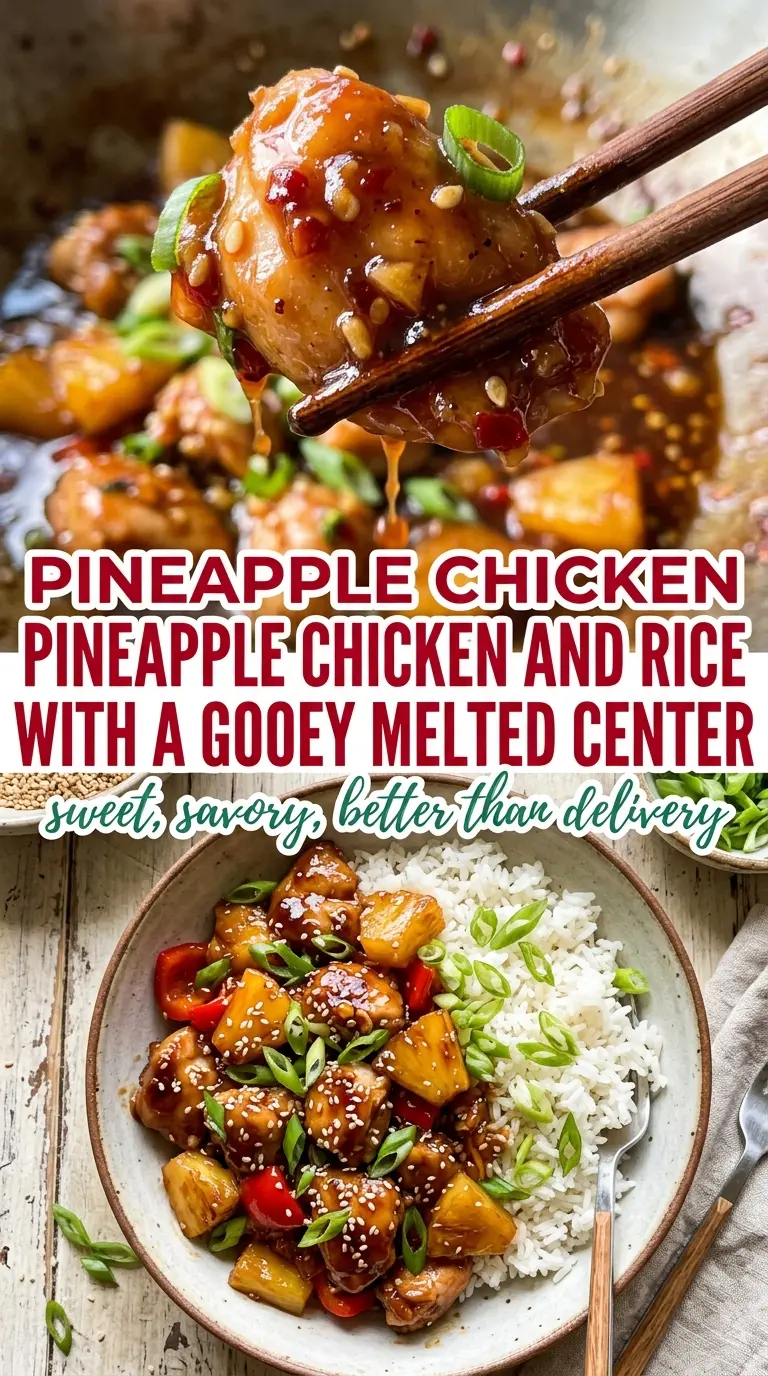
- Chicken breast — Breast meat stays lean and cooks quickly, which works well here because the sauce keeps it moist. Cut the pieces into even cubes so they brown at the same pace. Thighs work too if you want a little more richness.
- Fresh pineapple chunks — This is the ingredient that keeps the dish from tasting heavy. Fresh fruit caramelizes better and contributes less extra liquid than canned pineapple. If you only have canned, drain it well and pat the pieces dry before they hit the pan.
- Soy sauce — Use a regular soy sauce here, not low-sodium if you want the glaze to taste bold enough over rice. Low-sodium works, but the sauce will need a pinch more salt at the end.
- Brown sugar — This is what turns the sauce glossy and sticky instead of thin and sharp. Light brown sugar is fine; dark brown sugar gives a deeper molasses note.
- Rice vinegar — It keeps the sweetness in check and wakes up the pineapple. There’s no real substitute that gives the same clean edge, but apple cider vinegar can step in if that’s what you’ve got.
- Sesame oil — Use toasted sesame oil if possible. It doesn’t need much heat, and its nutty aroma pulls the whole dish together at the end.
- Garlic and scallions — Garlic builds the savory base, while scallions finish the dish with a fresh bite. Add the scallions at the end so they stay bright instead of soft and dull.
Building the Glaze Without Letting It Turn Watery
Sear the Chicken Until the Edges Brown
Heat the skillet before the chicken goes in, then leave the pieces alone long enough to develop color. If you stir constantly, the chicken releases moisture and steams instead of browning. The pieces should look opaque on the outside with browned edges, but they don’t need to be fully cooked through yet.
Cook the Garlic and Pineapple Briefly
Once the chicken has color, add the garlic and pineapple and cook just until the garlic smells fragrant. Garlic burns fast in a hot pan, so this stage is short. The pineapple should soften and pick up some caramelized spots, not sit long enough to lose all structure.
Let the Sauce Reduce to a Sticky Finish
Whisk the soy sauce, brown sugar, rice vinegar, and sesame oil together, then pour it into the skillet and simmer. Keep the heat at a steady medium-low so the glaze thickens without turning harsh or breaking. When it’s ready, the sauce should coat the chicken in a shiny layer and leave a clear trail for a moment when you drag a spoon through the pan.
Serve Over Rice While the Glaze Is Hot
Spoon the chicken and pineapple over warm rice right away. The rice catches the excess sauce and keeps the dish balanced instead of overly sweet. Finish with scallions and sesame seeds while the glaze is still glossy so the garnish sticks in place.
Three Ways to Make This Fit Your Kitchen
Swap in chicken thighs for a richer finish
Thighs stay juicier and bring a little more richness to the glaze. They’ll take a couple extra minutes to cook through, but they’re less likely to dry out if the pan runs a little hot.
Make it gluten-free with tamari
Replace the soy sauce with gluten-free tamari in the same amount. The flavor stays savory and balanced, with a slightly rounder edge than standard soy sauce.
Turn it into a lighter bowl
Serve the chicken over cauliflower rice instead of regular rice if you want a lower-carb meal. The glaze still works, but you’ll want a little extra scallion and sesame seed on top to keep the bowl from tasting too sparse.
Use canned pineapple when that’s what you have
Canned pineapple works in a pinch, but drain it well and pat it dry first. You’ll lose a little caramelization and gain a softer texture, so the sauce may need an extra minute or two to tighten up.
Storage and Reheating
- Refrigerator: Keeps well for 3 to 4 days in a sealed container. The rice will firm up a bit, but the sauce stays flavorful.
- Freezer: Freezes fairly well for up to 2 months if you pack the chicken and rice separately. The pineapple softens after thawing, so the texture is a little looser, but the flavor holds up.
- Reheating: Warm it covered in a skillet over low heat with a splash of water to loosen the glaze. The common mistake is blasting it in the microwave until the chicken turns dry and the sauce gets sticky in all the wrong places.
Questions I Get Asked About This Recipe
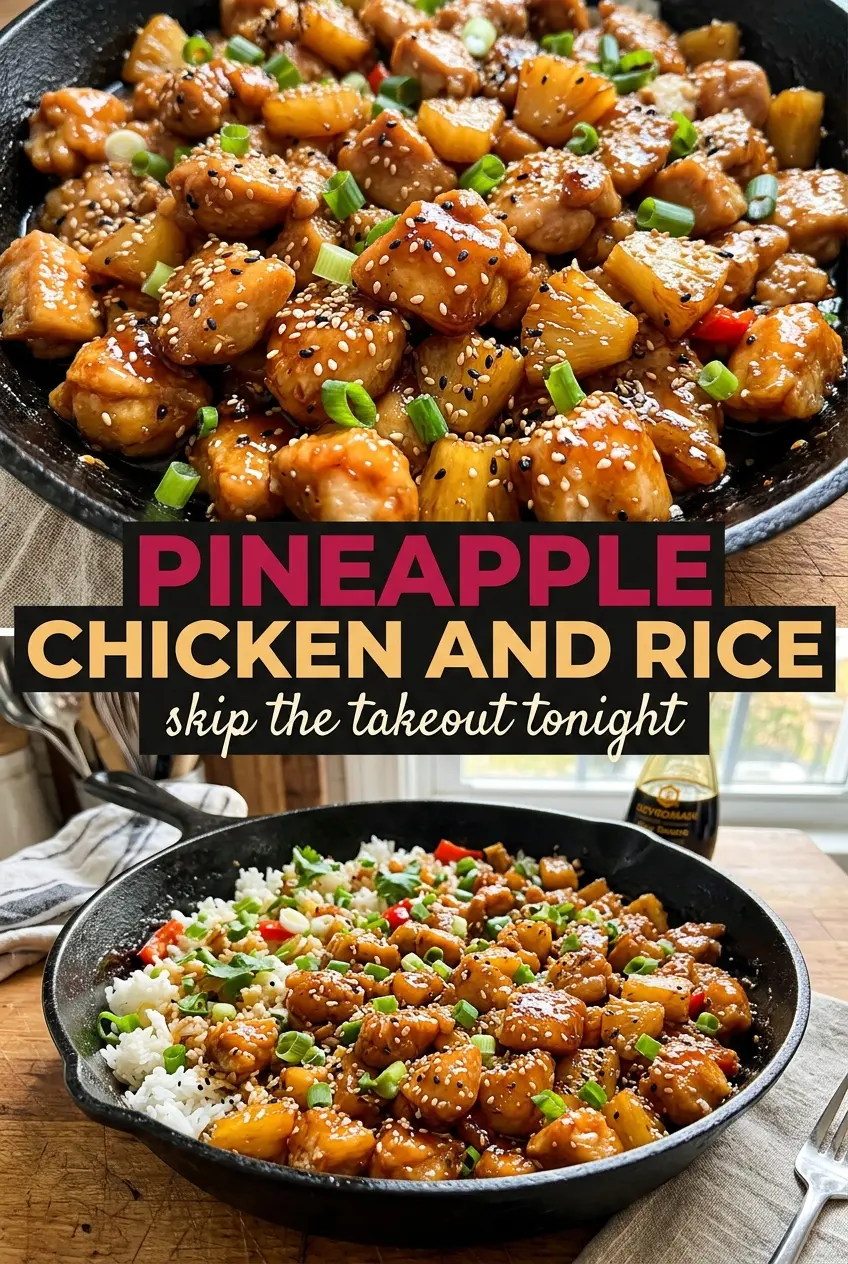
Pineapple Chicken And Rice
Ingredients
Equipment
Method
- Heat a cast iron skillet over medium-high heat. Sear the chicken cubes until golden, about 6 minutes, turning once so the surfaces brown evenly.
- Add the minced garlic and fresh pineapple chunks to the skillet. Cook for 2 minutes, stirring, until the garlic is fragrant and the pineapple starts to soften.
- Whisk together soy sauce, brown sugar, rice vinegar, and sesame oil in a small bowl. Pour the sauce into the skillet and stir to coat the chicken and pineapple.
- Simmer the mixture over medium heat for 5 minutes until sticky and glossy, stirring occasionally so the glaze clings to every piece.
- Spoon the sticky pineapple chicken over the cooked rice. Serve immediately for the best glossy coating.
- Top with sliced scallions and sesame seeds. Finish as a bright, lightly crunchy garnish right before eating.