
Rich, golden broth and broad homestyle noodles are what make Amish chicken noodle soup earn repeat status. It eats like a full meal: tender chicken, soft vegetables, and noodles that hold onto the broth instead of sliding right through it. The best bowls taste calm and complete, with nothing fancy needed to make them satisfying.
The key is giving the chicken time to simmer in the broth long enough to season the pot from the inside out. Thighs stay juicy through a long cook, and the broth picks up enough body from the vegetables and chicken to taste deeper than plain stock. Butter added near the end rounds out the broth without making it heavy, and the noodles go in only after the chicken is shredded so they stay intact.
Below, you’ll find the little timing detail that keeps the noodles from turning mushy, plus a few simple swaps if you need to stretch the soup or make it fit what’s already in the kitchen.
The broth came out clear but still tasted full and the egg noodles stayed plump instead of falling apart. I followed the timing exactly and the chicken shredded so easily.
Pin this Amish chicken noodle soup for the nights when you want a clear, comforting broth and thick homestyle noodles that actually hold their shape.
The Secret to Broth That Tastes Like It Simmered All Afternoon
The broth in this soup gets its depth from the chicken thighs simmering directly in the pot with the vegetables. That’s the part people rush, then wonder why the soup tastes thin. Thirty minutes is enough to cook the chicken through and pull flavor into the broth without reducing it so far that the soup turns salty or dull.
There’s another mistake that changes the whole bowl: adding the noodles too early. Egg noodles keep absorbing liquid as they sit, so if they go in before the chicken is shredded, they can turn bloated and soft before the soup is even served. Shred the chicken first, then add the noodles at the end so they finish in the broth at the table-ready stage.
- Chicken thighs — Thighs stay tender through the simmer and give the broth more body than breast meat. If you use chicken breasts, pull them out as soon as they’re cooked so they don’t dry out.
- Homestyle egg noodles — Thick, wide noodles are what give this soup its old-fashioned texture. Thin noodles work in a pinch, but they cook faster and won’t hold the same hearty bite.
- Butter — The butter softens the edges of the broth at the end and gives it a rounder taste. Don’t swap it for oil here if you can avoid it; oil won’t add the same finish.
- Thyme — A small amount is enough. It should smell warm and savory, not grassy, so add it toward the end and taste before adding more.
Building the Soup in the Right Order
Simmering the Base
Start by combining the chicken, broth, carrots, celery, and onion in a large pot. Keep the heat at a steady simmer, not a hard boil, so the broth stays clear and the chicken cooks gently. A rolling boil can make the meat stringy and the vegetables break down too fast. After about 30 minutes, the chicken should be cooked through and easy to shred with two forks.
Shredding and Returning the Chicken
Lift the chicken out onto a plate and shred it while it’s still warm. Warm chicken pulls apart in clean strands; cold chicken starts to clump. Return it to the pot once shredded so it finishes soaking up the broth. If the pieces look dry, they’ve sat too long before going back in, so don’t let them linger.
Finishing with Butter and Noodles
Stir in the thyme and butter first, then add the noodles. The butter should disappear into the broth and leave it a little glossy. Cook the noodles just until tender, about 8 minutes, and stop there. They’ll keep softening in the hot soup, so pulling the pot as soon as the noodles are cooked keeps them from turning mushy.
What to Change When You Need a Different Bowl
Make It Dairy-Free
Leave out the butter or replace it with a small spoonful of olive oil. The soup will still be comforting and flavorful, but the finish will taste a little leaner because butter adds roundness that oil can’t quite copy.
Use Chicken Breasts Instead of Thighs
Breasts work, but they need a gentler hand. Simmer them only until they’re cooked through, then remove them right away so they don’t turn dry and chalky. The broth will still taste good, just a little lighter.
Gluten-Free Version
Swap in a gluten-free egg noodle or another short pasta that can handle simmering. Check it a minute or two early, because gluten-free pasta can go from done to soft fast and keep absorbing liquid after the heat is off.
Stretch It for More Servings
Add an extra cup or two of broth and a handful more noodles if you need to feed more people. The soup will be a touch lighter in body, but it still holds together because the shredded chicken and vegetables carry the pot.
Storage and Reheating
- Refrigerator: Store for up to 4 days. The noodles will keep soaking up broth, so expect the soup to thicken as it sits.
- Freezer: It freezes well if you freeze the soup without the noodles. Add fresh noodles after thawing for the best texture.
- Reheating: Warm gently on the stove over medium-low heat. If the pot boils hard, the noodles can break down and the chicken can turn stringy.
The Questions People Usually Ask Before They Make It
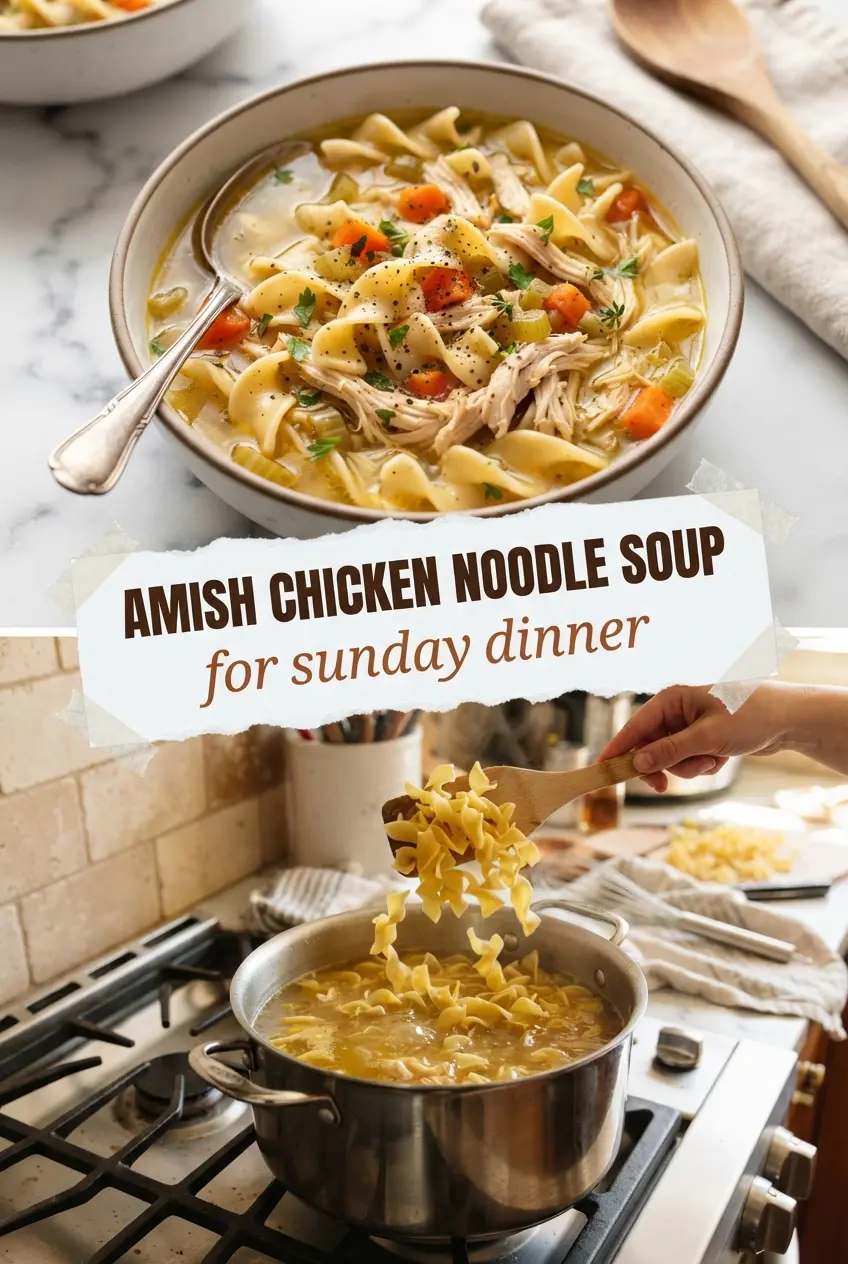
Amish Chicken Noodle Soup
Ingredients
Equipment
Method
- Bring the chicken broth to a gentle simmer in a Dutch oven, then add chicken thighs, carrots, celery, onion, and dried thyme. Maintain a steady simmer and cook for 30 minutes, until the chicken is tender and the vegetables are softening (light bubbling, not a hard boil).
- Remove the chicken to a plate, shred it into bite-size pieces, and return it to the pot. Stir so the shredded chicken distributes through the broth (visual cue: even strands throughout).
- Add the butter and stir until melted and the broth looks lightly golden and glossy. Heat for 1 minute to meld the flavors while keeping the simmer gentle.
- Add the homestyle egg noodles to the pot and simmer until tender, about 8 minutes. Stir occasionally and watch for noodles that are cooked through but still have a hearty bite (visual cue: noodles look swollen and no longer chalky).
- Ladle the soup into bowls and top with parsley. Serve hot for the best noodle texture (visual cue: bright green parsley across the surface).