
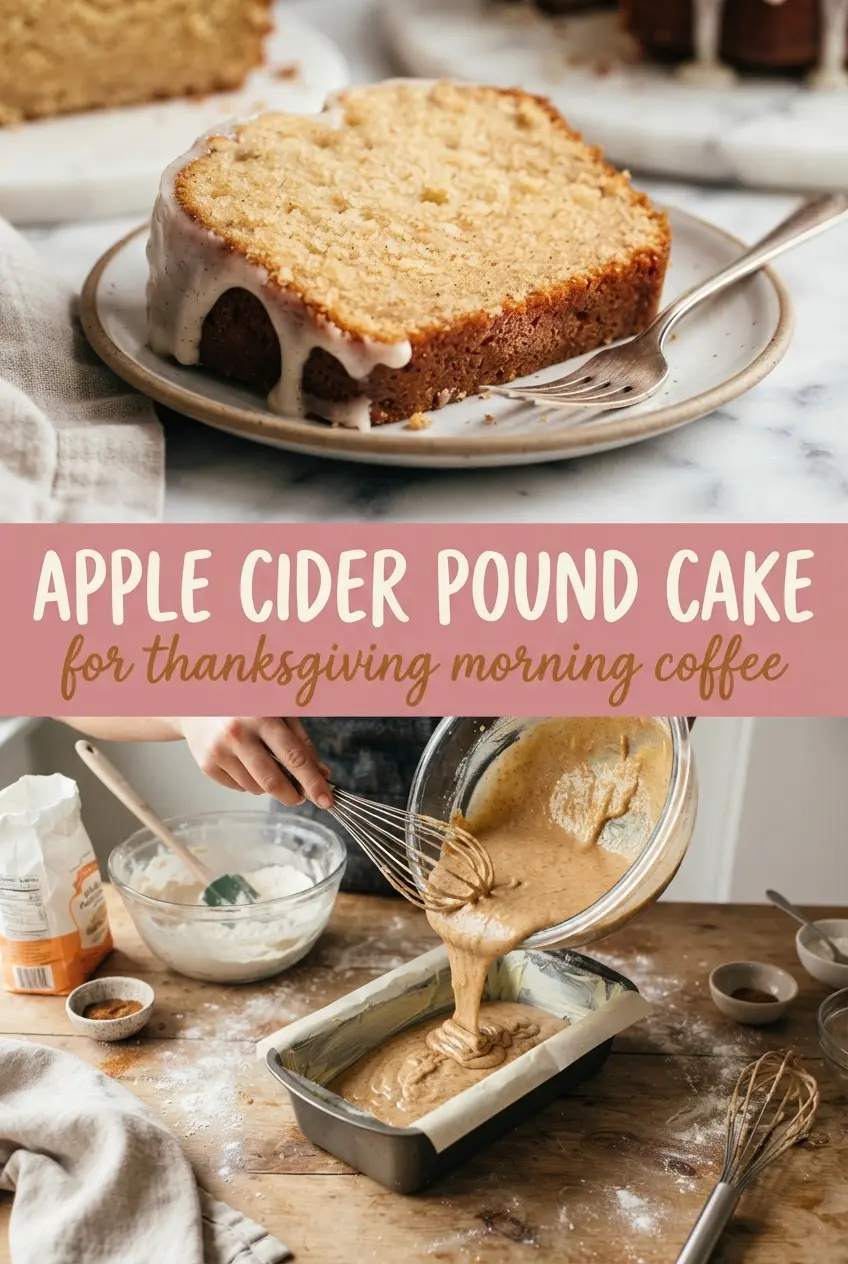
Apple cider pound cake bakes up with a tight, tender crumb and that plush, buttery slice people keep reaching for long after the first piece is gone. The cider reduction gives the cake its apple flavor without watering down the batter, and the cinnamon stays in the background just enough to make the whole loaf taste warm and complete. The drizzle settles into a soft shell on top, which gives each slice a little sweetness and a slight crackle when you cut through it.
The trick here is concentration and temperature. Reducing the cider first pulls out the flavor and keeps the batter from turning loose, while room-temperature butter, eggs, and sour cream help the cake emulsify into a smooth, even crumb. If you’ve ever baked a pound cake that came out dense in the middle or dry around the edges, this version avoids both problems by keeping the batter rich but not heavy.
Below, I’ll walk through the step that matters most, the ingredient swaps that do and don’t work, and how to keep the loaf from overbaking so the texture stays soft for days.
The cider flavor came through beautifully, and the crumb stayed so tender after cooling. I baked it exactly 75 minutes, and the glaze set up into that soft little shell on top just like you said.
Save this apple cider pound cake for the loaf with the cider drizzle and tender, buttery crumb.
The Reason This Pound Cake Stays Tender Instead of Heavy
Pound cake fails when the batter gets beaten past the point of emulsifying or when extra liquid sneaks in without enough structure to hold it. Here, the reduced cider gives you concentrated apple flavor without thinning the batter, and the sour cream adds moisture with enough fat and acidity to keep the crumb fine and plush. The butter-and-sugar stage matters too. Four full minutes of creaming traps air, which helps the loaf rise evenly instead of baking into a tight brick.
The other quiet mistake is rushing the eggs. Cold eggs can make the butter seize into little curds, which leaves the batter uneven and can cause a coarse crumb. Room-temperature eggs blend in smoothly, and that’s what gives this cake its clean, sliceable texture.
What Each Ingredient Is Actually Doing in This Loaf

- Apple cider — Reducing it first is what gives this cake a real apple backbone. If you skip that step, the flavor gets too faint and the extra liquid can soften the batter too much. Reduce it to a thick 1/2 cup, then cool it before adding it so it doesn’t melt the butter.
- Unsalted butter — This is where the pound cake gets its richness and structure. Softened butter creams properly with the sugar; melted butter won’t trap air, and the loaf will bake up denser. Unsalted butter gives you control over the seasoning, which matters in a cake this simple.
- Sour cream — Sour cream keeps the crumb tender for days and adds just enough tang to keep the sweetness from feeling flat. Full-fat sour cream works best. Plain Greek yogurt can stand in, but the texture will be a little firmer and the crumb less plush.
- All-purpose flour — This gives the cake its sturdy, close crumb. Cake flour is too delicate here and can make the loaf less sliceable. Measure the flour lightly so you don’t pack in too much, which is one of the fastest ways to dry out a pound cake.
- Cinnamon — It doesn’t need to dominate. It just rounds out the cider and gives the loaf that warm bakery smell when it comes out of the oven. Too much cinnamon muddies the apple flavor, so the smaller amount here is intentional.
Building the Batter Without Losing the Tender Crumb
Reducing the cider
Pour the apple cider into a small saucepan and simmer it until it shrinks to 1/2 cup. You want a stronger smell and a syrupy look, not a rapid boil that scorches the sugars. Let it cool before it goes into the batter, because hot cider can soften the butter too early and throw off the texture.
Creaming for structure
Beat the softened butter and sugar for a full 4 minutes until it looks pale and fluffy. This is where the loaf gets lift, so don’t stop when it just looks mixed. If the mixture still looks greasy or grainy, keep going until it lightens in color and clings to the bowl in thick ribbons.
Bringing the batter together
Add the eggs one at a time, then mix in the vanilla. When the dry ingredients go in, fold them together with the sour cream and reduced cider just until the last streaks disappear. Overmixing at this point tightens the crumb and can make the cake tough, so stop as soon as the batter looks smooth and thick.
Baking to the right center
Scrape the batter into the prepared loaf pan and bake at 325°F for 70 to 80 minutes. The top should be deep golden and split naturally down the center, and a tester should come out with a few moist crumbs, not wet batter. If the top browns before the center is done, tent it loosely with foil for the last part of the bake.
Drizzling at the end
Let the cake cool for 15 minutes before turning it out, then whisk the powdered sugar with cider until smooth and pour it over the top. A glaze that’s too thin will slide right off, so you want it thick enough to sit in slow ribbons. It should set into a soft shell within a few minutes.
How to Adapt This Apple Cider Pound Cake for Different Needs
Make it dairy-free with a smart fat swap
Use a high-quality plant butter that behaves like real butter in baking, and swap the sour cream for an unsweetened dairy-free yogurt with some body. The cake will still hold together, but the flavor will be a little less rich and the crumb slightly less velvety.
Use Greek yogurt instead of sour cream
Plain full-fat Greek yogurt works in place of sour cream if that’s what you have. The loaf will bake up a touch firmer and a little tangier, but the result is still tender as long as you don’t overmix the batter.
Turn it into cupcakes for faster serving
Spoon the batter into lined muffin cups and start checking around 18 to 22 minutes. You lose some of the classic pound cake slice, but you gain a quicker bake and crisp edges around each portion.
Storage and Reheating
- Refrigerator: Keep the loaf tightly wrapped for up to 5 days. The crumb firms up a little in the fridge, but the flavor stays excellent.
- Freezer: This cake freezes well. Wrap individual slices or the whole cooled loaf in plastic, then foil, and freeze for up to 2 months.
- Reheating: Warm slices in the microwave in short bursts or in a low oven until just softened. Don’t overheat it, or the glaze will melt away and the crumb can turn dry at the edges.
Answers to the Questions Worth Asking
Apple Cider Pound Cake
Ingredients
Equipment
Method
- Simmer the apple cider until reduced to 1/2 cup, then cool completely.
- Let the reduced cider come to room temperature so it won’t seize the batter when mixed.
- Preheat the oven to 325°F and grease and flour a 9x5-inch loaf pan.
- Place the loaf pan on a sheet pan so it bakes evenly and catches any drips.
- Cream the softened unsalted butter and granulated sugar for 4 minutes.
- Beat in the eggs and vanilla extract until the mixture looks smooth and lighter in color.
- Fold in the all-purpose flour, baking powder, salt, and ground cinnamon, alternating with sour cream and the reduced cider.
- Pour the batter into the prepared loaf pan and level the top.
- Bake at 325°F for 70 to 80 minutes, until a toothpick inserted near the center comes out clean.
- Cool the loaf in the pan for 15 minutes, then transfer to a rack.
- Whisk powdered sugar with 2 tablespoons apple cider until smooth and pourable.
- Drizzle over the warm-but-not-hot cake so the glaze sets into a soft shell.