
Roasted acorn squash turns sweet and silky in the oven, and the savory sausage filling gives it enough substance to stand on its own as dinner. The best versions hit that balance between tender squash, browned sausage, soft onion, and little bursts of apple that still hold their shape. When the maple syrup hits the hot filling and the top goes back into the oven, everything glosses over with a light sticky finish that tastes like it took more effort than it did.
What makes this version work is the timing. The squash gets a head start cut-side down, which keeps the flesh from drying out and lets it soften before you add the filling. The apple goes in late, after the sausage and onion have already built some color, so it stays distinct instead of turning to mush. A firm apple like Honeycrisp matters here because you want clean cubes, not a sauce hiding in the pan.
Below you’ll find the small details that keep the squash from going watery, plus a few swaps that still preserve the sweet-savory balance. If you’ve ever had stuffed squash that felt bland or soggy, this method fixes both problems.
The squash came out tender but not mushy, and the maple on top caramelized into little sticky spots. I used hot Italian sausage and the apple still tasted fresh in every bite.
Love the sweet-savory balance of this stuffed acorn squash? Save it to Pinterest for an easy one-pan dinner with maple-glazed squash and sausage.
The Reason This Squash Stays Tender Instead of Watery
Stuffed squash goes wrong when the shell is undercooked or the filling is too wet. Acorn squash needs that first roast cut-side down because it traps steam against the flesh while the cut surface stays protected. If you roast it cut-side up from the beginning, the edges dry out before the center gets soft, and then the filling sits on a half-cooked base.
The second thing that matters is the filling order. Brown the sausage and onion first so the pan loses excess moisture and picks up color. Add the apple near the end so it softens just enough to fit in with the sausage without dissolving into the mixture. The breadcrumbs on top aren’t there for decoration; they help catch the maple and give the finished squash a little texture against all that soft interior.
What Each Ingredient Is Doing in This Dish
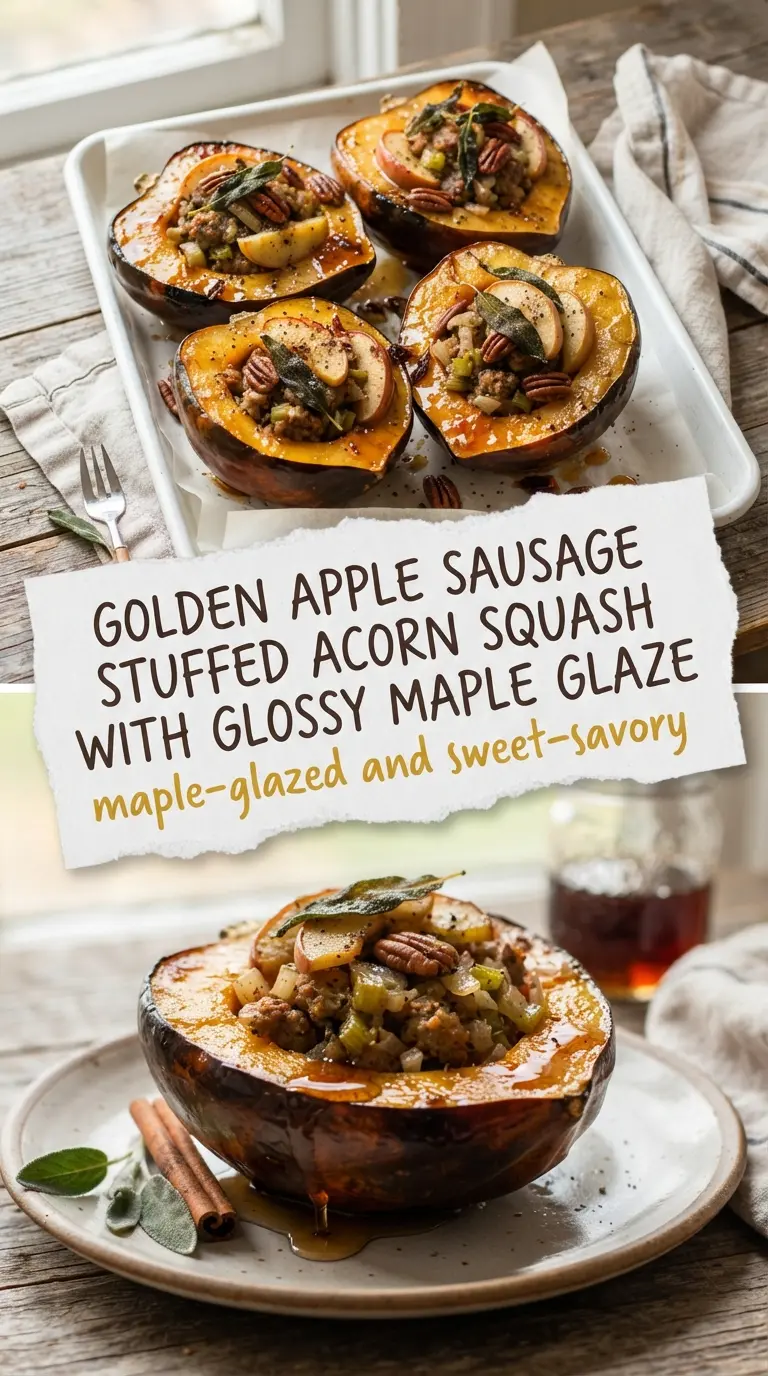
- Acorn squash — The squash is the container and the flavor base. Look for halves that feel heavy for their size and have deep green skin without soft spots. If you use a larger squash, expect a slightly longer roast before it can hold the filling.
- Sausage — This carries the savory side of the dish and seasons the filling from the start. Bulk sausage works best because it browns evenly; if you only have links, remove the casings and break it up in the skillet. Mild, hot, or maple sausage all work, but sweeter sausage will push the dish further in that direction.
- Apple — The apple should stay crisp enough to cut through the richness of the sausage. A firm variety like Honeycrisp or Granny Smith gives you clean pieces after baking. Soft apples break down too fast and disappear into the filling.
- Maple syrup — This is the glue that ties the sweet and savory parts together. Use real maple syrup, not pancake syrup, because you want clean flavor and a finish that actually caramelizes in the oven. The final drizzle gives the top a glossy finish without making the filling sugary.
- Breadcrumbs — These add a light crust on top and help absorb extra moisture from the filling. Plain breadcrumbs are fine, and panko gives a little more crunch. If you skip them, the dish still works, but the top will be softer.
- Dried sage — Sage gives the whole dish its autumnal, savory edge. Dried sage is stronger than fresh, so don’t overdo it. If you use fresh sage, double the amount and add it with the apple so it doesn’t scorch in the pan.
Building the Filling So It Tastes Finished Before It Ever Hits the Squash
Roasting the Squash First
Brush the cut sides with olive oil, season them, and place the squash cut-side down on the pan. That position helps the flesh steam and soften while the exterior caramelizes along the edges. Pull it when a knife slides into the thickest part with only a little resistance. If it still feels firm, the finished halves will be hard to eat cleanly.
Browning the Sausage and Onion
Cook the sausage and onion together until the sausage has real color and the onion turns soft and translucent with browned edges. Don’t rush this stage by turning the heat too high; you want the pan to build flavor, not scorch the drippings. If the sausage releases a lot of fat, drain off a little, but leave enough behind to coat the apples and carry the sage.
Adding the Apple, Sage, and Maple
Stir in the diced apple, sage, and just one tablespoon of maple syrup, then cook until the apple looks slightly glossy and the edges are just beginning to soften. The goal is not to cook the apple into sauce. If the pan looks dry, the syrup will loosen it as it heats; if it looks wet, keep cooking for another minute so the mixture doesn’t steam inside the squash.
Finishing the Stuffed Halves
Flip the squash cut-side up, mound in the filling, and top with breadcrumbs. Drizzle the remaining maple over everything and bake until the topping is lightly crisped and the edges of the squash are deeply golden. The filling should look settled and hot all the way through, with the squash tender enough that a fork sinks in without scraping.
How to Adapt This for Different Diets and Different Kitchens
Make It Gluten-Free
Swap the breadcrumbs for certified gluten-free breadcrumbs or crushed gluten-free crackers. You’ll still get that light top layer, but the texture may be a little more delicate. Check the sausage label too, since some brands use fillers that contain gluten.
Make It Dairy-Free Without Losing Richness
This recipe already leans dairy-free if your sausage doesn’t contain milk-based fillers, so the main thing to watch is the breadcrumb topping. Use olive oil instead of butter if you want to toss the crumbs before baking. The finished dish stays just as rich because the sausage and maple carry the weight.
Make It Meatless
Use a sturdy plant-based sausage or a mixture of sautéed mushrooms and lentils in place of the pork sausage. You need something with enough body to keep the filling from collapsing into the squash. If you go meatless, add a little extra salt and a pinch of smoked paprika so the filling still tastes complete.
Storage and Reheating
- Refrigerator: Store leftovers in an airtight container for up to 4 days. The squash softens a little more after chilling, but the flavor deepens.
- Freezer: It freezes fairly well for up to 2 months, though the squash texture turns softer after thawing. Wrap portions tightly and thaw overnight in the fridge before reheating.
- Reheating: Warm in a 350°F oven, covered loosely with foil, until hot through. The biggest mistake is microwaving it too long, which makes the squash collapse and the filling dry out at the same time.
Answers to the Questions Worth Asking
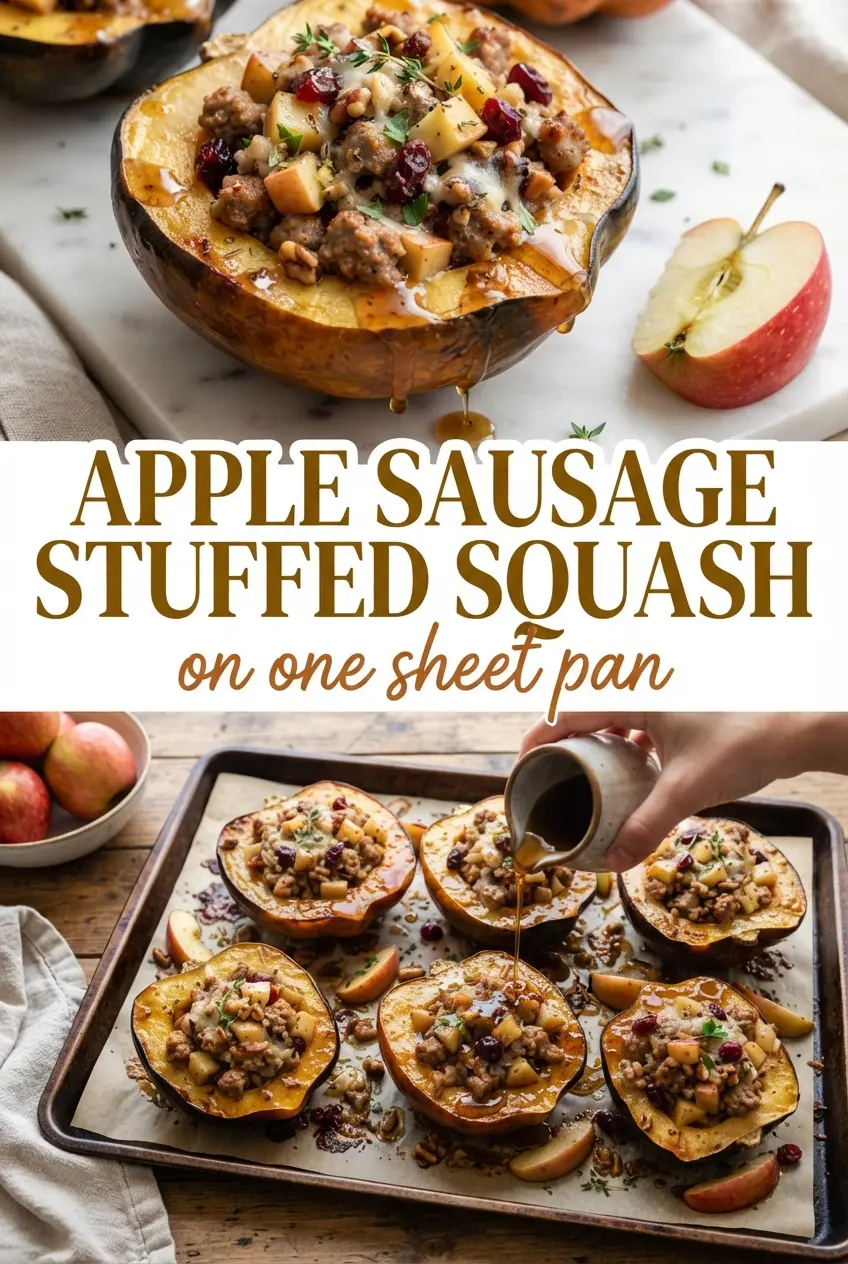
Apple Sausage Stuffed Acorn Squash
Ingredients
Equipment
Method
- Preheat the oven to 400°F and place the acorn squash halves cut-side down on a sheet pan. Brush with the olive oil, season with salt and pepper, then roast for 25 minutes, until the squash edges look tender and glossy.
- Brown the sausage with the yellow onion in a skillet over medium-high heat. Cook until the sausage is browned and the onion looks translucent, then add the diced apple, dried sage, and 1 tablespoon maple syrup and cook for 4 minutes, until the apple softens slightly and the mixture smells fragrant.
- Flip the roasted squash halves so the cavity faces up. Spoon in the sausage-apple filling and top each half with breadcrumbs for a lightly golden surface when baked.
- Drizzle the remaining 2 tablespoons maple syrup over the stuffed squash. Bake for 15 minutes at 400°F until the filling is hot and the crumbs turn golden.