
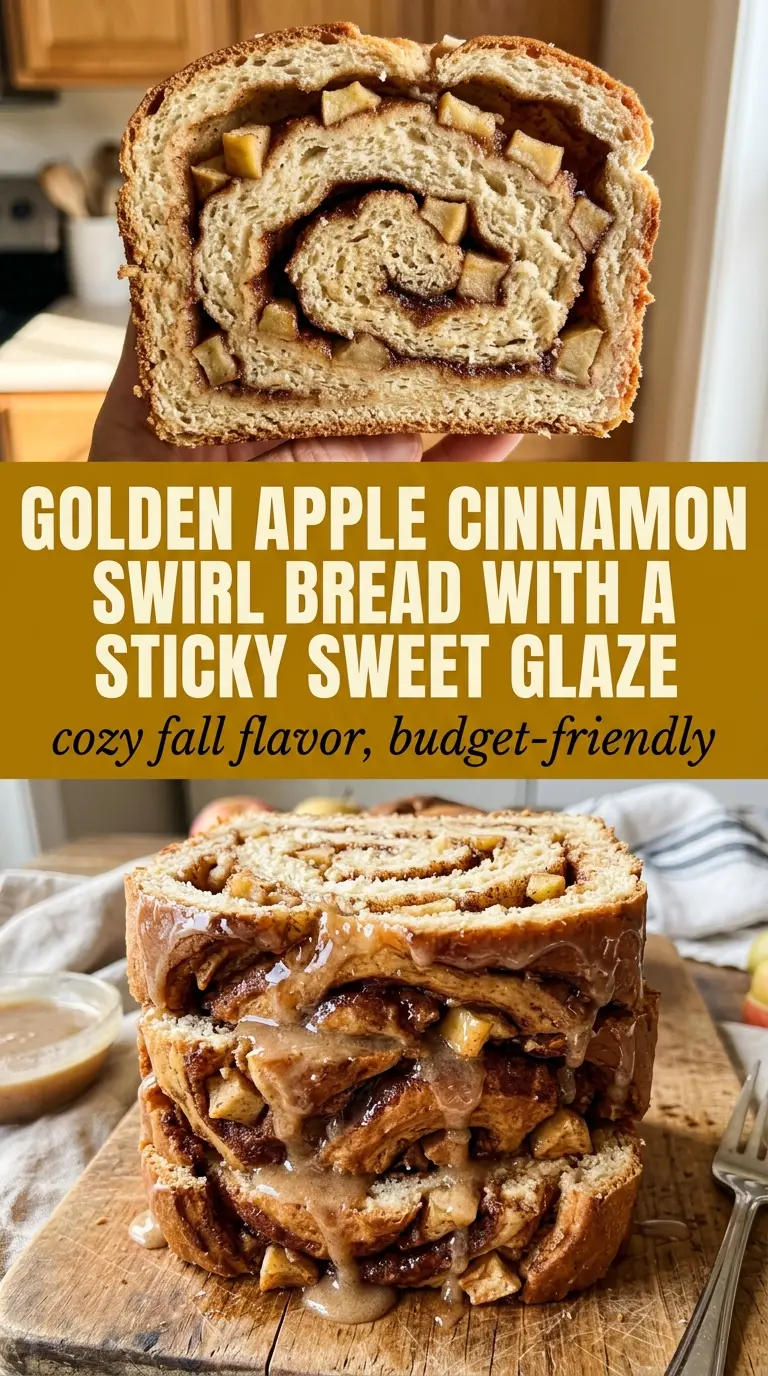
Tender apple cinnamon swirl bread earns its place on the counter because every slice gives you something different: soft crumb, pockets of juicy apple, and those amber ribbons of cinnamon sugar that sink into the loaf just enough to keep it moist without turning heavy. The glaze on top sets with a thin crackle, which makes the first slice feel a little special even though the ingredients are all everyday staples.
What makes this version work is the balance between a basic quick-bread batter and a tightly packed apple swirl. The batter stays tender because it’s mixed just until combined, and the apples are diced small enough to bake through without leaving wet gaps. The cinnamon-brown sugar mixture does more than add sweetness; it melts into the fruit and creates those marbled layers instead of disappearing into the loaf.
If you’ve ever had apple bread turn soggy in the middle or come out bland, the details below are the part worth paying attention to. Small apple pieces, a gentle swirl, and cooling the loaf before glazing all do real work here.
The apple pieces stayed evenly suspended and the cinnamon swirl baked into these beautiful ribbons instead of sinking to the bottom. I also loved that the glaze set up on the cooled loaf instead of disappearing into it.
Save this apple cinnamon swirl bread for the days when you want a tender loaf with a sticky glaze and plenty of cinnamon ribbon in every slice.
The swirl sinks when the batter is too loose
The biggest mistake with apple swirl bread is treating it like a dump-and-stir loaf. If the batter is overmixed, it gets stiff and tunnels; if it’s too loose, the apple-cinnamon layer drops straight to the bottom before the loaf sets. This version avoids both problems by keeping the batter thick enough to support the fruit and by layering instead of stirring the apple mixture all the way through.
The knife swirl matters, but only a little. A few gentle passes create marbling without blending the sugar into the batter, which keeps the ribbon distinct and helps the top bake into a darker, lightly caramelized crust. If you drag the knife through too many times, you’ll lose the swirl and end up with an evenly spiced loaf instead of those defined apple pockets.
What each ingredient is actually doing in this loaf
- All-purpose flour — This gives the loaf its structure without making it cakey. Bread flour is too firm here, and cake flour can’t hold the apple layers as well.
- Baking powder and baking soda — The two leaveners work together to lift the loaf and keep it from turning dense around the fruit. The baking soda also helps the apples and buttermilk brown a little better.
- Butter — Softened butter creates the tender crumb and carries the sugar into the batter during creaming. Margarine won’t give the same flavor or the same clean slice.
- Buttermilk — This adds tang and keeps the crumb soft. If you don’t have it, use milk with a teaspoon of lemon juice or vinegar stirred in and let it sit for 5 minutes.
- Apples — Dice them small and keep the pieces even so they bake through at the same rate. A firm apple like Honeycrisp, Granny Smith, or Fuji holds its shape better than a mealy one.
- Brown sugar and cinnamon — This is the swirl, and it’s doing more than seasoning the apples. The brown sugar melts into a sticky ribbon that keeps the loaf moist and gives you those deep amber streaks.
- Powdered sugar and milk — The glaze is optional, but it finishes the loaf with a thin sweet layer that sets on the surface. Add the milk a little at a time so it stays drizzleable instead of turning runny.
Building the loaf so the apples stay where you want them
Creaming the base until it turns fluffy
Beat the butter and sugar until the mixture looks pale, airy, and a little increased in volume. That step traps air, which gives the loaf lift before the batter even hits the oven. If the butter is still cold, it’ll stay grainy and the bread will bake up heavier, so soften it fully before you start.
Mixing in the dry ingredients without toughening the crumb
Add the flour mixture and buttermilk in alternating additions, stopping as soon as the batter comes together. The batter should look thick, smooth, and just a little textured, not glossy and whipped. Overmixing here turns the crumb tight and makes the loaf spring back less when sliced.
Layering the apple-cinnamon ribbon
Spread half the batter in the pan, spoon on half the apple mixture, then repeat. Keep the apple pieces in a fairly even layer so they don’t clump in one corner. A few gentle swirls with a knife are enough; if you keep going, the sugar starts blending into the batter and the ribbon disappears.
Baking until the center is set
Bake until a toothpick comes out clean or with a few moist crumbs, usually 55 to 60 minutes. The top should be deeply golden and the center should spring back lightly when pressed. If the top browns too quickly before the middle is done, cover it loosely with foil for the last 15 minutes.
Finishing with glaze only after cooling
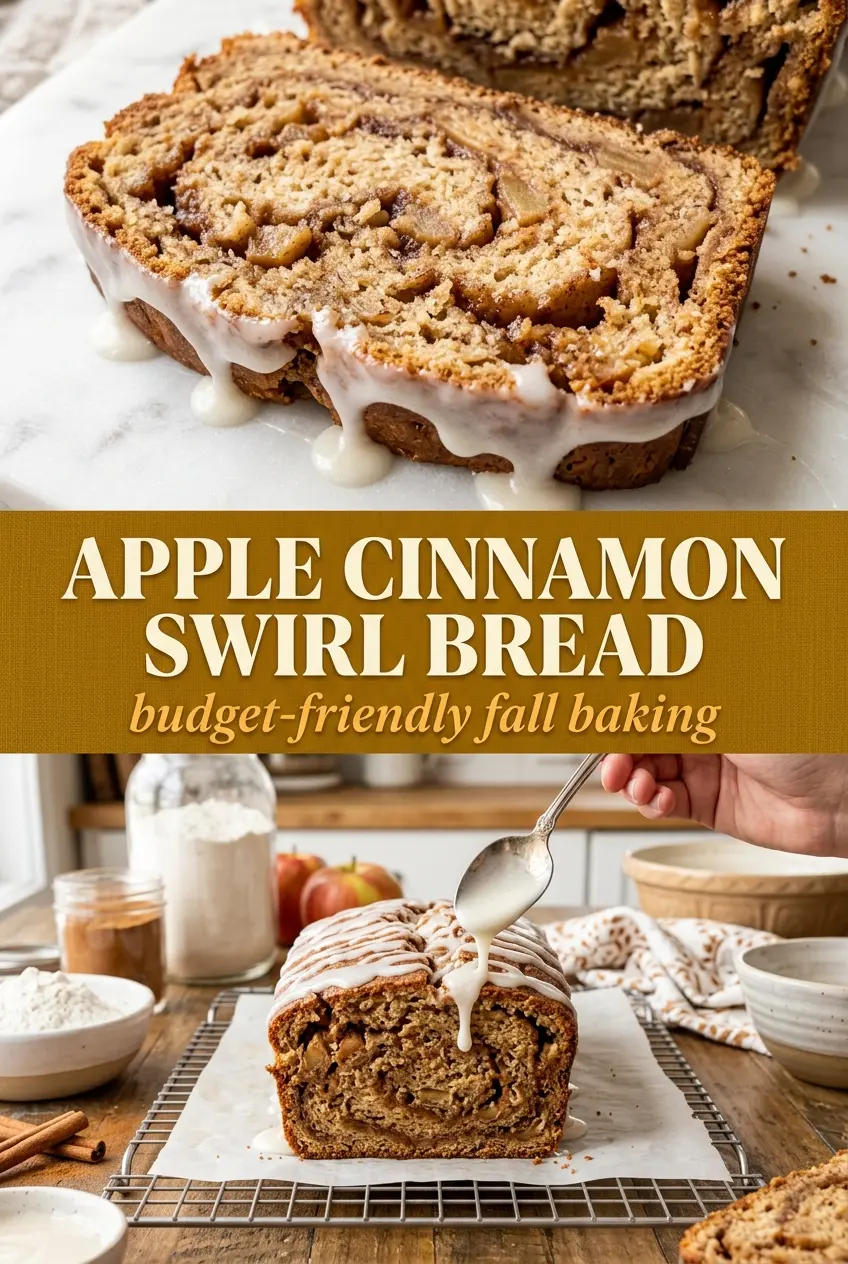
Let the loaf cool before you whisk on the glaze. If you add it while the bread is hot, it melts into the crust instead of sitting on top. Once the loaf is barely warm or fully cool, drizzle the glaze so it lands in thick white ribbons and sets with that thin, sweet shell.
How to adapt this apple bread for different kitchens and different diets
Dairy-free version
Swap the butter for a plant-based baking stick and use the milk-vinegar version of buttermilk. The loaf will still be tender, though the flavor loses a little richness compared with real butter.
Make it less sweet
Reduce the glaze to a light drizzle or leave it off entirely, and use tart apples so the bread doesn’t taste flat. The swirl will still give you enough sweetness in the center.
Swap the fruit
Pears work if you want a softer, more delicate loaf, but they release a little more moisture, so dice them small and don’t overpack the pan. The flavor turns gentler and less tart.
Storage and Reheating
- Refrigerator: Store tightly wrapped for up to 4 days. The crumb gets a little denser in the fridge, but the flavor holds well.
- Freezer: This bread freezes well. Wrap the cooled loaf or individual slices in plastic, then foil, and freeze for up to 2 months.
- Reheating: Warm slices in a toaster oven or microwave for just a few seconds. If you reheat too long, the glaze melts away and the bread dries out at the edges.
Answers to the questions worth asking about this bread
Apple Cinnamon Swirl Bread
Ingredients
Equipment
Method
- Preheat the oven to 350°F and grease a loaf pan to prevent sticking.
- Whisk the all-purpose flour, baking powder, and baking soda together until evenly combined.
- Cream the softened unsalted butter with granulated sugar until fluffy.
- Beat in the eggs one at a time until the mixture looks smooth.
- Alternate adding the dry ingredients with the buttermilk, mixing just until combined to avoid overmixing.
- Toss the diced apples with the brown sugar and cinnamon until the pieces are evenly coated.
- Layer half the batter in the loaf pan, then spoon half of the apple mixture over the top.
- Repeat with the remaining batter and apple mixture, then swirl gently with a knife to create a marbled ribbon.
- Bake at 350°F for 55-60 minutes until a toothpick inserted in the center comes out clean.
- Whisk the powdered sugar with the milk, then drizzle the glaze over the cooled loaf so it sets instead of melting.