
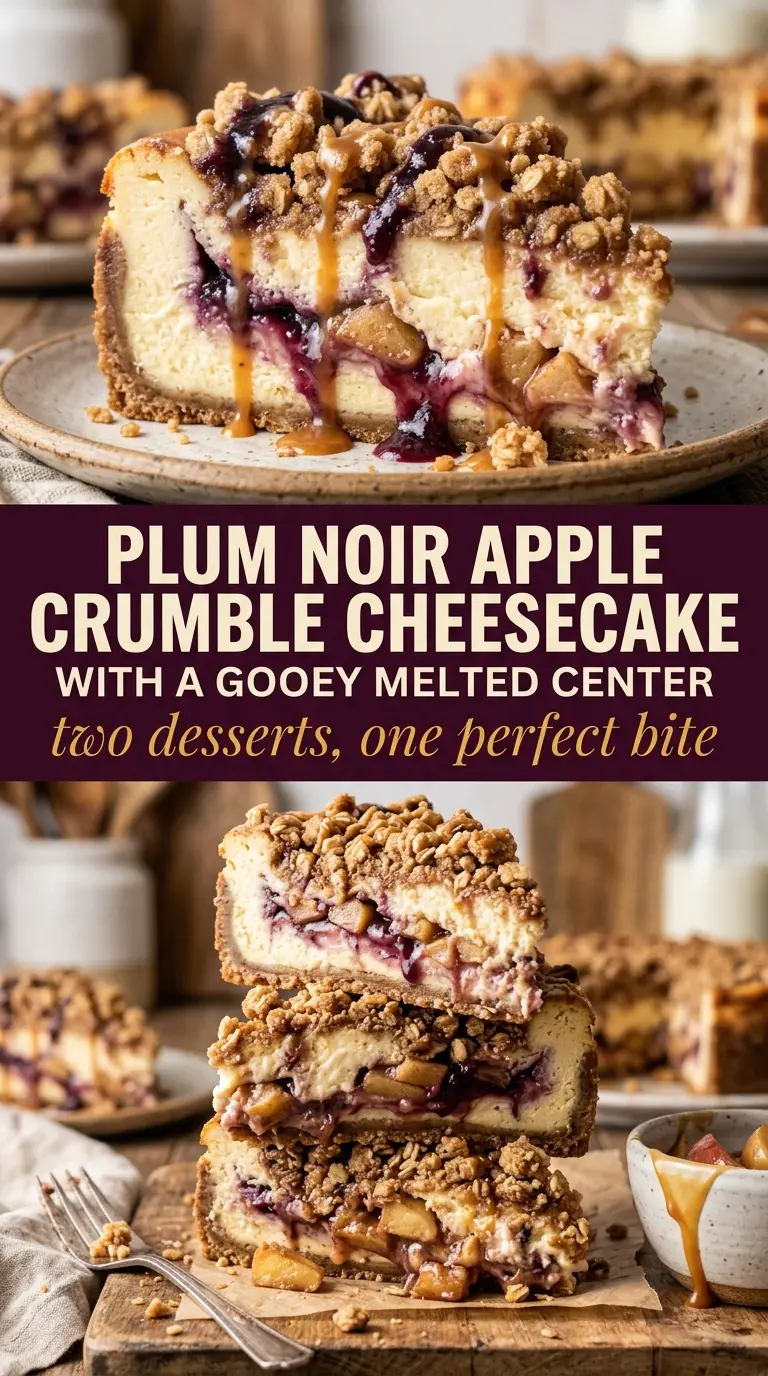
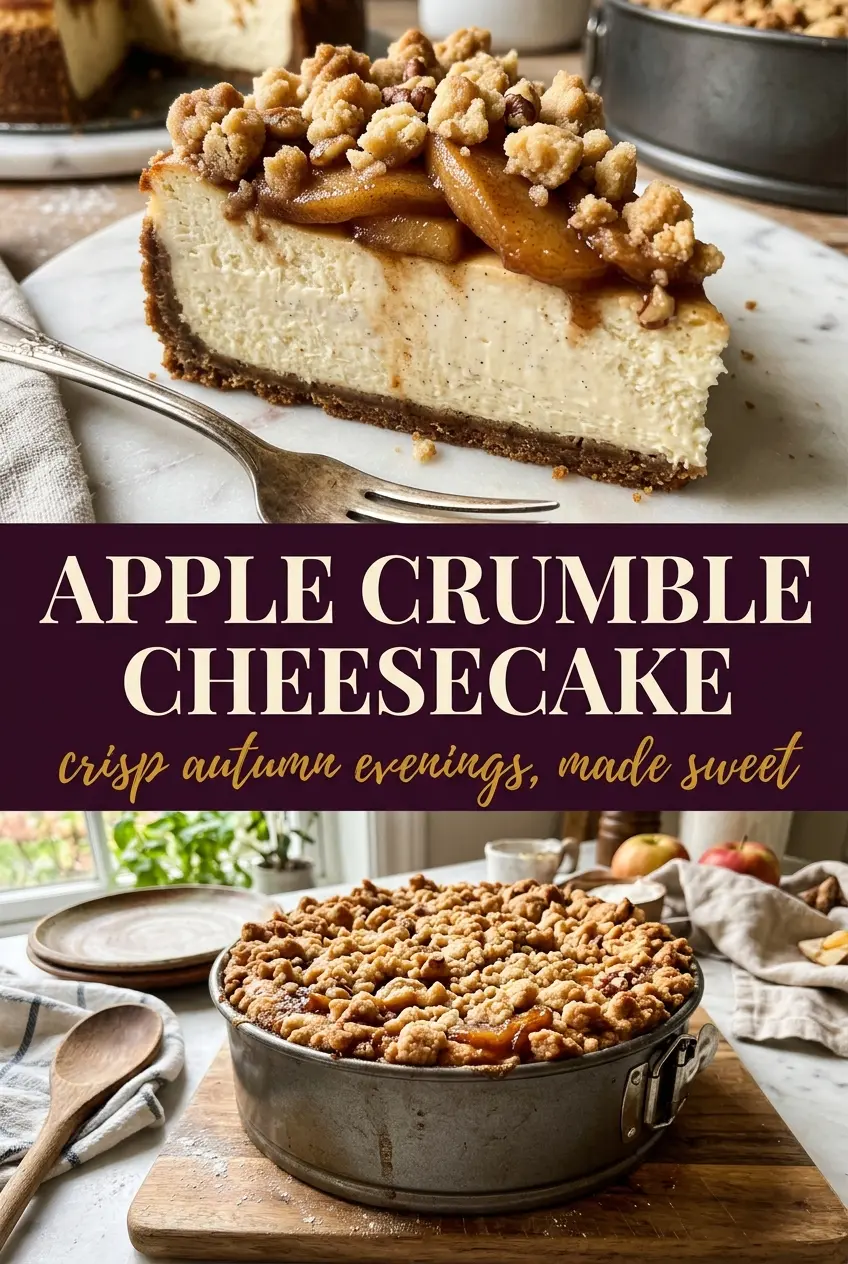
Silky cheesecake, tender cinnamon apples, and a buttery crumble topping all land in one slice here, and the payoff is that contrast: crisp crumbs up top, a creamy center underneath, and apples that soften just enough to turn jammy without disappearing. It’s the kind of dessert that gets quieter as soon as people take the first bite, because everyone’s too busy deciding whether the top or the filling is their favorite part.
What makes this version work is the way the layers are handled. The crust gets pressed firmly enough to hold together, the cheesecake batter stays plain and smooth so the apples can do the talking, and the crumble goes on last so it bakes into a sandy, bronzed lid instead of sinking into the filling. The apples are tossed with brown sugar and cinnamon before they hit the batter, which draws out just enough juice to flavor the cheesecake without making it watery.
Below, I’ll walk through the one detail that keeps the center from cracking, how to get the crumble truly crumbly instead of paste-like, and what to change if you want a slightly sharper apple flavor or cleaner slices the next day.
The cheesecake baked up smooth with no cracks, and the apples stayed soft without turning mushy. The crumble got nicely golden after the full hour, and it sliced cleanly once I chilled it overnight.
Save this apple crumble cheesecake for the dessert nights when you want a creamy center, jammy apples, and a crisp buttery topping in every slice.
The Crust and Crumble Need Different Textures, Not the Same One
Cheesecake recipes with a fruit and crumb topping can go wrong when every layer turns soft at the same time. The crust should be firmly pressed and slightly dense so it stays put under the filling. The crumble, on the other hand, needs cold butter cut into the dry ingredients so it bakes into clumps and toasty bits instead of melting into a paste.
The apple layer is another place where texture matters. Sliced apples release juice as they bake, and that juice helps flavor the top of the cheesecake, but too much and the surface turns loose. Tossing them with a little brown sugar and cinnamon keeps the flavor deep while still letting the apples hold their shape.
What Each Ingredient Is Actually Doing in This Dish
- Graham cracker crumbs — Fine crumbs pack better than big chunks, which gives you a crust that cuts cleanly instead of crumbling all over the plate. If you only have whole crackers, pulse them until sandy before mixing with the butter.
- Cream cheese — Full-fat brick cream cheese gives the cheesecake its structure. Low-fat versions tend to bake up softer and a little grainy, especially once the apple juices and crumble top are added.
- Apples — Use a firm baking apple if you can, like Granny Smith or Honeycrisp. Softer apples break down too fast and blur into the filling before the cheesecake has time to set.
- Cold butter for the crumble — Cold butter is what keeps the topping crumbly. If it starts to melt while you mix, chill the bowl for a few minutes before sprinkling it over the apples.
Building the Cheesecake So the Center Sets Before the Top Overbrowns
Pressing the crust with enough force
Mix the graham crumbs with the melted butter until every crumb looks evenly moistened, then press it into the springform pan in a firm, even layer. If the crust feels loose now, it will fall apart when you slice it later. A flat-bottomed glass helps you pack it down without leaving ridges.
Making the filling smooth without whipping in too much air
Beat the cream cheese and sugar until the mixture turns completely smooth and glossy, then add the eggs one at a time. Stop mixing as soon as each egg disappears. Too much air gives the cheesecake lift in the oven, then a collapse and cracks as it cools.
Layering the apples and crumble in the right order
Pour the batter over the crust first, then arrange the apples across the top so they sit on the surface instead of sinking all the way down. Scatter the crumble over the apples in loose clumps. If you pack it down, it bakes into one heavy lid instead of a crisp topping.
Knowing when to pull it from the oven
Bake until the edges are set and the center still has a slight wobble when you nudge the pan. That wobble is what you want. If the middle is completely firm in the oven, it’s already overbaked and will turn dry after chilling. Let it cool slowly, then chill it long enough for the filling to become dense and sliceable.
Three Ways to Adjust the Bake Without Losing the Apple Crumble Effect
For a sharper apple flavor
Use mostly Granny Smith apples or mix them half-and-half with a sweeter apple. The tartness cuts through the rich filling and keeps the dessert from tasting flat. You’ll lose a little natural sweetness, but the cheesecake tastes brighter and less heavy.
For a gluten-free version
Swap the graham crumbs for gluten-free graham-style crumbs and use a 1:1 gluten-free flour blend in the crumble. The texture stays close to the original, though the topping may bake a touch more sandy. Keep the butter cold so the crumble still forms little nuggets instead of dust.
For a dairy-free attempt
Use a dairy-free cream cheese made for baking and swap in a plant-based butter for both the crust and crumble. The result won’t taste exactly the same, and the filling may be a little softer, but the apple and cinnamon layer still carries the dessert well. Chill it fully before slicing so it has time to firm up.
Storage and Reheating
- Refrigerator: Store covered for up to 5 days. The crumble softens a bit after day one, but the flavor stays excellent.
- Freezer: It freezes well if you wrap slices tightly and freeze them without garnish. Thaw overnight in the refrigerator for the best texture.
- Reheating: Serve it cold or let a slice sit at room temperature for 20 to 30 minutes. Warming it in the oven tends to make the cheesecake loose and the topping too soft.
Answers to the Questions Worth Asking
Apple Crumble Cheesecake
Ingredients
Equipment
Method
- Preheat oven to 325°F. Press graham cracker crumbs mixed with melted butter into a springform pan, packing firmly for an even crust.
- Beat cream cheese and sugar until smooth. Beat in eggs one at a time, then mix in vanilla extract until glossy and lump-free.
- Pour cheesecake batter over the crust. Tap the pan lightly to settle the batter into an even layer.
- Toss sliced apples with brown sugar and cinnamon. Arrange apples over the batter in an even layer so they bake into a top layer.
- Mix crumble ingredients until crumbly and sprinkle over the apples. Ensure the topping covers most of the surface so it crisps as it bakes.
- Bake for 55-60 minutes at 325°F. Bake until the center is just set with a slight wobble when the pan is gently shaken.
- Cool the cheesecake completely at room temperature. Chill at least 4 hours (or overnight) before slicing for clean, firm pieces.