
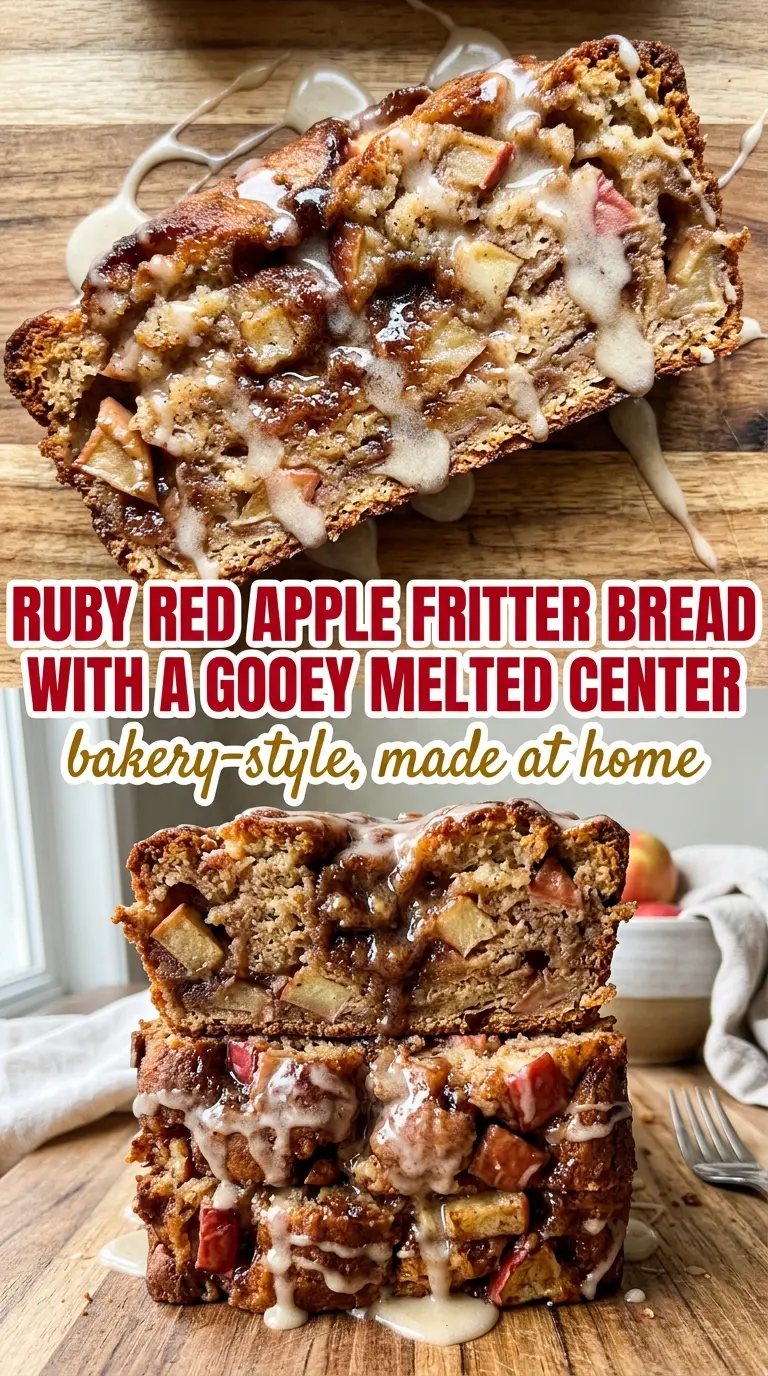
Apple fritter bread has that bakery-style pull of cinnamon apples and soft vanilla cake in every slice, but without the fuss of frying. The loaf bakes up tender and plush with pockets of juicy apple tucked through the center, then gets finished with a thin vanilla glaze that seeps into the top just enough to give it that classic fritter feel. The best part is how the apple layer stays distinct instead of disappearing into the batter, so you get both the soft crumb and those sweet spiced bites in the same slice.
What makes this version work is the balance between the batter and the apple mixture. The apples are tossed with brown sugar and cinnamon before they go into the pan, which draws out a little juice and creates those syrupy pockets as the loaf bakes. A fairly thick batter helps suspend the fruit instead of letting it sink, and alternating layers keeps the apples distributed from top to bottom. If you’ve ever ended up with a dense loaf or a wet streak through the middle, it usually comes down to overmixing the batter or cutting the apples too large.
Below you’ll find the technique that keeps the loaf tender, the reason the glaze should go on only after cooling, and a few smart swaps if you need to adjust the ingredients you have on hand.
The apples stayed in little pockets instead of sinking, and the glaze set up beautifully without making the top soggy. I brought it to brunch and people kept asking what bakery it came from.
Pin this apple fritter bread for a tender loaf with cinnamon apples and a glossy vanilla glaze.
The Trick to Keeping the Apples in the Bread Instead of in the Bottom of the Pan
Most apple quick breads fail for one simple reason: the fruit is too heavy for the batter. The result is a loaf that looks fine on top but turns into a soggy layer underneath, with not much apple in the slices above it. This recipe avoids that by using a thicker batter and layering the apples in stages, so they stay suspended as the bread bakes.
Another common problem is cutting the apples too large. Big chunks release more juice in pockets and can throw off the bake, leaving the center gummy even when the edges are done. Small, even dice cook through at the same pace as the batter, which gives you soft fruit instead of wet patches.
- Thick batter: It needs enough structure to hold the apples up. If the batter looks a little dense before baking, that’s a good sign here.
- Brown sugar and cinnamon: This combination pulls the apple flavor forward and gives the fruit a caramel note while it bakes.
- Alternating layers: This distributes the apples through the loaf instead of letting them settle at the bottom.
- Gentle swirling: A few light turns of a knife are enough. Overmixing the layers will muddy the loaf and break up the pockets you want.
What Each Ingredient Is Actually Doing in This Loaf
- All-purpose flour: This gives the bread its structure without making it tough. Bread flour is too strong here and would push the texture toward chewy instead of tender.
- Baking powder: It lifts the loaf so it bakes up like a soft quick bread, not a heavy cake. Fresh baking powder matters more than brand name.
- Unsalted butter: Butter brings flavor and a richer crumb. If you only have salted butter, use it and cut back a pinch on added salt if your recipe card includes it.
- Granulated sugar and brown sugar: White sugar sweetens the batter, while brown sugar in the apple layer adds moisture and that deeper caramel note. They do different jobs, so I wouldn’t swap one for the other across the board.
- Apples: Use a firm baking apple that holds its shape, not a mealy one that turns to mush. If your apples are large, dice them small and evenly so they bake through at the same rate.
- Milk and eggs: These loosen and enrich the batter so it bakes into a soft sliceable loaf. Room-temperature eggs blend more smoothly, which helps prevent a curdled-looking batter.
- Vanilla: It rounds out the cinnamon and apple and makes the loaf taste more like a bakery treat. Use the real stuff if you have it.
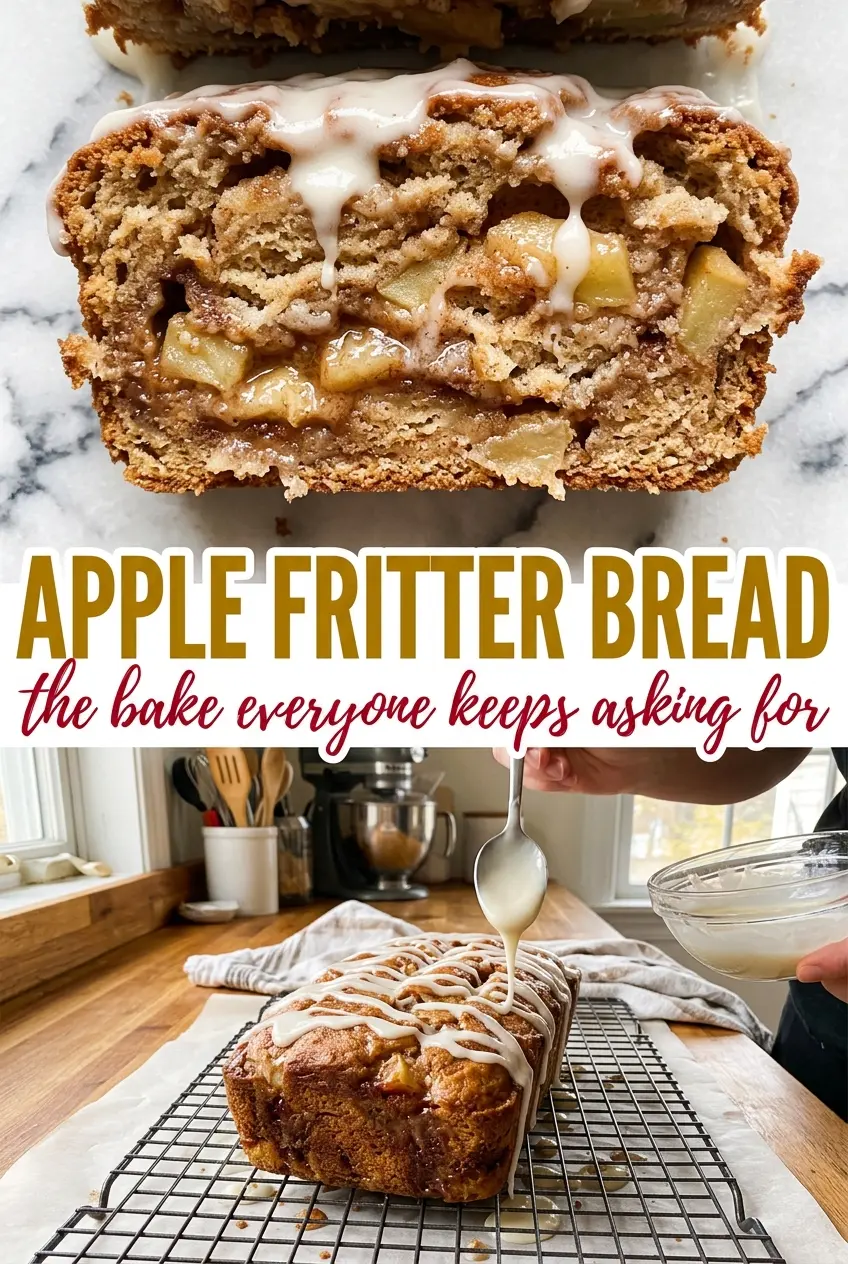
- Powdered sugar glaze: The glaze gives the finished loaf that fritter-style finish. If you like a thicker drizzle, use less milk; if you want it to soak into the top a little, add it drop by drop until it flows.
Building the Loaf So It Bakes Up Tender, Not Dense
Cream the Butter Until It Turns Pale
Start by beating the butter and sugar until the mixture looks lighter in color and a little fluffy around the edges. That step traps air, which helps the loaf rise instead of baking up heavy. If the butter is still cold, it will never fully cream, and the batter can turn lumpy before the flour even goes in.
Fold the Flour in Just Until the Streaks Disappear
Once the dry ingredients go in, stir only until you stop seeing dry flour. Overmixing develops gluten and gives you a tight, bready crumb instead of a soft quick bread. The batter should look thick and smooth, not stretchy.
Layer the Apples So They Stay Evenly Spread
Spoon in part of the batter, add some of the cinnamon apples, then repeat until the pan is filled. Keep the apple pieces fairly even and don’t dump them all in one place, or the loaf will bake into a heavy pocket in the middle. A light swirl with a knife is enough to create those bakery-style ribbons without collapsing the structure.
Wait for the Center to Set Before Pulling It Out
Bake until a toothpick inserted into the center comes out clean or with just a few moist crumbs. If the top browns too quickly before the center is done, tent it loosely with foil for the last stretch of baking. Let the loaf cool in the pan for a bit before turning it out, or the warm crumb can split while it’s still fragile.
Three Useful Ways to Adjust Apple Fritter Bread
Make It Dairy-Free Without Losing the Soft Crumb
Use a neutral dairy-free butter substitute and an unsweetened non-dairy milk such as almond or oat milk. The loaf will still be tender, though it may bake with a slightly less rich flavor than the butter version. Choose a milk that doesn’t have a strong flavor of its own, or it will compete with the apples and cinnamon.
Use Pears for a Softer, More Delicate Fruit Layer
Firm pears can stand in for apples if you want a gentler fruit flavor. Keep the dice small and use slightly less time in the oven check, since pears soften faster and can turn watery if they go too far. The loaf will taste less sharp and more mellow.
Make the Glaze Thicker or Thinner on Purpose
For a thick bakery-style drizzle, use less milk and whisk until the glaze falls from the spoon in a ribbon. For a lighter finish that soaks into the top, add milk a teaspoon at a time until it pours easily. The texture changes the whole feel of the loaf, so pick the finish you want before you start drizzling.
What to Do if You Need a Gluten-Free Loaf
Use a cup-for-cup gluten-free flour blend that includes xanthan gum. The texture will be a little more delicate, so let the loaf cool fully before slicing or it can crumble. Gluten-free versions usually benefit from a few extra minutes in the pan after baking before you turn them out.
Storage and Reheating
- Refrigerator: Store covered for up to 4 days. The loaf stays moist, though the glaze may soak in more over time.
- Freezer: Freeze slices tightly wrapped for up to 2 months. The texture holds up better if you freeze without the glaze and add it after thawing.
- Reheating: Warm slices in a toaster oven or a low oven until just heated through. The biggest mistake is microwaving too long, which makes the crumb rubbery and can melt the glaze into a sticky puddle.
Answers to the Questions Worth Asking
Apple Fritter Bread
Ingredients
Equipment
Method
- Preheat oven to 350°F and grease a loaf pan.
- Whisk all-purpose flour and baking powder together.
- Cream unsalted butter, softened and granulated sugar until fluffy, then beat in large eggs, milk, and vanilla extract.
- Fold the flour mixture into the wet mixture until just combined.
- Toss apples, peeled and diced with brown sugar and cinnamon for apple layer.
- Layer batter and apple mixture alternately in the pan, swirling gently to create streaks of apple throughout.
- Bake 55-60 minutes until a toothpick comes out clean.
- Whisk powdered sugar with milk (2-3 tbsp) and drizzle over the cooled loaf.