
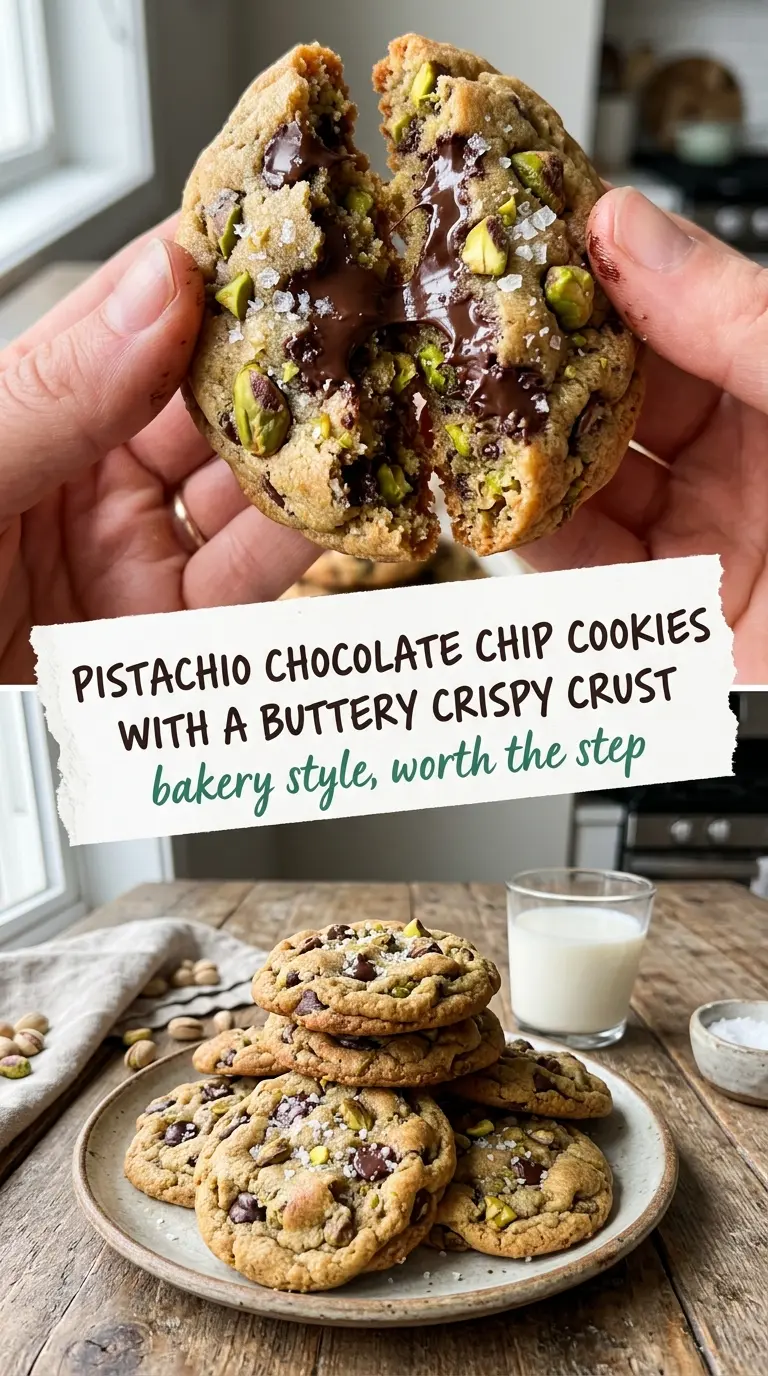
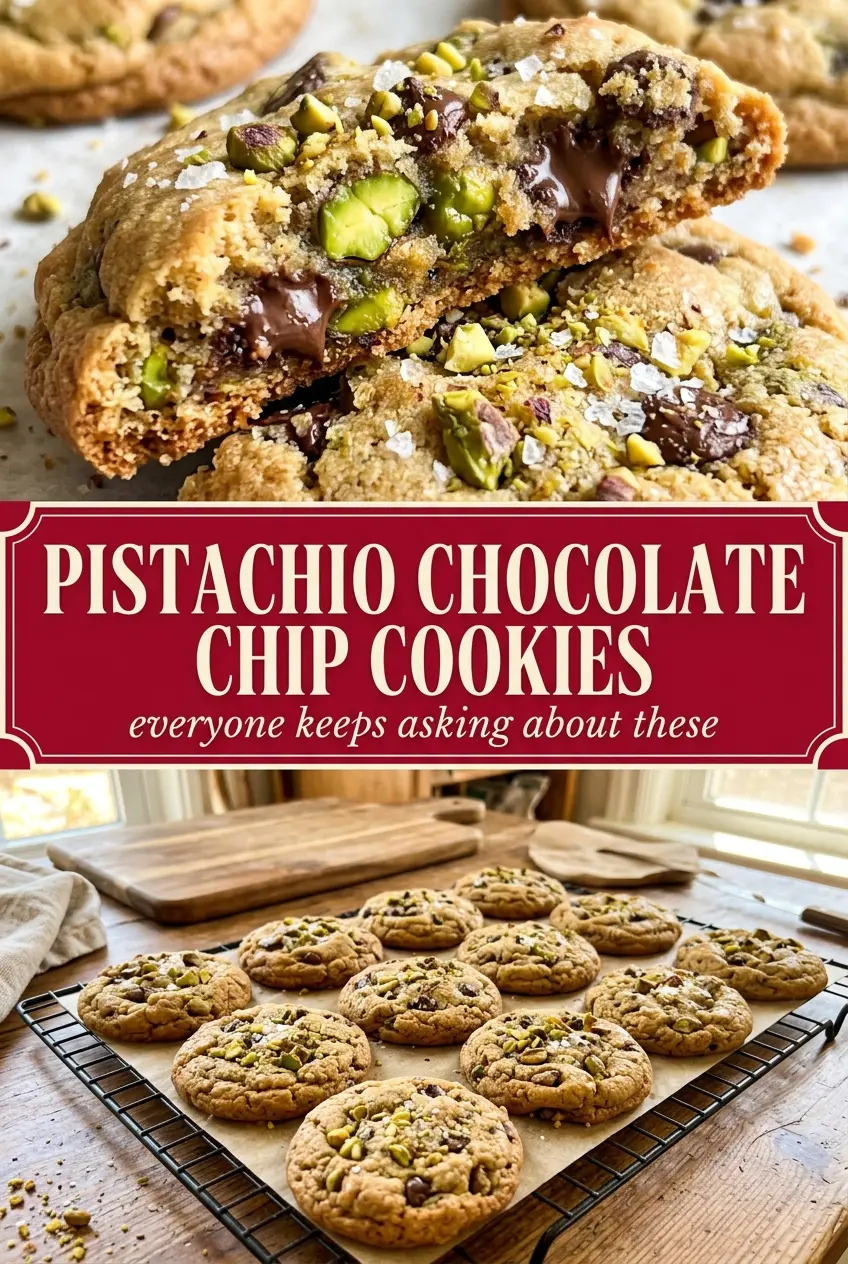
Salted pistachio chocolate chip cookies have that rare bakery-style finish that makes people pause after the first bite. The edges bake up golden and crisp, the centers stay soft and chewy, and the flaky sea salt on top keeps the sweetness in check so every bite tastes balanced instead of heavy. The chopped pistachios bring a nutty crunch that plays perfectly against the melted chocolate, which is exactly why these cookies disappear fast off a cooling rack.
What makes this version work is the contrast. Creaming the butter with both brown sugar and granulated sugar gives you a cookie that spreads just enough without turning thin, while the pistachios add structure and a little savory depth. Chopping them coarsely matters. If they’re too fine, they vanish into the dough and you lose that satisfying bite that makes these cookies special. The flaky salt goes on before baking, not after, so it melts just slightly into the surface and gives you those little bursts of salt in every bite.
Below, I’ll walk through the part that matters most: how to keep the cookies thick in the middle while still getting those crisp, golden edges. I’ve also included a few smart swaps and storage notes so you can bake them now and still enjoy them later without losing the texture.
The pistachios stayed crunchy and the centers baked up soft instead of cakey. I sprinkled a little extra flaky salt on top and my husband said they tasted like something from a bakery.
These salted pistachio chocolate chip cookies bake with crisp edges, chewy centers, and that buttery nutty crunch worth saving for later.
The Hidden Reason These Cookies Stay Thick Instead of Spreading Flat
Most cookies that lean this rich and loaded spread too much because the butter gets too warm or the flour gets overworked. This dough avoids both problems. The butter should be softened, not greasy, and the flour only needs to disappear into the dough. Once you keep mixing after that point, you build gluten and lose the tender center that makes these cookies worth baking.
The other thing working in your favor is the pistachios. They help interrupt the dough just enough that the cookies hold a little more shape, which is why coarse chopping matters. If the nuts are ground too fine, you lose that support and the texture gets muddier. The chocolate chips also matter more than they get credit for: they melt into pockets that help the cookie set with those soft, gooey spots instead of drying out from edge to center.
What Each Ingredient Is Doing in These Cookies
- Butter — Softened butter creams with the sugars to trap air, which gives the cookies lift and a softer bite. If it’s melted, the dough turns greasy and spreads too fast.
- Brown sugar — This brings moisture and a deeper caramel note that keeps the centers chewy. Dark brown sugar works too, but the cookies will taste a little richer and darker.
- Granulated sugar — This is what helps the edges turn crisp. If you swap in all brown sugar, the cookies stay softer but lose that thin, crackly edge.
- Flour — Regular all-purpose flour is the right choice here. Spoon and level it instead of packing it, or the dough gets dry and the cookies bake up dense.
- Eggs — They bind the dough and add structure. Use large eggs, and bring them to room temperature if you can so they mix in smoothly without tightening the butter.
- Chocolate chips — Semi-sweet chips balance the salt and pistachios best, but chopped chocolate works if you want bigger puddles. The cookie will feel a little more rustic and less uniform.
- Pistachios — Use shelled pistachios and chop them coarsely so you still get crunch in every bite. Roasted, salted pistachios can work, but if they’re already heavily salted, cut back a touch on the flaky salt finish.
- Flaky sea salt — This is not garnish. It sharpens the chocolate and keeps the sweetness clean. Fine salt won’t give you the same little bursts on top.
Mixing the Dough Without Losing the Tender Center
Creaming the Butter and Sugars
Beat the butter, brown sugar, and granulated sugar until the mixture looks pale and fluffy, with a texture that sticks lightly to the bowl. That step builds the structure that keeps the cookies from baking into puddles. If the butter is too soft, the mixture will look oily instead of airy, and the cookies will spread before they set.
Adding the Eggs and Vanilla
Beat in the eggs one at a time if you want the smoothest dough, then add the vanilla. The dough should look glossy and slightly thicker once the eggs are fully mixed in. If it looks curdled, the butter was probably too cold or the eggs were too cold, but it usually comes together once the flour goes in.
Folding in the Dry Ingredients
Add the flour and mix only until the last streaks disappear. Stop there. Overmixing at this stage is the fastest way to turn a cookie into a tough one, and you’ll taste it after baking. Fold in the chocolate chips and pistachios by hand so they stay evenly distributed without overworking the dough.
Baking Until the Edges Set
Scoop the dough onto the baking sheet and sprinkle each portion with flaky sea salt before it goes in the oven. Bake until the edges are golden-brown and the centers still look slightly underdone, because they’ll finish setting on the pan. If you wait until the middles look fully baked in the oven, they’ll come out dry once cooled.
How to Adapt These Cookies for Different Kitchens and Different Cravings
Dairy-Free Swap
Use a plant-based butter stick made for baking, not a tub spread. The texture will still be close, though you may get a slightly softer cookie with a less rich finish. Choose one that holds firm when cold so the dough doesn’t spread too much.
Gluten-Free Version
A good 1:1 gluten-free baking flour can work here, especially one with xanthan gum already added. The cookies will be a little more delicate when warm, so let them cool fully on the pan before moving them. That rest helps the structure set.
Swap the Pistachios for Another Nut
Chopped walnuts or pecans work if pistachios aren’t in the pantry. Walnuts give you a more bitter, earthy edge, while pecans lean sweeter and softer. Keep the chop coarse so the nuts stay noticeable in the finished cookie.
Storage and Reheating
- Refrigerator: Store in an airtight container for up to 5 days. They’ll lose a little edge crispness, but the centers stay pleasantly chewy.
- Freezer: These freeze well as baked cookies or portioned dough balls. Freeze the dough on a tray, then move it to a bag so you can bake a few at a time straight from frozen.
- Reheating: Warm baked cookies in a 300°F oven for 3 to 5 minutes or give them 10 seconds in the microwave. Too much heat makes the chocolate greasy and softens the pistachios.
Questions I Get Asked About This Recipe
Salted Pistachio Chocolate Chip Cookies
Ingredients
Equipment
Method
- Preheat the oven to 350°F and set a sheet pan nearby for baking.
- Cream butter, brown sugar, and sugar together until fluffy.
- Beat in eggs and vanilla until the mixture looks smooth and well combined.
- Fold in flour until just combined, then fold in chocolate chips and chopped pistachios.
- Scoop dough onto a baking sheet and sprinkle each portion with flaky sea salt.
- Bake for 11-13 minutes at 350°F until the edges are golden-brown, keeping the centers slightly soft-looking.