
Roasted butternut squash and sausage make a meal that lands on the table looking polished, but the real win is the contrast: tender squash with caramelized edges, savory sausage, and sweet apple pieces that hold their shape instead of melting into mush. The filling is hearty enough to stand on its own, but it tastes best tucked into the squash because the roasted flesh picks up all those drippings and herbs.
What makes this version work is the order. Roasting the squash cut-side down first gives you concentrated flavor and prevents that watery, steamed texture that happens when squash goes straight into a stuffing dish. Browning the sausage with onion and garlic builds the base, then the apples go in just long enough to soften at the edges without turning to sauce. Breadcrumbs finish the mixture by soaking up the pan juices so the filling stays cohesive and easy to mound.
Below, I’ve included the little things that matter here: how to keep the squash tender without collapsing, what to do if your apples are on the tart side, and the freezer trick that makes this a smart make-ahead dinner.
The squash came out tender and the filling held together instead of getting watery. I loved how the apples stayed a little chunky and gave each bite a sweet pop against the sausage.
Keep this apple sausage stuffed butternut squash handy for a hearty roasted dinner that freezes beautifully before the final bake.
The Reason the Squash Roasts Better Cut-Side Down
Butternut squash can go from beautifully caramelized to oddly soggy if it roasts the wrong way. The cut-side-down method puts the flesh in direct contact with the hot pan, which drives off moisture and browns the edges instead of letting the squash steam in its own liquid. That first roast also gives you a softer interior without fully cooking it through, so the second bake finishes the squash right when the filling is ready.
The other trap is overfilling before the squash has enough structure. If you stuff it too early, the halves can collapse or go stringy before the center is tender. Roasting first gives you control: the squash should pierce easily with a knife, but still hold its shape when you turn it over.
What Each Ingredient Is Actually Doing in This Dish
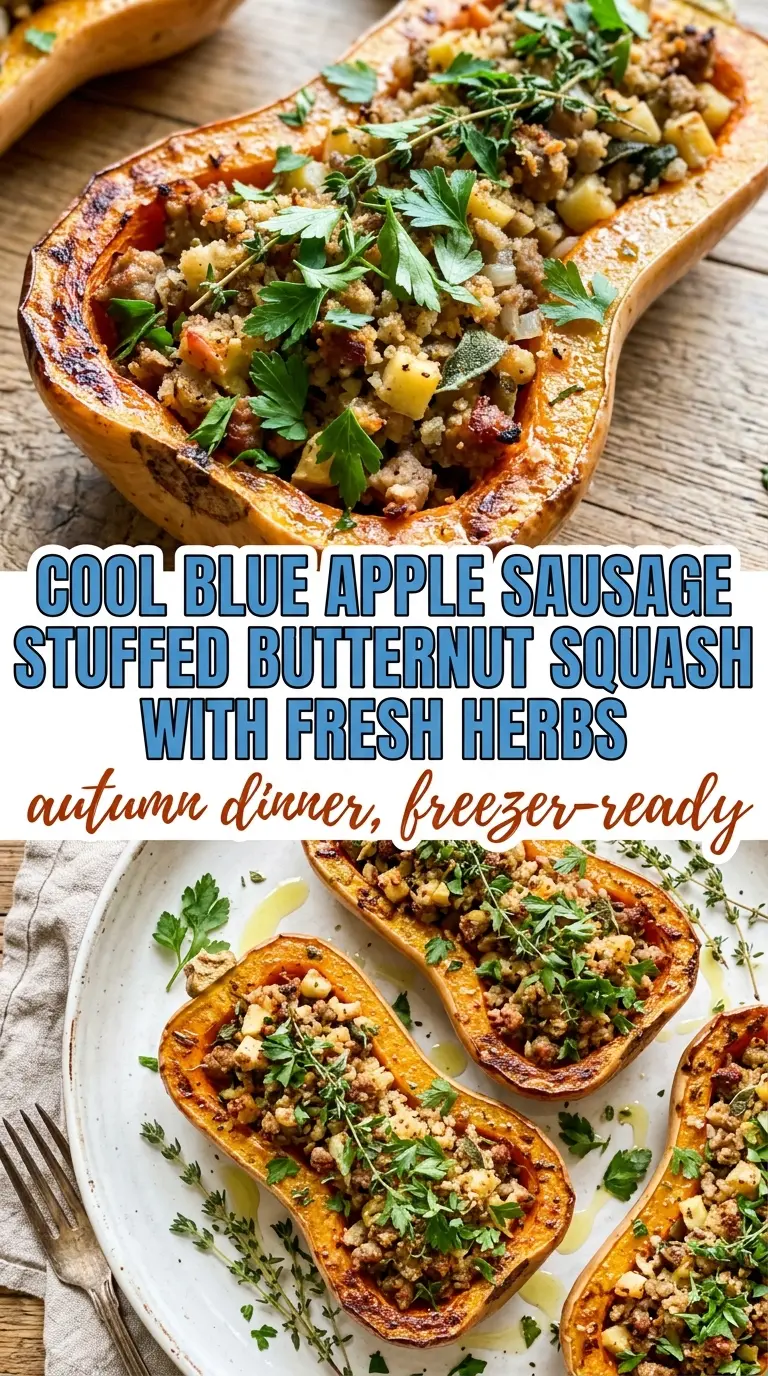
- Butternut squash — This is the edible bowl and the sweet counterpoint to the sausage. Pick squash that feel heavy for their size and have matte skin; shiny ones can be less mature. If you only have one very large squash, cut it into smaller portions and shorten the first roast a bit.
- Italian sausage — This brings salt, fat, and seasoning in one move, which is why it works better here than plain ground meat. Mild or hot both work; hot sausage gives the dish more backbone, while mild keeps the apple flavor front and center. If you need a lighter swap, ground turkey works, but add a little extra olive oil and a pinch of fennel or sage so the filling doesn’t taste flat.
- Apples — Choose a firm, crisp apple that holds shape when cooked. Softer apples turn jammy too fast and blur into the sausage. If your apples run tart, a sweeter variety balances the savoriness better than adding sugar later.
- Fresh thyme and sage — These herbs make the filling taste grounded and autumny without getting heavy. Dried can work in a pinch, but use less because the flavor reads more concentrated; fresh gives a cleaner finish. Chop sage finely so you don’t end up with big chewy leaves in the filling.
- Breadcrumbs — They soak up the sausage drippings and keep the filling from sliding around inside the squash. Plain breadcrumbs are fine, and panko gives a slightly lighter texture. If you need gluten-free, use gluten-free breadcrumbs or crushed rice crackers for the same binding effect.
The 20 Minutes That Turn the Filling Into Dinner
Roasting the Squash First
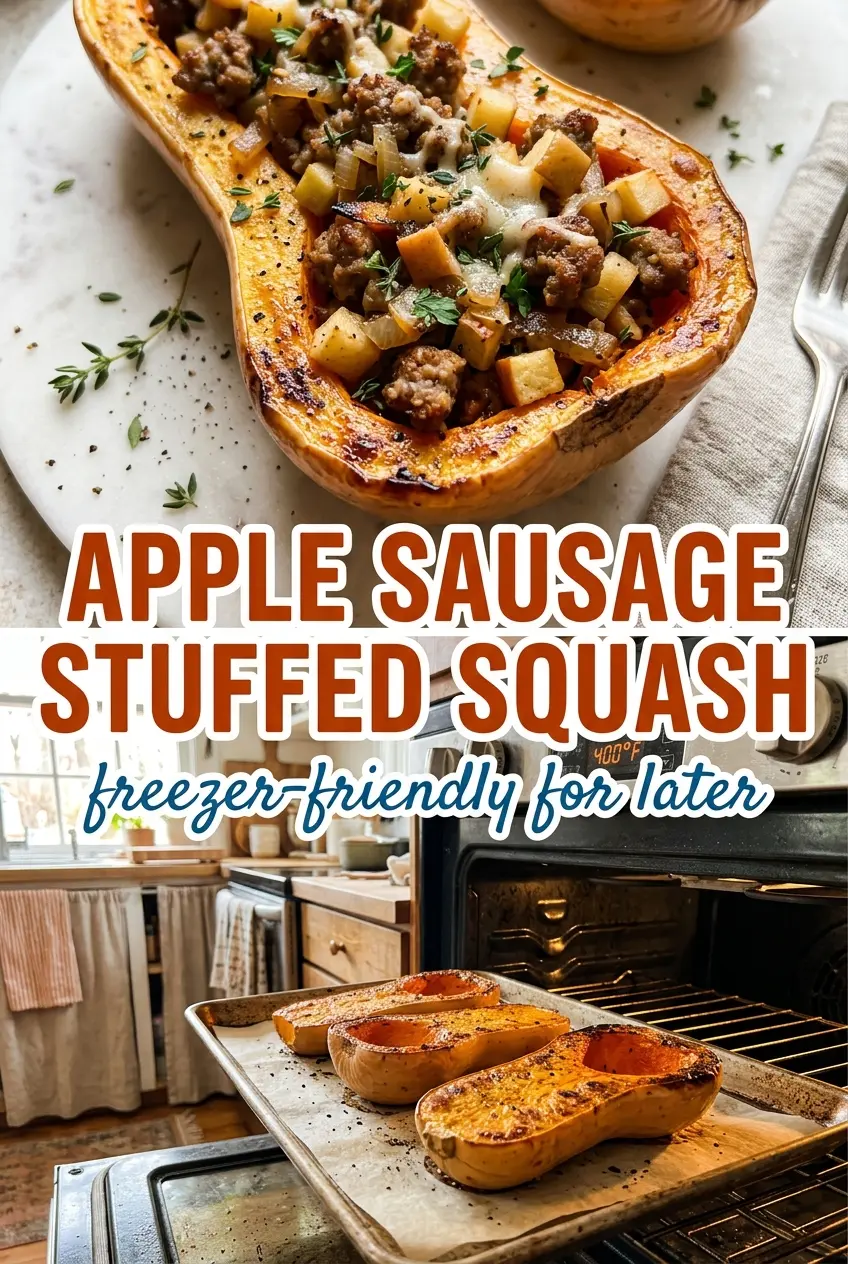
Brush the squash halves with olive oil, season them lightly, and place them cut-side down on the pan. You want the flesh to look slightly browned at the edges and a knife to slide in with little resistance. If the squash is still hard in the thickest part, give it a few more minutes now; under-roasted squash won’t soften enough in the final bake to feel spoon-tender.
Building the Sausage Mixture
Cook the sausage with the onion and garlic until the meat is no longer pink and the onion turns translucent and sweet. Break the sausage into small pieces as it cooks so the filling sits evenly in the squash halves instead of clumping into one dense layer. Add the apples near the end and cook just until they lose their raw edge; they should soften but still keep a little bite.
Bringing It All Together
Stir in the breadcrumbs, then taste the filling before it goes into the squash. The sausage may already be salty enough, so season gradually. Flip the squash cut-side up, mound in the filling generously, and bake until the tops turn lightly golden and the squash yields easily when pierced through the side.
How to Adapt It When You Need a Different Version
Make it dairy-free without changing the texture
This recipe already lands naturally dairy-free as written, which is part of why it feels so satisfying without extra richness. If you want more depth, use a sausage with good fat content and don’t skip the first roast on the squash, since that caramelization does the work dairy would usually do in a casserole.
Swap in vegetarian filling
Use a plant-based sausage or a mix of sautéed mushrooms and walnuts if you want something vegetarian. You’ll lose some of the built-in seasoning from pork sausage, so add extra thyme, sage, and a good pinch of salt. The result is a little lighter and less rich, but still sturdy enough to pack into the squash.
Use a different apple depending on what you like
Tart apples give the filling more brightness, while sweeter apples make the dish feel rounder and more mellow. Just keep the pieces firm and diced small enough to cook through in the skillet without falling apart. Soft apples will disappear into the sausage instead of giving you those little sweet pockets in each bite.
Storage and Reheating
- Refrigerator: Store leftovers in an airtight container for up to 4 days. The squash softens a little more as it sits, but the flavor holds up well.
- Freezer: This freezes well before the final bake. Assemble the stuffed squash, wrap tightly, and freeze; bake from frozen with extra time until the center is hot and the squash is tender.
- Reheating: Reheat covered in a 350°F oven until warmed through. The biggest mistake is microwaving it uncovered, which dries out the sausage and makes the squash rubbery before the middle heats up.
Answers to the Questions Worth Asking
Apple Sausage Stuffed Butternut Squash
Ingredients
Equipment
Method
- Preheat the oven to 400°F. Brush the squash halves with olive oil and roast them cut-side down for 25 minutes, until slightly caramelized at the edges and just starting to soften.
- Brown the sausage with the onion and garlic in a skillet over medium-high heat, breaking it up as it cooks until no longer pink. Stir occasionally so the bits color evenly.
- Stir in the diced apples, thyme, and sage, then cook for 5 minutes until the apples soften slightly and release some juices. Keep the mixture moving so the herbs distribute.
- Mix in the breadcrumbs and season with salt and pepper. Cook for 1 more minute so the breadcrumbs lightly toast and thicken the filling.
- Flip the roasted squash halves and fill generously with the sausage mixture. Press the filling in so it sits level and reaches the scooped center.
- Bake for 15-20 more minutes at 400°F until the filling is golden and the squash is tender. Look for bubbling edges and a fork-tender squash interior.