
Smoky sausage, caramelized apples, and tender sweet potatoes all on one pan is the kind of dinner that lands hard after a long day. The sausage gives you salty, browned edges, the apples soften just enough to turn jammy without collapsing, and the sweet potatoes pick up the paprika and thyme while they roast. It’s the kind of tray bake that tastes like it took more effort than it did.
What makes this version work is the timing. Sweet potatoes need a head start, or they’ll stay firm while everything else goes soft. Adding the sausage and apples later keeps the apples from turning to mush and gives the sausage time to brown instead of just warming through. A tart apple matters here, too, because it cuts through the richness and keeps each bite balanced.
Below, I’ve laid out the roasting order that keeps the pan from getting crowded and soggy, plus a few smart swaps if you want to adjust the sausage, herbs, or vegetables without losing the point of the dish.
The sweet potatoes got tender without falling apart, and the apples stayed in little caramelized wedges instead of turning mushy. I also loved that the sausage browned on the pan instead of steaming.
Save this sheet pan sausage with apples and sweet potatoes for a one-pan dinner with crisp edges, tender vegetables, and a sweet-savory finish.
The Real Reason the Sweet Potatoes Go in First
The most common mistake in sheet pan dinners like this is trying to roast everything at the same pace. Sweet potatoes are dense, and if they go in at the same time as the sausage and apples, they usually come out either underdone or the rest of the pan gets overcooked while you wait for them to catch up. Giving them a 15-minute head start solves that problem without extra effort.
This timing also protects the apples. They only need long enough to soften and pick up some color around the edges. If they roast from the beginning, they lose their shape and turn watery, which makes the whole pan look and taste flat. Staggering the ingredients keeps every part of the dish doing what it’s supposed to do: the sausage browns, the sweet potatoes turn tender, and the apples stay intact.
The other thing worth paying attention to is space. A crowded sheet pan steams food instead of roasting it. If your pan is packed tight, use two pans or roast in batches. That’s the difference between caramelized edges and a tray of soft vegetables.
What Each Ingredient Is Actually Doing in This Dish
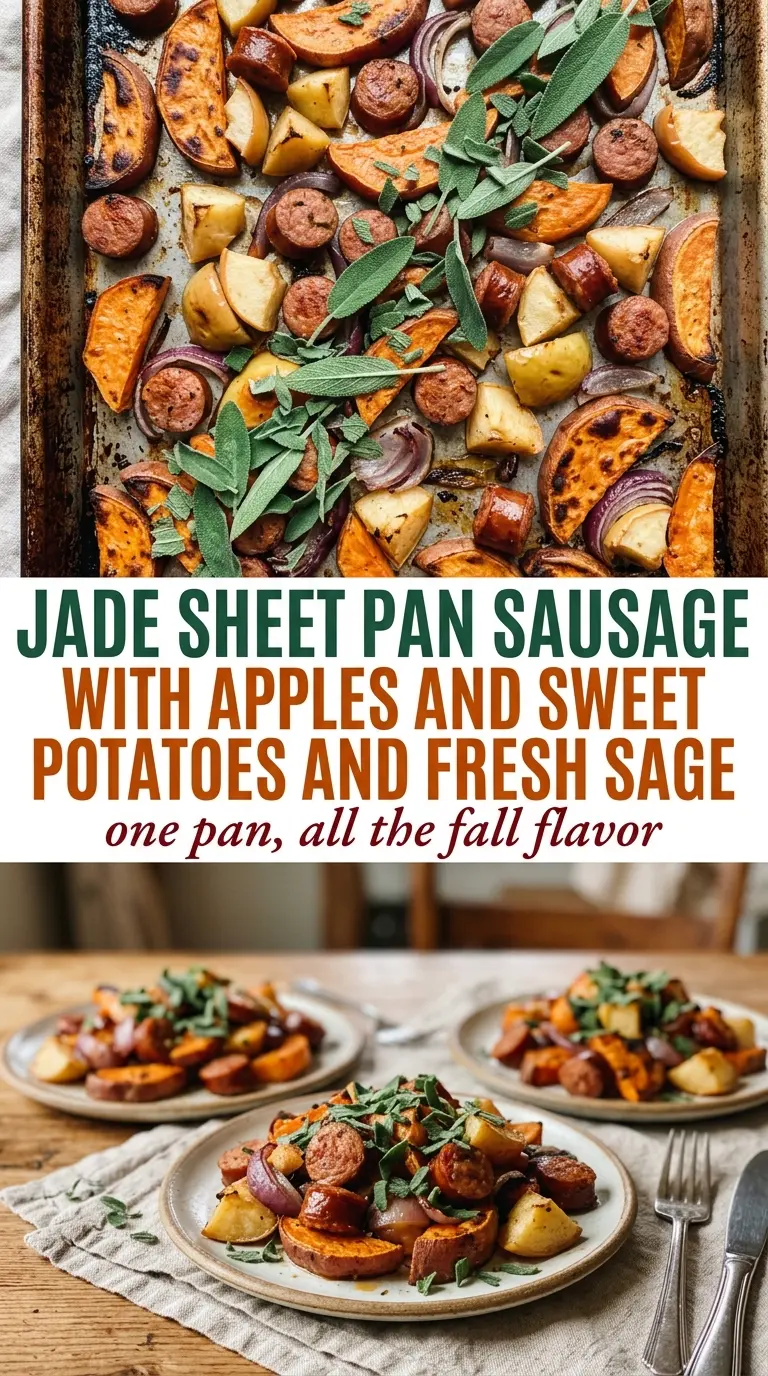
- Smoked sausage — This brings the salt, fat, and browned flavor that carry the whole pan. A fully cooked smoked sausage works best because it crisps at the edges without drying out. Kielbasa, andouille, or chicken sausage all work; just choose one with enough seasoning to stand up to the apples.
- Sweet potatoes — These need the head start because they’re the slowest item on the pan. Cut them into even cubes so they finish at the same time, and don’t go too small or they’ll collapse before the sausage has browned. If you only have regular potatoes, use them, but expect a less sweet, less tender result.
- Apples — Tart apples like Granny Smith hold their shape and keep the dish from tasting too sweet. Softer apples will break down faster and give you more of a sauce-like finish, which can be nice, but you lose the clean wedges. Core them and cut them into thick wedges so they roast instead of vanish.
- Fresh sage — This is the finishing note that makes the pan taste intentional. It’s added at the end so it stays fragrant instead of turning dull and bitter in the oven. If you only have dried sage, use less and add it with the oil at the beginning, but the flavor will be heavier and less fresh.
- Smoked paprika and thyme — Paprika deepens the sausage flavor, and thyme bridges the sweet potatoes and apples without making the dish taste like dessert. These are small ingredients, but they’re doing a lot of work. If your paprika is old and faded, replace it; stale paprika tastes dusty instead of smoky.
Roasting the Pan in the Right Order
Season the Sweet Potatoes First
Toss the sweet potato cubes with olive oil, smoked paprika, thyme, salt, and pepper before they hit the pan. This coats every surface and helps them brown instead of drying out at the edges. Spread them in a single layer so they can roast, not pile up and steam. If they’re touching in thick mounds, the centers soften late and the outside can turn leathery.
Give the Potatoes a Head Start
Roast the sweet potatoes for 15 minutes before adding anything else. That first stretch starts the browning and gets the starches moving so they finish tender by the end. When you pull the pan out, the edges should be starting to color and the bottoms should release cleanly from the parchment. If they’re still pale and firm, give them a few more minutes before moving on.
Add the Sausage, Apples, and Onion Together
Toss the sausage, apple wedges, and red onion with the remaining olive oil, then add them to the pan. Keep the pieces fairly large so they hold their shape during the second roast. The sausage should sit against the pan in some spots so it browns; if everything is buried under the vegetables, you’ll lose those crisp edges. Stir once if needed, but don’t keep tossing or the apples will break.
Finish Until the Edges Caramelize
Roast for about 20 more minutes, until the sausage is browned and the vegetables are tender all the way through. You’re looking for softened sweet potatoes, onions with browned edges, and apples that are tender but still wedge-shaped. If the pan looks dry, a light drizzle of olive oil helps, but usually the sausage renders enough fat to finish the job. Toss with the chopped sage while everything is still hot so the herb perfumes the whole dish.
How to Adapt This for Different Kitchens and Diets
Make It Dairy-Free Without Changing the Dish
This recipe is already dairy-free as written, which is part of why it works so well for a weeknight dinner. The olive oil and the sausage fat give you enough richness that you don’t miss butter or cream. If you’re buying sausage, check the label for hidden dairy in the seasoning blend, especially with specialty flavors.
Swap the Sausage for Chicken Sausage or Turkey Kielbasa
A lighter sausage keeps the dish less rich, but it still needs to be fully cooked before it goes into the oven. Chicken sausage won’t render as much fat, so the pan may need a little extra oil to keep the edges from drying out. You’ll get a cleaner, leaner finish with the same sweet-savory balance.
Use Pears Instead of Apples
Firm pears can stand in for apples if that’s what you have, but they’ll soften faster and taste a little milder. That means the dish leans sweeter and less tart, so a squeeze of lemon at the end helps sharpen it back up. Choose pears that are just barely ripe, not soft to the touch.
Storage and Reheating
- Refrigerator: Store leftovers in an airtight container for up to 4 days. The apples will soften a bit more, but the flavor holds up well.
- Freezer: It freezes, but the apples and sweet potatoes lose some texture after thawing. If you do freeze it, cool it completely first and thaw overnight in the fridge.
- Reheating: Reheat on a sheet pan at 375°F until hot, about 10 to 15 minutes. The oven keeps the sausage from getting rubbery, while the microwave tends to make the apples collapse and the sweet potatoes turn watery.
Questions I Get Asked About This Recipe

Sheet Pan Sausage With Apples And Sweet Potatoes
Ingredients
Equipment
Method
- Preheat oven to 425°F and line a sheet pan with parchment, then set aside the pan for immediate use.
- Toss sweet potato cubes with 2 tbsp olive oil, smoked paprika, dried thyme, salt, and pepper, then spread them on the pan in an even layer.
- Roast at 425°F for 15 minutes so the sweet potatoes begin to tenderize before adding the other ingredients.
- Add the sliced smoked sausage, apple wedges, and red onion to the pan, then toss with the remaining 1 tbsp olive oil.
- Roast at 425°F for 20 more minutes, until the sausage is browned and the vegetables are tender.
- Toss everything with the chopped fresh sage right before serving so the herb stays fragrant and green.