
Golden chicken, tender tortellini, and sweet butternut squash all in one creamy skillet is the kind of dinner that disappears fast and leaves the pan scraped clean. The squash gives the sauce a gentle sweetness, the sage keeps it grounded, and the spinach folds in at the end so the whole dish still tastes fresh, not heavy. It lands somewhere between cozy and bright, which is exactly why it earns a repeat spot.
The trick is treating the squash like an ingredient that needs its own head start, not something you toss in and hope for the best. Small cubes cook through quickly and hold their shape beside the tortellini, while the chicken gets browned first so the pan picks up those savory bits that deepen the sauce. The cream and broth simmer together just long enough to thicken slightly before the pasta goes in, which keeps the tortellini from turning mushy.
Below, I walk through the parts that matter most: how small to cut the squash, when to add the tortellini, and what to do if the sauce tightens up before you’re ready to serve.
I was worried the squash would fall apart, but cutting it small was the key. The sauce came together silky, the tortellini stayed tender, and even my picky eater asked for seconds.
Save this creamy chicken tortellini with butternut squash for the nights when you want one pan, tender pasta, and a sage-kissed sauce that tastes like more work than it is.
The Reason the Squash Needs Its Own Head Start
Butternut squash is the ingredient that can make this dish feel plush and balanced or underdone and awkward. If the cubes are too big, they’ll still be firm when the tortellini is ready. If you rush the skillet, the squash steams in the broth instead of softening enough to melt into the sauce. The goal is tender edges and a creamy interior that holds its shape when you stir everything together.
Brown the chicken first, then use the same skillet for the squash. That keeps the flavor built in layers instead of starting over in a clean pan. The sage goes in after the garlic so it has a chance to bloom in the fat without burning. Once the broth and cream hit the pan, the squash should already be close to tender so the sauce can finish around it instead of waiting on it.
What Each Ingredient Is Actually Doing in This Skillet
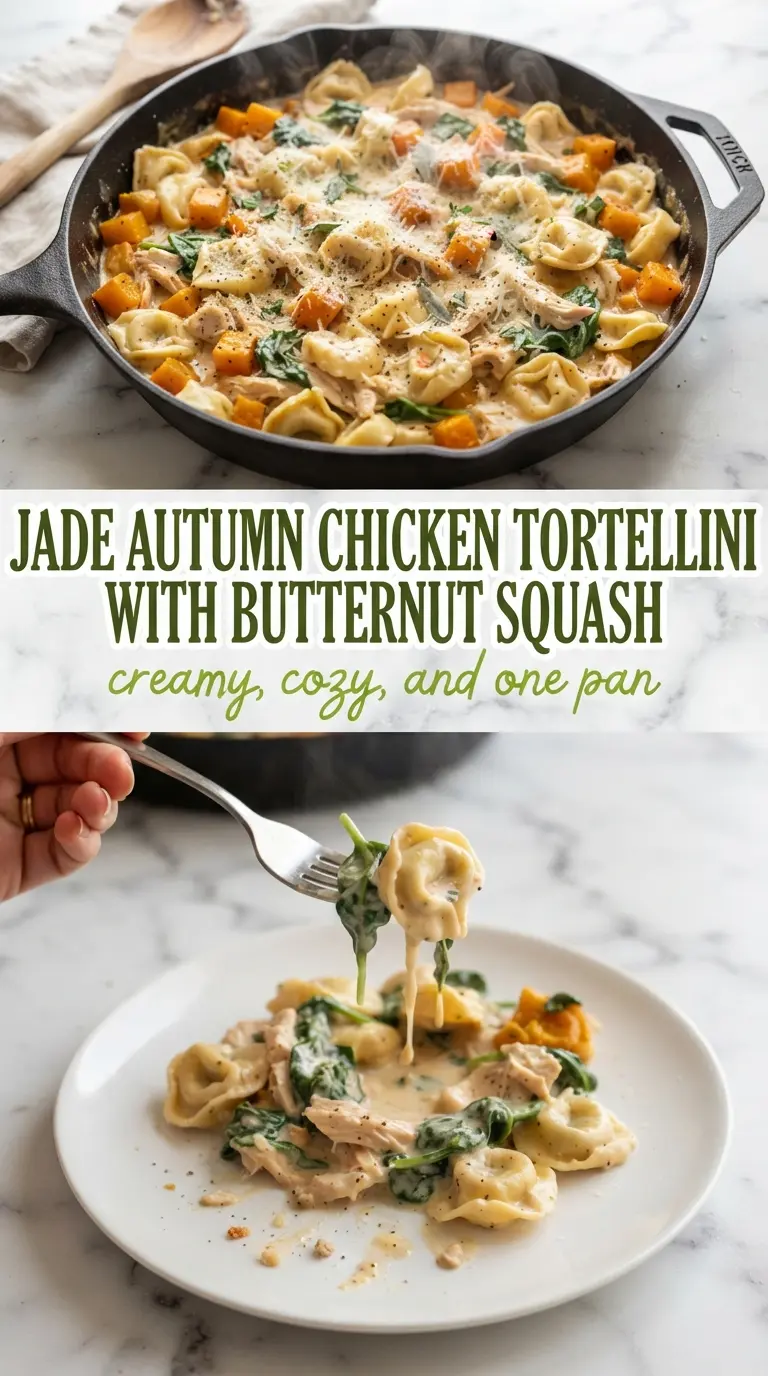
- Chicken breast — Diced chicken cooks quickly and stays tender if you brown it hard enough to get color, then pull it out before it overcooks. Thigh meat works too and gives you a little more richness, but breast keeps the dish lighter and easier to balance with the cream.
- Butternut squash — This is the piece that gives the sauce its sweet, earthy backbone. Cut it small, about 1/2-inch cubes, so it cooks in the same window as the pasta; larger chunks need a longer simmer and can throw off the timing.
- Refrigerated cheese tortellini — Fresh tortellini is worth using here because it cooks in minutes and stays plush in the sauce. Dried tortellini can work, but you’ll need to extend the simmer and add more broth so the pan doesn’t dry out before the pasta softens.
- Heavy cream — Cream smooths the broth and turns the skillet drippings into an actual sauce. Half-and-half will give you a thinner result and is more likely to look broken if you boil it hard, so keep the heat gentle if you swap it in.
- Parmesan — Parmesan adds salt, body, and that savory finish that keeps the dish from tasting sweet. Grate it finely so it melts in cleanly; pre-shredded cheese can leave the sauce grainy.
- Baby spinach — Spinach doesn’t need cooking so much as collapsing. Stir it in at the end so it wilts just enough to soften without turning the sauce muddy green.
Getting the Pan in the Right Order
Brown the Chicken First
Heat the olive oil until it shimmers, then add the chicken in a single layer. Let it sit long enough to develop real color before stirring; pale chicken leaves the whole dish flatter. You’re not cooking it through at this stage, just building flavor and getting the pan ready for the sauce. Pull it out once the outside is browned so it doesn’t dry out while the squash cooks.
Soften the Squash Before the Sauce Goes In
Add the squash to the same skillet and let it cook until the edges look glossy and the cubes give a fork little resistance. If the pieces are too big, they’ll still taste starchy when the tortellini is done. A small dice matters here because the pasta only needs a short simmer, and the squash has to keep pace. Stir often enough to prevent sticking, but not so much that the cubes break apart.
Build the Cream Sauce Gently
Once the garlic and sage hit the hot pan, they should smell fragrant within seconds. Pour in the broth and cream, then lower the heat so the mixture simmers softly instead of boiling hard. Hard bubbling can split the cream and make the sauce look greasy. You want a light simmer that thickens just enough to coat a spoon.
Finish With Pasta, Chicken, and Greens
Stir in the tortellini and let it cook until the pasta is tender and the sauce clings to the edges. Add the chicken back once the pasta is nearly done so it warms through without tightening up. The spinach and Parmesan go in at the very end, off the strongest heat, so the greens wilt and the cheese melts smoothly instead of clumping.
How to Adapt This for a Lighter, Gluten-Free, or Bigger-Batch Dinner
Make it gluten-free with GF tortellini
Use a gluten-free refrigerated tortellini if you can find one, then watch the pot closely because the cooking time can be shorter and the texture can go from tender to gummy fast. If the pasta you buy is more delicate, add it at the very end and stir gently so it doesn’t split apart in the sauce.
Swap in chicken thighs for a richer skillet
Boneless thighs stay juicier than breast meat and give the sauce a deeper, slightly richer taste. They need just a little longer to brown, but the payoff is chicken that stays tender even if the pan sits for a few minutes before serving.
Lighten it with half-and-half instead of cream
Half-and-half works if you want a thinner sauce, but keep the heat low and don’t let it boil hard or it can separate. The result will taste a little less plush, which is fine if you want the squash and sage to stay more pronounced.
Storage and Reheating
- Refrigerator: Store leftovers in an airtight container for up to 3 days. The tortellini will keep absorbing sauce, so it gets thicker by the next day.
- Freezer: I don’t recommend freezing this one. Cream sauces and stuffed pasta both lose their texture after thawing, and the squash gets watery.
- Reheating: Warm it slowly in a skillet over low heat with a splash of broth or cream to loosen the sauce. High heat is the mistake here — it can make the cream split and turn the tortellini tough.
Answers to the Questions Worth Asking

Autumn Chicken Tortellini with Butternut Squash
Ingredients
Equipment
Method
- Heat the cast iron skillet over medium-high heat and add the olive oil. Brown the chicken breast, diced for 3-4 minutes until golden, then transfer to a plate.
- In the same skillet, cook the butternut squash for 8 minutes over medium heat until tender. Stir occasionally so the cubes cook through and pick up light browning.
- Add the garlic cloves, minced and dried sage and cook for 30-60 seconds until fragrant. Pour in the chicken broth and heavy cream, then bring to a gentle simmer.
- Add the refrigerated cheese tortellini to the skillet and simmer for 5 minutes until the pasta is tender. Watch for small bubbling at the edges and a slightly thickened sauce.
- Return the chicken to the skillet, then stir in the baby spinach until wilted, about 1-2 minutes. Sprinkle in grated Parmesan and season with Salt and pepper, to taste, stirring until the sauce looks glossy.