
Baked peaches turn jammy at the edges, keep their shape in the center, and fill the kitchen with butter, brown sugar, and warm spice. The little trick here is that the peaches roast cut-side up, so the juices pool in the cavities instead of running away, and the fruit softens without collapsing into mush. If you’ve ever baked peaches that went watery or bland, this version fixes both problems with a simple, smart pan setup.
Brown sugar melts into the butter and peach juice, then the cinnamon and cardamom get carried through every bite instead of sitting on the surface. Cardamom is the note that makes people pause for a second and ask what’s different. It doesn’t shout; it lifts the fruit and gives the whole dessert a warmer, more fragrant finish than cinnamon alone.
Below, I’ve included the one pan detail that keeps the peaches from sticking, plus a few ways to change the topping depending on what you have on hand. The graham cracker option gives you a crisp, sweet crust right in the baking dish, which is one of those small things that makes the whole dessert feel finished.
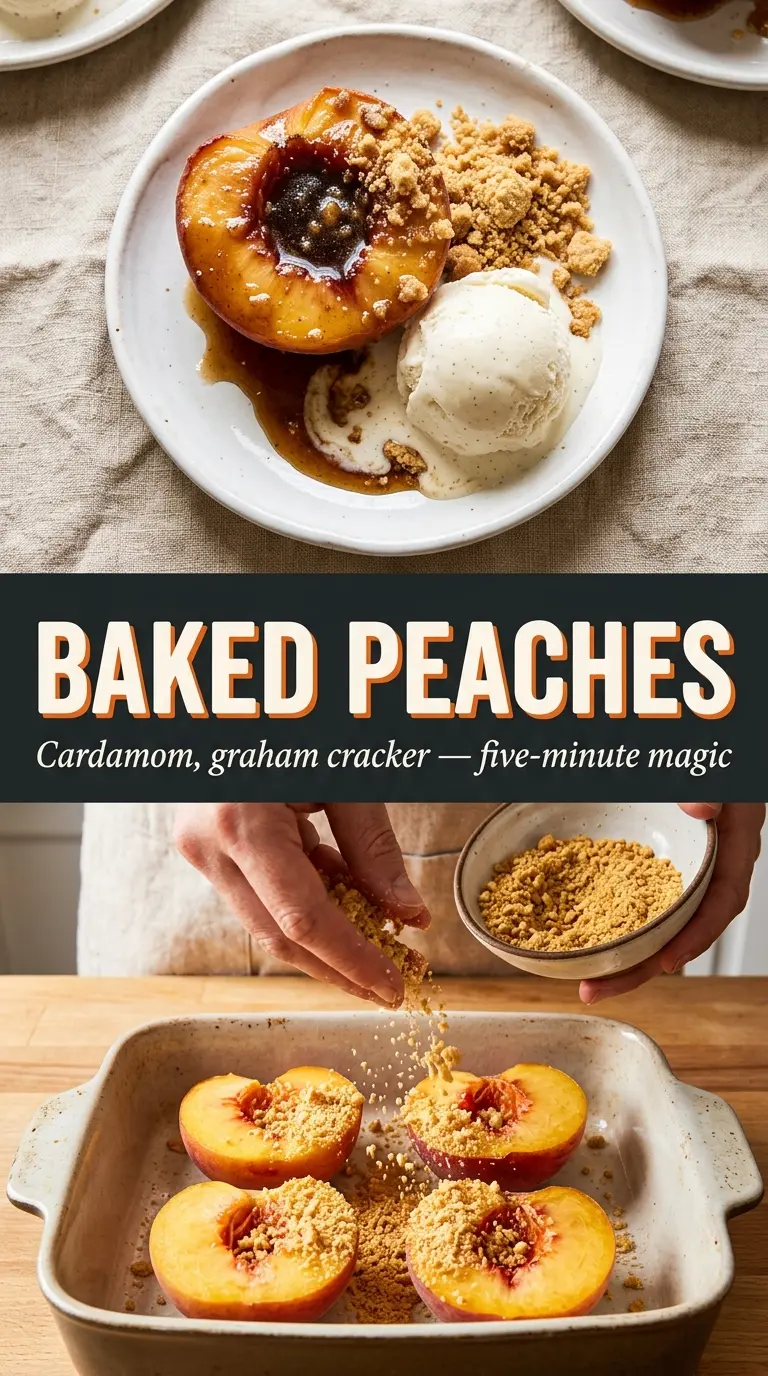
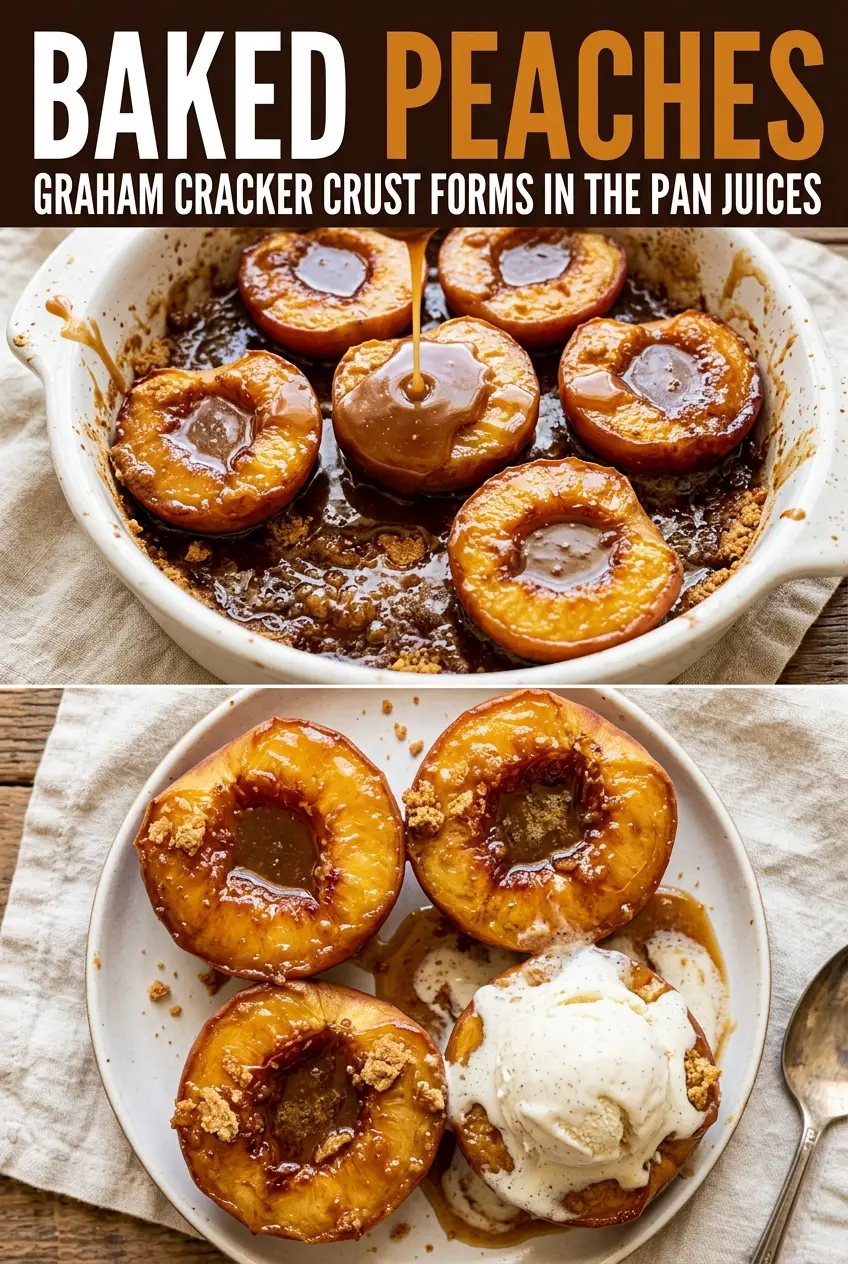
The peaches went soft and syrupy but still held their shape, and the graham cracker bits at the bottom turned into this sweet little crust in the pan juices. I served it with vanilla ice cream and my husband asked if we could make it again the next night.
Save these cardamom baked peaches for the nights when you want a five-minute dessert with caramelized edges and a crisp graham cracker finish.
The Reason Baked Peaches Stay Juicy Instead of Turning to Mush
The biggest mistake with baked peaches is overbaking them until the fruit slumps and the juices turn thin. Peaches need just enough heat to soften, concentrate, and caramelize at the edges. Past that point, they lose their shape and start tasting cooked out instead of fruit-forward.
Cut-side up is doing a lot of work here. It keeps the butter-sugar mixture in contact with the fruit, lets the filling melt into the centers, and holds the juices in the peach halves so they baste themselves in the oven. The graham crackers, if you use them, don’t need to blanket the peaches; scattered around the pan, they soak up those juices and turn into a crisp, sweet layer underneath and around the fruit.
What Each Ingredient Is Actually Doing in This Dish
- Ripe peaches — Use peaches that give slightly at the stem end but still feel intact. Hard peaches stay firm and bland, while overripe ones collapse too fast and make the pan watery.
- Brown sugar — This melts into the peach juices and creates the syrupy base. Light or dark brown sugar both work; dark brown gives a deeper molasses note.
- Cardamom — This is the ingredient that makes the dessert taste layered instead of one-note. Ground cardamom is strong, so stick to the measured amount unless you want it to take over the peaches.
- Graham crackers — Optional, but they change the texture in the best way. They bake into a crisp topping where they catch the butter and juice, almost like a tiny peach crisp without the extra bowl.
- Vanilla ice cream — Cold ice cream against hot peaches is the payoff. It also softens the sweetness so the spices come through more clearly.
How to Roast the Peaches So the Edges Caramelize Before the Centers Collapse
Setting Up the Pan
Arrange the peach halves cut-side up in a baking dish with enough room for the juices to collect around them. A snug pan is fine; you want the fruit close enough to share that caramel-butter syrup, not so crowded that it steams. Drop the butter, sugar, spices, vanilla, and salt right into the cavities so they melt from the inside out. If the peaches are rocking around in the dish, trim a thin slice from the rounded bottom so they sit flat.
Adding the Graham Cracker Layer
If you’re using graham crackers, scatter the crumbs around the peaches rather than piling them on top. That placement is what turns them into a crust instead of a soggy blanket. They soak up the bubbling juices on the pan floor and crisp at the edges where the heat is strongest. If you dump them into the peach cavities, they’ll disappear into the filling and lose the texture that makes this variation worth doing.
Watching for the Finish
Bake at 375°F until the peach edges look slightly shriveled, the centers are tender when pierced, and the juices are actively bubbling. The pan should smell like caramel and warm spice before the peaches are fully done. If the fruit still feels firm in the center, give it a few more minutes, but stop once the halves can be lifted without falling apart. They should hold their shape on the spoon while still yielding easily at the bite.
Dairy-Free Version
Swap the butter for coconut oil or a plant-based butter that melts cleanly. Coconut oil adds a faint tropical note that works well with peaches, while a neutral dairy-free butter keeps the flavor closer to the original. The texture stays glossy as long as you use enough fat to help the sugar dissolve into the fruit.
Without Graham Crackers
Leave them out and the peaches turn into a cleaner, softer dessert with more emphasis on the syrup in the pan. You’ll still get caramelized fruit and spiced juices, just without the crisp crumbs underneath. A handful of chopped pecans or sliced almonds can stand in if you want a little crunch.
More Citrus, Less Sweet
Add a little lemon zest to the filling if your peaches are especially sweet or one-note. The zest sharpens the fruit and keeps the dessert from leaning too far into syrupy territory. A small squeeze of lemon juice works too, but use it lightly so you don’t thin out the pan juices.
Storage and Reheating
- Refrigerator: Store leftovers in an airtight container for up to 3 days. The peaches soften more as they sit, and the crumb topping loses some crunch.
- Freezer: Freezing isn’t ideal. The fruit turns soft and watery after thawing, and the graham cracker layer won’t stay crisp.
- Reheating: Warm the peaches in a 300°F oven until just heated through, about 8 to 10 minutes. The microwave works in a pinch, but it pushes the fruit past that tender stage and can make the topping soggy.
Answers to the Questions Worth Asking
Baked Peaches
Ingredients
Equipment
Method
- Preheat oven to 375°F and set a sheet pan inside for easier hot-oven baking. Place peach halves cut-side up in a baking dish.
- Fill each peach cavity with cubed unsalted butter, brown sugar, cinnamon, cardamom, vanilla, and a pinch of salt. Keep the filling mounded so it caramelizes as the juices bubble.
- Scatter crushed graham crackers around the peaches if using. This helps the crumbs bake into a crisp, sweet crust in the pan juices.
- Bake 20-25 minutes at 375°F until peach edges caramelize and the juices bubble, with the graham cracker turning crust-like around the fruit. Let it set for 2 minutes so the juices thicken slightly.
- Serve immediately with vanilla ice cream. Spoon the warm caramel-butter juices over the peaches right before eating.