
Crisp lettuce cups and a glossy, savory-sweet chicken filling are what make these P.F. Chang’s chicken lettuce wraps worth keeping in the regular dinner rotation. The filling clings to every bite without getting soupy, the water chestnuts stay pleasantly crunchy, and the cool lettuce keeps the whole thing light enough that you don’t feel weighed down after a plateful. It tastes like takeout, but it lands fresher and cleaner on the table.
The trick is building enough flavor in the skillet before the sauce goes in. Garlic and ginger need that quick sizzle in sesame oil first, and the chicken has to brown a little instead of steaming in its own juices. Once the hoisin, soy sauce, and vinegar hit the pan, they turn into a glossy coating instead of a thin sauce, which is what you want for stuffing lettuce cups.
Below, you’ll find the one small timing detail that keeps the lettuce crisp, plus the easiest swap if you want a softer wrap or a little heat. The rest of it is straightforward, and that’s exactly why this recipe works so well on a busy night.
The sauce thickened up perfectly and the water chestnuts stayed crunchy, which made the filling taste just like the restaurant version. I used butter lettuce and it held together better than I expected.
Love these glossy chicken lettuce wraps? Save them to Pinterest for the nights when you want takeout flavor, crunchy lettuce, and a fast skillet dinner.
The Trick to Keeping the Filling Glossy Instead of Watery
The filling for lettuce wraps can go sideways fast if the pan is crowded or the sauce goes in before the chicken has lost some moisture. Ground chicken releases liquid as it cooks, and if that liquid pools in the skillet, the hoisin and soy sauce just thin out instead of coating the meat. Give the chicken a minute here and there to brown against the pan, and you get deeper flavor plus a filling that actually stays put in the lettuce.
Water chestnuts are not an optional crunchy garnish in this recipe; they’re the texture that keeps each bite interesting. Without them, the filling eats soft all the way through. The green onions do double duty too, adding freshness at the end so the sauce doesn’t taste flat or heavy.
What Each Ingredient Is Actually Doing in These Wraps
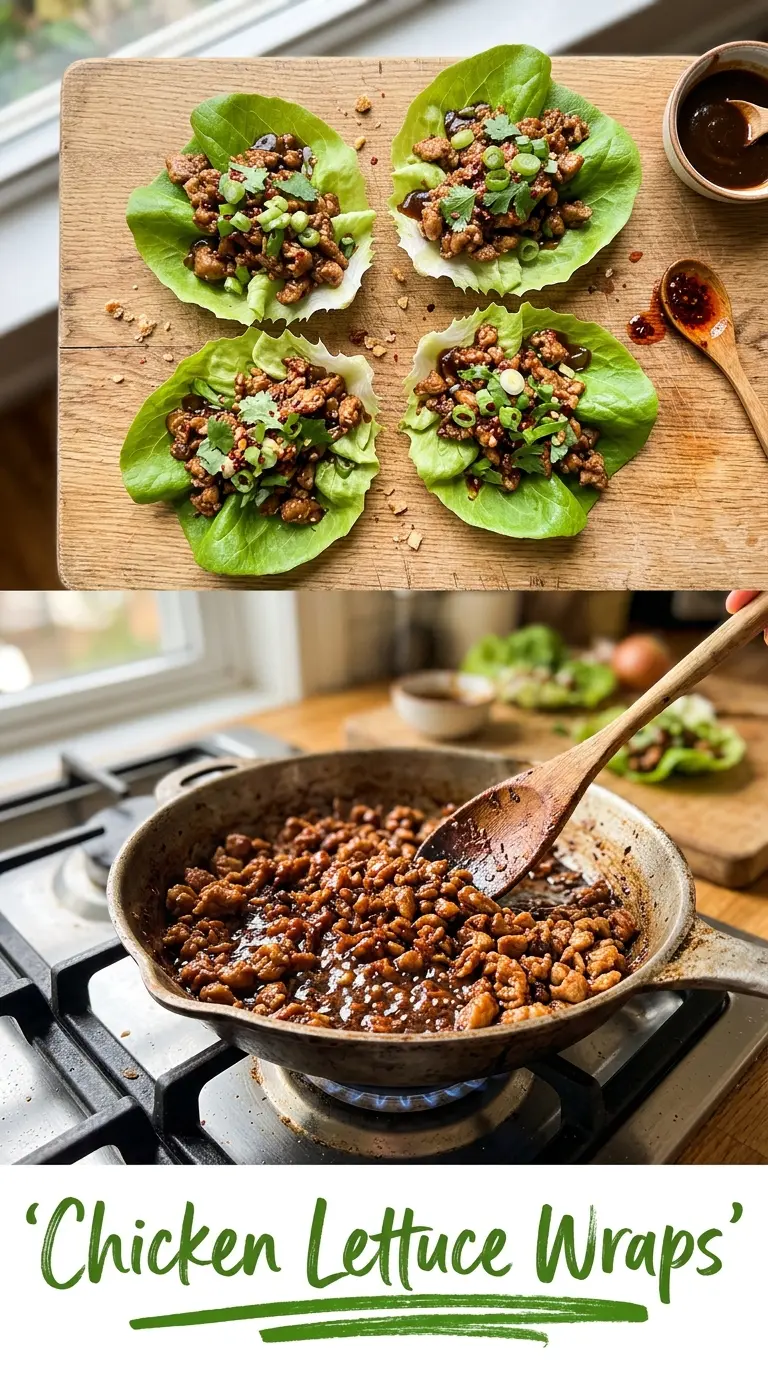
- Ground chicken — This is the base that soaks up the sauce and stays tender when cooked over medium-high heat. Ground turkey works in a pinch, but it tastes a little leaner and benefits from an extra splash of sesame oil.
- Sesame oil — A little goes a long way here. It gives the filling that toasted, restaurant-style aroma that neutral oil can’t replace.
- Hoisin sauce — This is the sweetness and body in the glaze. There’s no exact substitute, but a mix of barbecue sauce and a little soy can mimic the thickness if that’s what you have.
- Soy sauce — It sharpens the sweetness and seasons the chicken all the way through. Low-sodium soy works well if you want more control over saltiness.
- Rice wine vinegar — This keeps the filling from tasting sticky or one-note. If you skip it, the sauce loses the little bit of lift that makes the wraps taste fresh.
- Water chestnuts — These are the crunch in every bite. Dice them small so they disperse evenly and don’t fall out of the lettuce cups.
- Iceberg or butter lettuce — Iceberg gives the best snap, while butter lettuce bends more easily and is less likely to split. Use the leaves that form natural cups and pat them dry so the filling doesn’t slide around.
- Ginger and garlic — They need a fast sauté in the oil before the chicken goes in. That short step takes away their raw edge and gives the whole pan a deeper, sweeter base.
Building the Filling So It Tastes Like Takeout, Not Stir-Fry Soup
Starting with the Aromatics
Heat the sesame oil first, then add the garlic and ginger for just about a minute. You want them fragrant, not browned, because burnt garlic turns bitter fast and can take over the whole pan. The smell will shift from sharp to warm and nutty when they’re ready for the chicken.
Cooking the Chicken Until It Really Browns
Add the ground chicken and break it up as it cooks, but don’t stir constantly. Let it sit against the hot skillet long enough to pick up some color on the edges. If it stays pale and wet, the finished filling tastes flat and the sauce can’t cling properly.
Turning the Sauce Into a Glaze
Stir in the hoisin, soy sauce, and rice wine vinegar once the chicken is cooked through. The mixture should look shiny and thick enough to coat the meat, not pool at the bottom of the pan. If it looks thin, let it cook another minute or two over medium heat so some moisture cooks off before you add the water chestnuts.
Finishing With Crunch and Fresh Onion
Add the water chestnuts and half the green onions near the end so they stay crisp and bright. The chestnuts should still have bite, and the onions should soften just enough to take the raw edge off. Spoon the filling into the lettuce cups right away while the chicken is still warm and the lettuce is cold.
Three Small Changes That Still Keep the Wraps Working
Butter Lettuce for Softer Wraps
Swap iceberg for butter lettuce if you want wraps that fold more easily and feel a little more delicate. Butter lettuce won’t crack the way iceberg can, though it gives up some of that crisp snap, so the filling needs to be scooped gently.
Make It Gluten-Free Without Losing the Sauce
Use a gluten-free hoisin sauce and tamari in place of standard soy sauce. The result stays sticky and savory, though tamari usually tastes a touch rounder than soy, so the flavor may be a little less sharp.
Add Heat Without Breaking the Balance
Stir sriracha or a pinch of crushed red pepper into the sauce after the chicken is cooked. That gives you a slow burn without overpowering the ginger and hoisin, and it keeps the heat in the filling instead of making the lettuce unpleasantly spicy.
Storage and Reheating
- Refrigerator: Store the filling separately from the lettuce for up to 4 days. The lettuce will wilt fast if it’s assembled ahead.
- Freezer: The chicken filling freezes well for up to 2 months. Thaw it in the refrigerator before reheating, and keep the lettuce fresh.
- Reheating: Warm the filling in a skillet over medium-low heat with a splash of water if it looks dry. Don’t blast it in the microwave for too long or the chicken can turn rubbery and the sauce can tighten up too much.
Answers to the Questions Worth Asking
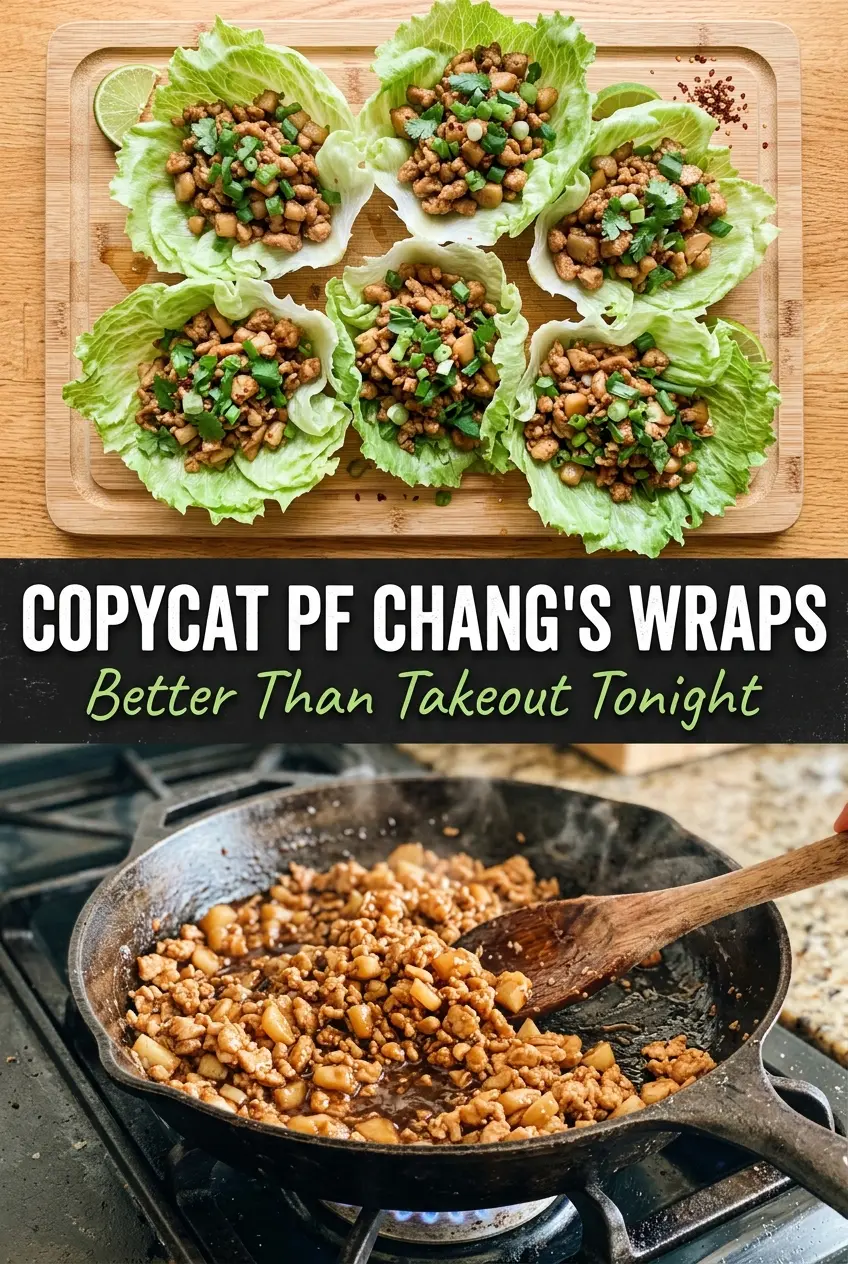
Pf Chang's Chicken Lettuce Wraps
Ingredients
Equipment
Method
- Heat sesame oil in a large skillet over medium-high heat until it shimmers, about 1 minute (visual cue: liquid oil looks glossy at the surface).
- Add garlic and ginger and saute for 1 minute, stirring constantly (visual cue: fragrant aroma and light sizzling).
- Add ground chicken and cook until no longer pink, breaking it up as it cooks (visual cue: meat loses pink color and crumbles evenly).
- Stir in hoisin sauce, soy sauce, and rice wine vinegar until glossy and well combined (visual cue: sauce looks uniform and lightly thickened).
- Add water chestnuts and half the green onions, then cook for 2 minutes (visual cue: water chestnuts are hot and filling is bubbling gently).
- Spoon the chicken mixture into lettuce cups (visual cue: filling piles are contained by crisp leaf edges).
- Garnish with the remaining green onions and serve immediately (visual cue: bright onion tops contrast with the caramel-colored chicken).