
Blueberry jam gets a lot more interesting when the fruit stays bright and the set lands somewhere between spoonable and spreadable, with whole berries suspended in a glossy, jewel-toned syrup. The lavender here is not there to make the jam taste like soap or perfume. Used lightly, it rounds out the blueberries with a soft floral note that reads elegant, not aggressive, and the lemon keeps the sweetness sharp enough that you want another spoonful.
The trick is treating the lavender like a background note instead of the main event. A short simmer pulls out enough aroma for the jam to taste layered, and then the buds come out before they get woody or bitter. Blueberries also need a little help setting cleanly, so the lemon juice does double duty: it brightens the flavor and helps the jam firm up properly as it cooks.
Below, you’ll find the small choices that keep this jam from tasting flat or over-scented, plus the cold-plate test that tells you exactly when it’s done. If you’ve ever had blueberry jam turn out loose or overly sweet, this version gives you a much better target.
The set was perfect on the first try, and the lavender stayed subtle instead of taking over. I used it on toast and swirled it into yogurt all week.
This blueberry and lavender jam is the one to pin for bright, floral jars that set beautifully and never taste too perfumy.
The Small Batch Secret to a Cleaner Blueberry Set
Blueberries give up a lot of juice, which is great for color and not great if you rush the boil. If the pot stays at a gentle simmer the whole time, the fruit collapses before enough water cooks off, and you end up with syrup instead of jam. A steady boil after the lavender goes in is what concentrates the mixture and pushes it toward that glossy, clingy finish.
The other place people go wrong is flavor balance. Lavender needs enough heat to bloom, but not enough time to turn sharp or medicinal. That’s why the buds go in after the sugar has started to dissolve and before the final simmer, then come out as soon as the jam has picked up the aroma.
What Each Ingredient Is Actually Doing in This Dish
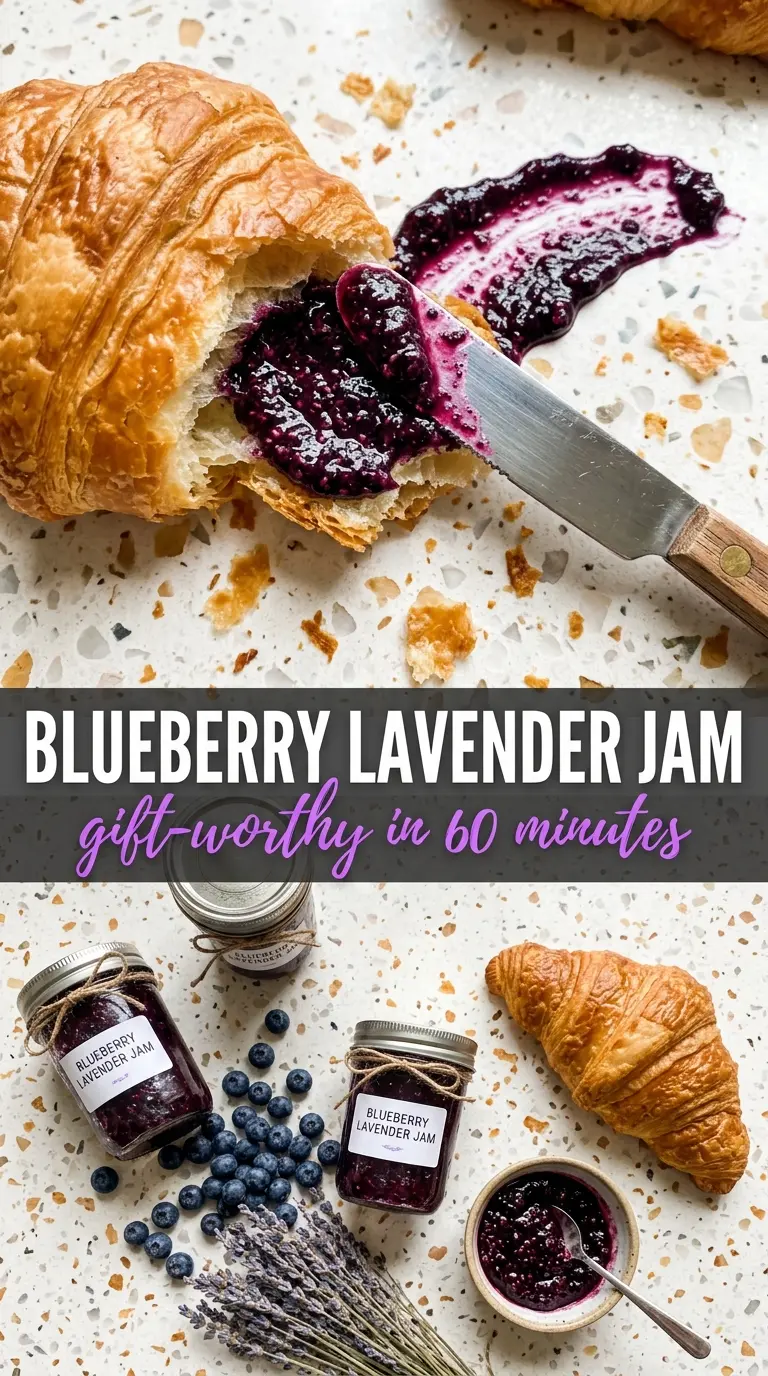
- Fresh blueberries — Fresh berries give the cleanest, brightest flavor and the nicest texture, especially if you want a few intact berries in the finished jam. Frozen berries work too; use them straight from the freezer and expect a slightly softer set because they release more liquid.
- Sugar — Sugar isn’t just sweetness here. It helps the jam gel and gives the finished jars that glossy, spoon-coating look. Cutting it back too far can leave you with a loose set that won’t hold up on toast.
- Lemon juice and zest — The juice sharpens the blueberries and helps the pectin do its job. The zest adds a little lift, but don’t overdo it or it can compete with the lavender.
- Culinary lavender — Use only culinary lavender buds. Ornamental lavender can taste bitter and harsh. Start with the amount listed, then stop there unless you know you want a stronger floral note.
- Pectin — Optional, but useful if your berries are especially juicy or you want a firmer jam without cooking it down too long. Follow the packet directions for the style you’re using, since pectin types vary a lot.
How to Cook the Jam Without Losing the Lavender
Macerating the Fruit
Stir the blueberries, sugar, lemon juice, and zest together first and let them sit for about 20 minutes. The sugar pulls juice from the berries and gives you a head start on dissolving it all, which keeps the pot from scorching once heat hits it. If you skip this rest, the mixture takes longer to come together and the berries can break down unevenly.
Blooming the Lavender
Add the lavender once the fruit has started to look glossy and a little syrupy, then bring the pot to a boil over medium-high heat. You want the lavender to perfume the jam, not steep forever like tea, so keep the simmer controlled and stir often. If the heat is too low, the jam will take too long to thicken and the floral note can taste flat instead of bright.
Reducing to the Set Point
Let the jam simmer until it thickens and the bubbles look heavier and slower, about 25 to 30 minutes. The color deepens as the liquid cooks off, and the sound in the pan changes from a wet splash to a thicker, more concentrated pop. If it starts catching on the bottom, the heat is too high; lower it and keep stirring so the sugars don’t scorch.
Checking and Jarring
Remove the lavender buds before jarring, or strain through a tea ball if you want a cleaner finish. Test the set on a cold plate: spoon a little jam onto the chilled surface, wait a minute, then push it with your finger. If it wrinkles and moves slowly, it’s ready; if it runs like syrup, give it a few more minutes and test again before filling the jars.
How to Adjust the Flavor, Set, and Shelf Life
Make It More Floral
Use a little more lavender only if you want a stronger perfume note, and add it in tiny increments. The flavor builds fast, and too much turns the jam bitter and soapy. For most jars, the recipe amount gives the best balance.
Use Frozen Blueberries
Frozen berries work well if that’s what you have. Don’t thaw them first; cook them from frozen so they keep their shape better and don’t flood the pan with extra juice before the sugar has a chance to help the jam set.
Go With a Firmer Set
If you want a thicker jam for thumbprint cookies or layered desserts, use the pectin packet and follow its timing exactly. Pectin works best when you don’t overcook it, so add it at the point your packet calls for rather than trying to boil the jam down forever.
Storage and Reheating
- Refrigerator: Store in a clean, sealed jar for up to 3 weeks. The set will firm up a little more as it chills.
- Freezer: Frozen jam works well if you leave headspace in the jar. Freeze for up to 6 months and thaw in the refrigerator overnight.
- Reheating: Jam usually doesn’t need reheating, but if it thickens too much after chilling, warm a spoonful briefly in the microwave or set the jar in warm water. Don’t boil it again or you’ll lose the bright blueberry flavor.
The Things That Trip People Up With This Jam
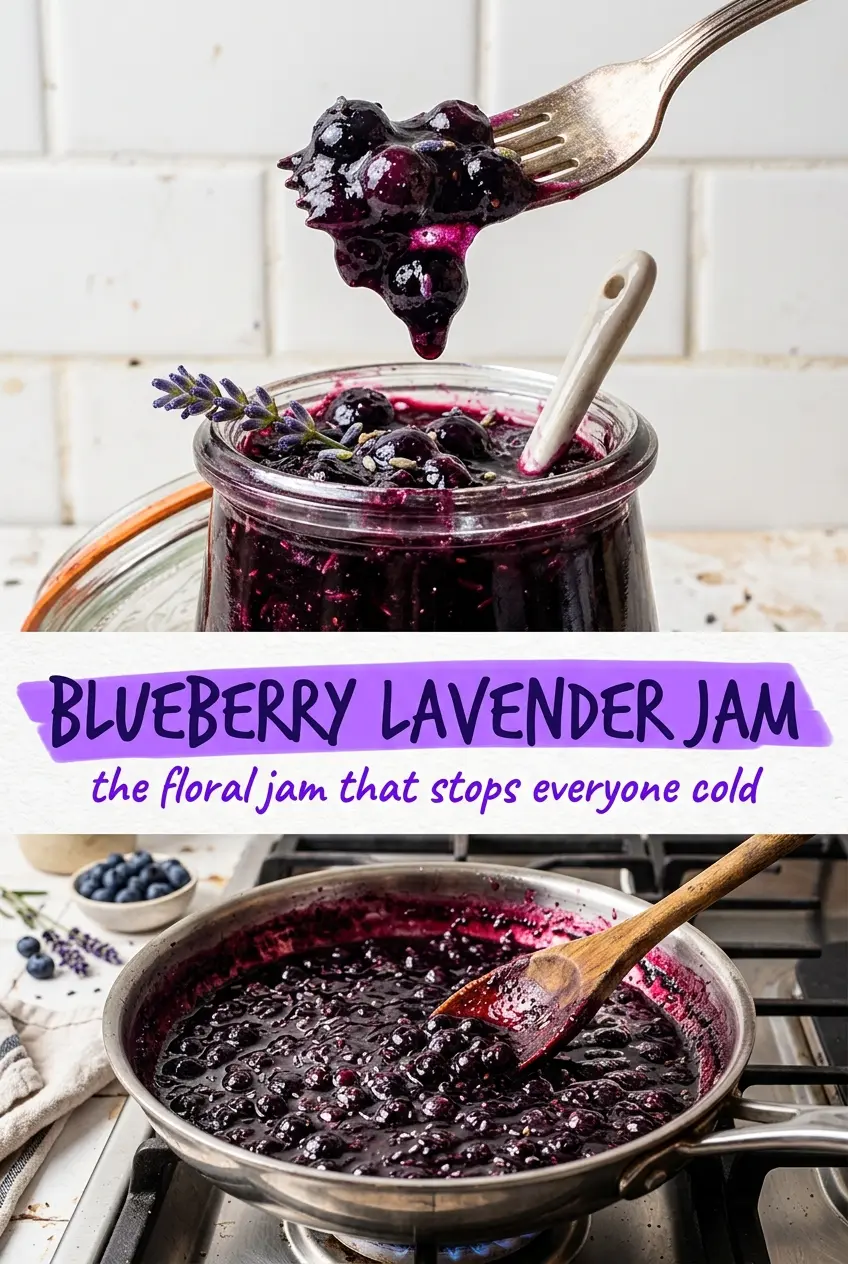
Blueberry & Lavender Jam Recipe
Ingredients
Equipment
Method
- Add blueberries, sugar, and lemon juice to a saucepan, then stir to coat. Let sit at room temperature for 20 min so the berries release juices (visual cue: syrup starts forming around the skins).
- Bring the mixture to a boil over medium-high heat, stirring as it heats. When boiling, add lavender buds and continue boiling briefly (visual cue: deep purple-red bubbling).
- Reduce heat to a simmer and cook 25–30 min, stirring often, until thick and glossy. Adjust heat to maintain a steady simmer (visual cue: jam coats the spoon and looks shiny).
- Remove lavender buds by straining with a fine strainer or using a tea ball. Press gently to extract flavor (visual cue: fewer visible lavender petals remain).
- Test set by placing a spoonful on a cold plate for 1 min. If it wrinkles when pushed, it’s ready (visual cue: surface gel forms, not liquid flow).
- Ladle hot jam into sterilized jars, leaving appropriate headspace. Wipe rims clean (visual cue: jar tops are free of drips).
- Process the filled jars in a water bath for 10 min to seal for shelf storage. Keep water at a gentle boil throughout (visual cue: jars seal as they cool).